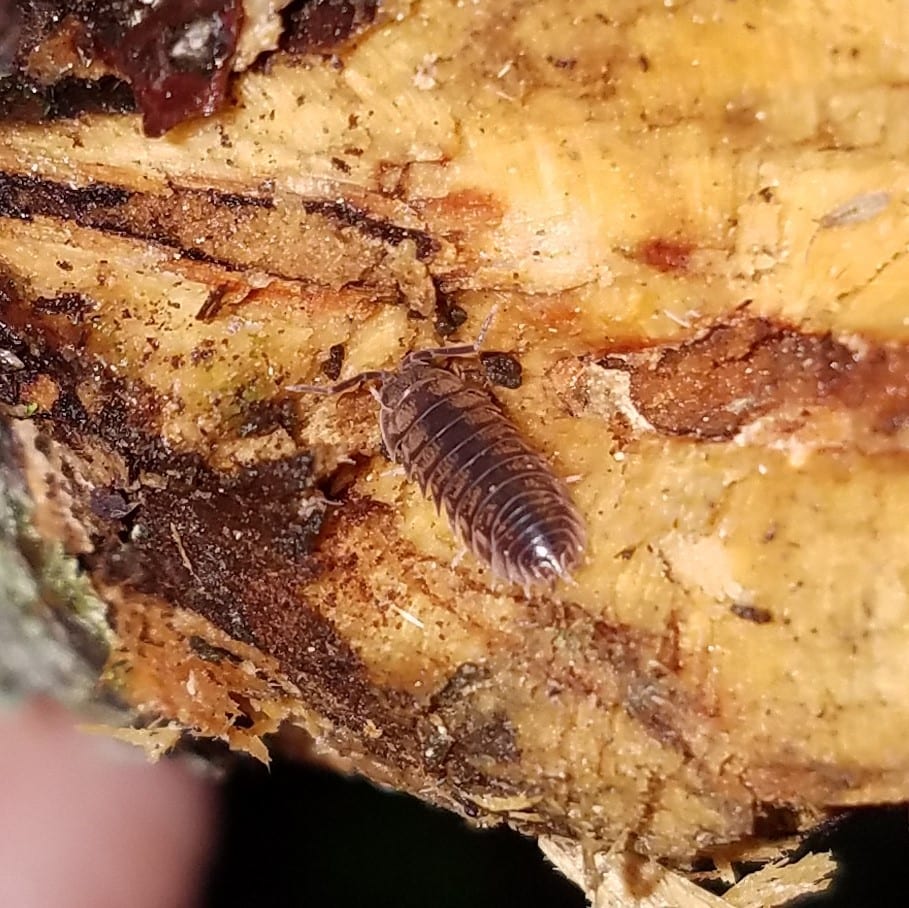
 © Leila Dasher / CC BY 4.0
Curly Isopod
The Curly Isopod is a woodlouse species native to Europe that has since established itself around the world. Its signature trait is an imperfect roll: when it curls up, its antennae and long tail appendages still peek out, rather than forming a perfect sphere. Body color varies widely from gray to reddish-brown, so individuals can look quite different from one another. Hardy and highly adaptable, it breeds readily and multiplies naturally once settled into an enclosure. It works well as cleanup crew, breaking down leaf litter, decaying wood, and leftover food to help keep an enclosure tidy, which is why it's a popular starting point for anyone new to keeping isopods or other invertebrates.
View Curly Isopod encyclopedia →0% commission on your first sales!Register by September 30, 2026 and your first 2 sales are commission-free!
Breeder Wanted!
List on BreederDirect and sell directly to customers nationwide!
BreederDirect's 5 Transparency Commitments
When listing Exotic Invertebrates, Breeders disclose the following. We guarantee transparency on growth stage and breeding unit.
- Real Photos
- Breeding Unit
- Generation Info
- Body Length (mm)
- Country of Origin
Browse all 286 breeds
Verified breeders wanted for Exotic Invertebrates
Breeders are signing up now ahead of launch. Subscribe to be notified when new listings go live.
Getting alerts is free with a member account. When new listings match your saved search, we'll notify you by email and in-app.
Browse other categories
Verified breeders (preview)
Are you raising exotic invertebrates?
Register as a breeder and connect with buyers directly.
Apply as a breederCurly Isopod key facts
- Care level
- Beginner-friendly
- Lifespan
- 2-4 years
- Size
- About 10-15mm
- Temperature
- 15〜28℃
- Humidity
- 50〜65%
- Diet
- Leaf litter and rotten wood as staples, with isopod food, fish flakes, vegetables and fruit for protein and plant matter.
- Temperature & Humidity
- 15-28C and 50-65% humidity. A moist-to-dry gradient makes it tolerant of fluctuations.
- Enclosure
- A ventilated container with soil, sphagnum and leaf litter, plus cork and bark; it also climbs vertical structures.
- Diet & Feeding
- Keep leaf litter and rotten wood available; add isopod food, fish flakes, vegetables and fruit. Extra protein speeds breeding and growth.
- Temperament & Venom
- Harmless and very active. Nocturnal but often seen on the surface. Keep in groups.
- Notes
- Breeds very quickly and can overpopulate; manage numbers when used in a vivarium.
About Curly Isopod
The Curly Isopod is a hardy woodlouse native to Europe, known for its imperfect roll where antennae and tail appendages peek out. Fast-breeding and beginner-friendly, it's a popular cleanup crew species.
7 things to know before welcoming a Curly Isopod
1Named for Its Imperfect Roll
When disturbed, the Curly Isopod rolls into a ball, but it never forms a perfect sphere — its antennae and long tail appendages remain visible. This distinctive incomplete roll is where its "curly" name comes from.
2Beginner-Friendly Care Level
This species is highly adaptable, and as long as basic humidity levels are maintained, it can be kept without major issues. It's a good choice for anyone trying isopod or invertebrate keeping for the first time.
3Color Varies Between Individuals
Body color ranges from gray tones to reddish-brown, so individuals of the same species can look noticeably different. Coloring can also shift somewhat with growth stage and enclosure conditions.
4Breeds Quickly and Multiplies
This isopod is hardy and reproduces readily, naturally increasing in number once its enclosure conditions are right. It's worth thinking ahead about extra space or where surplus individuals might go.
5Balancing Humidity and Airflow
While this species likes humidity, excess moisture without airflow can lead to mold or odor problems, so balancing substrate moisture with ventilation matters. Regular misting and checking the substrate helps maintain an appropriate humidity level.
6A Role as Cleanup Crew
This isopod breaks down leaf litter, decaying wood, and leftover food, which is why it's often introduced as cleanup crew in other animals' enclosures. If housing it alongside other animals, check compatibility beforehand.
7Setting Up Before Bringing One Home
Before bringing one home, it helps to prepare moisture-retentive substrate, hiding spots like decaying wood or leaf litter, and a mister. Letting the enclosure's temperature and humidity stabilize first reduces stress on the animal.
Frequently asked questions about Curly Isopod
- Q.Can it be kept together with other animals?
- A.It's docile and generally won't attack other animals, which is why it's often added to enclosures as cleanup crew. Still, it's worth checking compatibility and enclosure conditions before combining species.
- Q.Where does the name "Curly" come from?
- A.The name comes from its imperfect roll — when it curls up, its antennae and long tail appendages still stick out instead of forming a full sphere. This distinctive shape is also a fun detail to watch for.
- Q.How big does it get as an adult?
- A.Adults reach about 1 to 1.5 cm in length. Being a small species, it's easy to manage even in a compact enclosure.
- Q.Is it suitable for first-time isopod keepers?
- A.It's considered a beginner-friendly species, manageable as long as basic humidity is maintained. It's hardy and adaptable, keeping the barrier to entry relatively low.
- Q.What should it be fed?
- A.It naturally feeds on organic matter such as leaf litter, decaying wood, and leftover food from other animals. Incorporating natural materials into the substrate can reduce the need for separate feeding.
Learn more about Curly Isopod in the encyclopedia
View Curly Isopod encyclopedia entry →
Care difficulty, lifespan, size and diet — all basics covered.
More in this category
Can't find the one you're looking for?
Post your wishes for free and breeders with matching animals will contact you with introductions.