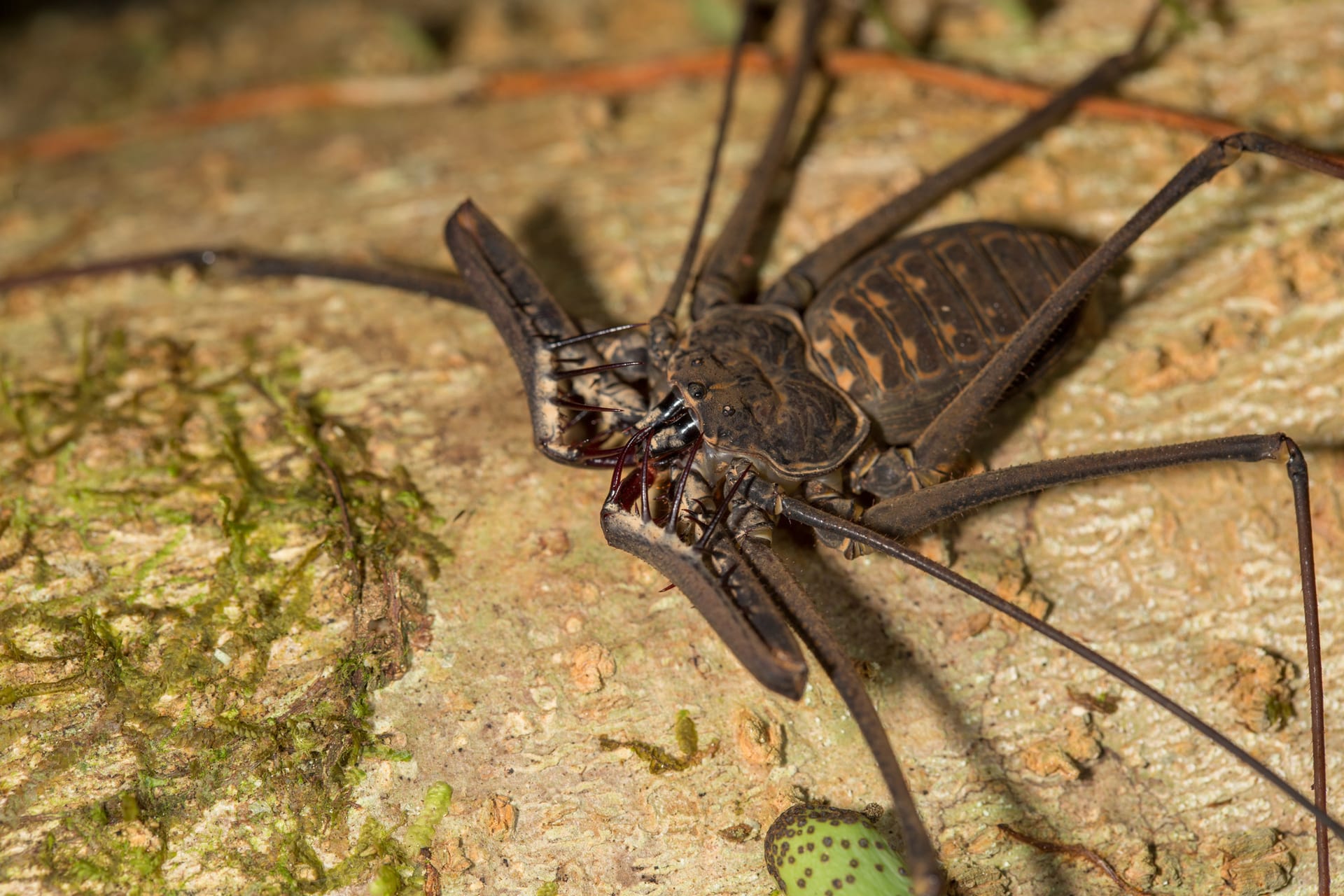
 © Graham Wise / CC BY-SA 4.0
Giant Amazon Whip Spider
The Giant Amazon Whip Spider is one of the largest members of the order Amblypygi, native to the rainforests of the western Amazon basin. Mature males unfurl whip-like pedipalps that can span up to 20 cm, making them one of the longest-limbed arachnids known. Despite their imposing look, they are venomless and generally calm, though their delicate, sensitive nature demands careful, experienced husbandry. Active mostly after dark, they move with a slow, deliberate grace that gives them a striking, almost otherworldly presence. Combined with their scarcity in the trade, this makes them a bucket-list species for seasoned invertebrate keepers.
View Giant Amazon Whip Spider encyclopedia →0% commission on your first sales!Register by September 30, 2026 and your first 2 sales are commission-free!
Breeder Wanted!
List on BreederDirect and sell directly to customers nationwide!
5 Transparency Standards You Can Trust
When listing Exotic Invertebrates, Breeders disclose the following. We guarantee transparency on growth stage and breeding unit.
- Real Photos
- Breeding Unit
- Generation Info
- Body Length (mm)
- Country of Origin
Browse all 249 breeds
Verified breeders wanted for Exotic Invertebrates
Breeders are signing up now ahead of launch. Subscribe to be notified when new listings go live.
Getting alerts is free with a member account. When new listings match your saved search, we'll notify you by email and in-app.
Browse other categories
Verified breeders (preview)
Are you raising exotic invertebrates?
Register as a breeder and connect with buyers directly.
Apply as a breederGiant Amazon Whip Spider key facts
- Care level
- Advanced
- Lifespan
- 5-8 years
- Size
- Pedipalps up to about 20cm unfolded, with far longer whip-like first legs
- Temperature
- 23〜26℃
- Humidity
- 75〜85%
- Diet
- Insects such as crickets and red runner roaches
- Temperature & Humidity
- Keep it within the general amblypygid guideline (23-26 C and 75-85% humidity, as for Damon medius). It is intolerant of cold, including during transport.
- Enclosure
- The span is enormous, so the enclosure needs generous height and width. Stand cork bark to give broad vertical surfaces and leave clear space for moulting.
- Diet & Feeding
- Crickets and red runner roaches. Even juveniles are large, so match prey size accordingly.
- Temperament & Venom
- Venomless and silkless. Shy, darting sideways when startled. The large spiny pedipalps can give a thorn-like puncture if they grip a finger.
- Notes
- Hard to source and sensitive to change. Moults fail easily, so leave ample clearance between the vertical surface and the floor.
About Giant Amazon Whip Spider
One of the world's largest whip spiders, the Giant Amazon Whip Spider spans up to 20cm across its pedipalps. Venomless but delicate, it's a striking pick for experienced invertebrate keepers.
7 things to know before welcoming a Giant Amazon Whip Spider
1High Humidity & Hiding Spots
Native to the Amazon rainforest, this species needs an enclosure that holds consistently high humidity. Provide layered hiding spots with cork bark or driftwood so it can retreat into darkness during the day.
2Handle the Pedipalps With Care
The pedipalps, which can span up to 20 cm, double as sensitive sensory organs. Startling the animal or handling it roughly can cause them to break, so observe from a respectful distance.
3Calm but Skittish by Nature
Despite its imposing appearance, this species is shy and skittish, darting for cover at the slightest vibration or sound. It is venomless and rarely poses any risk to people, but should still be handled with minimal disturbance.
4Molting Requires Extra Caution
Like all arachnids, it molts periodically to grow, and this process is especially delicate — a failed molt can be fatal. Keep humidity elevated and avoid disturbing the animal before and after molting.
5Nocturnal and Most Active at Night
It stays still and hidden for most of the day but becomes active after dark, slowly exploring its enclosure with its long pedipalps extended. If you want to observe its behavior, check on it in the evening.
6Feeding: Live Insects Only
Feed live insects such as crickets. Remove any uneaten prey promptly to keep the enclosure clean.
7Prepare Your Setup in Advance
Because this species can be hard to find, prepare your enclosure, humidity control, and temperature setup in advance so you're ready as soon as you bring one home. Prior experience keeping tropical invertebrates is a plus, given its advanced-keeper status.
Frequently asked questions about Giant Amazon Whip Spider
- Q.Is it venomous or dangerous to keep?
- A.The Giant Amazon Whip Spider has no venom and poses essentially no danger to people. It's naturally shy and calm, rarely acting aggressively, though its pedipalps are delicate and should be handled gently.
- Q.How big does it get?
- A.Mature males can spread their pedipalps up to about 20 cm, among the longest reach of any arachnid. The whip-like first pair of legs extends even further than the pedipalps.
- Q.Is this a good species for beginners?
- A.This species is considered suitable for advanced keepers, not beginners. It requires careful humidity control and gentle handling around molting, so prior invertebrate-keeping experience is recommended before bringing one home.
- Q.Is it covered by CITES?
- A.The Giant Amazon Whip Spider is not subject to CITES.
- Q.Can multiple whip spiders be kept together?
- A.Whip spiders can be territorial, and housing multiple individuals in one enclosure carries a risk of aggression or cannibalism. It's generally safest to keep them one per enclosure.
Learn more about Giant Amazon Whip Spider in the encyclopedia
View Giant Amazon Whip Spider encyclopedia entry →
Care difficulty, lifespan, size and diet — all basics covered.
More in this category
Can't find the one you're looking for?
Post your wishes for free and breeders with matching animals will contact you with introductions.