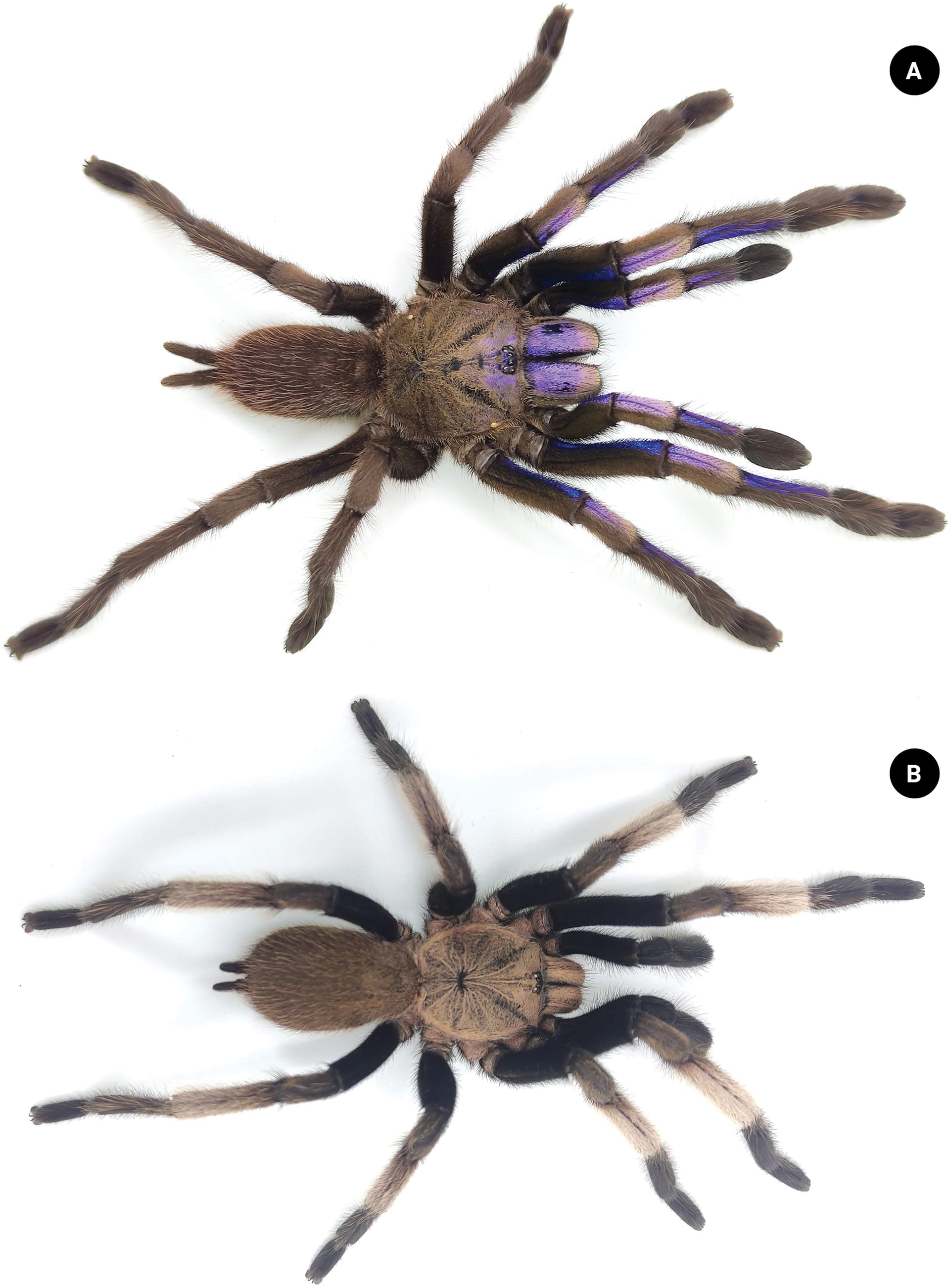
 © Narin Chomphuphuang, Zongtum Sippawat, Patipan Sriranan, Paveen Piyatrakulchai, Chaowalit Songsangchote / CC BY 4.0
Electric Blue Tarantula
The Electric Blue Tarantula is a fossorial species native to Thailand's mangrove forests, spending much of its life underground. Its body is a subdued brown, but around the fifth molt females develop a striking blue sheen on the underside of their legs that shifts with the light. This isn't pigment — the color comes from microscopic structures within the hairs themselves, which is why it doesn't fade over time. Quick-moving and somewhat high-strung, it needs a burrow-friendly setup, which is why it's generally regarded as a tarantula for experienced keepers rather than beginners.
View Electric Blue Tarantula encyclopedia →Breeder Wanted!
List on BreederDirect and sell directly to customers nationwide!
BreederDirect's 5 Transparency Commitments
When listing Exotic Invertebrates, Breeders disclose the following. We guarantee transparency on growth stage and breeding unit.
- Real Photos
- Breeding Unit
- Generation Info
- Body Length (mm)
- Country of Origin
Browse all 286 breeds
Verified breeders wanted for Exotic Invertebrates
Breeders are signing up now ahead of launch. Subscribe to be notified when new listings go live.
Getting alerts is free with a member account. When new listings match your saved search, we'll notify you by email and in-app.
Browse other categories
Verified breeders (preview)
Are you raising exotic invertebrates?
Register as a breeder and connect with buyers directly.
Apply as a breederElectric Blue Tarantula key facts
- Care level
- Advanced
- Lifespan
- About 10 years for females; males die around four months after the mature moult
- Size
- Body up to 8cm (female)
- Temperature
- 25〜27℃
- Humidity
- 70〜80%
- Diet
- Live insects such as crickets and roaches
- Temperature & Humidity
- Keep 25-27C by day; night temperatures may fall to around 20C and the species adapts fairly well to room temperature. Hold humidity at 70-80%.
- Enclosure
- Use an enclosure of about 30x30x45cm with a deep layer of peat. Decoration is not required, though pieces of bark give it anchor points for webbing.
- Diet & Feeding
- Offer active live prey such as crickets and roaches and remove uneaten items within a day.
- Temperament & Venom
- It has no urticating hairs. It is fast, moves in leaps and is highly defensive; bites are reported to cause intense burning, dizziness, swelling and muscle cramps. It is kept hands-off.
- Notes
- Thailand lists the species as controlled wildlife after habitat loss. It was described only recently and supply is limited, so check the provenance of any specimen offered.
About Electric Blue Tarantula
A fossorial tarantula from Thailand's mangrove forests, known for the vivid structural blue that develops on females' legs through successive molts. Best suited to experienced keepers.
7 things to know before welcoming a Electric Blue Tarantula
1Deep Substrate for Burrowing
Females reach a maximum body length of about 8cm — modest for a tarantula — but as a fossorial species it still needs substrate deep enough to dig a proper burrow. Adding a piece of cork bark can help it get started.
2Fast and Defensive Temperament
It's a skittish species, quick to flee or raise a threat posture when it feels threatened. As an Old World tarantula its bite is considered relatively potent, so it's best kept without unnecessary disturbance.
3Blue Hairs Develop Through Molts
Juveniles start out plain brown, and females begin developing blue hairs at the base of their legs around the fifth molt. Watching the color deepen with each subsequent molt is part of the appeal.
4Balancing Humidity and Ventilation
Coming from mangrove forest habitat, it needs a careful balance of substrate moisture and ventilation. Too much moisture invites mold and substrate breakdown, while too little can lead to molting problems.
5Feed in Moderation
Feeding live insects like crickets a few times a month is generally enough. When it's holed up in its burrow, there's no need to force feeding — just wait until it comes out on its own.
6Lifespan Differs by Sex
Females are long-lived, typically around 10 years, while males die roughly four months after their maturing molt. If you want to keep one for the long term, a female is the better choice.
7Prepare an Enclosure and Hideout First
Before bringing one home, prepare an enclosure that can hold deep substrate along with heating and humidity control. Since it likes to hide, adding cork bark or another shelter will help it settle in.
Frequently asked questions about Electric Blue Tarantula
- Q.Is this tarantula suitable for beginners?
- A.It's generally considered a species for experienced keepers, given how quick-moving and defensive it can be. We'd recommend building up tarantula-keeping experience before taking one on.
- Q.How big does it get?
- A.Females reach a maximum body length of about 8cm, making it a relatively compact tarantula.
- Q.How long do they live?
- A.Females can live around 10 years, making this a long-lived species. Males, however, die roughly four months after their maturing molt, so females are the better choice for long-term keeping.
- Q.When does the blue coloring appear?
- A.Juveniles are plain brown, and females start developing blue hairs at the base of their legs around the fifth molt. The blue comes from the hair's structure rather than pigment.
- Q.Is it safe to handle by hand?
- A.Handling isn't recommended, as this species is fast-moving and quick to become defensive. It's best enjoyed by observing rather than handling.
Learn more about Electric Blue Tarantula in the encyclopedia
View Electric Blue Tarantula encyclopedia entry →
Care difficulty, lifespan, size and diet — all basics covered.
More in this category
Can't find the one you're looking for?
Post your wishes for free and breeders with matching animals will contact you with introductions.