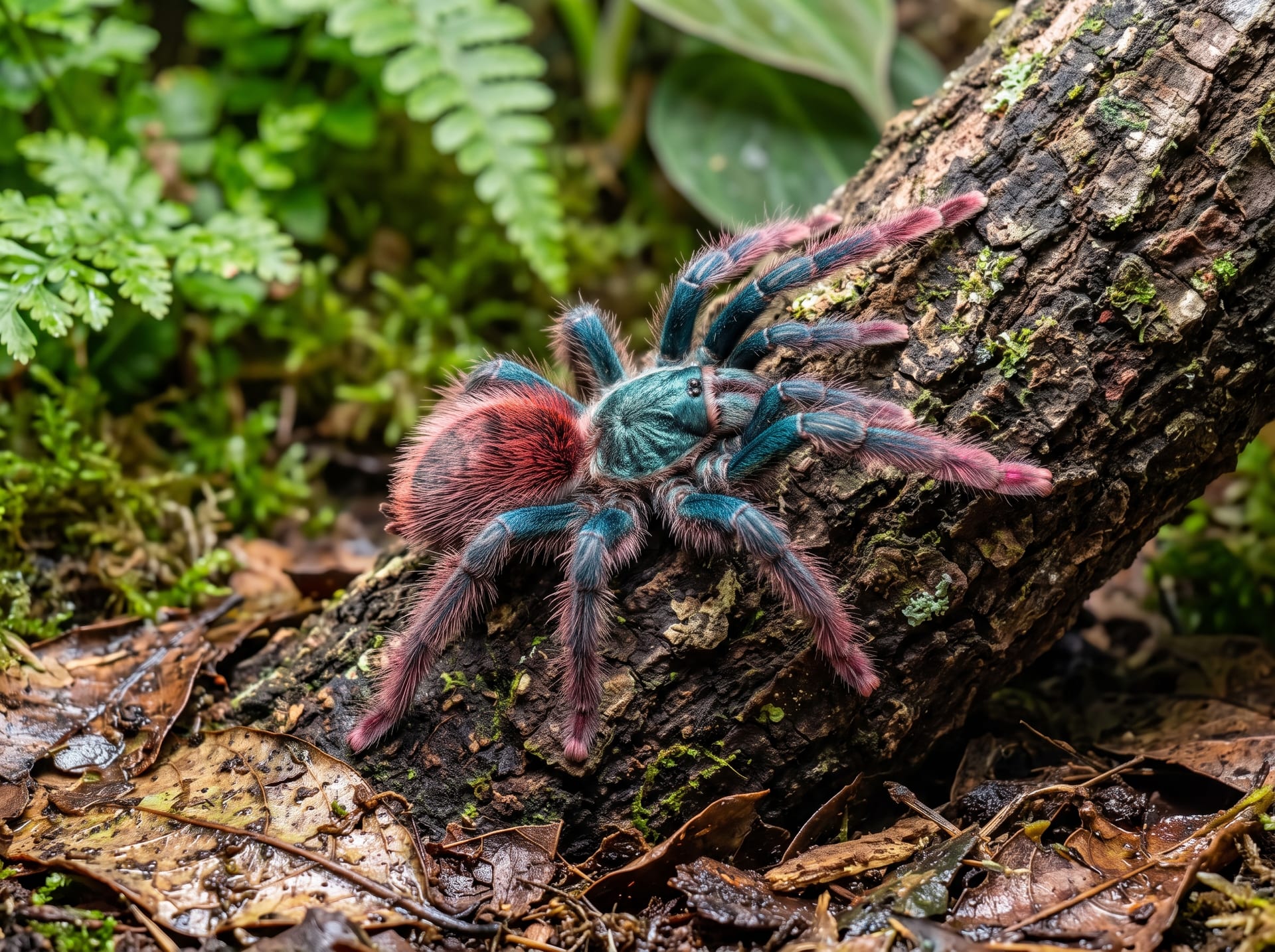
Antilles Pinktoe
The Antilles Pinktoe is an arboreal tarantula from Martinique prized for its dramatic color transformation: juveniles start out a striking electric blue, while adults develop a shimmering mix of green, red, and purple. Active and quick to climb branches or cork bark, it makes for an engaging display animal, and its temperament is generally calm for an arboreal species. That said, balancing ventilation with humidity in its enclosure takes some care, which is why it's considered better suited to keepers with some prior experience. Few species offer such a rewarding, ever-changing appearance over time.
View Antilles Pinktoe encyclopedia →0% commission on your first sales!Register by September 30, 2026 and your first 2 sales are commission-free!
Breeder Wanted!
List on BreederDirect and sell directly to customers nationwide!
5 Transparency Standards You Can Trust
When listing Exotic Invertebrates, Breeders disclose the following. We guarantee transparency on growth stage and breeding unit.
- Real Photos
- Breeding Unit
- Generation Info
- Body Length (mm)
- Country of Origin
Browse all 249 breeds
Verified breeders wanted for Exotic Invertebrates
Breeders are signing up now ahead of launch. Subscribe to be notified when new listings go live.
Getting alerts is free with a member account. When new listings match your saved search, we'll notify you by email and in-app.
Browse other categories
Verified breeders (preview)
Are you raising exotic invertebrates?
Register as a breeder and connect with buyers directly.
Apply as a breederAntilles Pinktoe key facts
- Care level
- Intermediate
- Lifespan
- Female 10-12 years / Male 3-4 years
- Size
- Leg span 12-15 cm
- Temperature
- 24〜28℃
- Humidity
- 70〜80%
- Diet
- Live insects such as crickets, flies and roaches, offered roughly weekly.
- Habitat
- Tall enclosure with vertical cork bark or branches for an arboreal layout.
- Temp & Humidity
- 24-28°C, 70-80% humidity; high moisture with strong ventilation is essential.
- Feeding
- Catches flying prey readily; feed about weekly.
- Caution
- Fast and prone to leaping; mild venom and urticating hairs. Poor ventilation can cause sudden death.
About Antilles Pinktoe
Antilles Pinktoe: an arboreal tarantula from Martinique known for its blue-to-rainbow color change. Intermediate difficulty; females live 10-12 years, males 3-4.
7 things to know before welcoming a Antilles Pinktoe
1Color Changes as It Grows
Juveniles start out a solid, vivid blue, but with each molt the coloring shifts toward a mix of green, red, and purple. Watching the same individual transform so dramatically over time is one of the real pleasures of keeping this species.
2An Arboreal Species — Think Vertical
Unlike ground-dwelling species, this tarantula prefers climbing surfaces like branches and cork bark rather than open floor space. Setting up the enclosure with height in mind, rather than just footprint, lets it behave more naturally.
3Balancing Ventilation and Humidity
Arboreal species like this one are sensitive to excess moisture, but they also don't tolerate being too dry. Keeping airflow adequate while maintaining suitable humidity is one of the trickier parts of care, and a big reason this species is considered intermediate-level.
4Generally Calm Temperament
Among invertebrate pets, this species is generally considered mild-mannered. That said, it can move and jump quickly, so it's best to stay calm and deliberate when opening or working around the enclosure.
5Lifespan Differs Sharply by Sex
Females can be kept and enjoyed for 10 to 12 years, while males typically reach the end of their lives just 3 to 4 years after maturing. It's worth confirming the sex of your spider early on, since it shapes how long you'll be caring for it.
6Give It Space Around Molting
A tarantula's body is especially fragile right before and after molting. Minimize handling, vibration, and disturbance beyond routine feeding and misting during this period, and keep the surrounding environment quiet.
7Prepare the Enclosure in Advance
Before bringing one home, prepare a well-ventilated enclosure along with climbing branches or cork bark and misting supplies for humidity control. Having everything ready in advance makes for a smoother, less stressful first day for your new arrival.
Frequently asked questions about Antilles Pinktoe
- Q.Is this species suitable for beginners?
- A.The Antilles Pinktoe is generally considered an intermediate-level species, so first-time tarantula keepers may find it a bit challenging. It's a good idea to get comfortable with ventilation and humidity management before taking one on.
- Q.How big do adults get?
- A.Adults typically reach around 12 to 15 cm in leg span. Choose an enclosure with this eventual size in mind.
- Q.Do males and females have different lifespans?
- A.Yes, quite significantly. Females tend to live 10 to 12 years, while males typically live only 3 to 4 years after maturing.
- Q.Is the Antilles Pinktoe covered by CITES?
- A.Antilles Pinktoe is listed in CITES Appendix III (listed by the European Union for its own populations). International trade needs documents such as a certificate of origin, but as far as CITES is concerned, no registration is needed to buy or sell in Japan.
- Q.Can multiple individuals be kept together?
- A.No. Tarantulas are solitary animals, and housing multiple individuals together risks cannibalism, so each one should have its own enclosure.
Learn more about Antilles Pinktoe in the encyclopedia
View Antilles Pinktoe encyclopedia entry →
Care difficulty, lifespan, size and diet — all basics covered.
More in this category
Can't find the one you're looking for?
Post your wishes for free and breeders with matching animals will contact you with introductions.