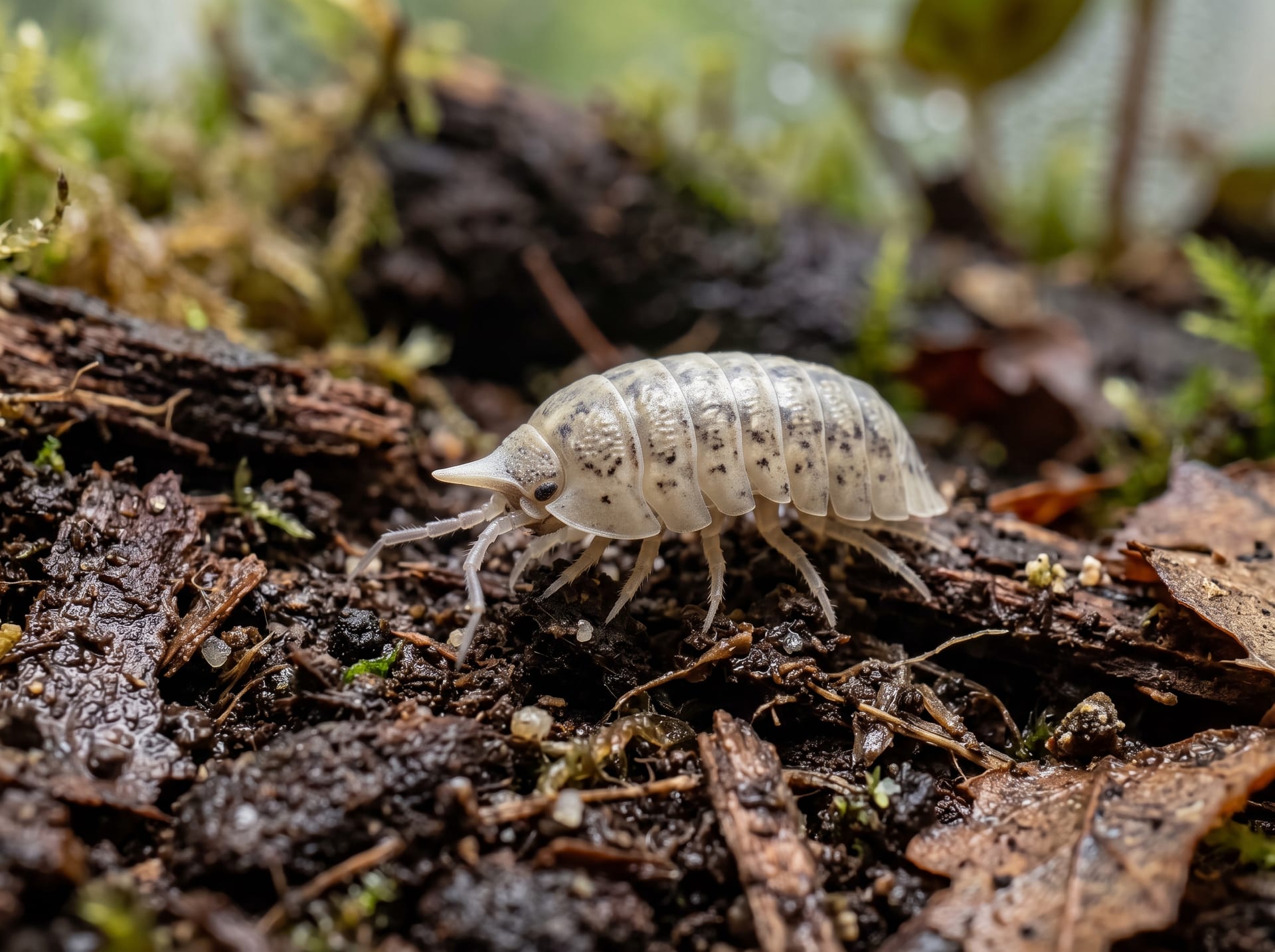
Spotted Pill Isopod
The Spotted Pill Isopod is known for the small ridges along the front edge of its head and its distinctive spotted, marbled pattern. When disturbed, it curls into a tight ball for protection — a charming defense behavior typical of pill bugs. It's completely harmless, with no bite and no venom, and spends its time breaking down decaying leaves and wood, making it a helpful cleanup crew member in any enclosure. Hardy and adaptable, it breeds readily in captivity, making it a great choice for anyone new to keeping invertebrates. Each individual's pattern is slightly different, so there's plenty of enjoyment in watching them roll up and go about their day.
View Spotted Pill Isopod encyclopedia →0% commission on your first sales!Register by September 30, 2026 and your first 2 sales are commission-free!
Breeder Wanted!
List on BreederDirect and sell directly to customers nationwide!
5 Transparency Standards You Can Trust
When listing Exotic Invertebrates, Breeders disclose the following. We guarantee transparency on growth stage and breeding unit.
- Real Photos
- Breeding Unit
- Generation Info
- Body Length (mm)
- Country of Origin
Browse all 249 breeds
Verified breeders wanted for Exotic Invertebrates
Breeders are signing up now ahead of launch. Subscribe to be notified when new listings go live.
Getting alerts is free with a member account. When new listings match your saved search, we'll notify you by email and in-app.
Browse other categories
Verified breeders (preview)
Are you raising exotic invertebrates?
Register as a breeder and connect with buyers directly.
Apply as a breederSpotted Pill Isopod key facts
- Care level
- Beginner-friendly
- Lifespan
- About 2-3 years
- Size
- About 1.5-2 cm
- Temperature
- 18〜26℃
- Humidity
- 55〜75%
- Diet
- Mainly leaf litter and wood, supplemented with vegetable scraps, protein, and calcium.
- Habitat
- A ventilated tub with leaf litter, wood, and hides.
- Temp & Humidity
- Keep 18-26C with one moist side for a gradient.
- Feeding
- Leaf litter plus supplemental protein and calcium.
- Notes
- Hardy and prolific; harmless with no venom or bite.
About Spotted Pill Isopod
A beginner-friendly guide to the Spotted Pill Isopod, prized for its head ridges, spotted pattern, and gentle rolling behavior. Harmless, hardy, and easy to breed.
7 things to know before welcoming a Spotted Pill Isopod
1Enclosure & Substrate
Use a deep layer of insect mat or leaf-mold substrate, and add pieces of rotten wood and dead leaves for hiding spots. These isopods like humidity, so mist regularly to keep the substrate from drying out. A well-ventilated enclosure also helps prevent mold.
2Temperature & Humidity
Spotted Pill Isopods dislike high heat and excessive dryness, so keep them out of direct sunlight at room temperature or slightly cooler. Mist the substrate when it starts to dry, and leave both a damp side and a drier side in the enclosure so they can choose their preferred spot.
3Mostly Omnivorous Diet
In the wild they feed on decaying leaves, wood, and plant matter. In captivity, isopod pellets or vegetable scraps work well, and adding a calcium source like crushed eggshell or cuttlebone supports healthy shell growth.
4Rolling Into a Ball
When startled or touched, they curl up into a tight ball to protect themselves — a signature behavior of pill isopods. It's one of the most charming things to watch, but try not to provoke it too often, since it can stress the animal.
5No Bite, No Venom
This species doesn't bite and carries no venom, making it easy to handle. Direct contact is generally safe, but as with any living creature, handle it gently.
6Easy to Breed
Given stable temperature and humidity, breeding happens fairly easily, and females carry eggs and young beneath their bodies. It's worth planning extra enclosure space in advance in case the colony grows.
7Lifespan & Growth
Adults typically live around 2 to 3 years and reach about 1.5 to 2 cm in size. Juveniles are much smaller and can burrow into the substrate, so watch closely to avoid losing track of them.
Frequently asked questions about Spotted Pill Isopod
- Q.Does it bite or have venom?
- A.No — the Spotted Pill Isopod doesn't bite and carries no venom, making it completely harmless to handle. It's safe to touch with bare hands, which makes it a great choice even for first-time invertebrate keepers.
- Q.Is it suitable for beginners?
- A.Yes, it's considered beginner-friendly thanks to its hardiness and adaptability. As long as you maintain proper substrate humidity and feed it regularly, it's easy to keep without specialized equipment.
- Q.What does it eat?
- A.It's an omnivore that feeds on decaying leaves, rotten wood, isopod pellets, and vegetable scraps. Adding a calcium source like crushed eggshell or cuttlebone helps support healthy shell growth.
- Q.How big does it get, and how long does it live?
- A.Adults reach about 1.5 to 2 cm and typically live around 2 to 3 years. Juveniles are very small and tend to burrow into the substrate, so keep an eye out when observing them.
- Q.Is it easy to breed?
- A.Breeding is fairly straightforward when temperature and humidity stay stable, with females carrying eggs and young beneath their bodies. It's a good idea to leave extra enclosure space in case the colony grows.
Learn more about Spotted Pill Isopod in the encyclopedia
View Spotted Pill Isopod encyclopedia entry →
Care difficulty, lifespan, size and diet — all basics covered.
More in this category
Can't find the one you're looking for?
Post your wishes for free and breeders with matching animals will contact you with introductions.