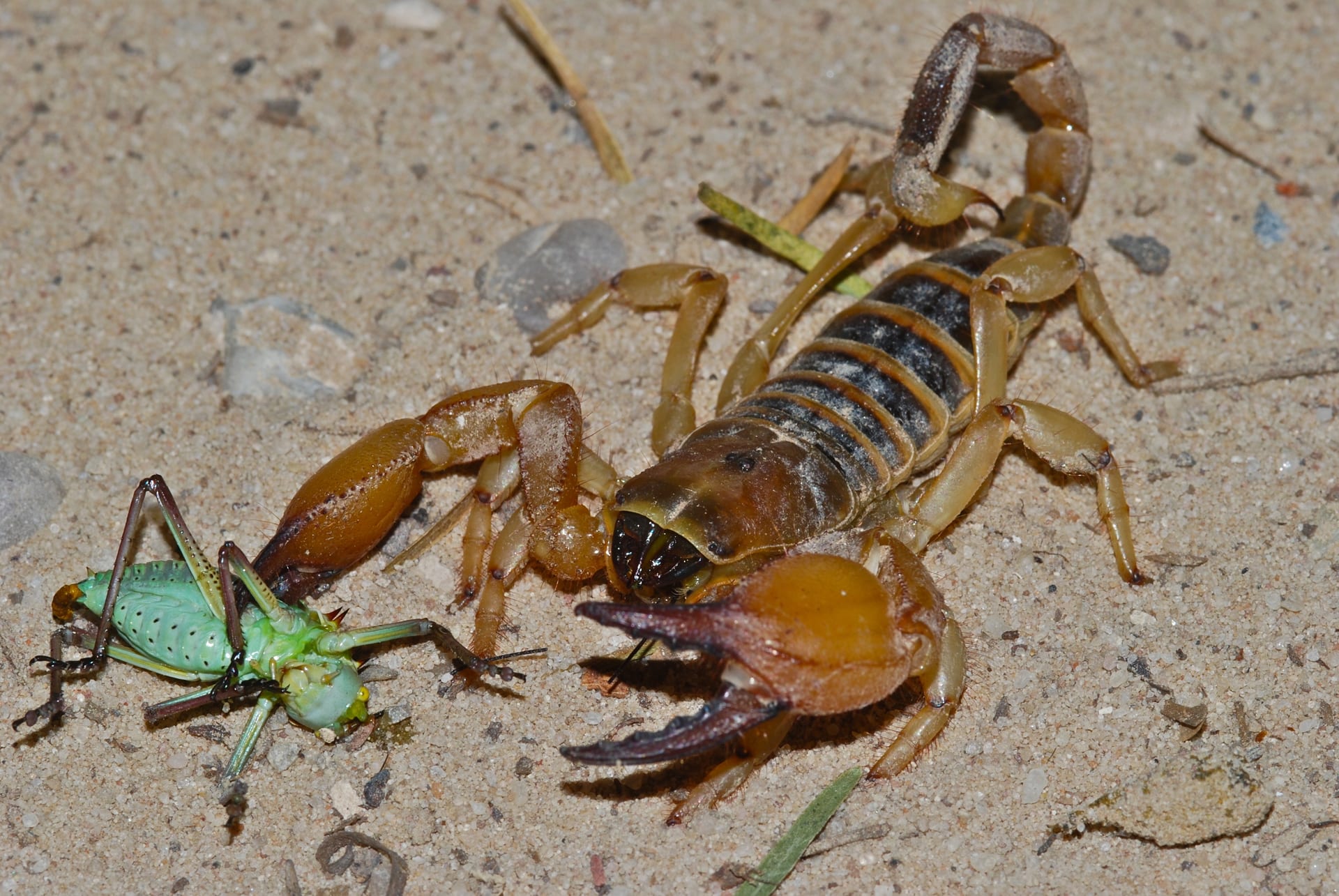
 © Bernard DUPONT / CC BY-SA 2.0
Tricolor Burrowing Scorpion
The Tricolor Burrowing Scorpion is a fossorial scorpion native to the arid Kalahari-fringe habitats of Botswana, Namibia, and South Africa. Its common name comes from the contrasting tones across its body, legs, and pincers. By day it retreats into a self-dug burrow to escape heat and predators, emerging at night to forage, behavior best appreciated when it is kept over a deep substrate layer that lets it dig naturally. Compared with many scorpions, it tends toward a calmer, less flighty demeanor, making it an appealing step for keepers moving from reptiles or insects into invertebrate husbandry. Because it is considered an intermediate-level species, it suits keepers who already have some experience managing substrate moisture and temperature.
View Tricolor Burrowing Scorpion encyclopedia →Breeder Wanted!
List on BreederDirect and sell directly to customers nationwide!
BreederDirect's 5 Transparency Commitments
When listing Exotic Invertebrates, Breeders disclose the following. We guarantee transparency on growth stage and breeding unit.
- Real Photos
- Breeding Unit
- Generation Info
- Body Length (mm)
- Country of Origin
Browse all 286 breeds
Verified breeders wanted for Exotic Invertebrates
Breeders are signing up now ahead of launch. Subscribe to be notified when new listings go live.
Getting alerts is free with a member account. When new listings match your saved search, we'll notify you by email and in-app.
Browse other categories
Verified breeders (preview)
Are you raising exotic invertebrates?
Register as a breeder and connect with buyers directly.
Apply as a breederTricolor Burrowing Scorpion key facts
- Care level
- Intermediate
- Lifespan
- 5-8 years
- Humidity
- Low
- Diet
- Live insects such as crickets
- Temperature & Humidity
- It occurs in dry country around the Kalahari. Keep the surface of the substrate dry and only the lower layers slightly damp.
- Enclosure
- With deep substrate it digs a burrow and stays in it. Leave the finished burrow undisturbed.
- Diet & Feeding
- Offer live insects such as crickets. It may not feed while sealed in its burrow.
- Temperament & Venom
- The genus is hardy but nervous and will take a defensive posture when disturbed. Handle with tools rather than hands.
- Notes
- Like its congeners it is kept singly. Digging it up to check on it is a needless stress.
About Tricolor Burrowing Scorpion
A burrowing scorpion from Botswana, Namibia, and South Africa, named for its tricolor body tones, an intermediate-level species known for life in a deep burrow.
7 things to know before welcoming a Tricolor Burrowing Scorpion
1Give It Deep Substrate To Burrow
This species spends daylight hours inside a burrow it digs for itself, so provide a substrate layer deep enough for natural digging behavior. Avoid disturbing it while it is sheltering underground, since a settled burrow is key to reducing stress.
2Mostly Active After Dark
It is normal not to see much movement during the day, since this scorpion stays tucked away in its burrow until evening. Most activity happens at night, so check in after dark if you want to observe natural behavior, ideally using a dim red light that will not disturb it.
3Recreate Its Dry, Warm Habitat
Since it comes from the arid Kalahari region, the substrate should generally stay on the dry side rather than damp. That said, extreme dryness or prolonged high heat can also stress the animal, so choose a placement where the enclosure temperature stays reasonably stable.
4Calmer Than Many Scorpions
Within the scorpion world, this species is often described as relatively calm and not quick to act aggressively. Even so, it remains a venomous animal capable of pinching or stinging in self-defense, so handling should be done with tools rather than bare hands.
5Feed Sparingly, Not Daily
This species is insectivorous and typically fed live prey such as crickets. Its metabolism is fairly slow, so feeding every few days rather than daily is usually sufficient, and any uneaten prey should be removed promptly to keep the enclosure clean.
6Leave It Alone When Molting
Like other scorpions, this species molts periodically as it grows, and its body is soft and vulnerable right after shedding. Avoid handling or disturbing it during this period, and if it stays hidden in its burrow for an extended stretch, molting may be the reason.
7Set Up the Enclosure First
It is best to have the enclosure ready before bringing one home, with deep substrate for burrowing, space to dig in, and temperature and humidity suited to an arid-adapted species. Since it is venomous, use a secure, escape-proof lid and make sure everyone in the household knows not to handle it carelessly.
Frequently asked questions about Tricolor Burrowing Scorpion
- Q.Is its venom dangerous to humans?
- A.It is generally considered one of the calmer scorpion species, but it is still a venomous animal. Reactions to a sting can vary by individual, so anyone concerned about allergies or sensitivity should consult a medical professional beforehand.
- Q.Can I handle it with bare hands?
- A.Since it is venomous, handling it with bare hands is not recommended. Use tongs or similar tools when observing or cleaning the enclosure, and keep a safe distance from its pincers and tail.
- Q.Why is it rarely visible during the day?
- A.This species naturally stays inside its burrow during daylight hours, so not seeing it is normal rather than a cause for concern. It becomes more active at night, so try checking in during the evening instead.
- Q.How deep should the substrate be?
- A.Because this species digs and lives in burrows, it is best to provide a substrate layer deep enough relative to its size. Choose a substrate that is easy to burrow into and keep it on the drier side.
- Q.Is this species suitable for beginners?
- A.It is generally considered an intermediate-level species, better suited to keepers with some prior scorpion or invertebrate experience. Managing substrate moisture and recreating a proper burrowing environment take a bit of know-how, so first-time keepers may want to build up some background knowledge before taking one on.
Learn more about Tricolor Burrowing Scorpion in the encyclopedia
View Tricolor Burrowing Scorpion encyclopedia entry →
Care difficulty, lifespan, size and diet — all basics covered.
More in this category
Can't find the one you're looking for?
Post your wishes for free and breeders with matching animals will contact you with introductions.