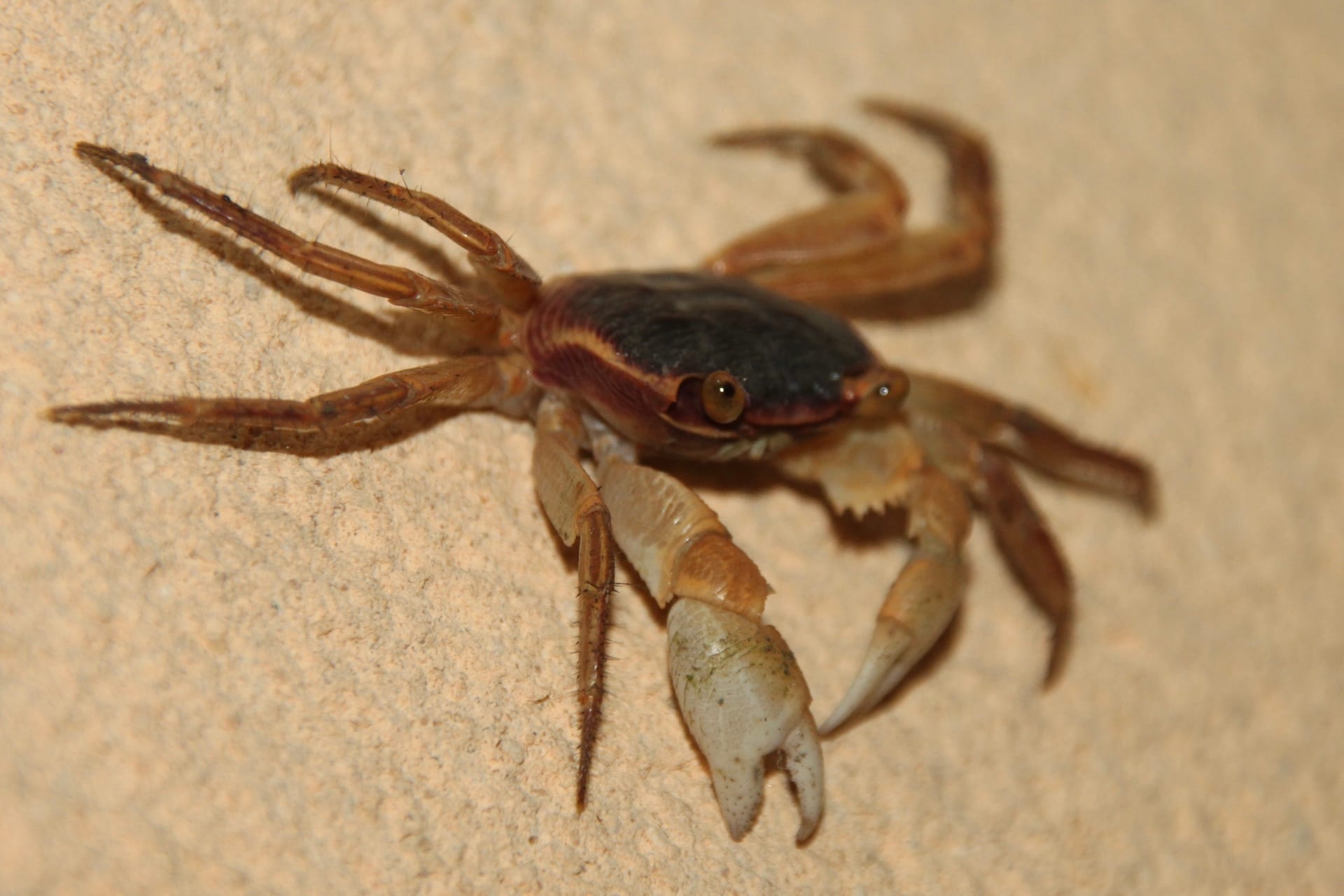
 © Matteo Bellucci / CC BY 4.0
Little nipper
Geograpsus grayi is a land-dwelling crab in the family Grapsidae, found from the Red Sea across the islands of the Indo-Pacific. It has also been recorded in Japan, on the Izu Islands and on islands from Shikoku southward, and its coloration varies from one individual to another. Its claws can pinch, so it needs careful handling. With a setup that offers both land and water, hiding places and steady humidity, you can enjoy watching its active behavior up close. Care is rated for intermediate keepers, so it suits people with some experience keeping crustaceans or terrestrial animals.
View Little nipper encyclopedia →0% commission on your first sales!Register by September 30, 2026 and your first 2 sales are commission-free!
Breeder Wanted!
List on BreederDirect and sell directly to customers nationwide!
5 Transparency Standards You Can Trust
When listing Exotic Invertebrates, Breeders disclose the following. We guarantee transparency on growth stage and breeding unit.
- Real Photos
- Breeding Unit
- Generation Info
- Body Length (mm)
- Country of Origin
Browse all 286 breeds
Verified breeders wanted for Exotic Invertebrates
Breeders are signing up now ahead of launch. Subscribe to be notified when new listings go live.
Getting alerts is free with a member account. When new listings match your saved search, we'll notify you by email and in-app.
Browse other categories
Verified breeders (preview)
Are you raising exotic invertebrates?
Register as a breeder and connect with buyers directly.
Apply as a breederLittle nipper key facts
- Care level
- Intermediate
- Lifespan
- Little data
- Size
- Little data
- Diet
- Omnivorous (said to take a lot of animal food)
- Enclosure
- Give a large land area with rockwork or wood for cover, and a shallow water area it can fully submerge in. Keeping it singly is safest to avoid cannibalism.
- Temperature & Humidity
- Little data on keeping temperatures exist. It is a warm-coast species, so avoid winter cold, and keep the substrate and air humid because it breathes with gills.
- Diet & Feeding
- It is omnivorous and said to take a lot of animal food. Combine animal food such as fish or insects with vegetables and leaf litter.
- Temperament & Venom
- Not venomous. It is fast and may pinch, so do not grab it bare-handed.
- Notes
- Land crabs are skilled escapers, so secure the lid. The larvae develop only in the sea, so captive breeding is difficult. Never release captive animals.
About Little nipper
Geograpsus grayi is a land-dwelling crab of the family Grapsidae, found from the Red Sea across Indo-Pacific islands, including parts of Japan. Colors vary between individuals. Learn the care basics and what to know before bringing one home.
7 things to know before welcoming a Little nipper
1For intermediate keepers
Care is rated for intermediate keepers. Land-dwelling crabs need a balance of temperature, humidity and water access, plus room to molt safely, and a poor setup can leave them stressed. Some prior experience with crustaceans or terrestrial pets makes the first setup easier.
2Provide land and water
Even though it lives on land, it is best to provide access to water. Set up a damp substrate area and a shallow water dish that is easy to climb out of, and do not let the substrate or the air dry out, since the crab breathes with gills. Use dechlorinated water and replace it promptly when it gets dirty.
3Escape-proof the lid
Crabs are surprisingly good climbers and can slip out through small gaps. Choose an enclosure with a lid that locks firmly, and seal any openings for cables or tubing. Stay alert when opening the lid during routine care.
4Hideouts and molting
Places to hide, such as gaps between rocks or space under driftwood, help the crab settle in. Around molting it may become sluggish or stay hidden for a while, so leave it alone rather than pulling it out. The new shell is soft right after a molt, so avoid touching it.
5Keep one per enclosure
It can pinch hard with its claws. Crabs may also fight with one another, and a freshly molted individual can be injured, so keeping one crab per enclosure is the safe starting point. If you do house several together, provide plenty of space and hiding spots and watch them closely.
6An omnivorous diet
Land crabs of this kind are generally described as omnivores. Keepers often offer a mix of vegetables, fruit, and small pieces of fish, shellfish or insects. Remove uneaten food the same day and adjust portions to how much the crab actually eats.
7Warmth and humidity
Because it is found on islands from the Red Sea through the Indo-Pacific, winter chill in Japan may call for supplemental heating. Keep a thermometer and hygrometer in the enclosure and check daily that it stays warm and damp. Overly dry or cold conditions can contribute to trouble with molting or general health.
Frequently asked questions about Little nipper
- Q.Can a beginner keep one?
- A.Its care difficulty is rated for intermediate keepers. If you are new to the hobby, it helps to gain experience with other terrestrial crustaceans first, and to ask the seller about their setup and feeding before you decide.
- Q.How long does it live and how big does it get?
- A.Reliable information on both lifespan and adult size is limited, so no firm figures can be given. Check the current size of the individual you are considering and choose an enclosure with room to spare as it grows.
- Q.Is it safe to handle with bare hands?
- A.It can pinch with its claws, so it is best to avoid handling it with bare hands. When you need to move it, guide it into a container instead of grabbing it directly.
- Q.Do colors differ between individuals?
- A.Coloration is known to vary between individuals. Look at the photos of the actual animal on the listing, and ask the seller if you have questions about its appearance.
- Q.What are the basic supplies?
- A.The basics are an escape-proof enclosure with a secure lid, damp substrate, a shallow water dish, hiding places, and a thermometer and hygrometer. Consider heating equipment for winter.
Learn more about Little nipper in the encyclopedia
View Little nipper encyclopedia entry →
Care difficulty, lifespan, size and diet — all basics covered.
More in this category
Can't find the one you're looking for?
Post your wishes for free and breeders with matching animals will contact you with introductions.