Source: Wikimedia Commons
Little nipper
IntermediateGeograpsus grayi
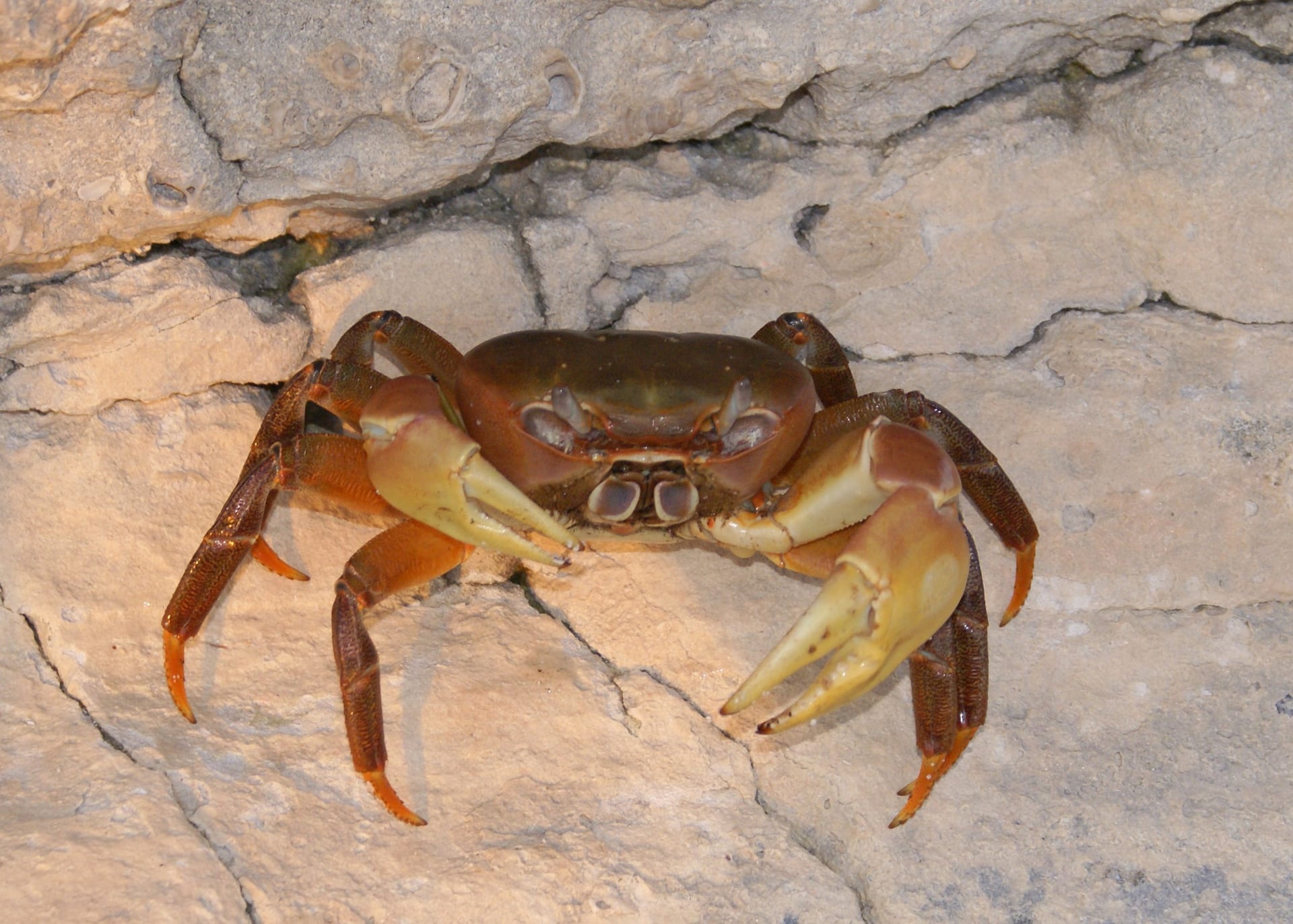
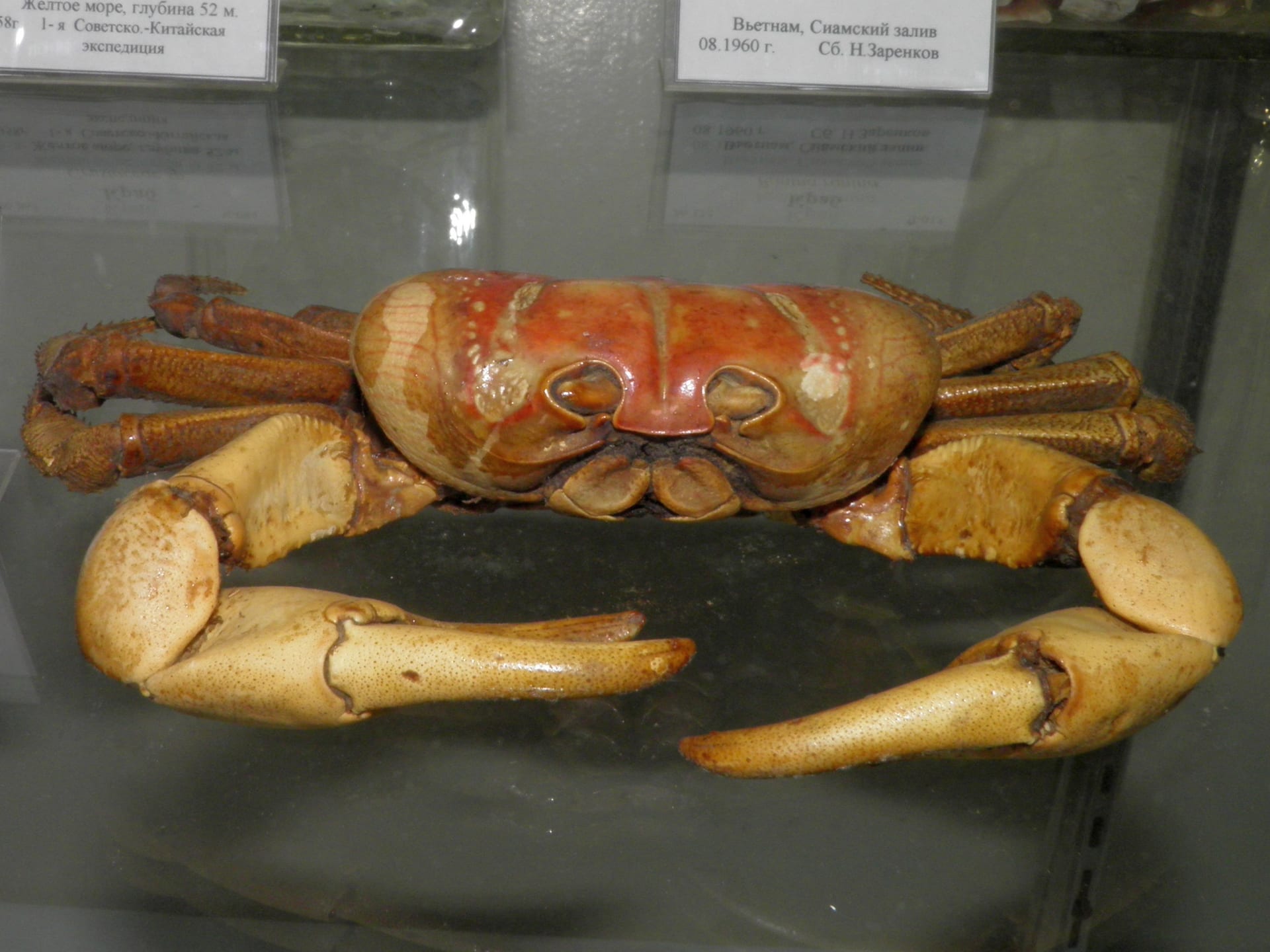
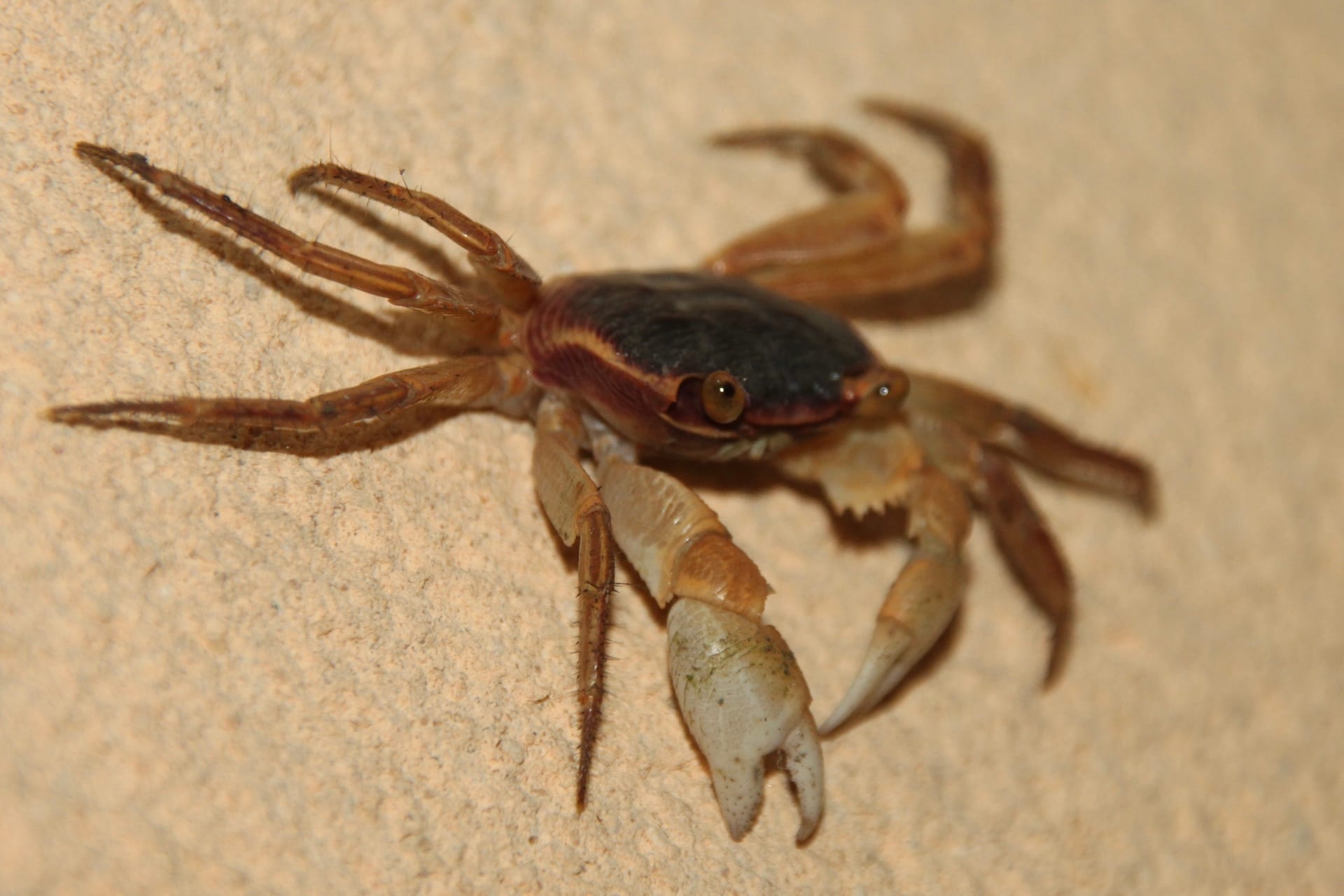
A land-living grapsid crab ranging from the Red Sea across the Indo-Pacific islands. In Japan it has been recorded from the Izu Islands and from Shikoku southward, and its colouring varies between individuals.
Difficulty
Intermediate
Lifespan
Little data
Size
Little data
Diet
Omnivorous (said to take a lot of animal food)
About
Geograpsus grayi (H. Milne Edwards, 1853) is a crab of the family Grapsidae found across the Indo-West Pacific from the Red Sea to the Cocos Islands and from Japan to the Kermadec Islands. GBIF holds Japanese records from Okinawa and Kagoshima as well as Shizuoka, Tokyo and Kochi, so in Japan it is recorded mainly from the Nansei Islands but also from the Izu Islands and the coast of Shikoku. Elsewhere, for example on Reunion, it has been photographed running about on land near the shore. Crabs of the superfamily Grapsoidea are mostly omnivorous, eating plants, insects, small animals and carrion. Adults can live away from water but still breathe with their gills and need moisture, and the larvae develop only in the sea, so egg-bearing females go to the shore to release them. Little has been published on the size or diet of this species in particular. In Japan shops that handle land crabs regularly sell males, females and differently coloured individuals, and it is often described as a crab with strongly carnivorous habits.
Basic Info
Origin
Indo-West Pacific (Red Sea to the Cocos Islands, Japan to the Kermadec Islands)
Lifespan
Little data
Size
Little data
Diet
Omnivorous (said to take a lot of animal food)
Care Guide
Enclosure
Give a large land area with rockwork or wood for cover, and a shallow water area it can fully submerge in. Keeping it singly is safest to avoid cannibalism.
References & Sources
Edited & verified by: BreederDirect editorial team
The taxonomic, regulatory, and husbandry data on this page are compiled and verified against the authoritative primary sources below.
Primary sources
- Ministry of the Environment: Nationally rare species list (JA)
- Ministry of the Environment: List of regulated alien species, including taxa needing an identification certificate (JA)
- Species+ CITES query (not listed)
- SeaLifeBase: Geograpsus grayi
- Grapsoidea - Wikipedia (JA), on land-crab breathing and larval life
- GBIF: Geograpsus grayi (H. Milne Edwards, 1853)
Taxonomy & Authority
Accepted name: Geograpsus grayi (H. Milne Edwards, 1853)
Synonyms: Grapsus grayi H. Milne Edwards, 1853, Geograpsus rubidus Stimpson, 1858
Authority databases: GBIF · GBIF · SeaLifeBase
Nomenclature follows global taxonomic authority databases.
Regulations & Conservation Status
Not CITES-listed
It is not covered by the Invasive Alien Species Act or the Act on Conservation of Endangered Species and is not listed by CITES (September 2026). Native populations exist on Japanese islands, so never release captive animals or move animals between localities.
Sources: Ministry of the Environment: Nationally rare species list (JA) / Ministry of the Environment: List of regulated alien species, including taxa needing an identification certificate (JA) / Species+ CITES query (not listed)
Regulations may change. Always verify the latest information with the relevant authorities.
Little nipper Listings
Loading latest listingsFind listings for this species