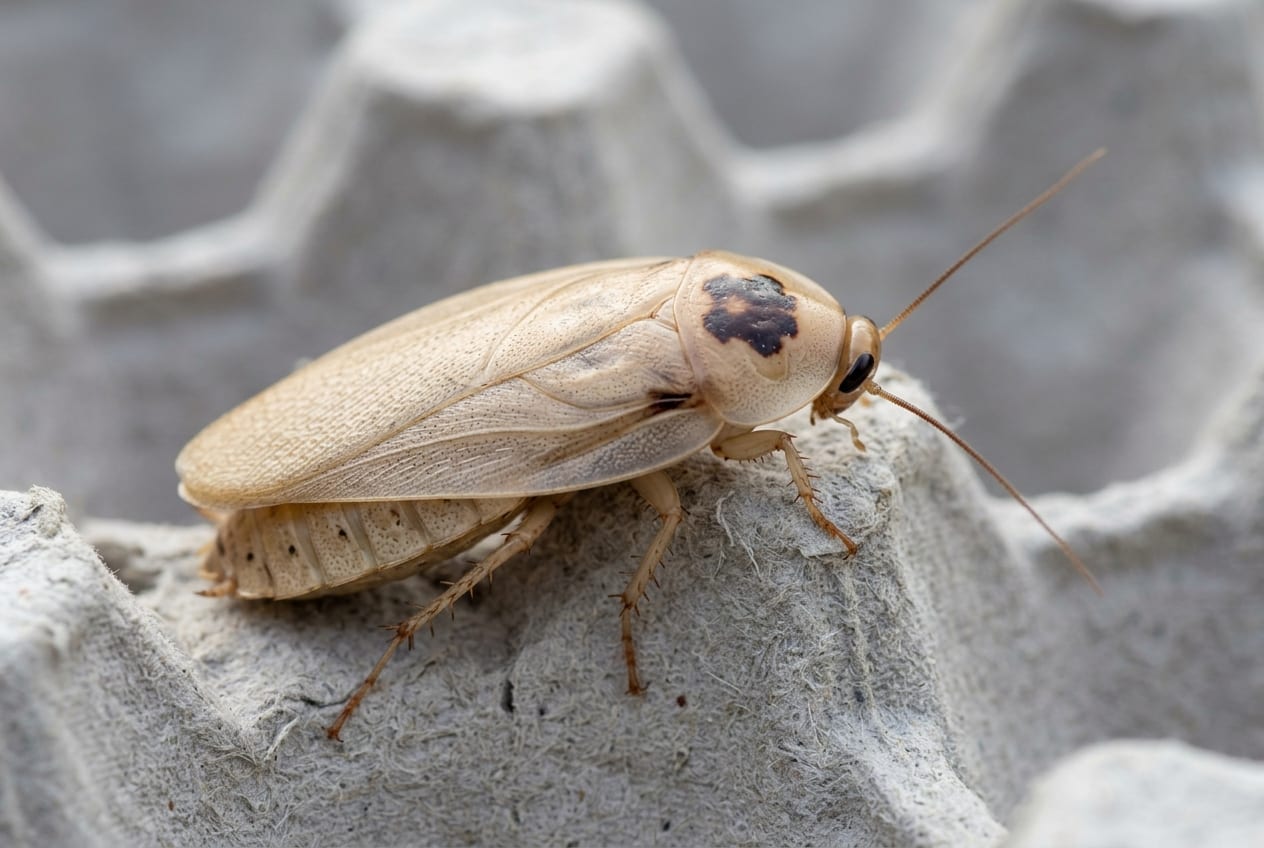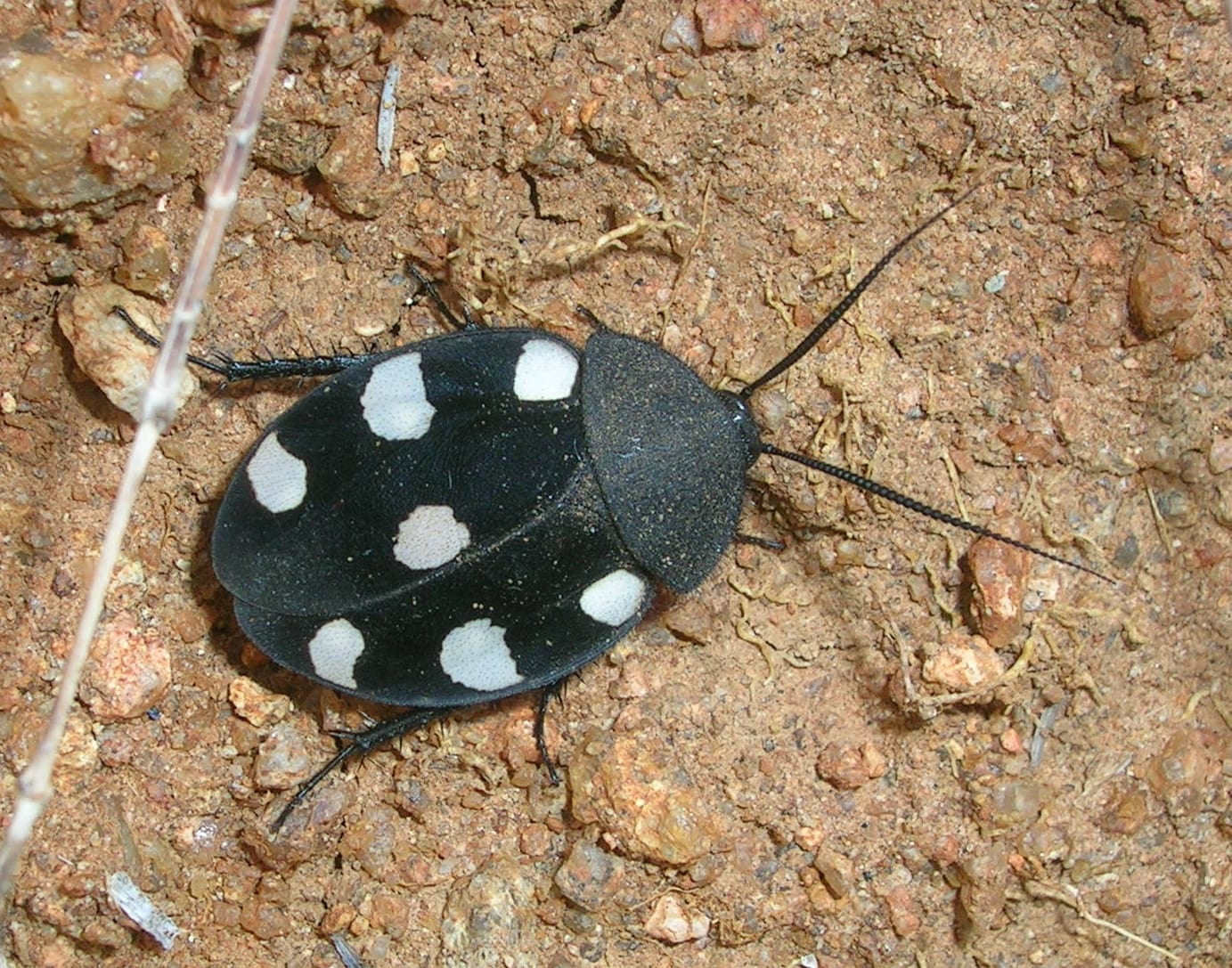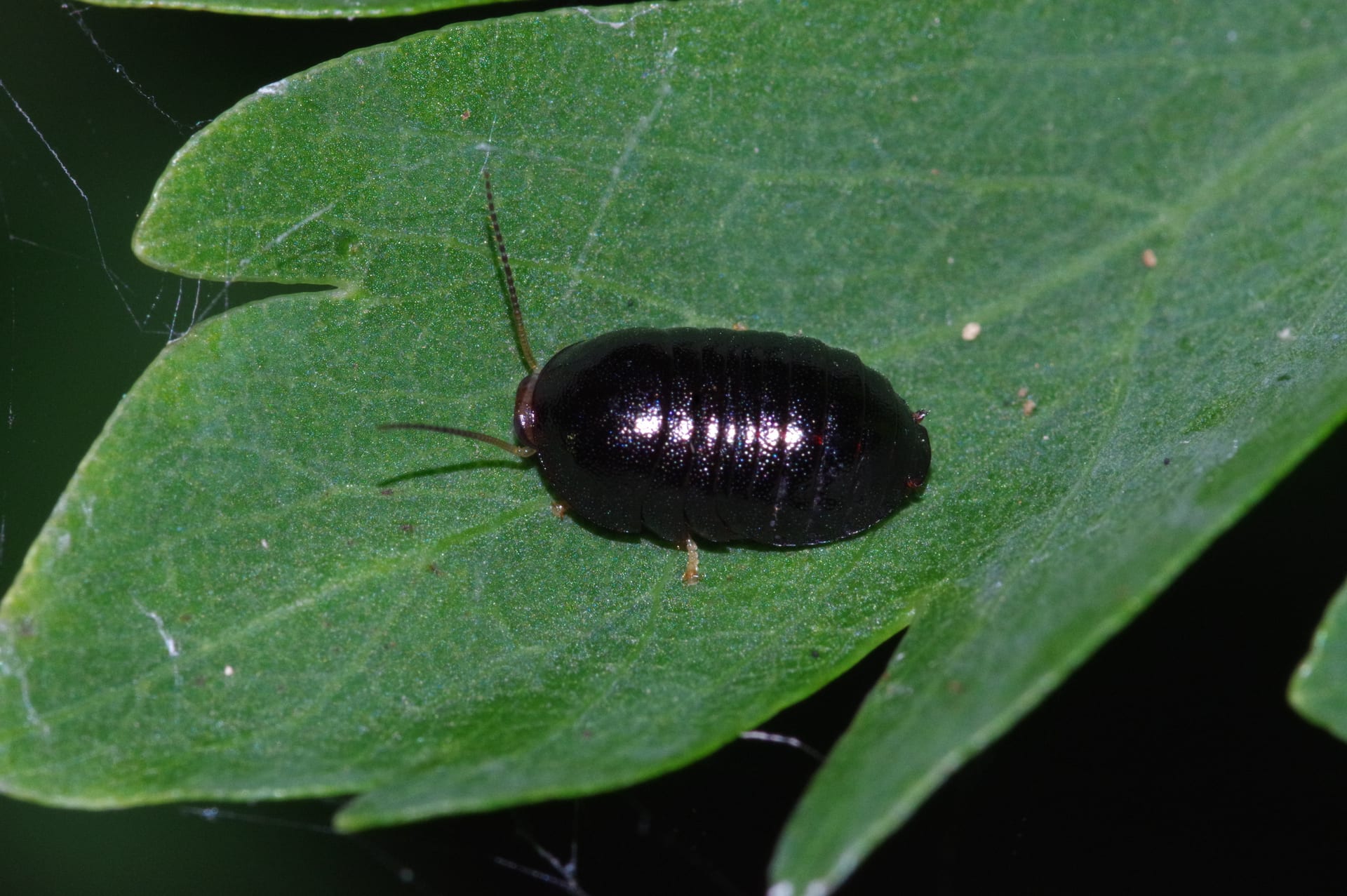
Source: Wikimedia Commons
Pill cockroach
IntermediatePerisphaerus horaianus
A small cockroach that rolls itself into a ball like a pill bug. It lives in forests from southern Kyushu through the Ryukyus and is active on tree bark. The Japanese populations were described as a new species in 2025.
Difficulty
Intermediate
Lifespan
Little data
Size
Total length about 13.6 mm (a female recorded on Yorojima)
Diet
Little data (active on tree bark in forest)
About
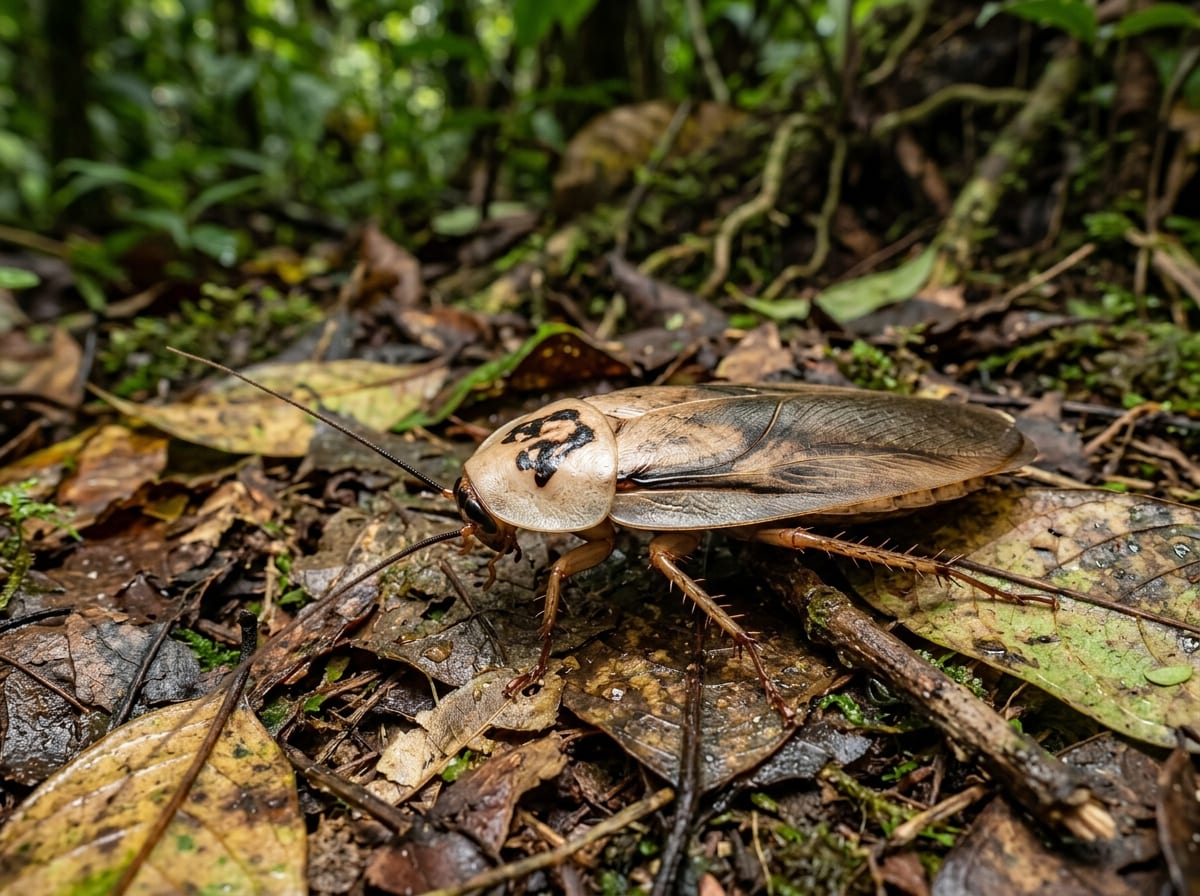
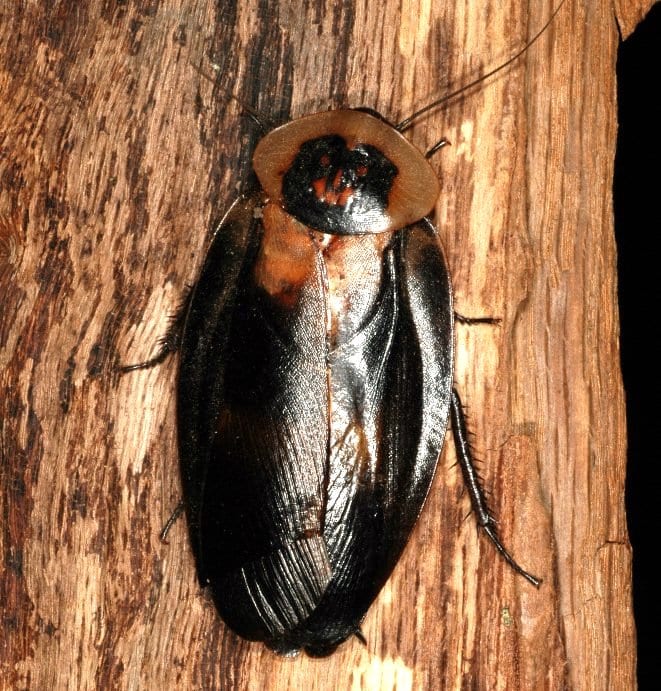
The pill cockroach is a small cockroach of the genus Perisphaerus (family Blaberidae) that rolls into a ball like a pill bug when disturbed. Japanese populations were long treated as P. pygmaeus Karny, 1915, described from Taiwan, but in 2025 morphological and DNA comparisons showed them to be a separate species, described as Perisphaerus horaianus Hsu, Yanagisawa & Ohgita, 2025; the same paper redescribed the female of P. pygmaeus. P. horaianus ranges from Kagoshima Prefecture through the Ryukyu Islands to Taiwan, with records from the Koshiki, Osumi, Tokara, Amami, Daito, Okinawa, Miyako and Yaeyama island groups. A record from Yorojima describes a 13.6 mm female active at night on the bark of a Castanopsis trunk. Identification features include a dark brown front of the head grading to dark reddish brown on the vertex. In Japan specialist shops only occasionally offer animals from the Nansei Islands, and little has been written on keeping it.
Size of the Pill cockroach
The Pill cockroach grows to Total length about 13.6 mm (a female recorded on Yorojima).
Basic Info
Origin
Kagoshima Prefecture through the Ryukyu Islands (Amami, Okinawa, Miyako, Yaeyama and others) to Taiwan
Lifespan
Little data
Size
Total length about 13.6 mm (a female recorded on Yorojima)
Diet
Little data (active on tree bark in forest)
Care Guide
References & Sources
Edited & verified by: BreederDirect editorial team
The taxonomic, regulatory, and husbandry data on this page are compiled and verified against the authoritative primary sources below.
Primary sources
- Ministry of the Environment: Nationally rare species list (JA)
- Ministry of the Environment: List of regulated alien species, including taxa needing an identification certificate (JA)
- Species+ CITES query (not listed)
- Nakasone (2025) First record of Perisphaerus horaianus from Yorojima Island, Nature of Kagoshima 52 (JA)
- GBIF: Perisphaerus pygmaea Karny, 1915
Taxonomy & Authority
Accepted name: Perisphaerus horaianus Hsu, Yanagisawa & Ohgita, 2025
Synonyms: Perispherus pygmaea Karny, 1915, Trichoblatta pygmaea (Karny, 1915)
Authority databases: GBIF · Nature of Kagoshima 52 (2025)
Nomenclature follows global taxonomic authority databases.
Regulations & Conservation Status
Not CITES-listed
It is not covered by the Invasive Alien Species Act or the Act on Conservation of Endangered Species of Wild Fauna and Flora and is not listed by CITES (September 2026). It is a native cockroach with island populations, so never release captive animals and do not mix stock from different islands.
Sources: Ministry of the Environment: Nationally rare species list (JA) / Ministry of the Environment: List of regulated alien species, including taxa needing an identification certificate (JA) / Species+ CITES query (not listed)
Regulations may change. Always verify the latest information with the relevant authorities.
Pill cockroach Listings
Loading latest listingsFind listings for this species