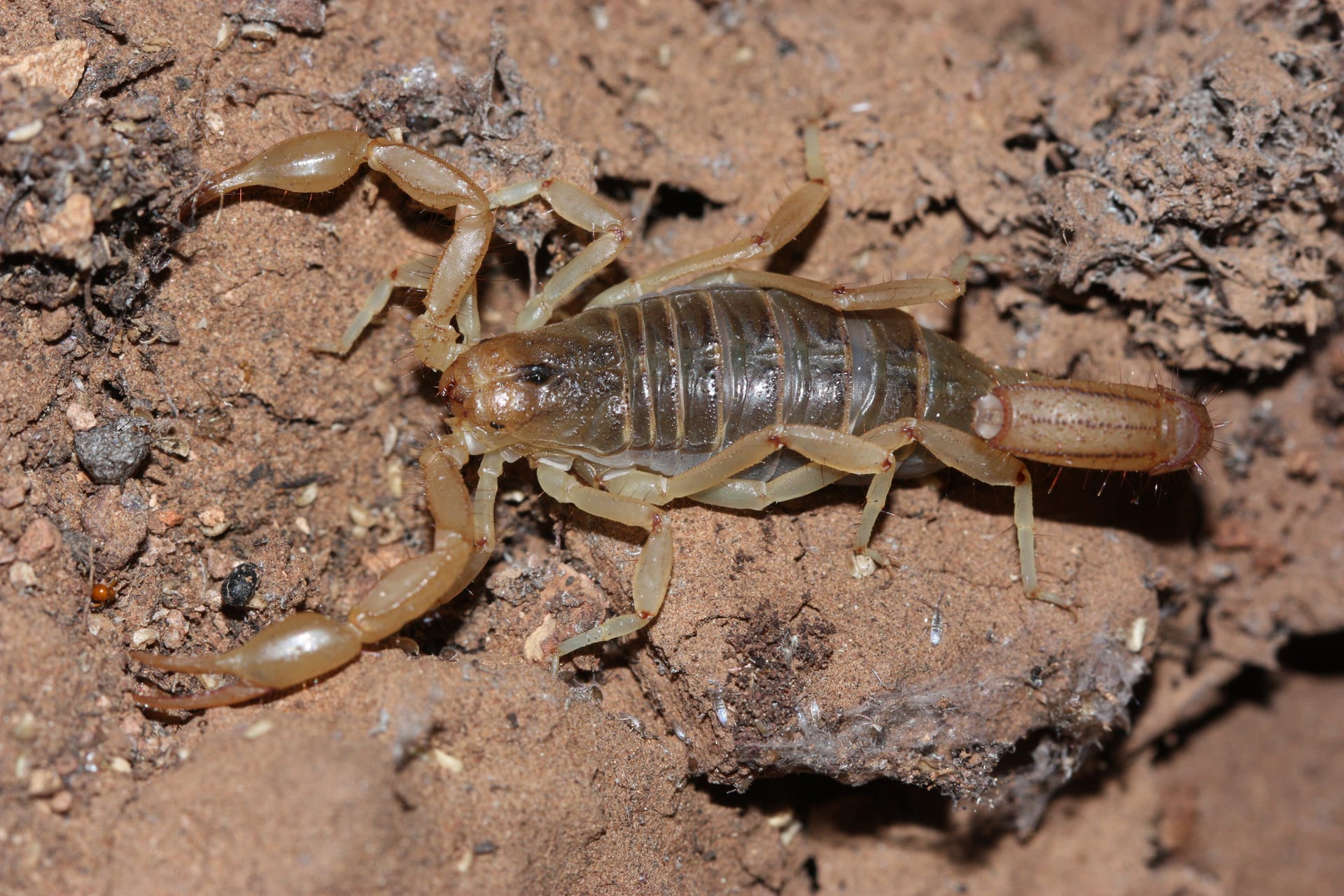
Source: Wikimedia Commons
Stripe-tailed scorpion
BeginnerParavaejovis spinigerus
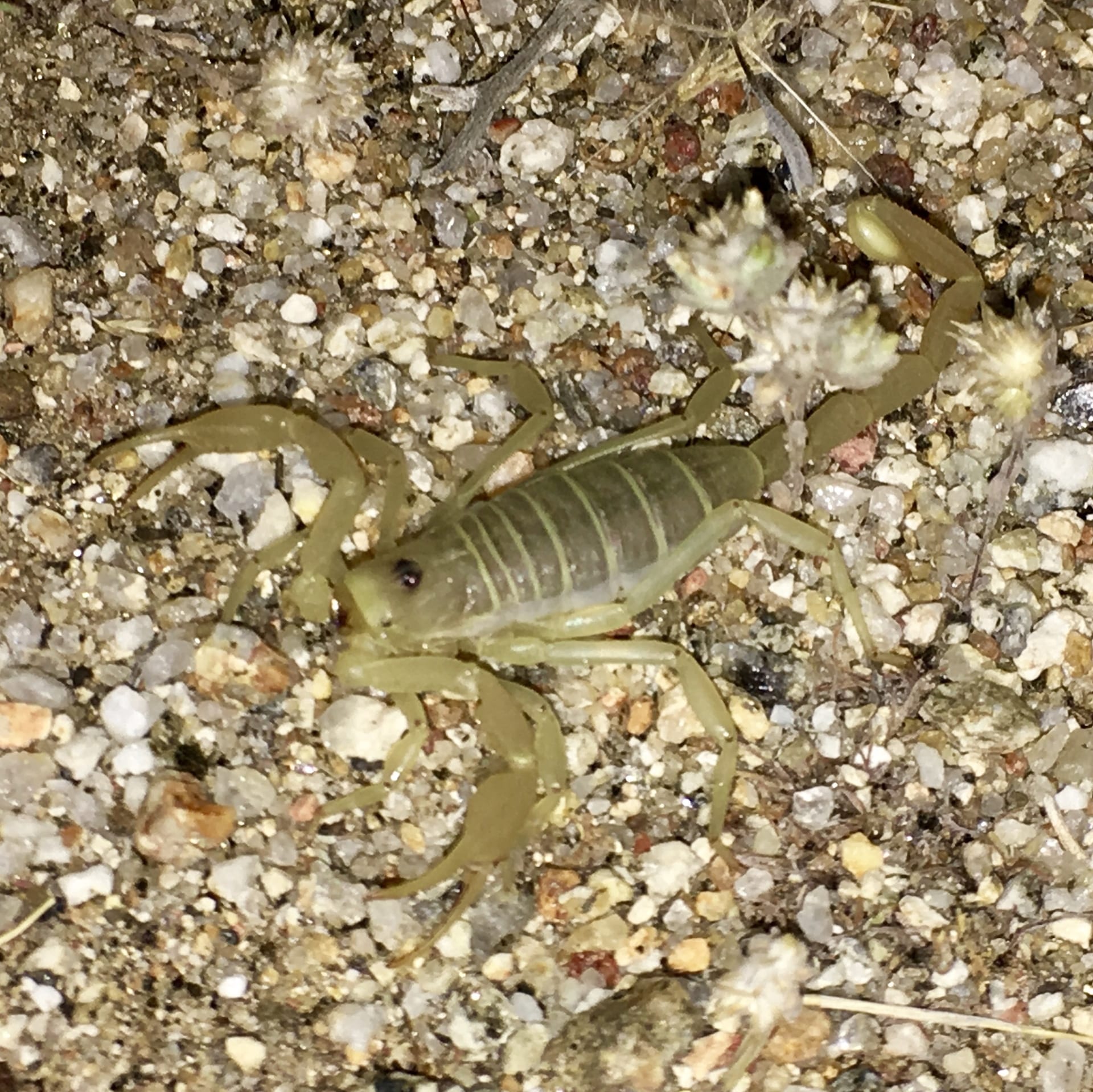
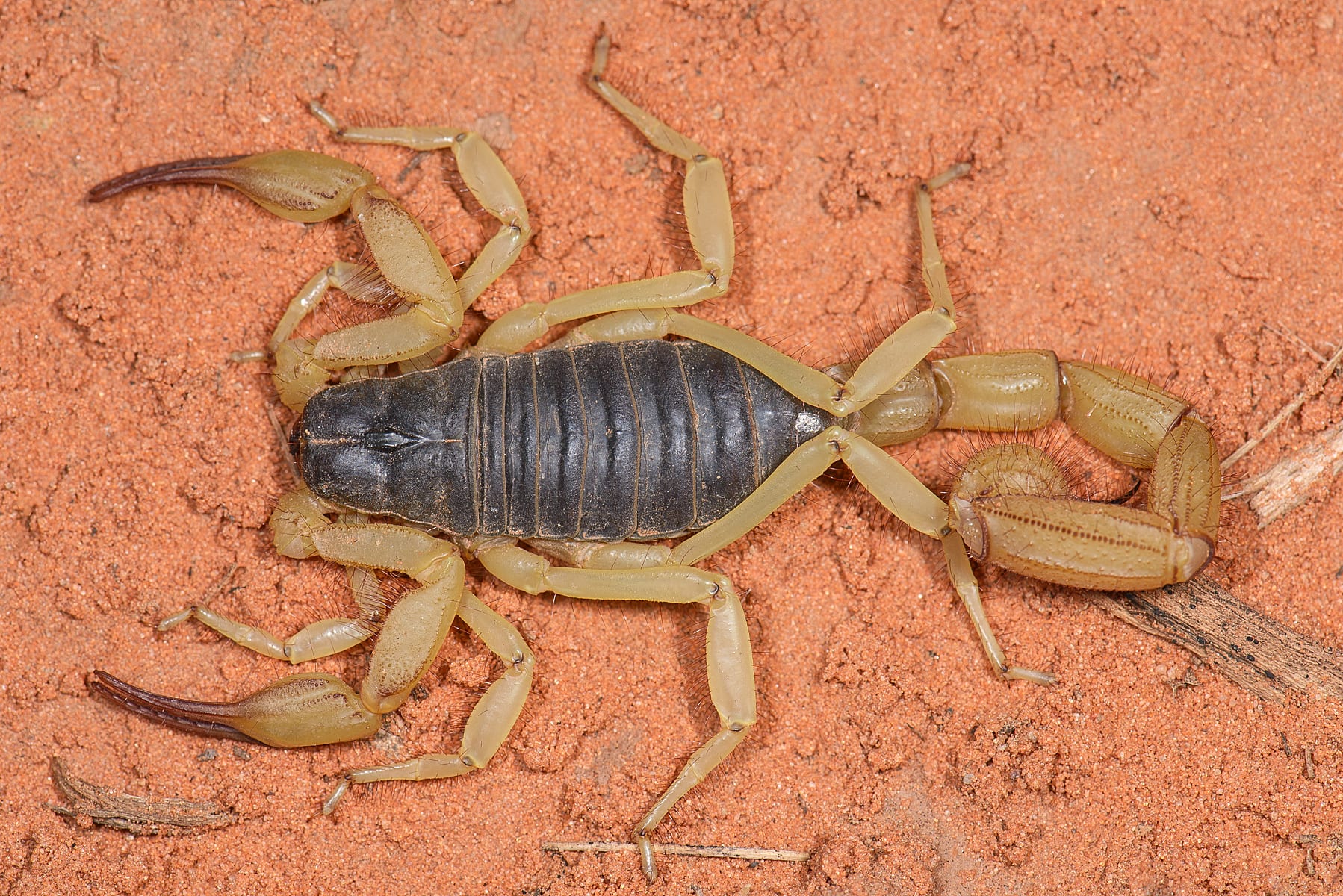
A Sonoran Desert scorpion from the south-western United States and north-western Mexico with brownish stripes along the keels of its tail. It reaches about 6-7 cm, and its venom is not considered medically significant to people.
Difficulty
Beginner
Lifespan
Little data
Size
Total length nearly 60-70 mm; weight about 9.5 g
Diet
Carnivorous (small invertebrates such as crickets, mealworms and roaches)
About
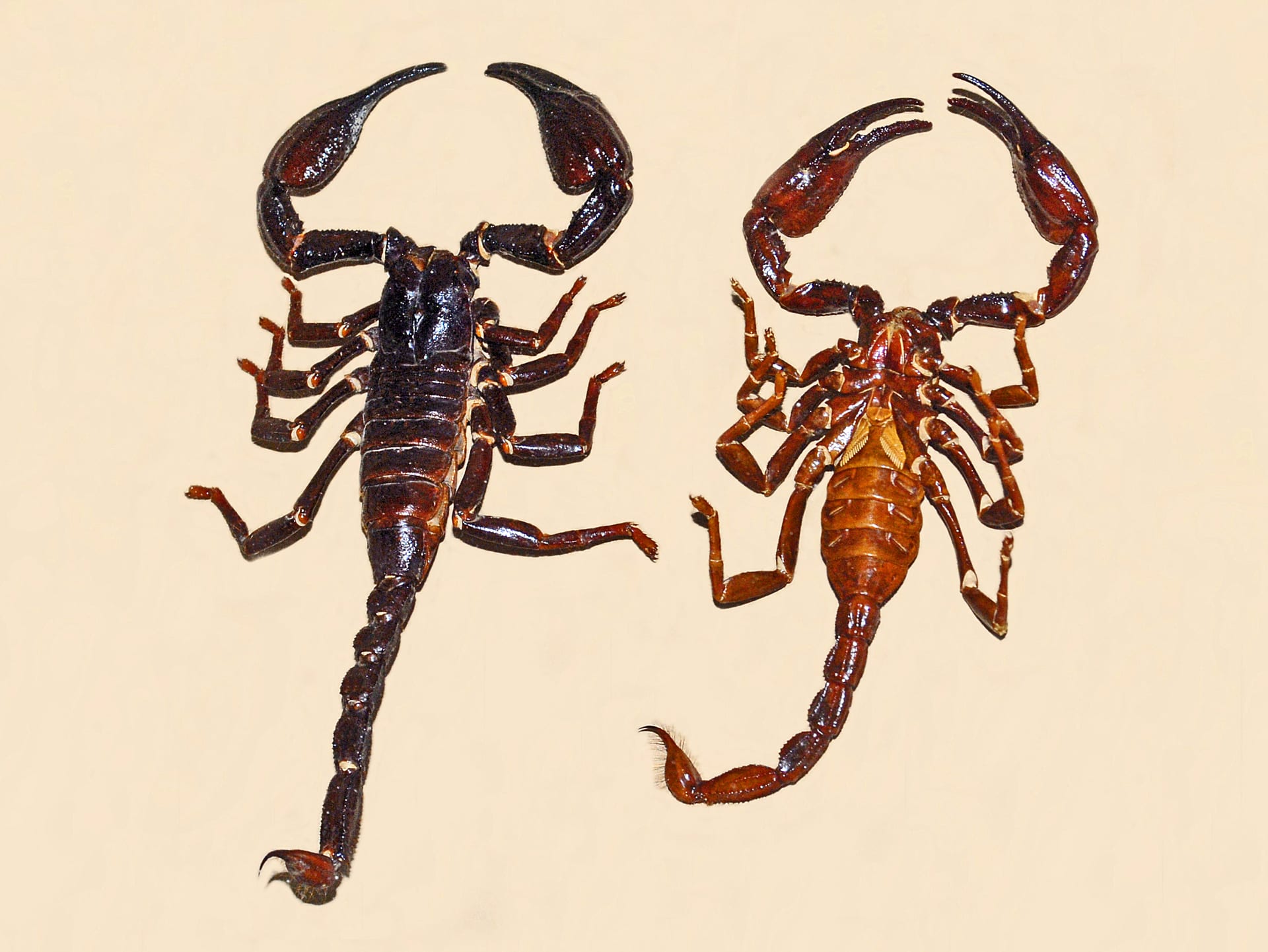
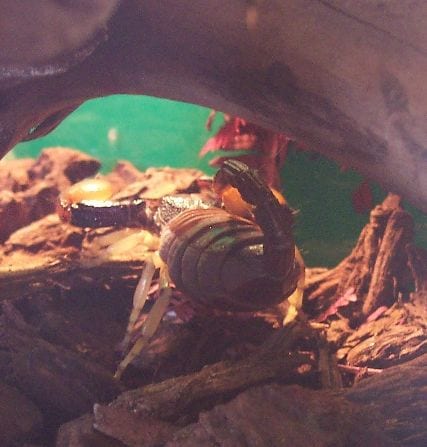
Paravaejovis spinigerus (Wood, 1863), known in English as the stripe-tailed or devil scorpion, is a scorpion of the family Vaejovidae; it was placed in Hoffmannius until 2013. It lives in the Sonoran Desert of north-western Mexico (Sonora, Baja California and Baja California Sur) and the south-western United States (Arizona, New Mexico and parts of California), sheltering under rocks and surface objects from the desert floor to rocky hillsides, and seeks out the most humid spots available. Brownish stripes run along the keels on the back of the tail, and it can be told from the Arizona bark scorpion (a buthid) because its tail is thicker than its slender claws and pedipalps. The species name refers to the spiniform granules at the ends of the dorsal tail keels. It is venomous, but the venom is not medically significant to humans or other mammals and is not considered dangerous. It feeds mainly on small invertebrates. In Japan it appears only occasionally at specialist shops.
Source: Wikipedia (CC BY-SA 4.0)
Size of the Stripe-tailed scorpion
The Stripe-tailed scorpion grows to Total length nearly 60-70 mm; weight about 9.5 g.
Adults of both sexes reach nearly 60-70 mm and weigh about 9.5 g.
Basic Info
Origin
Sonoran Desert (south-western United States and north-western Mexico)
Lifespan
Little data
Size
Total length nearly 60-70 mm; weight about 9.5 g
Diet
References & Sources
Edited & verified by: BreederDirect editorial team
The taxonomic, regulatory, and husbandry data on this page are compiled and verified against the authoritative primary sources below.
Taxonomy & Authority
Accepted name: Paravaejovis spinigerus (Wood, 1863)
Synonyms: Hoffmannius spinigerus (Wood, 1863)
Authority databases: GBIF · GBIF · The Scorpion Files
Nomenclature follows global taxonomic authority databases.
Regulations & Conservation Status
Not CITES-listed
It is not a member of the Buthidae, so it is not a designated invasive alien species in Japan. However, every scorpion species is on Japan's list of taxa that need an identification certificate, so imports must be accompanied by documents certifying the species. It is not listed by CITES (September 2026). Keep it in escape-proof housing and never release captive animals.
Sources: Ministry of the Environment: List of regulated alien species, including taxa needing an identification certificate (JA) / Species+ CITES query (not listed)
Regulations may change. Always verify the latest information with the relevant authorities.
Stripe-tailed scorpion Listings
Loading latest listingsFind listings for this species