Source: Wikimedia Commons
Black-back Desert Hairy Scorpion
IntermediateHadrurus spadix
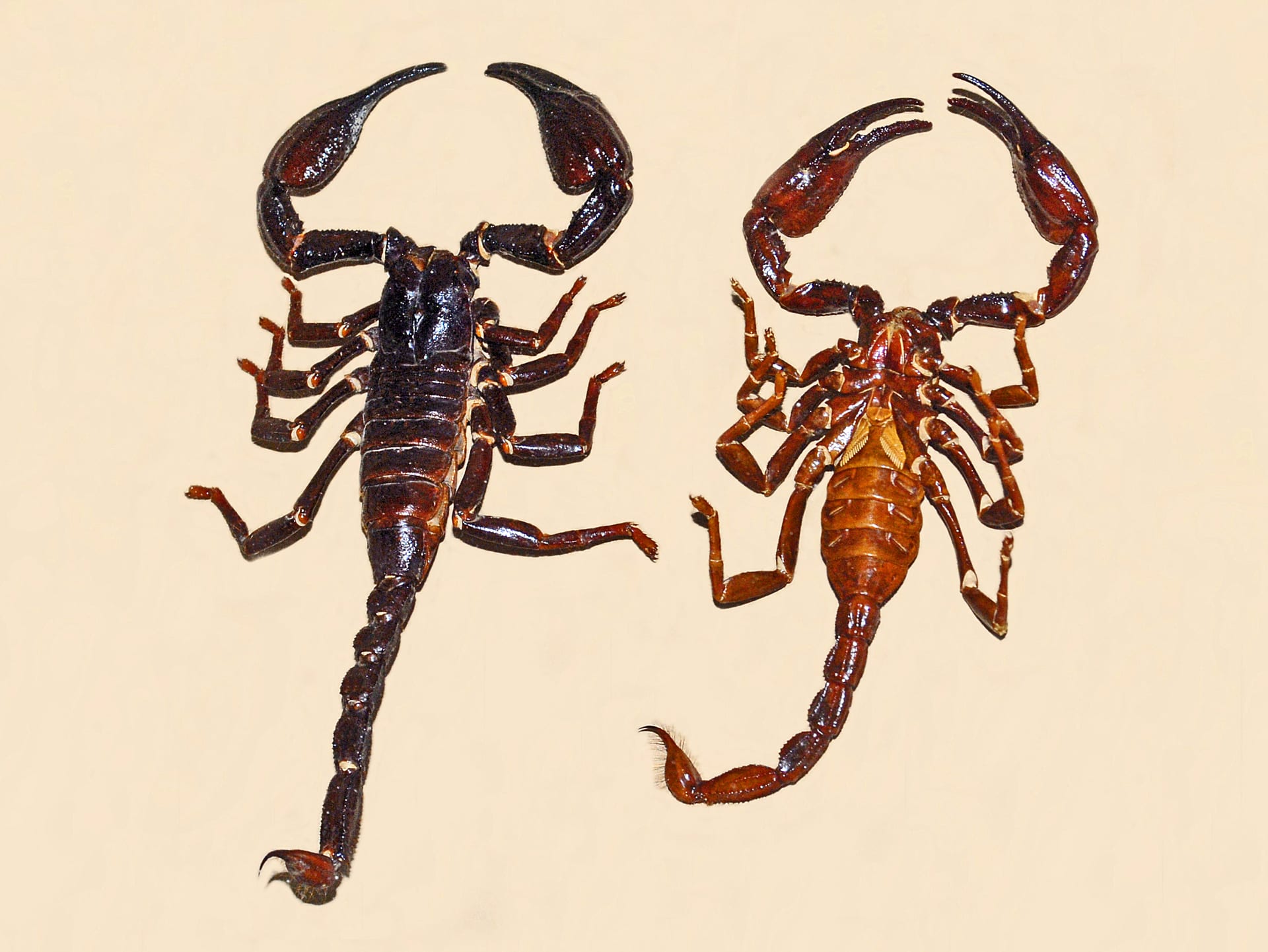
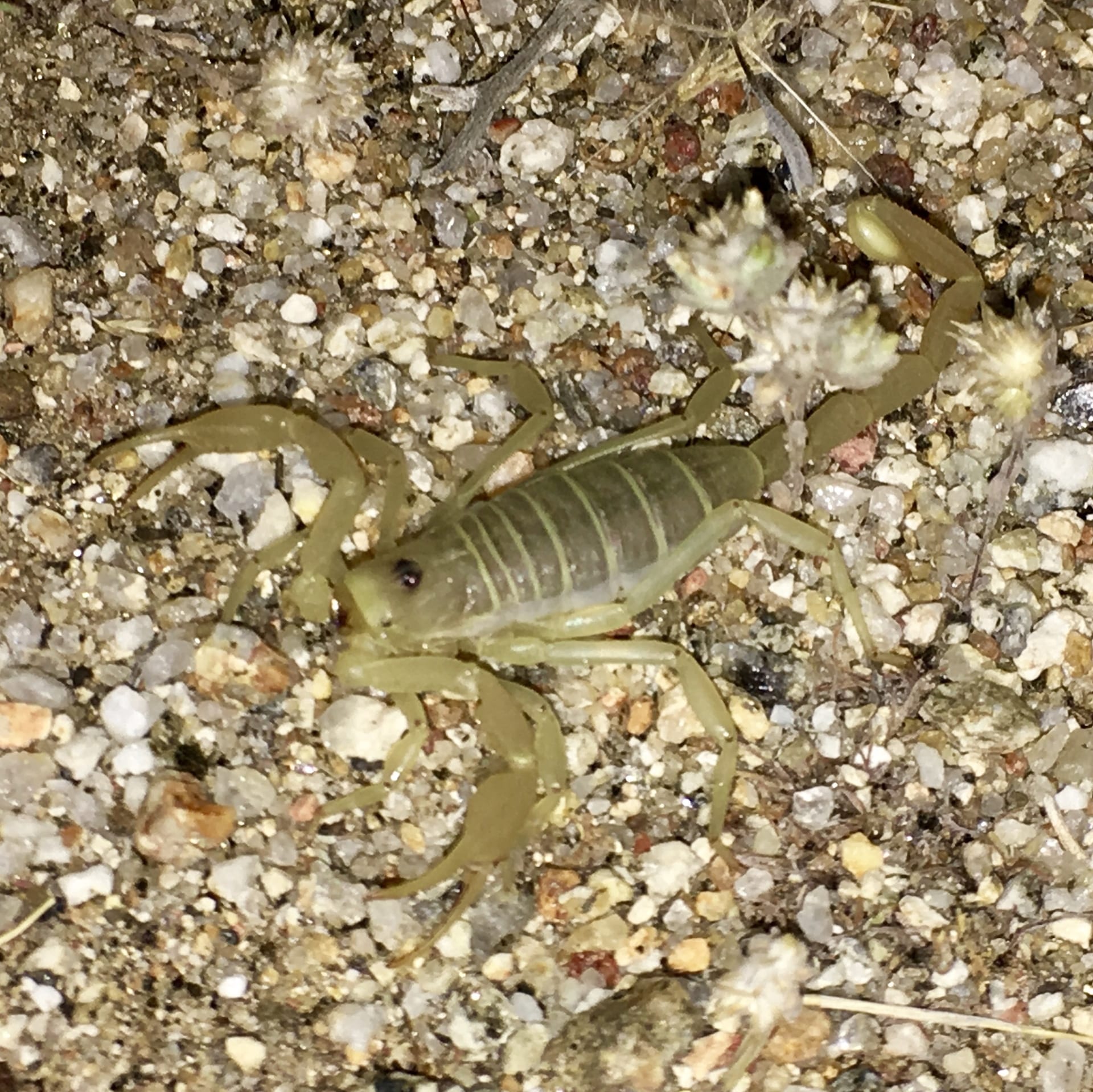
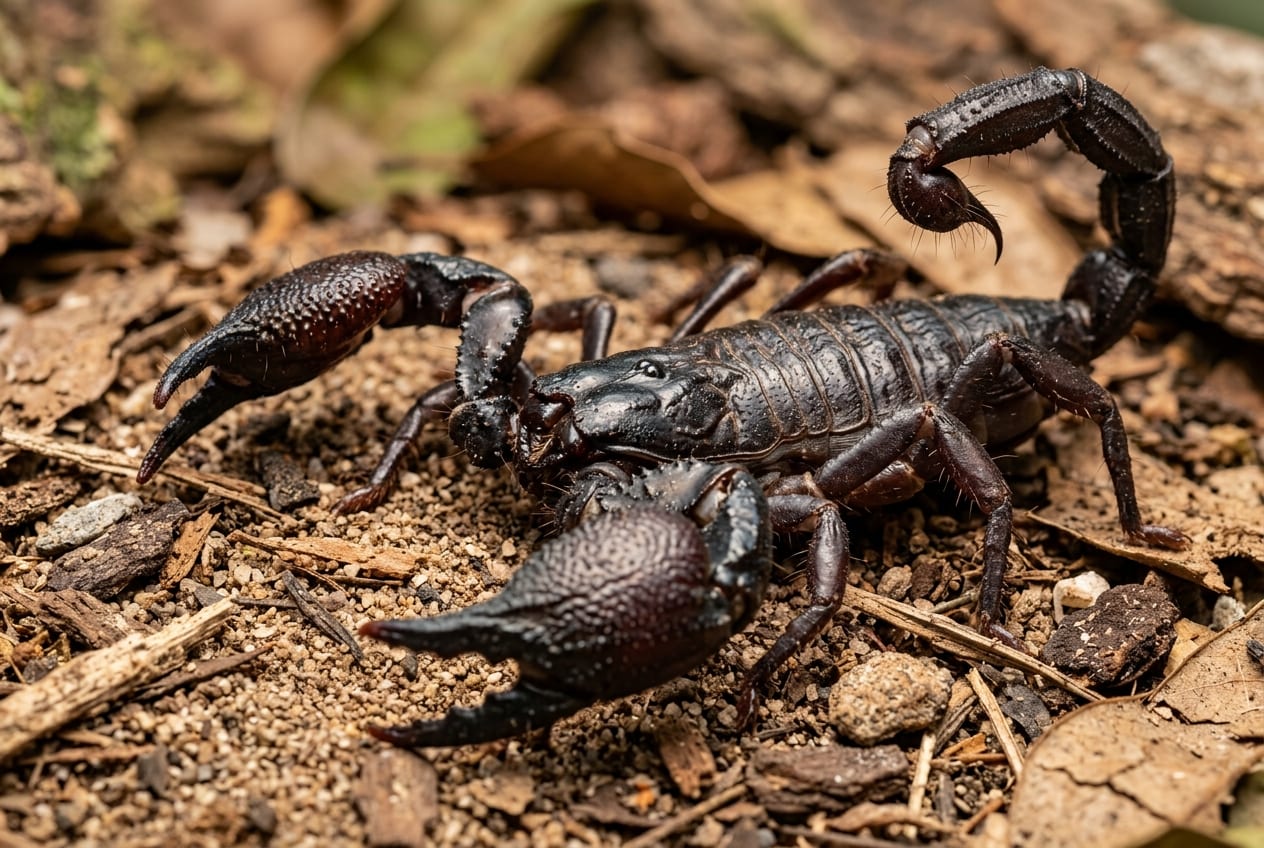
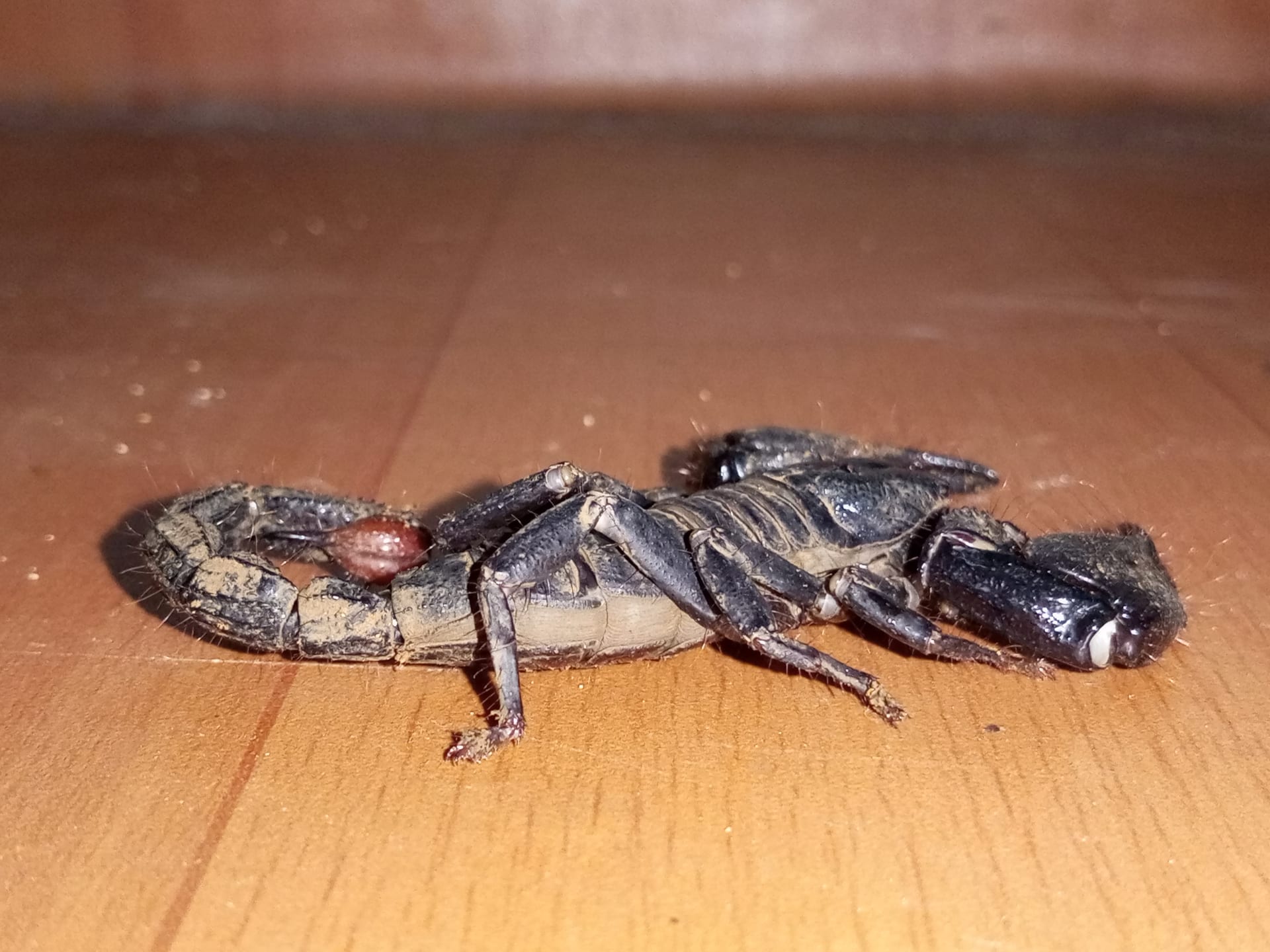
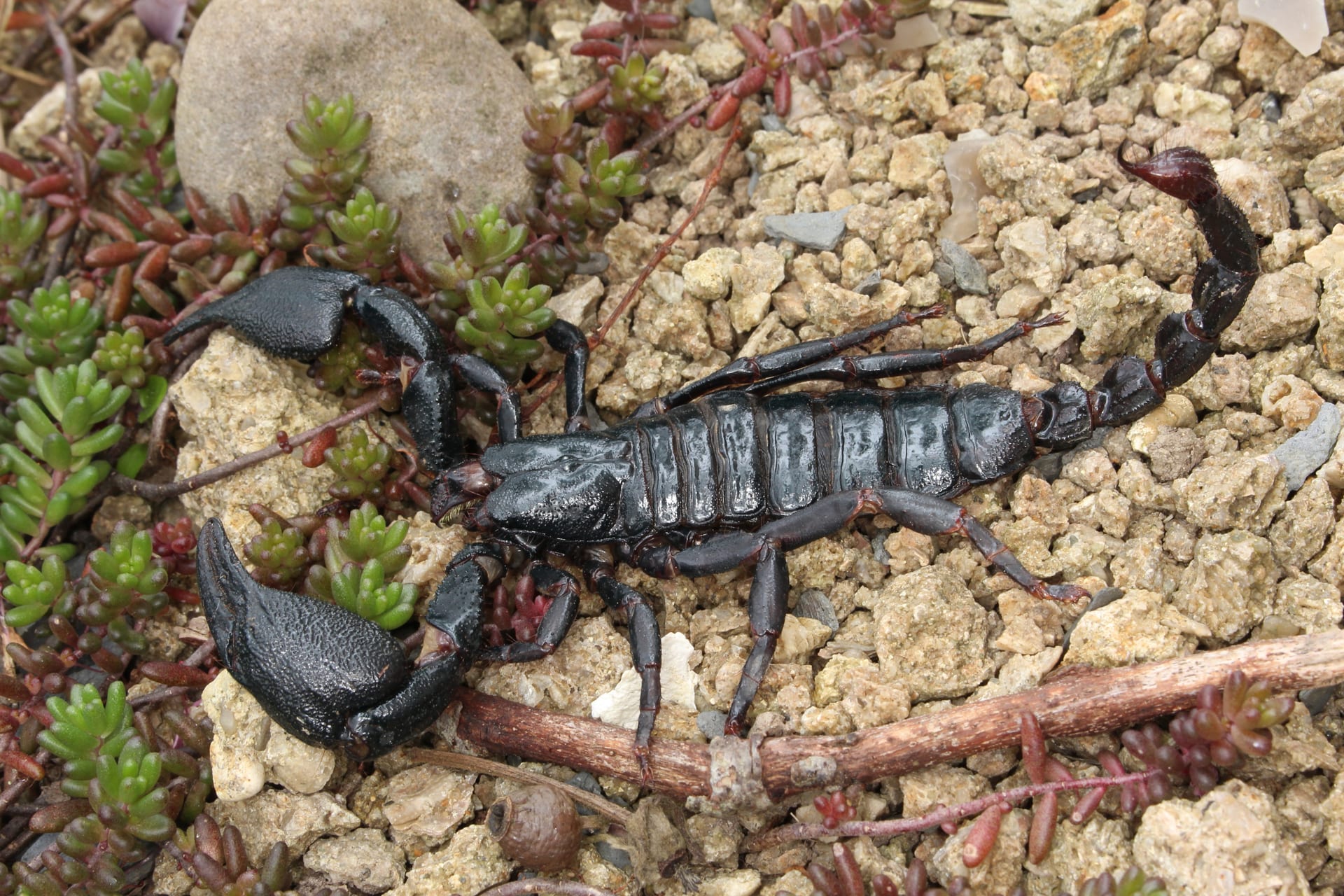
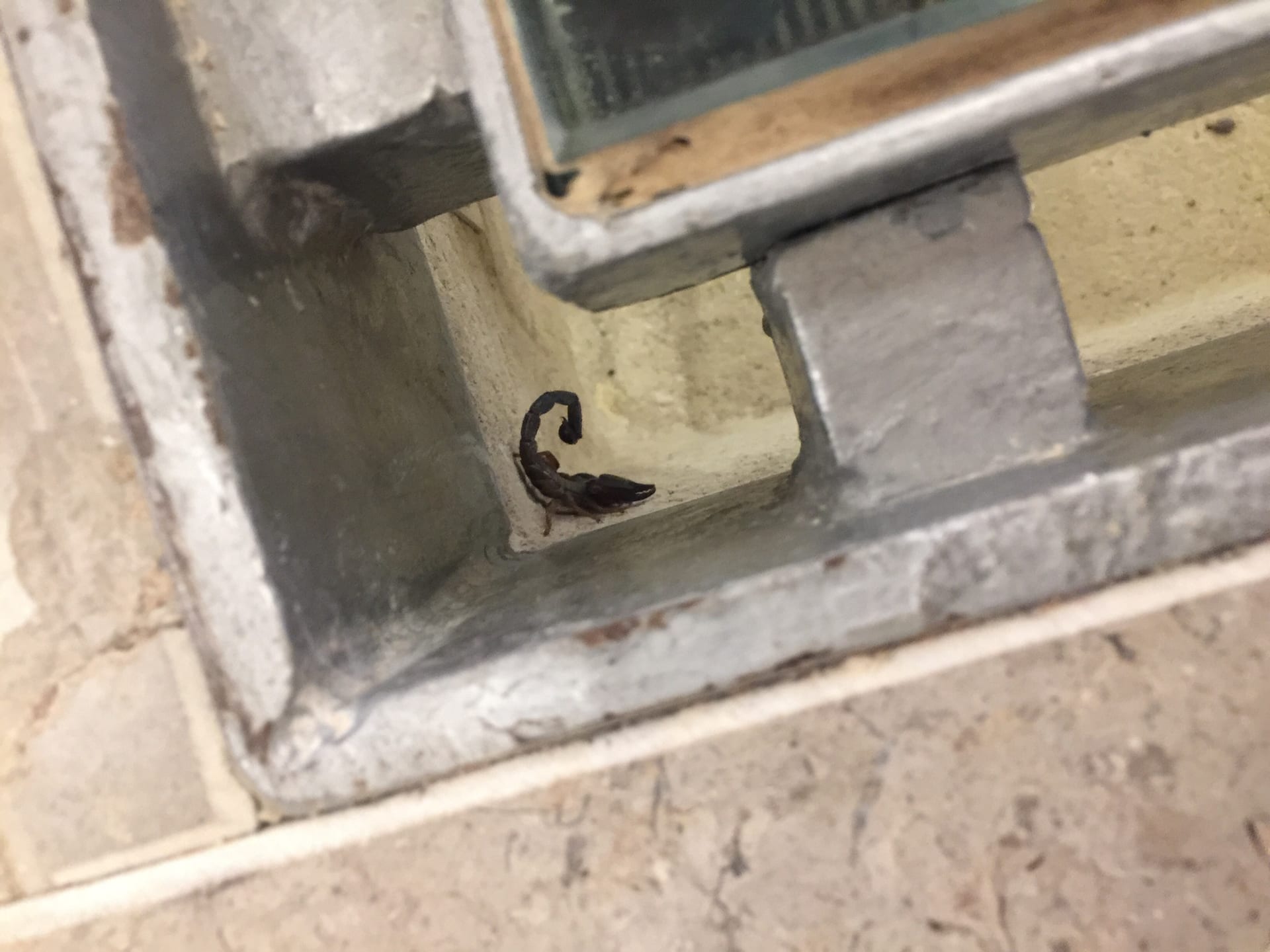
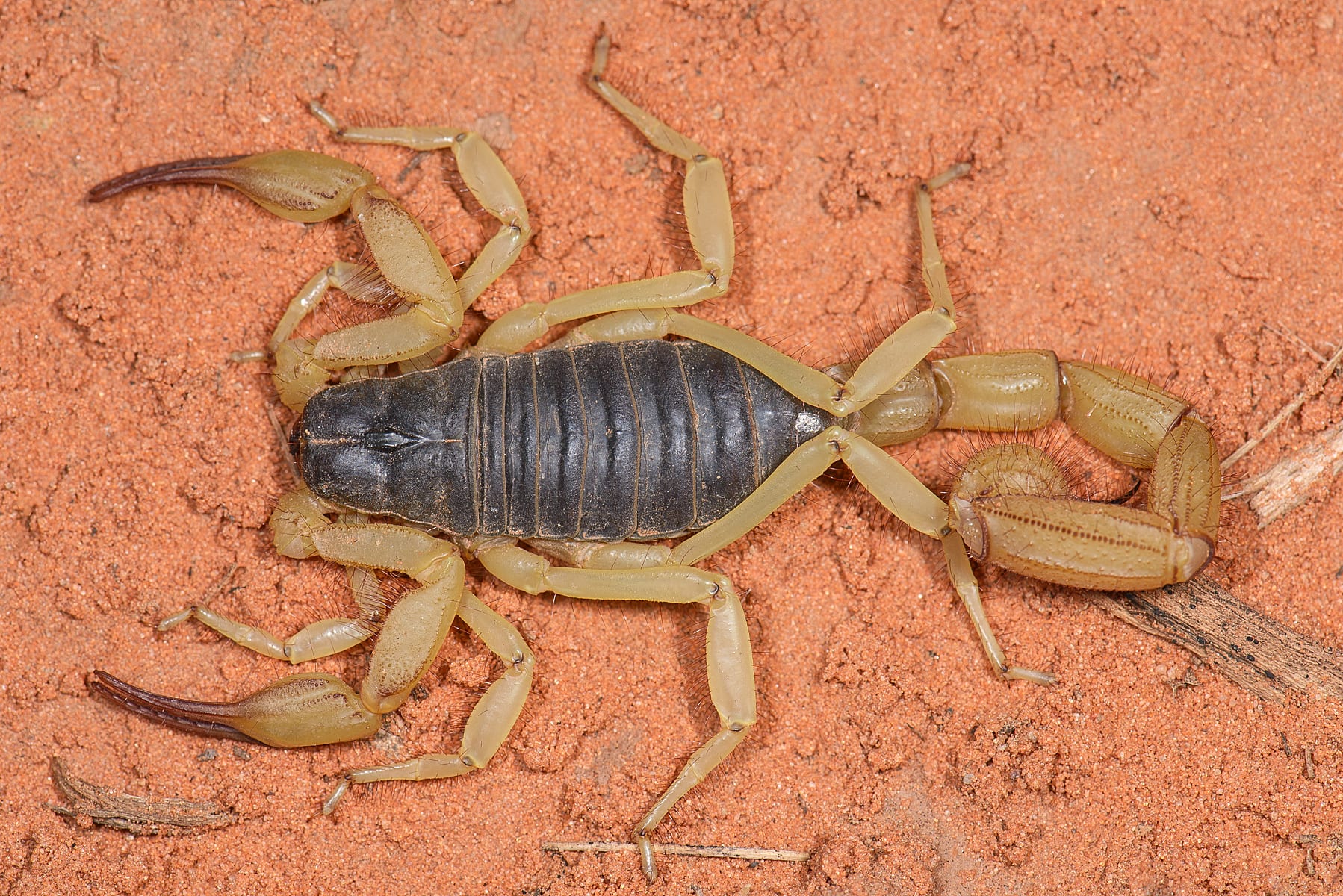
A large scorpion of around 15cm from the deserts of southern North America. Its uniformly black carapace separates it from the related giant desert hairy scorpion. It spends much of its time digging and enlarging its burrow.
Difficulty
Intermediate
Lifespan
10-18 years
Size
About 15cm total length
Humidity
30%
Diet
Small live insects, most commonly crickets
About
Hadrurus spadix is a large scorpion, around 15 cm long, native to the southern deserts of North America. Commonly called the black-back scorpion, it is told from the similar giant desert hairy scorpion by its completely black prosoma. It is strongly fossorial and spends much of its time digging and enlarging a burrow. Substrate should be mostly sand with some peat, moistened so that it packs and then dried before the scorpion is introduced, so that burrows hold their shape. A rock or piece of bark gives it something to dig beneath. The species wants heat, doing best at 30-35 C by day with a sharp drop to about 20 C at night to mimic desert conditions. It is nervous and can behave aggressively; the venom is considered low in toxicity but the sting is quite painful. Prey is located by vibration, so sluggish food items are harder for it to find.
Source: Wikipedia (CC BY-SA 4.0)
Lifespan of the Black-back Desert Hairy Scorpion
The Black-back Desert Hairy Scorpion lives 10-18 years.
Size of the Black-back Desert Hairy Scorpion
The Black-back Desert Hairy Scorpion grows to About 15cm total length.
Temperature & humidity for the Black-back Desert Hairy Scorpion
No water dish is needed, and humidity is kept low, around 30%, to prevent mycosis.
Basic Info
Origin
Deserts of southern North America (United States)
Lifespan
Care Specifications
Semi-aggressive
Sources: Wikipedia: Hadrurus spadix (Captive care) / GBIF Hadrurus spadix
References & Sources
Edited & verified by: BreederDirect editorial team
The taxonomic, regulatory, and husbandry data on this page are compiled and verified against the authoritative primary sources below.
Taxonomy & Authority
Accepted name: Hadrurus spadix Stahnke, 1940
Authority databases: GBIF
Nomenclature follows global taxonomic authority databases.
Regulations & Conservation Status
Not CITES-listed
Sources: CITES Appendices (species not listed)
Regulations may change. Always verify the latest information with the relevant authorities.
Black-back Desert Hairy Scorpion Listings
Loading latest listingsFind listings for this species