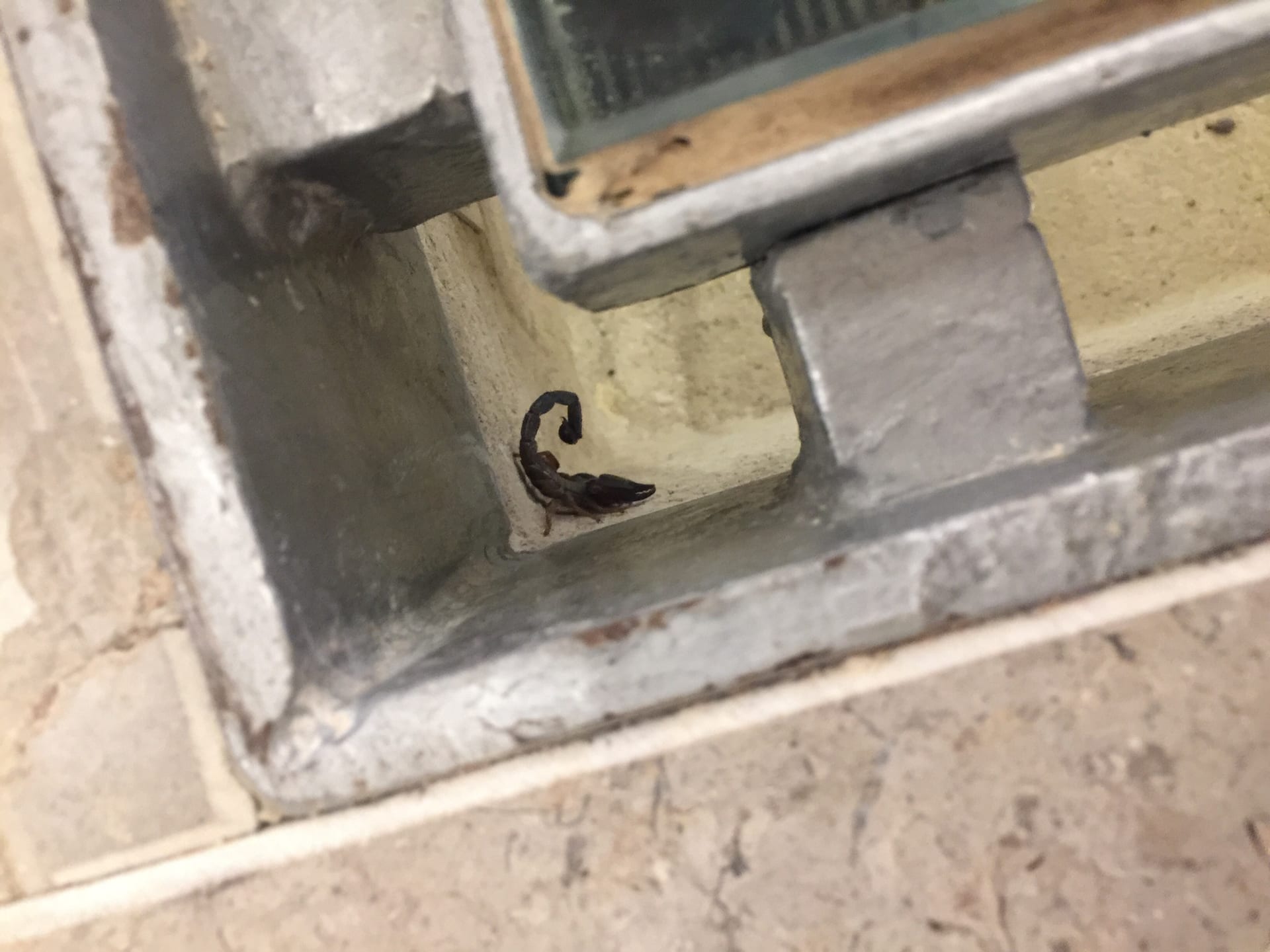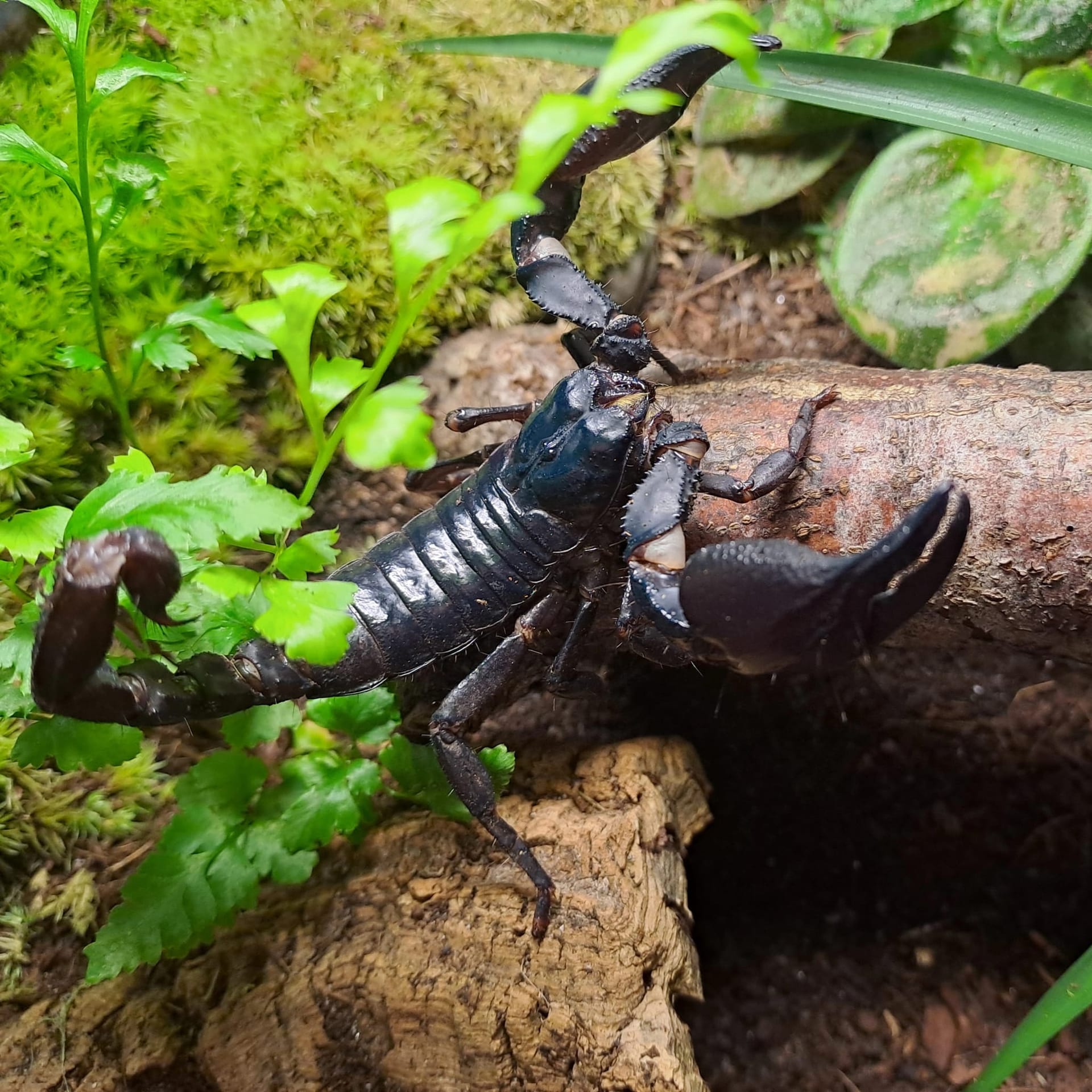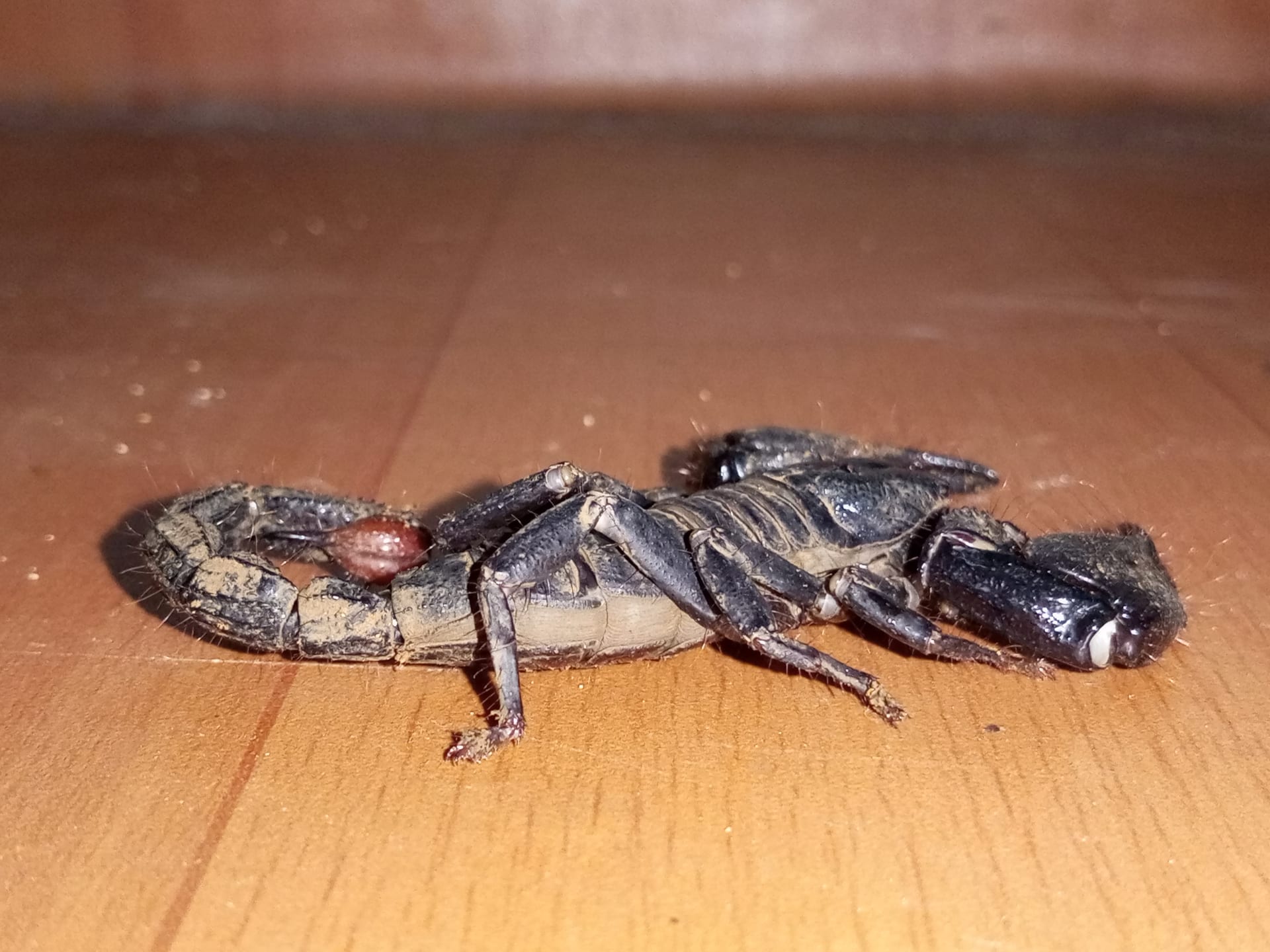
Source: Wikimedia Commons
Giant Forest Scorpion
AdvancedGigantometrus swammerdami
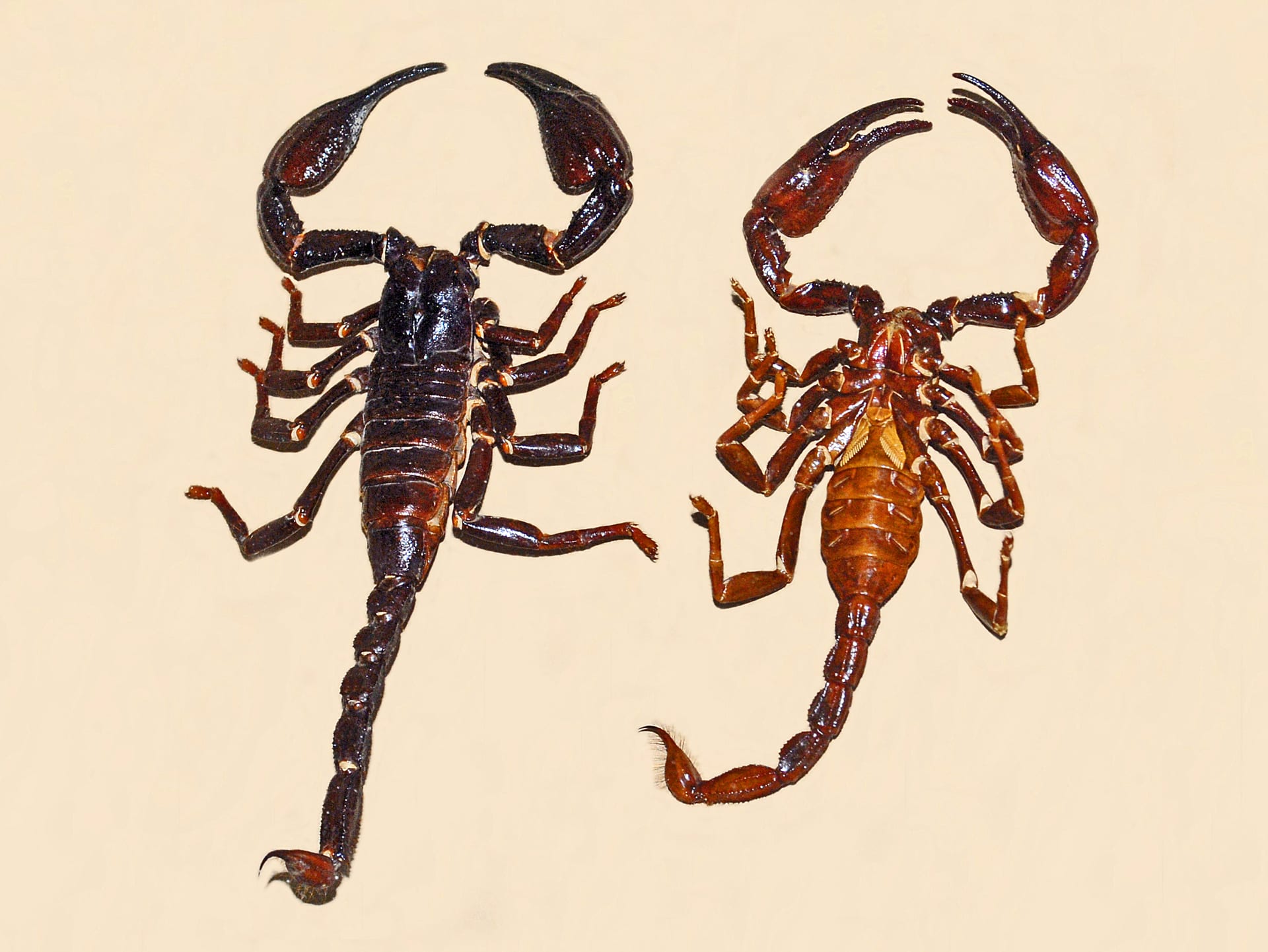
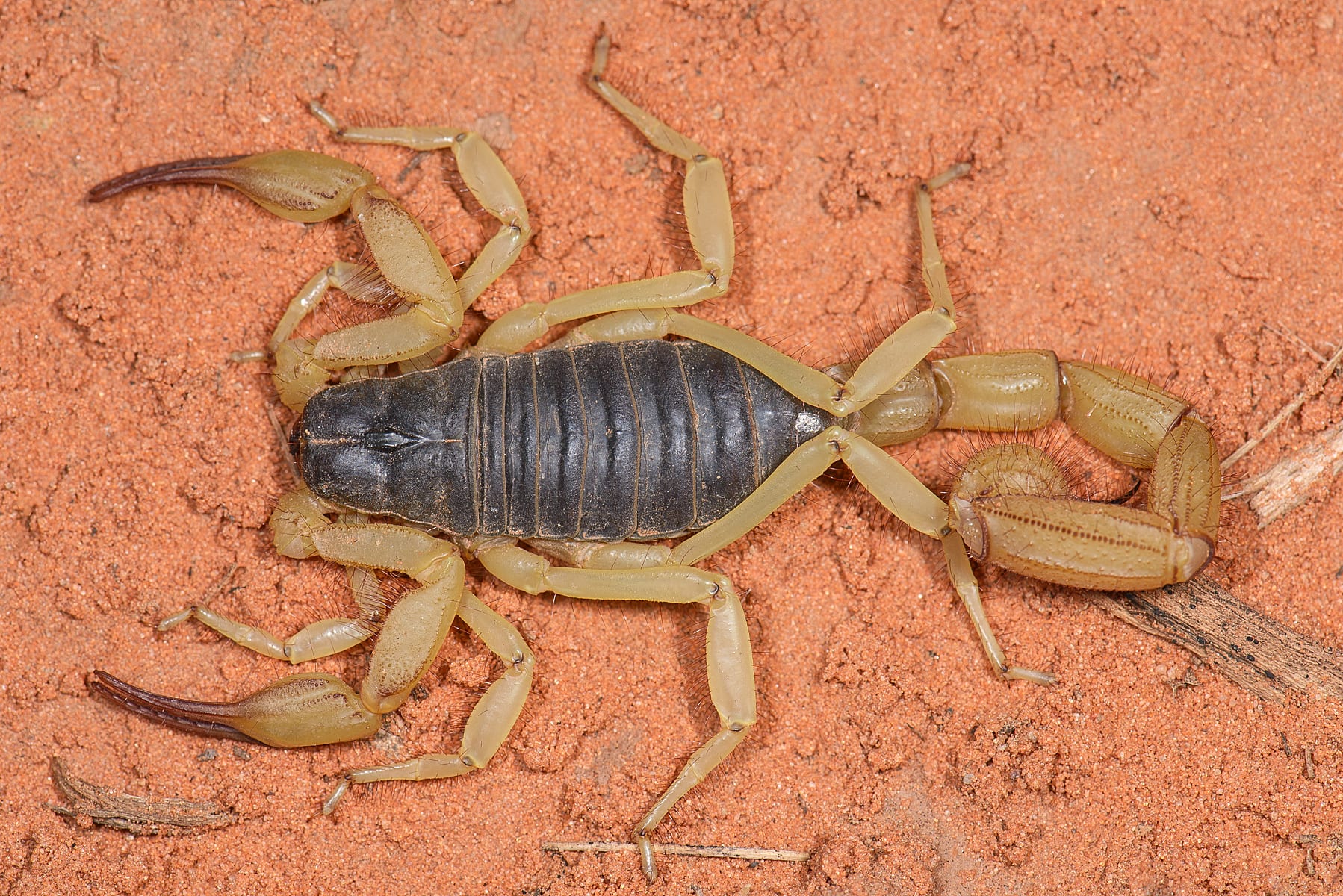
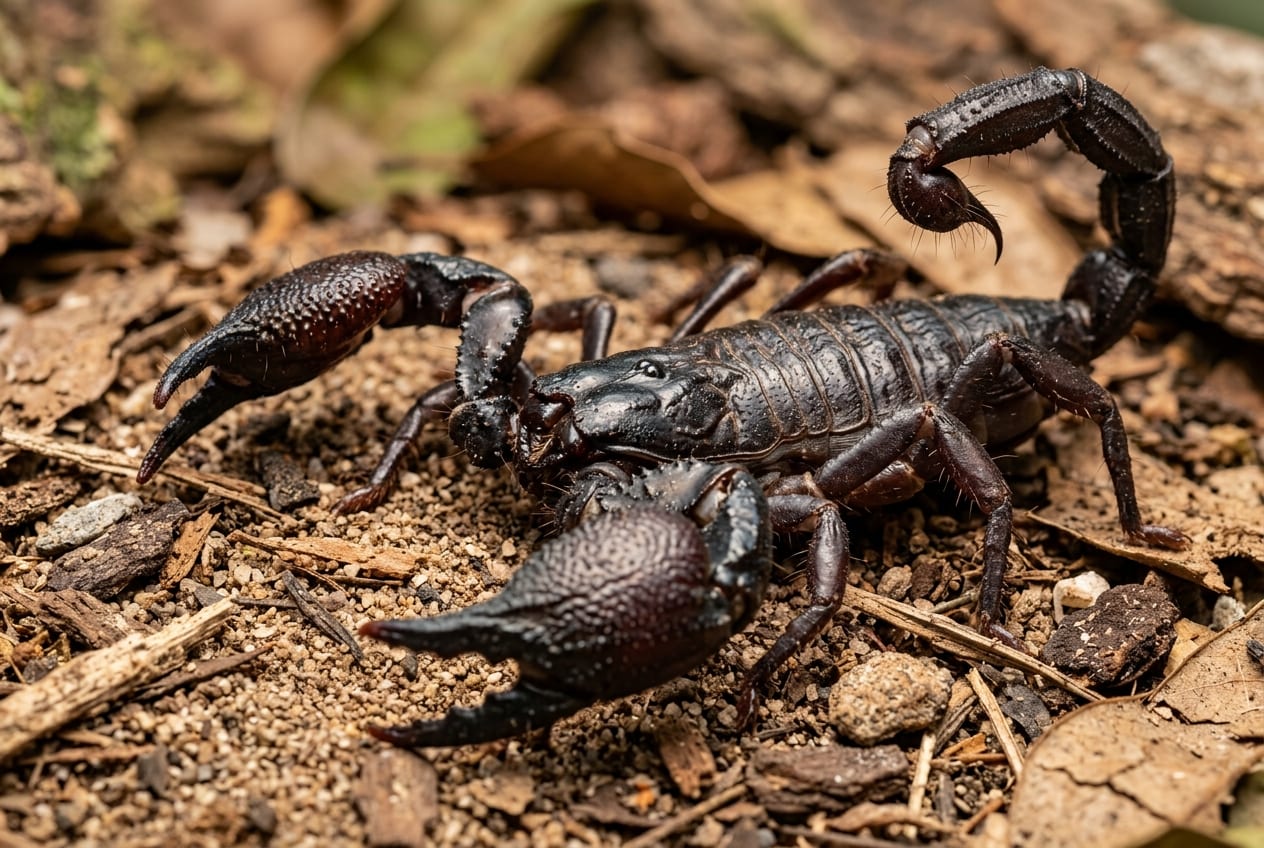
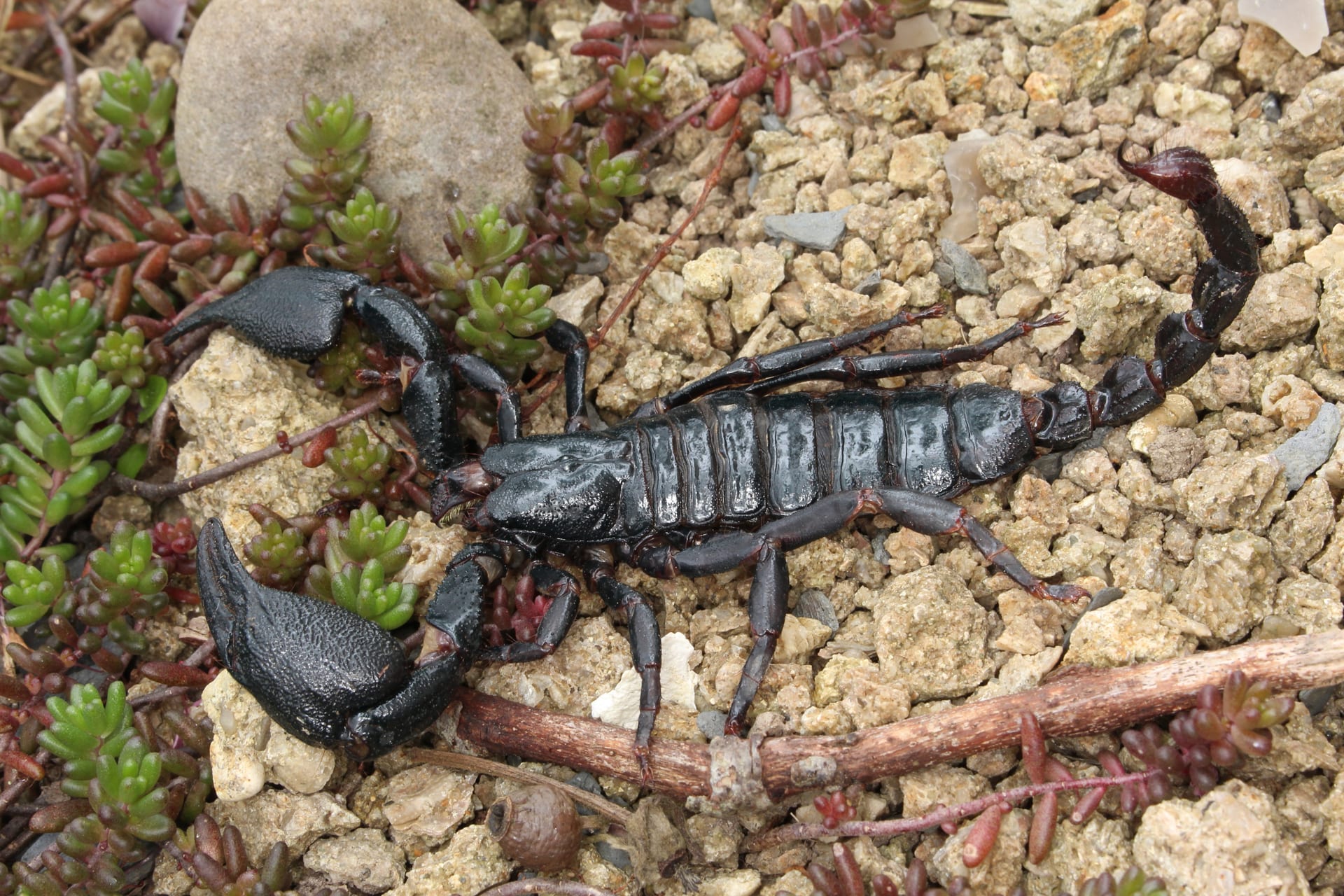
One of the world's largest scorpions at 23cm and 56g. Indian in origin, it ranges from reddish brown to reddish black. Its venom is not strong and it crushes prey with its massive pincers; juveniles have a yellow telson.
Difficulty
Advanced
Lifespan
5-8 years
Size
Up to about 23cm in total length and 56g in weight
Humidity
80%
Diet
Live insects such as crickets
About
Colour ranges from uniform reddish brown to reddish black, and juveniles are reddish with a yellow telson. There are 16 to 20 pectinal teeth. The pedipalp chelae are strongly lobiform and covered in large rounded granules, the carapace combines smooth discs with textured margins and rear, and the bulbous vesicle of the telson is longer than the aculeus itself. The venom is rarely lethal to humans, and the species is thought to have evolved to kill prey by crushing it with the pincers rather than by envenomation. It occurs around tropical rainforest and other moderately warm climates, and specimens are collected from inside degraded termite mounds, tree holes and abandoned rat or crab burrows in the bunds of agricultural fields. Males become active from April to July and emerge from their dens in that period.
Source: Wikipedia (CC BY-SA 4.0)
Lifespan of the Giant Forest Scorpion
The Giant Forest Scorpion lives 5-8 years.
Size of the Giant Forest Scorpion
The Giant Forest Scorpion grows to Up to about 23cm in total length and 56g in weight.
Gigantometrus swammerdami is an Indian scorpionid and one of the largest scorpions in the world, reaching 23 cm in length and 56 g in weight.
Basic Info
Origin
India
Lifespan
5-8 years
Size
Up to about 23cm in total length and 56g in weight
References & Sources
Edited & verified by: BreederDirect editorial team
The taxonomic, regulatory, and husbandry data on this page are compiled and verified against the authoritative primary sources below.
Taxonomy & Authority
Accepted name: Gigantometrus swammerdami (Simon, 1872)
Synonyms: Heterometrus swammerdami Simon, 1872
Authority databases: GBIF
Nomenclature follows global taxonomic authority databases.
Regulations & Conservation Status
Not CITES-listed
Sources: CITES Appendices (species not listed)
Regulations may change. Always verify the latest information with the relevant authorities.
Giant Forest Scorpion Listings
Loading latest listingsFind listings for this species