Beginner's Guide to Keeping Scorpions | Basic Care for Emperor Scorpions and Asian Forest Scorpions
While scorpions have a dangerous reputation, they can be kept by beginners with proper species selection. This guide explains husbandry environments, substrate, feeding, and sting treatment for less venomous species like Emperor Scorpions.
Key Takeaways
While scorpions have a dangerous reputation, they can be kept by beginners with proper species selection. This guide explains husbandry environments, substrate, feeding, and sting treatment for less venomous species like Emperor Scorpions.
Related Species
Can Scorpions Be Pets? How to Choose Safe Species
Scorpions have a strong reputation as "dangerous creatures," but among the 2,500+ species of scorpions in the world, there are many species with relatively weak venom and docile temperaments. With proper species selection and the basic rule of avoiding bare-handed handling, even beginners can successfully keep these unique pets.
There are two main criteria for species selection. First, "low toxicity," and second, "calm temperament." While toxicity can be assessed using LD50 (lethal dose index), beginners are safest selecting "large, black forest scorpion species." Small, yellow desert species (such as Androctonus genus) have potent venom and are suited for advanced keepers.
Recommended Beginner Species
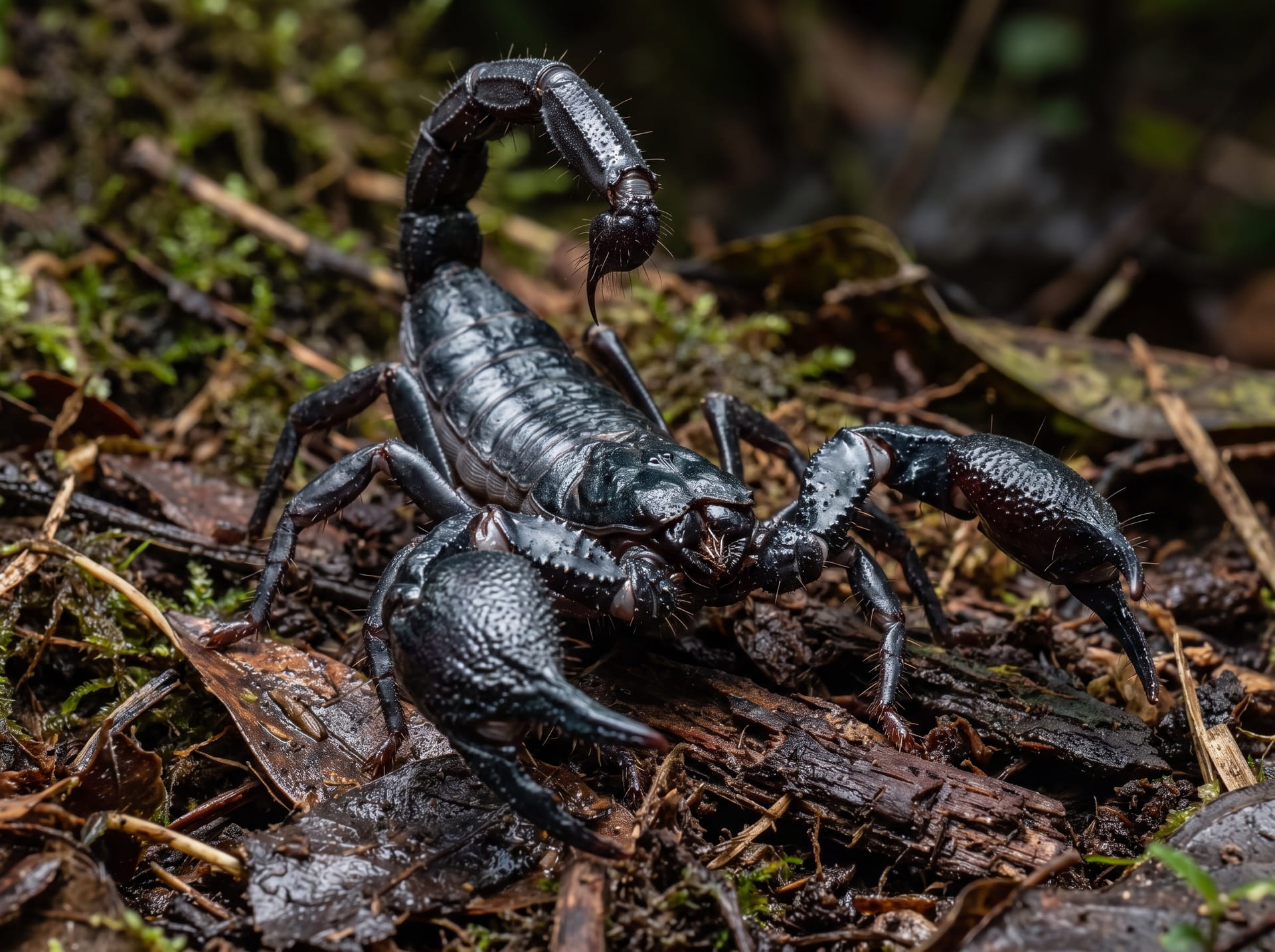
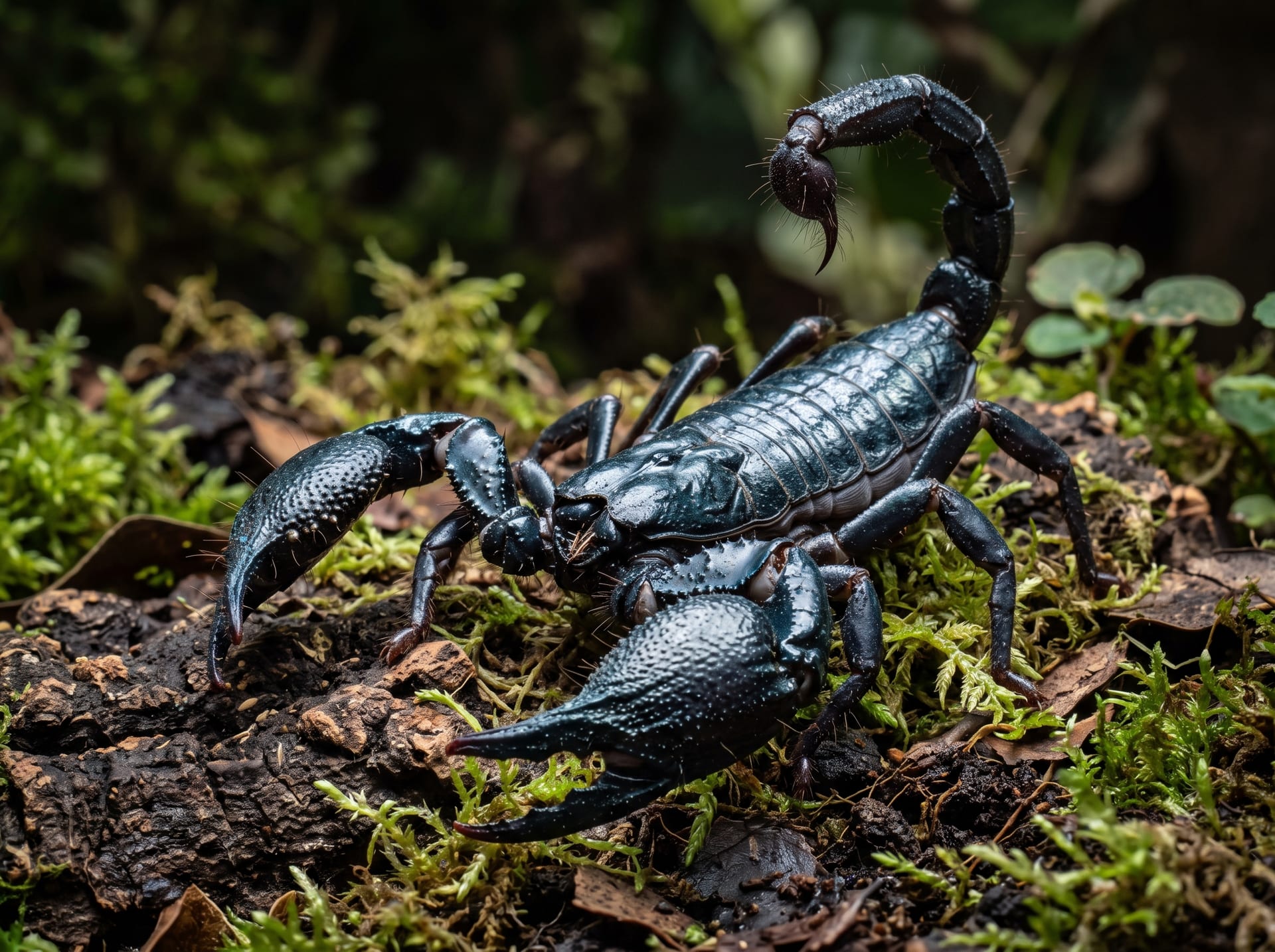
Emperor Scorpion (Pandinus imperator)
One of the world's largest scorpion species. Adults reach 15–20 cm in body length and can weigh over 30 grams. Their glossy black exoskeleton and massive pincers make them striking, earning them the title "THE Scorpion" in the pet hobby.
Why it's beginner-friendly: Its venom is extremely weak—comparable to that of a bee sting. Its temperament is calm, and when properly managed, it rarely becomes aggressive. However, its pincers are exceptionally powerful, and being pinched can cause significant pain. Physical injury from the pincers is a greater concern than the venom.
Native habitat: Tropical rainforests of West Africa (Ghana, Togo, Cameroon region). It inhabits warm, humid environments and prefers to hide under fallen leaves and decaying wood. Listed under CITES Appendix II, so commercially available specimens are primarily captive-bred (CB).
Asian Forest Scorpion (Heterometrus spp.)
A large black scorpion closely resembling the Emperor Scorpion. Multiple species are available in the trade, including Heterometrus spinifer (native to Thailand and Malaysia) and H. longimanus. More readily available and affordable than Emperor Scorpions, they are now the standard choice for beginners.
Venom potency is comparable to or slightly stronger than Emperor Scorpions. They can be slightly more aggressive than Emperors, but with proper environmental conditions, they remain manageable.
Setting Up Your Enclosure
Choosing a Cage and Layout
A 60 cm plastic container or reptile glass enclosure works well. Use a lid that can be securely fastened. Scorpions have flattened bodies and can escape through the smallest gaps. A lid with a locking mechanism is ideal.
Substrate should be coconut husk, leaf litter, or medium-grain red lava soil—either alone or mixed—laid at least 10–15 cm deep. Emperor and Asian Forest Scorpions exhibit burrowing behavior, so deep substrate is essential. If the substrate is too shallow, unmet behavioral needs can cause stress.
Hides should include multiple cork bark pieces, half-logs, or rocks. These scorpions hide during the day, making refuge areas critical to reduce stress.
Temperature and Humidity Management
| Species | Ideal Temperature | Ideal Humidity |
|---|---|---|
| Emperor Scorpion | 25–28°C | 70–80% |
| Asian Forest Scorpion | 25–30°C | 60–75% |
Heating is best achieved with panel heaters attached to the side of the enclosure. Under-tank heaters tend to dry out the substrate and are not recommended. Install a thermometer and hygrometer, and check them daily.
To maintain humidity, mist one side of the enclosure 2–3 times per week. Rather than wetting the entire enclosure uniformly, create a "humid zone" and a "dry zone" so the scorpion can choose its preferred microclimate. Provide a shallow water dish (about 5 cm diameter) and replace the water daily.
Feeding and Nutritional Management
Scorpions are obligate carnivores. In the wild they prey on insects, centipedes, small lizards, and mice, but in captivity, crickets are the easiest and most nutritionally balanced option.
Recommended feeder insects:
- Two-spotted crickets and European house crickets (primary diet)
- Mealworms (supplemental)
- Dubia roaches (high nutritional value and easy to maintain)
- Zophobas beetles (treats for large individuals)
Feeding frequency: Adults should be fed once or twice weekly. Juveniles should be fed 2–3 times weekly as they grow.
Scorpions follow a "gorge and fast" cycle—eating heavily, then not eating for extended periods. It's not uncommon for them to go 1–2 weeks without food, but this is normal if water is available. Remove any uneaten crickets the next day, as they may bite the scorpion while it rests.
Safety and Daily Care Tips
Handling Guidelines
Avoid bare-handed contact. If you must handle a scorpion, use long forceps or specialized gloves, keeping both the pincers and tail in view at all times.
Exercise special caution around molting. Signs of approaching molting include sudden loss of appetite and sluggish movement. Immediately after molting, the exoskeleton is soft and the scorpion is extremely vulnerable. Avoid feeding and handling during this period. If the substrate is sufficiently deep, scorpions typically molt underground, where they are safe.
If Stung
A sting from an Emperor or Asian Forest Scorpion causes localized pain and swelling similar to a bee sting. Wash the area with water, cool it, and rest. Those with allergies, or experiencing spreading swelling or numbness, should seek medical attention promptly.
The Joy of Scorpion Keeping and What to Observe
One thing that sets scorpions apart from common pets is fluorescence under black light (UV-A). When exposed to UV light in a dark room, a compound called beta-carboline in their exoskeleton reacts, producing a striking blue-green glow. While the biological purpose of this phenomenon remains incompletely understood, it's extremely useful for nighttime observation and one of the great pleasures of scorpion keeping.
Additionally, Emperor Scorpions are relatively easy to breed, with successful breeding documented in captivity. Females are viviparous, carrying eggs internally and giving birth to 20–30 scorpionlings at a time. The young cling to their mother's back as they develop—a behavior that's truly remarkable to witness.
Beneath their fearsome reputation, scorpions possess quiet, complex behavior and mysterious appeal. With proper species selection and appropriate care, they make unique pets that can be observed and enjoyed for extended periods—some species living over 10 years.