Millipede and Centipede Care Guide | Comparison with Asian Forest Scorpion Explained
Learn how to care for millipedes and centipedes as pets. This guide covers feeding, temperature, humidity, enclosures, and safety measures for African Giant Millipedes and large centipedes, with comparisons to tarantulas and other exotic species.
Key Takeaways
Learn how to care for millipedes and centipedes as pets. This guide covers feeding, temperature, humidity, enclosures, and safety measures for African Giant Millipedes and large centipedes, with comparisons to tarantulas and other exotic species.
Keeping Millipedes and Centipedes as Pets
Millipedes and centipedes both belong to the Myriapoda phylum, but they differ fundamentally in their behavior, level of danger, and husbandry approaches. They are gaining attention in Japan as the "next generation exotic pets" following reptiles and tarantulas, with specialist breeders and reptile shops steadily increasing their availability.
✍️
BreederDirect Editorial
The BreederDirect editorial team specializes in care information for animals, covering veterinary care and breeding to deliver beginner-friendly guides.
Find Exotic Invertebrates on BreederDirect
Buy directly from verified breeders
Browse Related Listings
Find Exotic Invertebrates listings related to this article on BreederDirect. Buy directly from verified breeders.
Millipedes are detritivores that lack venom and are characterized by their docile nature. The representative African Giant Millipede (Archispirostreptus gigas) reaches 25-28 cm in length and secretes defensive compounds when threatened, but does not bite. It is a beginner-friendly species.
Centipedes are carnivorous and possess venomous fangs (forcipules). Large species such as Scolopendra subspinipes have extremely painful bites that can cause swelling and allergic reactions. They are best suited for intermediate to advanced keepers.
Millipede Care Environment and Management
Using the African Giant Millipede as an example, here is a detailed setup guide.
Enclosure Selection: We recommend a glass terrarium (40-60 liters or larger). Adults require space to move around. Secure the lid with weights or locks to prevent escape.
Substrate Composition: Mix leaf mold, coconut husk, and dead leaves to a depth of 10-15 cm. Millipedes are "soil engineers" that consume and digest substrate material, so a nutrient-rich leaf mold base is essential. Commercial black soil alone will be nutritionally insufficient. Cork bark and mushroom wood provide hiding spots that reduce stress.
Temperature and Humidity: Most species are tropical or subtropical, so maintain 24-28°C. Use a reptile heating mat on the side or bottom of the enclosure during winter. Aim for 70-80% humidity. Mist only one side of the enclosure while keeping the other side drier, creating a humidity gradient that allows the animal to choose its preferred microclimate.
Food and Supplements: The primary diet consists of organic matter, microorganisms, and leaf litter in the substrate, but millipedes also enjoy thin slices of cucumber, carrot, and sweet potato. Always provide cuttlebone or calcium shells for calcium supplementation—calcium deficiency is a major cause of molting problems. Leave shed exoskeletons in the enclosure so the animal can reabsorb the calcium.
Safe Centipede Care
For the safety of both keeper and animal, large centipedes should be treated as "observation-only" pets. Handling is strictly prohibited.
Enclosure and Escape Prevention: Use a sturdy plastic container or glass terrarium with the lid secured by weights. Centipedes climb vertical surfaces easily and escape through small gaps. Many breeders recommend double locks on the door to the enclosure room—backup escape prevention measures are critical.
Substrate and Water: Use a 5-8 cm layer of mixed coconut husk and leaf mold. Provide water in a shallow dish to prevent drowning, and include cork bark or shelters as hiding places.
Temperature and Humidity: For Scolopendra subspinipes, aim for 25-30°C with 60-70% humidity. Scolopendra morsitans tends to prefer slightly drier conditions.
Feeding Method: Offer live crickets, mealworms, or pinky mice. Always use feeding tongs—never place your bare hands in the enclosure. Remove uneaten prey the next day to maintain hygiene. Centipedes often refuse food before and after molting, so do not force-feed during these periods.
Comparison with Asian Forest Scorpion
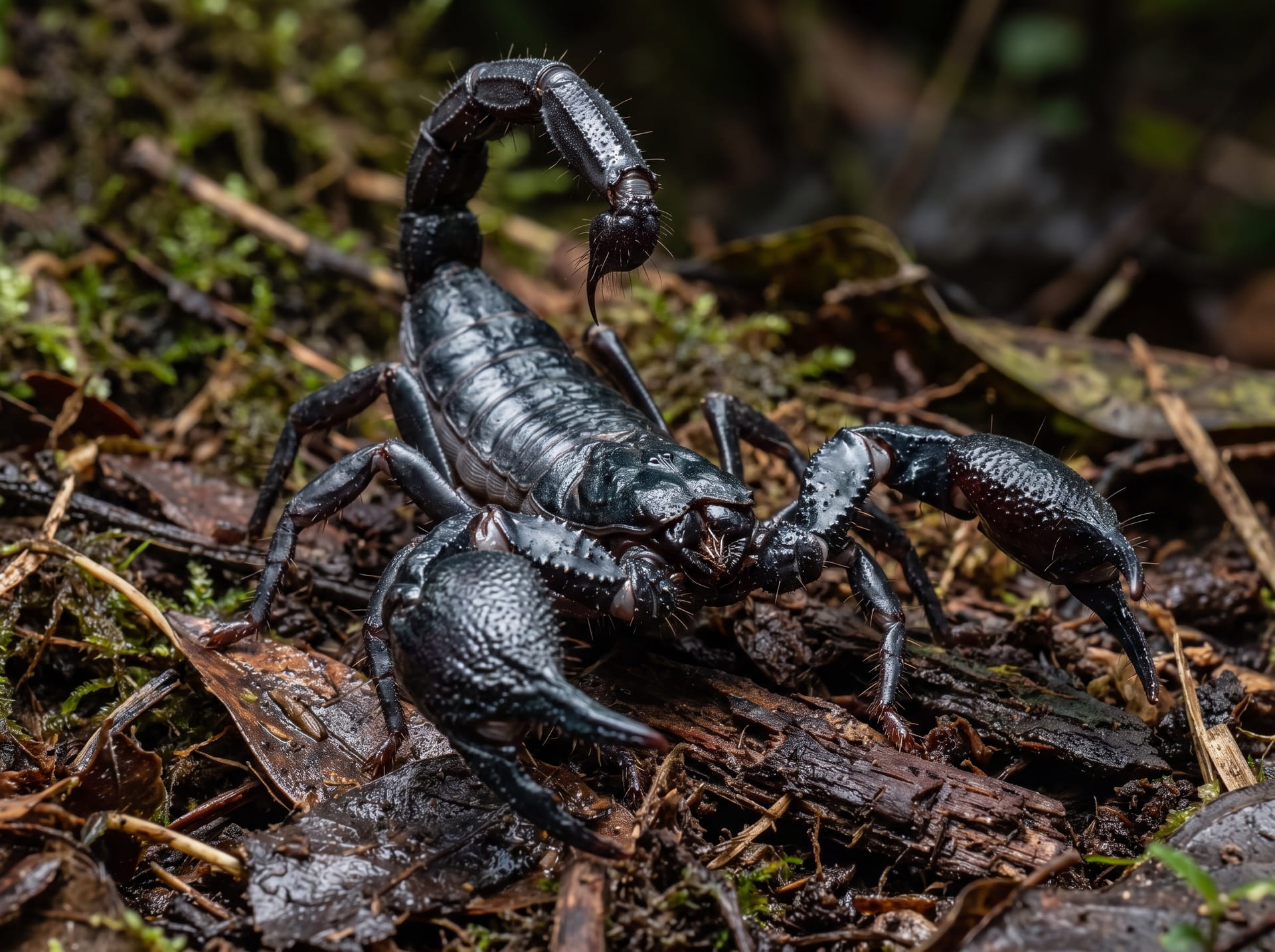
Comparing the Asian Forest Scorpion (Heterometrus spinifer), another popular pet market choice, with millipedes and centipedes reveals the distinct characteristics of each.
Aspect
Millipede
Centipede
Asian Forest Scorpion
Danger Level
Low (defensive secretions)
High (venomous fangs)
Medium (venomous sting, low toxicity)
Beginner-Friendly
◎
×
○
Handling
Possible (with care)
Not recommended
Possible (with precaution)
Care Cost
Low
Medium
Medium
Lifespan
7-10 years
3-7 years
8-15 years
Activity
Nocturnal, docile
Nocturnal, active
Nocturnal, relatively docile
The Asian Forest Scorpion has low toxicity; in healthy adults, envenomation causes only swelling and pain, but those with allergies should exercise caution. With lower difficulty than centipedes and the possibility of handling with experience, it serves as an entry-level option alongside millipedes. Centipedes, however, attract advanced keepers drawn to their danger and speed—the appeal of "keeping something difficult." Together, these three species appeal to distinct keeper demographics.
Legal Regulations and Purchase Considerations
Centipedes, millipedes, and the Asian Forest Scorpion covered in this article (family Scorpionidae) can be kept legally in Japan. However, all scorpions of the family Buthidae are designated as Invasive Alien Species and are prohibited from being kept in Japan. Please also note the following points:
Never Release Non-Native Species: Releasing non-native animals violates the Invasive Species Law. Either care for your animal for its entire life or consult with a specialist shop or breeder about rehoming options.
Import Restrictions: When importing from overseas, verify that the species is not listed in the CITES (Convention on International Trade in Endangered Species) appendices and comply with animal quarantine regulations.
Wild-Caught Specimens Not Recommended: Wild-caught animals carry risks of pesticide exposure, parasites, and pathogens.
Choosing a Source: Purchasing from domestic breeders or specialist reptile shops is safest. Buying directly from a breeder allows you to confirm husbandry history and health status, and ask questions on the spot. Always verify whether the animal is CB (captive-bred) or WC (wild-caught), and choose CB specimens whenever possible to maximize husbandry success.