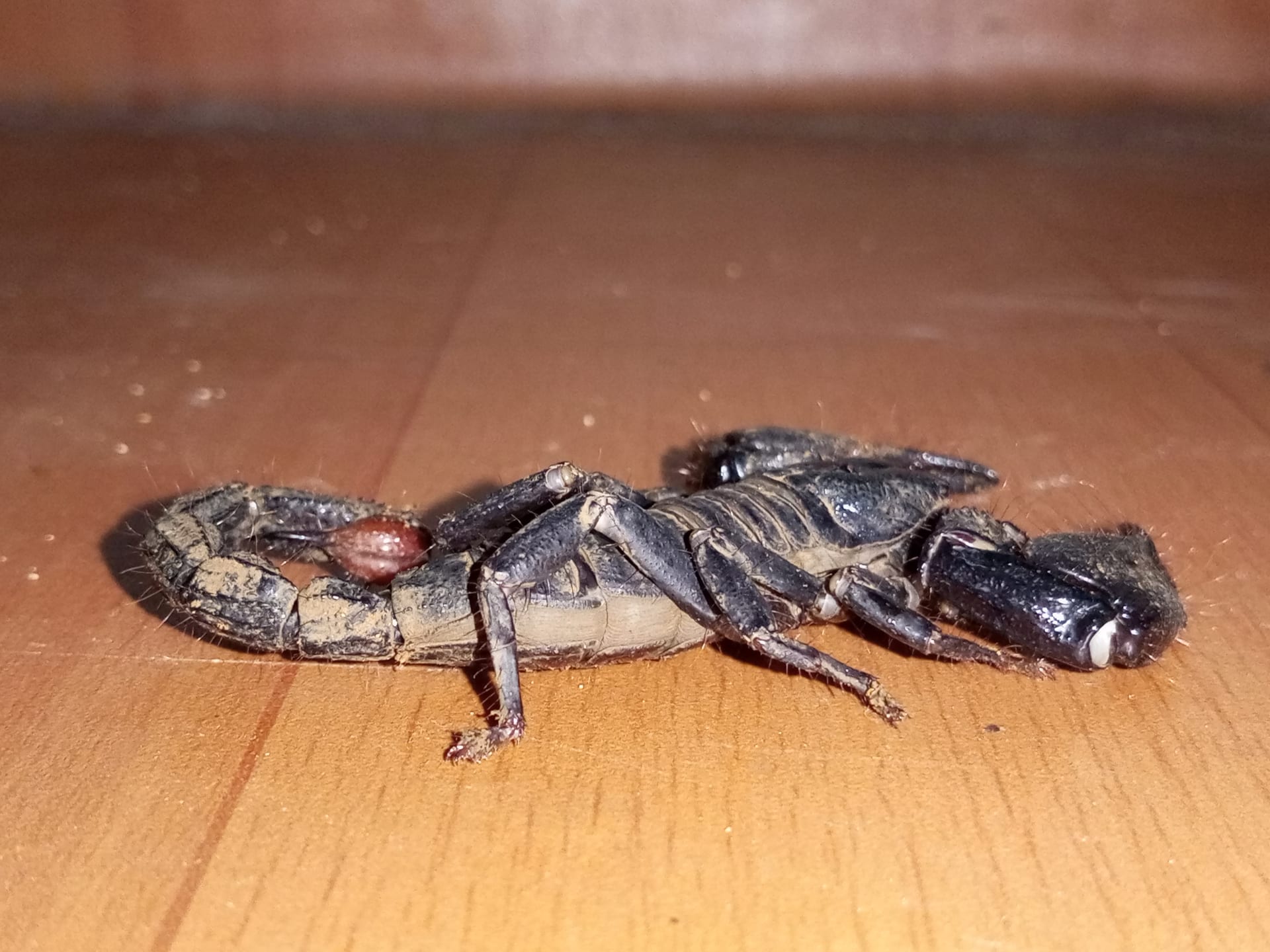
 © Nativeplants garden / CC BY-SA 4.0
Giant Forest Scorpion
The Giant Forest Scorpion is one of the largest scorpion species in the world, reaching up to 23cm in length and 56g in weight. Native to India, it has a striking, robust body colored reddish-brown to reddish-black. Its venom is relatively mild, and it relies instead on its thick, powerful pincers to crush and subdue prey. Juveniles are easy to spot thanks to the bright yellow tip of their tail stinger, which fades as they mature into their adult coloring. With its impressive size and bold presence, this species has strong appeal as a display animal, though its care calls for real handling knowledge — it's best suited to experienced keepers rather than first-time hobbyists.
View Giant Forest Scorpion encyclopedia →0% commission on your first sales!Register by September 30, 2026 and your first 2 sales are commission-free!
Breeder Wanted!
List on BreederDirect and sell directly to customers nationwide!
5 Transparency Standards You Can Trust
When listing Exotic Invertebrates, Breeders disclose the following. We guarantee transparency on growth stage and breeding unit.
- Real Photos
- Breeding Unit
- Generation Info
- Body Length (mm)
- Country of Origin
Browse all 249 breeds
Verified breeders wanted for Exotic Invertebrates
Breeders are signing up now ahead of launch. Subscribe to be notified when new listings go live.
Getting alerts is free with a member account. When new listings match your saved search, we'll notify you by email and in-app.
Browse other categories
Verified breeders (preview)
Are you raising exotic invertebrates?
Register as a breeder and connect with buyers directly.
Apply as a breederGiant Forest Scorpion key facts
- Care level
- Advanced
- Lifespan
- 5-8 years
- Size
- Up to about 23cm in total length and 56g in weight
- Temperature
- Humidity
- 80%
- Diet
- Live insects such as crickets
- Temperature & Humidity
- The figures used for the former genus Heterometrus are a warm end around 30 C against a room-temperature end and humidity of 80% or more.
- Enclosure
- As a large species it needs ample floor area, substrate deep enough to burrow into and a sturdy hide. Fix the heat mat to the side of the enclosure.
- Diet & Feeding
- Offer live prey such as crickets. It kills by crushing with its heavy pincers rather than by venom. Remove uneaten prey the next day.
- Temperament & Venom
- The venom is said to be rarely lethal to humans, but species-level accounts of temperament are sparse, and the powerful pincers of so large an animal make handling inadvisable.
- Notes
- It is among the largest scorpions and grips hard. In the wild it shelters in termite mounds, tree holes and abandoned burrows, so always provide structures it can hide inside.
About Giant Forest Scorpion
A giant Indian scorpion species reaching up to 23cm, with a reddish-brown to reddish-black body and powerful pincers. Venom is mild, but care is recommended for experienced keepers only.
7 things to know before welcoming a Giant Forest Scorpion
1Needs a Large Enclosure
As an adult can reach up to 23cm in length, this species needs a spacious enclosure with plenty of floor space and height. Provide a secure hide and substrate for burrowing so it has a place to settle in.
2Powerful Pincers
While its venom is relatively mild, this scorpion relies on thick, muscular pincers to crush its prey. Take extra care during handling to avoid getting pinched.
3Juveniles Have Yellow Tails
Young individuals have a bright yellow tail stinger that stands out against the body, which gradually shifts to reddish-brown or reddish-black as they mature. Watching this color change is part of the appeal of raising one from a juvenile.
4Mostly Nocturnal
This scorpion tends to stay hidden in its shelter during the day and becomes active mainly at night. Don't worry if it's out of sight during daylight hours — just observe it on its own schedule.
5Best Suited to Experts
Managing temperature and humidity, along with handling its powerful pincers safely, calls for real experience. First-time scorpion keepers should research care requirements thoroughly before bringing one home.
6Keep Housed Alone
Scorpions are territorial and can turn on each other, so solitary housing is generally recommended. If keeping multiple individuals, provide ample space and separate hides for each.
7Watch for Molting Signs
As it grows, this species molts periodically, and reduced appetite or sluggish movement can be early signs that a molt is approaching. Right after molting, its body is soft and especially vulnerable.
Frequently asked questions about Giant Forest Scorpion
- Q.Is its venom dangerous to humans?
- A.The Giant Forest Scorpion's venom is considered relatively mild. Still, a sting can cause pain and swelling, so avoid handling it with bare hands.
- Q.How big does this scorpion get?
- A.Adults reach up to about 23cm in length and 56g in weight, making it one of the largest scorpion species in the world. Watching it grow to this impressive size is part of the appeal.
- Q.Is this species suitable for beginners?
- A.This species is considered suitable for experienced keepers rather than beginners, requiring solid knowledge of temperature, humidity, and safe handling around its pincers. It's best for hobbyists who already have scorpion-keeping experience.
- Q.Can multiple scorpions be housed together?
- A.Scorpions are territorial and prone to cannibalism, so solitary housing is generally recommended. If housing multiple individuals, provide ample space and a separate hide for each.
- Q.Is this species subject to CITES?
- A.The Giant Forest Scorpion is not subject to CITES. There's no need to worry about special international trade procedures for this species.
Learn more about Giant Forest Scorpion in the encyclopedia
View Giant Forest Scorpion encyclopedia entry →
Care difficulty, lifespan, size and diet — all basics covered.
More in this category
Can't find the one you're looking for?
Post your wishes for free and breeders with matching animals will contact you with introductions.