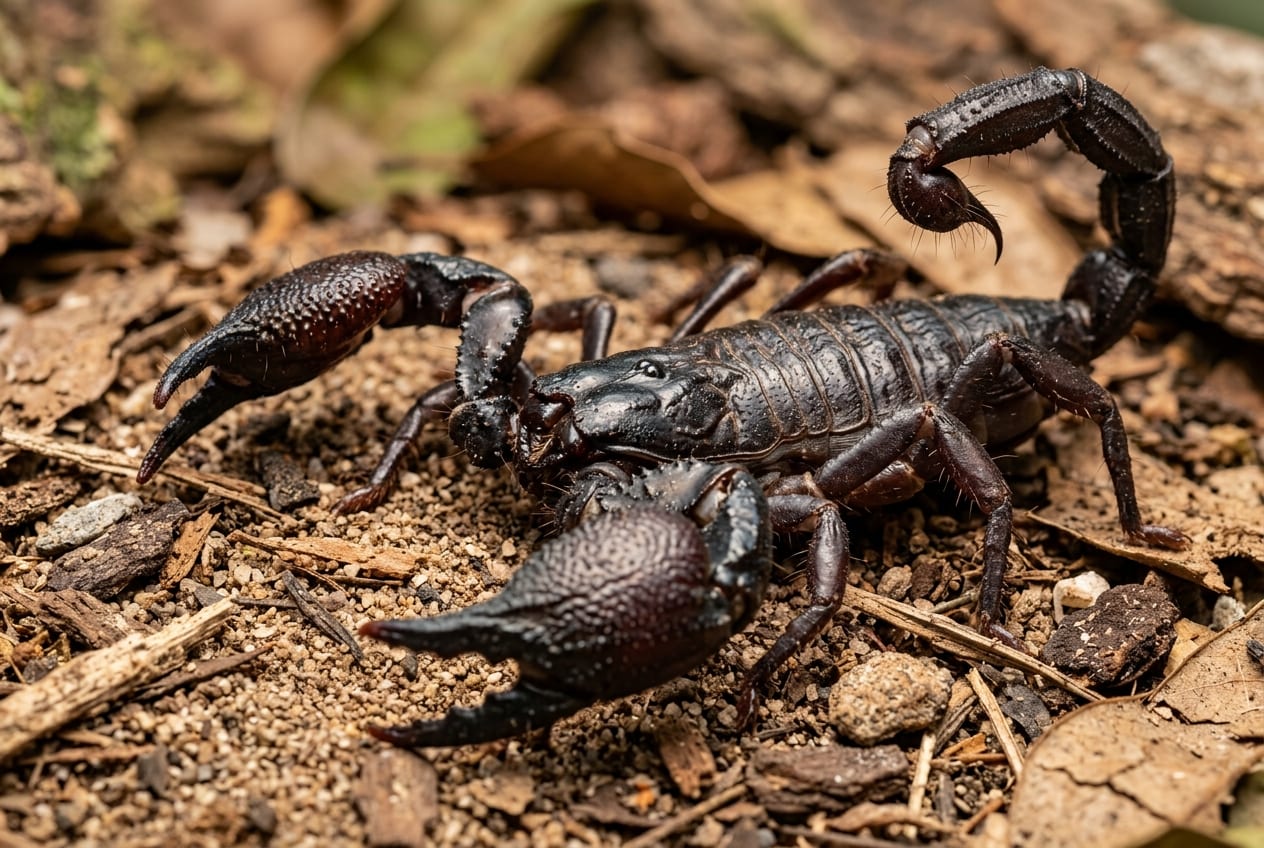
Gambian Scorpion
The Gambian scorpion is a large species native to the forests and savannas of West Africa, sharing the sturdy black-brown build and notably thick, powerful pincers of its close relative, the emperor scorpion. It's nocturnal, spending daylight hours tucked into burrows or under cover before emerging at night to hunt. While its movements are generally unhurried, some individuals can be quite defensive and skittish, so handling calls for caution. This imposing, heavy-bodied scorpion has real presence in a collection, but its confident care requires a keeper with some hands-on experience.
View Gambian Scorpion encyclopedia →0% commission on your first sales!Register by September 30, 2026 and your first 2 sales are commission-free!
Breeder Wanted!
List on BreederDirect and sell directly to customers nationwide!
5 Transparency Standards You Can Trust
When listing Exotic Invertebrates, Breeders disclose the following. We guarantee transparency on growth stage and breeding unit.
- Real Photos
- Breeding Unit
- Generation Info
- Body Length (mm)
- Country of Origin
Browse all 249 breeds
Verified breeders wanted for Exotic Invertebrates
Breeders are signing up now ahead of launch. Subscribe to be notified when new listings go live.
Getting alerts is free with a member account. When new listings match your saved search, we'll notify you by email and in-app.
Browse other categories
Verified breeders (preview)
Are you raising exotic invertebrates?
Register as a breeder and connect with buyers directly.
Apply as a breederGambian Scorpion key facts
- Care level
- Advanced
- Lifespan
- 6-9 years
- Size
- About 12-20cm total length (range for the genus Pandinus)
- Humidity
- Diet
- Live insects such as crickets
- Temperature & Humidity
- Most species of the genus live in humid tropical lowlands, in rainforest and gallery forest, so keep the enclosure warm and humid and never let the substrate dry out.
- Enclosure
- The genus prefers soft, loamy soils. Provide substrate deep enough to burrow into plus a hide, and leave any burrow intact.
- Diet & Feeding
- Offer live insects such as crickets. The animal pins prey with its heavy pincers.
- Temperament & Venom
- Venom in Scorpionidae is mild; stings cause local pain and no fatalities are known. Its defensive behaviour is not well known, so do not handle it bare-handed.
- Notes
- A CITES Appendix II species: permits are required for import and export. It was listed in 1995 together with P. imperator.
About Gambian Scorpion
A large West African scorpion related to the emperor scorpion, with a sturdy black-brown body, notably thick pincers, and a 12–20 cm adult size — a species best suited to experienced keepers.
7 things to know before welcoming a Gambian Scorpion
1Best for Experienced Keepers
This species is generally considered one for experienced keepers. It looks similar to the emperor scorpion, but some individuals are noticeably more defensive and quick to react, so it's best to avoid direct handling and use tools like feeding tongs instead.
2Notably Thick Pincers
Its defining feature is a sturdy black-brown body paired with unusually thick, powerful pincers. Because their grip is strong, keep your fingers clear during tank maintenance.
3Adults Reach 12–20 cm
Adults grow to roughly 12–20 cm in length, making them one of the more impressive-sized members of the genus Pandinus. Plan for an enclosure that can accommodate this size as they mature.
4Nocturnal Burrow Dweller
This species rests in burrows or under cover during the day and becomes active at night. Provide a substrate deep enough for burrowing along with a hide to help it feel secure.
5Recreate a West African Habitat
Native to the forests and savannas of West Africa, it does best with warmth and humidity that echo its natural range. Use substrate that holds moisture without becoming soggy, and ensure adequate ventilation.
6House Them Separately
Scorpions are territorial and can cannibalize one another, so this species should generally be kept one per enclosure. Avoid setting up group housing.
7Prepare Before You Bring One Home
Before your scorpion arrives, have burrowing substrate, a hide, and a reliable source of feeder insects ready to go. Prior experience with a related species like the emperor scorpion can make day-to-day care feel more familiar.
Frequently asked questions about Gambian Scorpion
- Q.Is its venom dangerous?
- A.The bigger concern is the grip of its notably thick pincers rather than the venom itself. It can show a defensive reaction when disturbed, so handle it calmly and avoid touching it directly.
- Q.Is this scorpion suitable for beginners?
- A.This species is generally considered one for experienced keepers. It's a good idea to gain experience with a related species first before bringing one home.
- Q.How big does it get?
- A.Adults reach roughly 12 to 20 cm in length. It's one of the larger-growing members of the genus Pandinus.
- Q.Can it be housed with other scorpions?
- A.Solitary housing is generally recommended. Scorpions are territorial and can cannibalize each other, so avoid keeping more than one in the same enclosure.
- Q.How is it different from the emperor scorpion?
- A.It's a close relative of the emperor scorpion and looks quite similar at a glance. However, the Gambian scorpion is considered better suited to experienced keepers, and some individuals tend to be more defensive and quick to react.
Learn more about Gambian Scorpion in the encyclopedia
View Gambian Scorpion encyclopedia entry →
Care difficulty, lifespan, size and diet — all basics covered.
More in this category
Can't find the one you're looking for?
Post your wishes for free and breeders with matching animals will contact you with introductions.