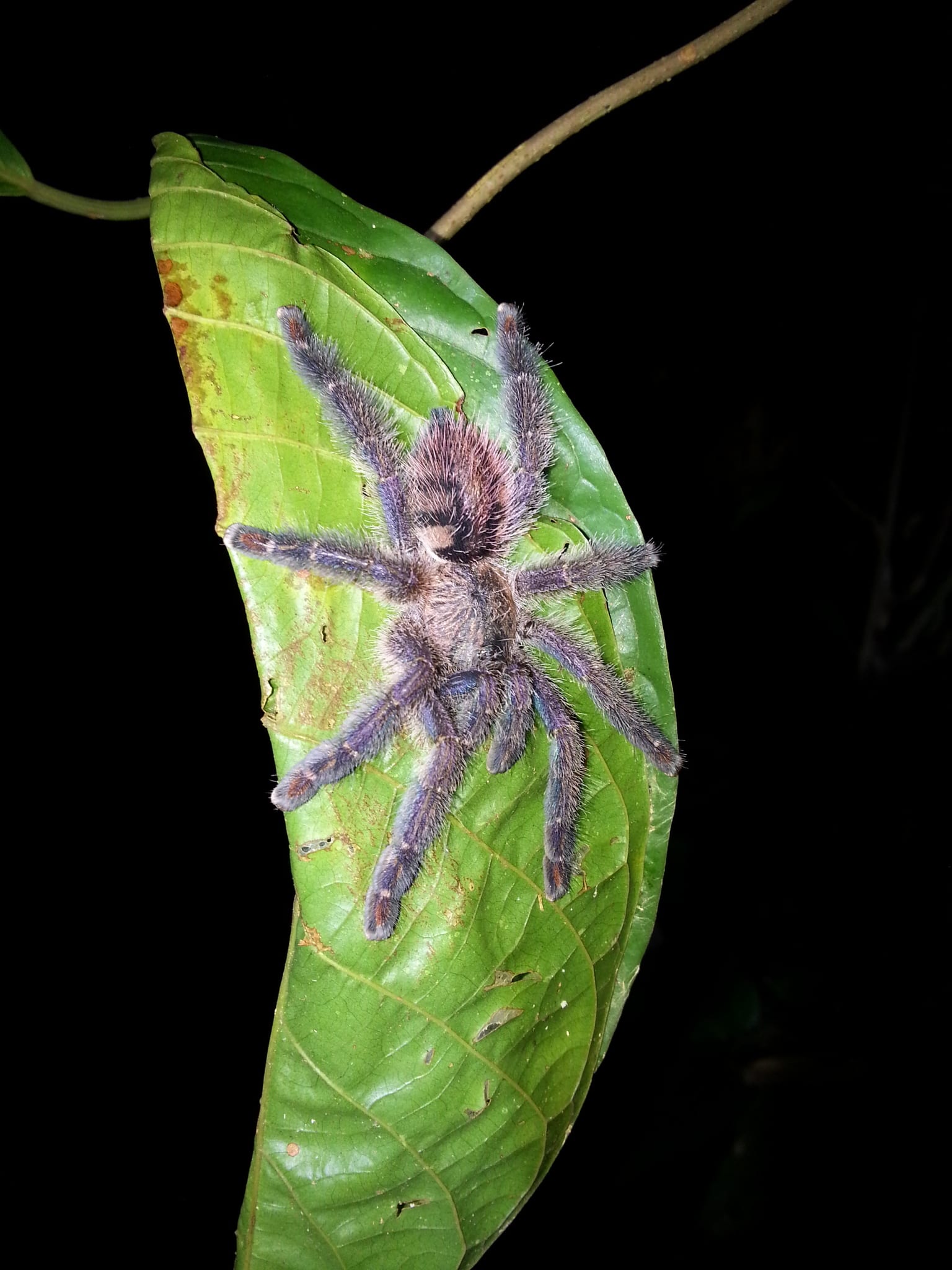
 © Celso Henrique Varela Rios / CC BY 4.0
Amazon Sapphire Pinktoe
The Amazon Sapphire Pinktoe is a small, tree-dwelling tarantula native to Brazil's Atlantic coastal forest. As juveniles, they carry a striking red patch with jagged edges across the center of the abdomen, bordered by black bands—markings that gradually fade as the spider matures, giving keepers a chance to watch its appearance change over time. True to its name, the tips of its legs carry a subtle sapphire-blue sheen, and its slender build reflects a life spent climbing rather than burrowing. Taxonomically, it was split off from the genus Avicularia into its own group in 2017. Because it's generally considered suited to intermediate keepers, it makes a good next step for hobbyists who already have some tarantula experience.
View Amazon Sapphire Pinktoe encyclopedia →0% commission on your first sales!Register by September 30, 2026 and your first 2 sales are commission-free!
Breeder Wanted!
List on BreederDirect and sell directly to customers nationwide!
5 Transparency Standards You Can Trust
When listing Exotic Invertebrates, Breeders disclose the following. We guarantee transparency on growth stage and breeding unit.
- Real Photos
- Breeding Unit
- Generation Info
- Body Length (mm)
- Country of Origin
Browse all 249 breeds
Verified breeders wanted for Exotic Invertebrates
Breeders are signing up now ahead of launch. Subscribe to be notified when new listings go live.
Getting alerts is free with a member account. When new listings match your saved search, we'll notify you by email and in-app.
Browse other categories
Verified breeders (preview)
Are you raising exotic invertebrates?
Register as a breeder and connect with buyers directly.
Apply as a breederAmazon Sapphire Pinktoe key facts
- Care level
- Intermediate
- Lifespan
- 3-5 years
- Temperature
- 21〜27℃
- Humidity
- 60〜70%
- Diet
- Small live insects such as crickets
- Temperature & Humidity
- For related arboreal aviculariines the usual figures are 21-27 C and 60-70% humidity, with ventilation treated as critical.
- Enclosure
- Arboreal. Use a tall enclosure with cork bark for the web, ventilate through both the top and the sides, keep the substrate shallow and provide a water dish.
- Diet & Feeding
- Feed small live insects such as crickets. The genus is small-bodied, so size prey accordingly and remove leftovers by the next day.
- Temperament & Venom
- Not aggressive; it bolts into its retreat when startled. Like other aviculariines it has urticating hairs on the abdomen, and the venom is considered weak.
- Notes
- It is traded under a name invoking the Amazon, but it actually lives in the Atlantic forest, so keep it on the assumption of a humid forest environment. Its habitat is affected by deforestation.
About Amazon Sapphire Pinktoe
A small arboreal tarantula from Brazil's Atlantic coastal forest. Juveniles show red-and-black abdominal markings that fade with age. Split from Avicularia in 2017; suited to intermediate keepers.
7 things to know before welcoming a Amazon Sapphire Pinktoe
1An Arboreal Lifestyle
The Amazon Sapphire Pinktoe lives up in the trees rather than on the ground. Set up its enclosure with height in mind—vertical space with branches or cork bark for climbing matters more than floor area.
2Coloring Changes With Age
Juveniles display a bold red patch with jagged edges and black banding across the abdomen, but this pattern fades as the spider matures. Keep in mind that its appearance will look quite different depending on the growth stage you bring home.
3Humidity Needs Attention
Arboreal tarantulas like this one need consistent humidity, typically maintained with regular misting. Both overly dry and overly damp conditions can cause problems, so check enclosure conditions regularly.
4Best for Intermediate Keepers
This species is generally considered suited to intermediate keepers rather than absolute beginners. If this would be your first tarantula, take time to research the basics of husbandry before bringing one home.
5Quick Movement and Webbing
Arboreal tarantulas tend to move quickly and can bolt suddenly if startled, more so than ground-dwelling species. They also spin silk to build a retreat inside the enclosure, so be mindful of where the spider is when doing maintenance.
6Solitary by Nature
Tarantulas are solitary animals, and housing more than one together risks cannibalism. Keep each individual in its own separate enclosure.
7Prepare Supplies in Advance
Before bringing one home, it helps to have a tall enclosure, climbing branches, a mister, and a thermo-hygrometer ready in advance. After transport, give the spider time to settle in without disturbance.
Frequently asked questions about Amazon Sapphire Pinktoe
- Q.Is this species suitable for beginners?
- A.It's generally considered suited to intermediate keepers rather than complete beginners. If this would be your first tarantula, it's a good idea to build up some basic husbandry knowledge first.
- Q.Does the juvenile's red pattern stay into adulthood?
- A.As juveniles, they show a red patch with jagged edges and black banding on the abdomen, but this pattern fades with growth. By adulthood, the markings are much less distinct than in the juvenile stage.
- Q.What kind of enclosure setup does it need?
- A.Since it's arboreal, a tall enclosure with climbing branches matters more than floor space. Maintaining adequate humidity with regular misting is also part of the basic setup.
- Q.Can it be housed with other tarantulas?
- A.Tarantulas are solitary by nature, and keeping more than one in the same enclosure risks cannibalism. Housing each individual separately is the safer approach.
- Q.Is this species subject to any international trade regulations?
- A.The Amazon Sapphire Pinktoe is not subject to CITES. If you have any questions, it's worth checking the details on the individual listing as well.
Learn more about Amazon Sapphire Pinktoe in the encyclopedia
View Amazon Sapphire Pinktoe encyclopedia entry →
Care difficulty, lifespan, size and diet — all basics covered.
More in this category
Can't find the one you're looking for?
Post your wishes for free and breeders with matching animals will contact you with introductions.