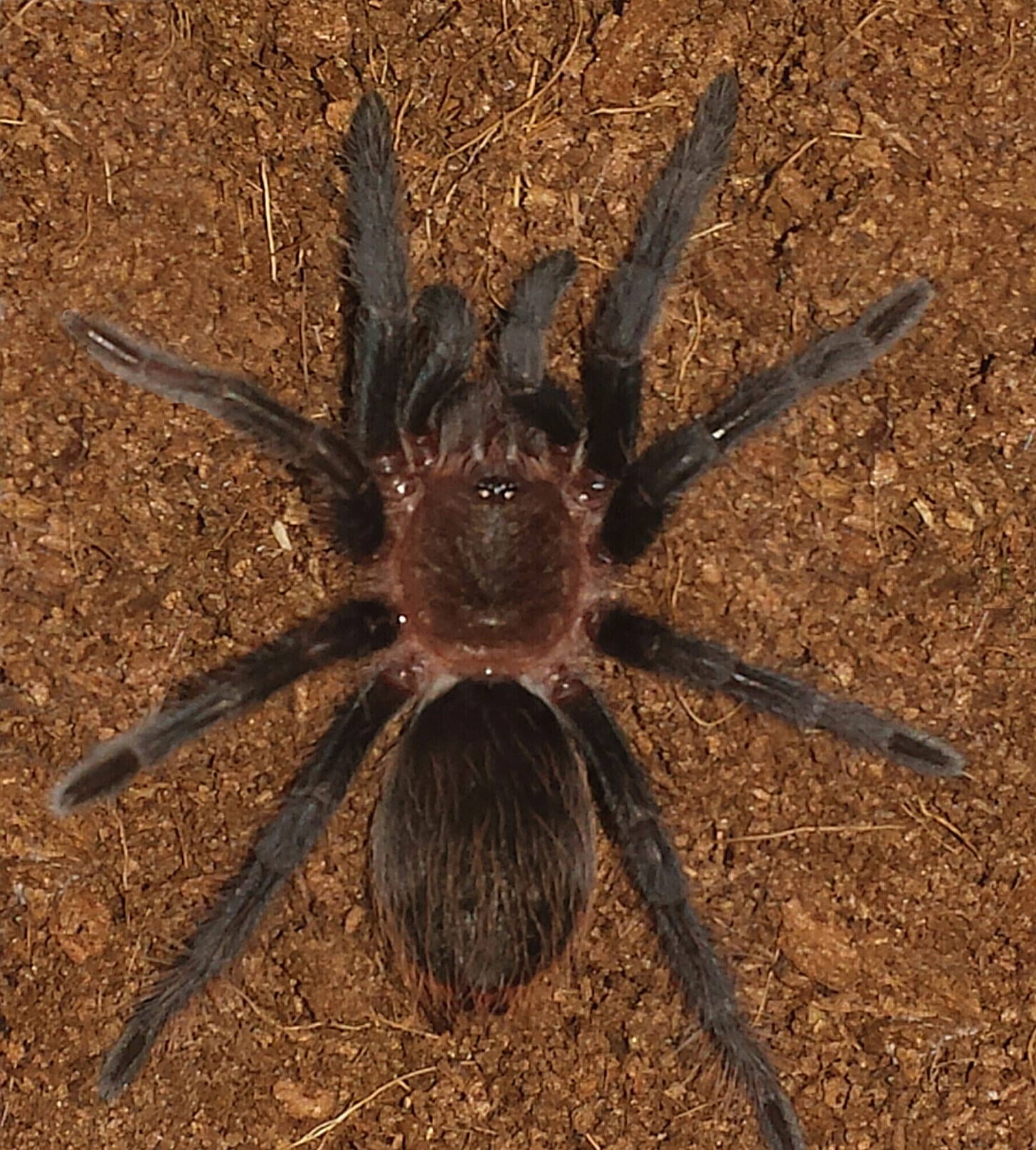
 © Original: Wikimedia Commons user MrKevin04; derived: Peter Coxhead / CC BY-SA 4.0
Mexican Rose Grey
The Mexican Rose Grey is a tarantula native to southern Mexico, found from the state of Guerrero through eastern Oaxaca. Males are strikingly dark, almost jet black, with reddish-orange hairs accenting the abdomen and legs, while females have a slightly paler carapace marked with a dark triangular pattern toward the front. It tends to spend much of its time tucked away rather than actively roaming, making it a rewarding species for keepers who enjoy quietly observing its understated beauty. Generally recommended for those with some prior tarantula-keeping experience, it's a species whose refined coloring and composed presence make it enjoyable to keep for the long term.
View Mexican Rose Grey encyclopedia →0% commission on your first sales!Register by September 30, 2026 and your first 2 sales are commission-free!
Breeder Wanted!
List on BreederDirect and sell directly to customers nationwide!
5 Transparency Standards You Can Trust
When listing Exotic Invertebrates, Breeders disclose the following. We guarantee transparency on growth stage and breeding unit.
- Real Photos
- Breeding Unit
- Generation Info
- Body Length (mm)
- Country of Origin
Browse all 249 breeds
Verified breeders wanted for Exotic Invertebrates
Breeders are signing up now ahead of launch. Subscribe to be notified when new listings go live.
Getting alerts is free with a member account. When new listings match your saved search, we'll notify you by email and in-app.
Browse other categories
Verified breeders (preview)
Are you raising exotic invertebrates?
Register as a breeder and connect with buyers directly.
Apply as a breederMexican Rose Grey key facts
- Care level
- Intermediate
- Lifespan
- Females 15-20 years / males 4-5 years
- Size
- Males about 3cm in body length with a fourth leg of about 5.5cm
- Diet
- Live insects such as crickets
- Temperature & Humidity
- It occurs from the coast of Guerrero inland. Avoid keeping it in hot, humid conditions.
- Enclosure
- A terrestrial tarantula; a wide enclosure with substrate deep enough to dig in and a hide suits it.
- Diet & Feeding
- Offer live insects such as crickets. Tarantulas do not use webs to catch prey.
- Temperament & Venom
- There is no established species-specific account of its temperament or venom. As with tarantulas generally, take care with the urticating hairs on the abdomen.
- Notes
- Listed on CITES Appendix II under its former name Brachypelma verdezi, so permits are required for import and export. Older sources discuss it under the name pallidum.
About Mexican Rose Grey
A guide to the Mexican Rose Grey tarantula from southern Mexico — its coloring, temperament, and care essentials for keepers considering this intermediate-level species.
7 things to know before welcoming a Mexican Rose Grey
1Native to Southern Mexico
This tarantula is native to southern Mexico, found across a range spanning Guerrero state through eastern Oaxaca. Aim for substrate that is neither too dry nor too damp, with reasonable ventilation in the enclosure.
2Coloring Differs by Sex
Males have a striking dark body accented by reddish-orange hairs on the abdomen and legs. Females have a slightly paler carapace with a dark triangular marking toward the front, and as they mature this difference makes it easier to tell the sexes apart.
3A Compact Adult Size
Adult males reach a body length of roughly 3 cm, with the fourth leg spanning around 5.5 cm. This is a fairly compact size for a tarantula, so a large or elaborate enclosure isn't required.
4An Intermediate-Level Species
The Mexican Rose Grey is generally considered suitable for keepers with some tarantula experience already, which makes day-to-day care easier to manage. First-time keepers may want to start with an easier species and build up experience before taking this one on.
5Temperature and Humidity Basics
Maintaining a stable temperature with basic heating equipment, while avoiding extremes of dryness or dampness, is the foundation of good health. Check the substrate condition, appetite, and activity level regularly to make sure the environment is working well.
6Leave It Undisturbed Around Molting
Tarantulas molt periodically as they grow, and beforehand they often become less active and stop eating. During and right after a molt they are extremely vulnerable, so it's important to leave them undisturbed rather than handling or prodding them.
7Supplies to Prepare in Advance
Have the basics ready before bringing one home: an enclosure, substrate, a hide, and a water dish. Choosing an enclosure sized appropriately for its body helps create a calm, settled environment.
Frequently asked questions about Mexican Rose Grey
- Q.Can beginners keep this species?
- A.It's generally considered an intermediate-level species, so some prior knowledge or experience with tarantula care is reassuring to have. First-timers may want to start with an easier species and gain experience before taking this one on.
- Q.How can you tell males and females apart?
- A.Coloring is the main clue. Males are dark overall with noticeable reddish-orange hairs on the abdomen and legs, while females have a paler carapace with a dark triangular mark toward the front. Telling them apart can be difficult while they're still young, though.
- Q.How large does it grow?
- A.Adult males reach a body length of roughly 3 cm, with the fourth leg spanning around 5.5 cm. That makes it a relatively compact species among tarantulas.
- Q.How long does it live?
- A.Lifespan varies by species, and among tarantulas in general females tend to live noticeably longer than males. The exact number of years depends on the individual and its care, so it's hard to state a precise figure.
- Q.Is it venomous, and is it dangerous to humans?
- A.Like tarantulas in general, the Mexican Rose Grey does have venom, though serious reactions in healthy adults are considered rare. Even so, pain and individual sensitivity to a bite can vary, so it should always be handled carefully rather than casually.
Learn more about Mexican Rose Grey in the encyclopedia
View Mexican Rose Grey encyclopedia entry →
Care difficulty, lifespan, size and diet — all basics covered.
More in this category
Can't find the one you're looking for?
Post your wishes for free and breeders with matching animals will contact you with introductions.