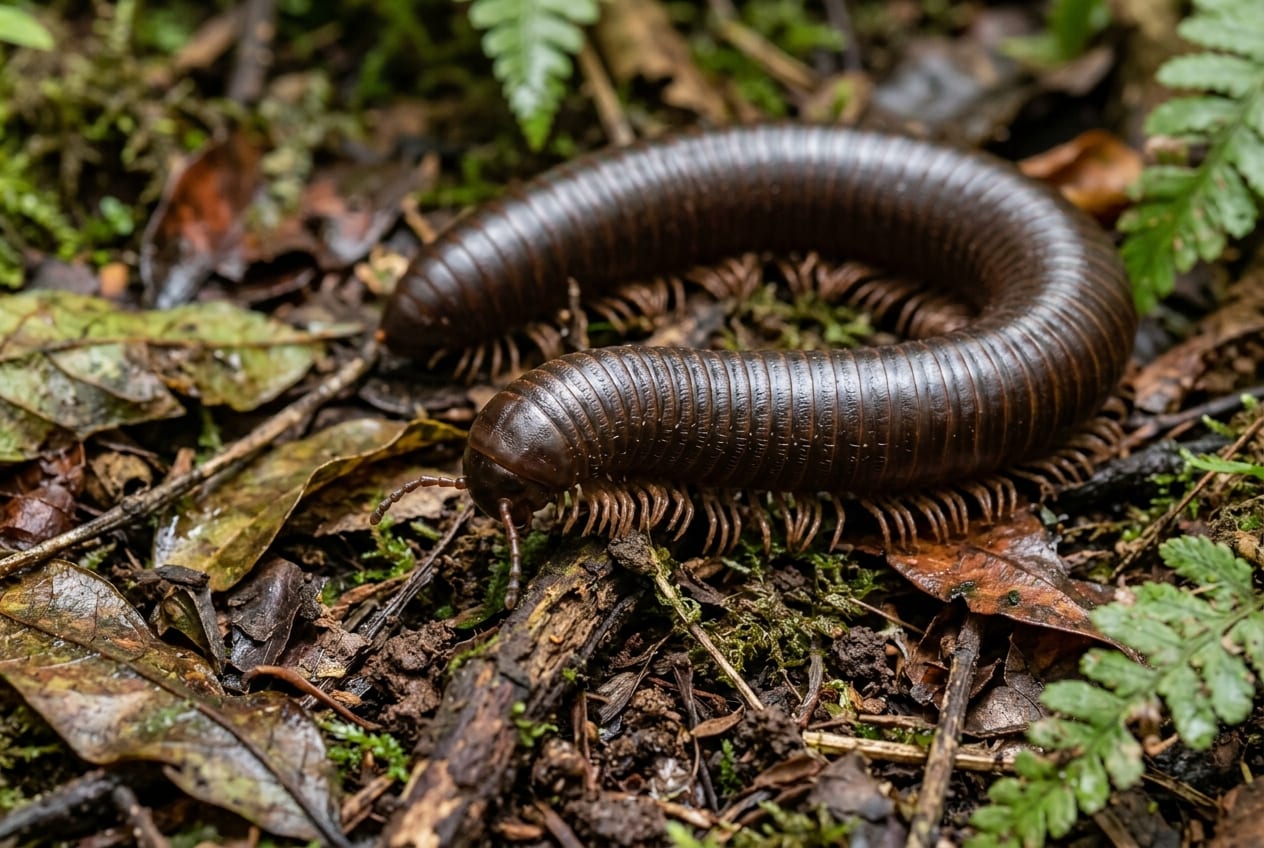
Ghana Chocolate Millipede
The Ghana Chocolate Millipede is native to a range spanning West Africa to Central Africa, prized for the glossy, deep brown body that gives it its "chocolate" trade name. It has a calm, docile temperament and typically curls into a tight coil when disturbed rather than trying to bite. As a detritivore, it spends its time slowly breaking down rotting wood and leaf litter, moving at an unhurried pace that makes it a relaxing species to simply watch. Care is generally considered suited to intermediate keepers who understand the basics of humidity and substrate management. Interestingly, its currently accepted scientific name, Spiropoeus fischeri, doesn't match the name it's often sold under in the hobby.
View Ghana Chocolate Millipede encyclopedia →0% commission on your first sales!Register by September 30, 2026 and your first 2 sales are commission-free!
Breeder Wanted!
List on BreederDirect and sell directly to customers nationwide!
5 Transparency Standards You Can Trust
When listing Exotic Invertebrates, Breeders disclose the following. We guarantee transparency on growth stage and breeding unit.
- Real Photos
- Breeding Unit
- Generation Info
- Body Length (mm)
- Country of Origin
Browse all 249 breeds
Verified breeders wanted for Exotic Invertebrates
Breeders are signing up now ahead of launch. Subscribe to be notified when new listings go live.
Getting alerts is free with a member account. When new listings match your saved search, we'll notify you by email and in-app.
Browse other categories
Verified breeders (preview)
Are you raising exotic invertebrates?
Register as a breeder and connect with buyers directly.
Apply as a breederGhana Chocolate Millipede key facts
- Care level
- Intermediate
- Lifespan
- 5-8 years
- Diet
- Rotting hardwood and leaf litter as the base, supplemented with carrot, cucumber, courgette or sweet potato and some protein, with a permanent calcium source
- Temperature & Humidity
- General millipede guidance says room temperature is sufficient (Bugs in Cyberspace). Keep the substrate damp through the lower layers rather than misted on top.
- Enclosure
- Forest humus mixed with white-rotted wood and leaf litter, laid deeper than the animal is long. Ventilate and never let water stand at the base. Add cork bark and branches.
- Diet & Feeding
- Rotting hardwood and leaf litter are the diet. Offer carrot, cucumber, courgette or sweet potato, and remove leftovers, which attract mites.
- Temperament & Venom
- Placid, and it neither bites nor stings. It coils when startled and may release a defensive fluid that stains and irritates skin.
- Notes
- Wash hands with soap after handling. The trade name and the accepted name disagree, so confirm the identification with the seller.
About Ghana Chocolate Millipede
A glossy, deep brown millipede native to West and Central Africa, known by the trade name "chocolate" millipede. It has a docile temperament and is generally suited to intermediate keepers.
7 things to know before welcoming a Ghana Chocolate Millipede
1Name Origin
This millipede gets its "chocolate" trade name from its glossy, deep brown body. It's native to a range spanning West Africa to Central Africa.
2Trade Name vs. Species Name
The currently accepted scientific name is Spiropoeus fischeri, but the hobby trade sometimes uses a different name for this species. It's worth checking which name a seller is using when comparing listings.
3Care Difficulty
This species is considered suitable for intermediate keepers. Some prior experience with invertebrate care will make day-to-day management easier.
4Humidity Needs
Like most millipedes, it's sensitive to dryness and prefers consistently moist conditions. Regular misting helps keep the substrate from drying out.
5Substrate & Hiding Spots
A deep layer of substrate mixed with decaying wood and leaf litter gives it a place to burrow and settle in. It tends to stay hidden underground or under cover during the day.
6Diet
As a detritivore, it feeds on rotting wood, dead leaves, and vegetable scraps. Adding a calcium source to its diet helps keep its exoskeleton healthy.
7Handling Care
When disturbed, it curls into a defensive coil and may release a secretion that can irritate skin. Wash your hands after handling and avoid touching your eyes or mouth.
Frequently asked questions about Ghana Chocolate Millipede
- Q.Does the Ghana Chocolate Millipede bite?
- A.It doesn't bite and isn't considered dangerously venomous. When disturbed, it curls into a defensive coil and may release a secretion that can irritate skin, so it's best to wash your hands after handling.
- Q.What does it eat?
- A.As a detritivore, it eats rotting wood, leaf litter, and vegetable scraps. Adding a calcium source to its diet also helps keep its exoskeleton healthy.
- Q.Is it suitable for beginners?
- A.This species is generally considered suited to intermediate keepers. A basic understanding of humidity control and substrate setup makes it easier to care for.
- Q.Why does the trade name differ from the scientific name?
- A.The currently accepted scientific name is Spiropoeus fischeri, but this species is often sold in the hobby under a different name. It's a good idea to check with the seller which name they're using.
- Q.Can multiple millipedes be housed together?
- A.Millipedes are generally docile, and individuals of the same species are often kept together in one enclosure. Still, avoid overcrowding and keep on top of removing leftover food and waste to maintain good hygiene.
Learn more about Ghana Chocolate Millipede in the encyclopedia
View Ghana Chocolate Millipede encyclopedia entry →
Care difficulty, lifespan, size and diet — all basics covered.
More in this category
Can't find the one you're looking for?
Post your wishes for free and breeders with matching animals will contact you with introductions.