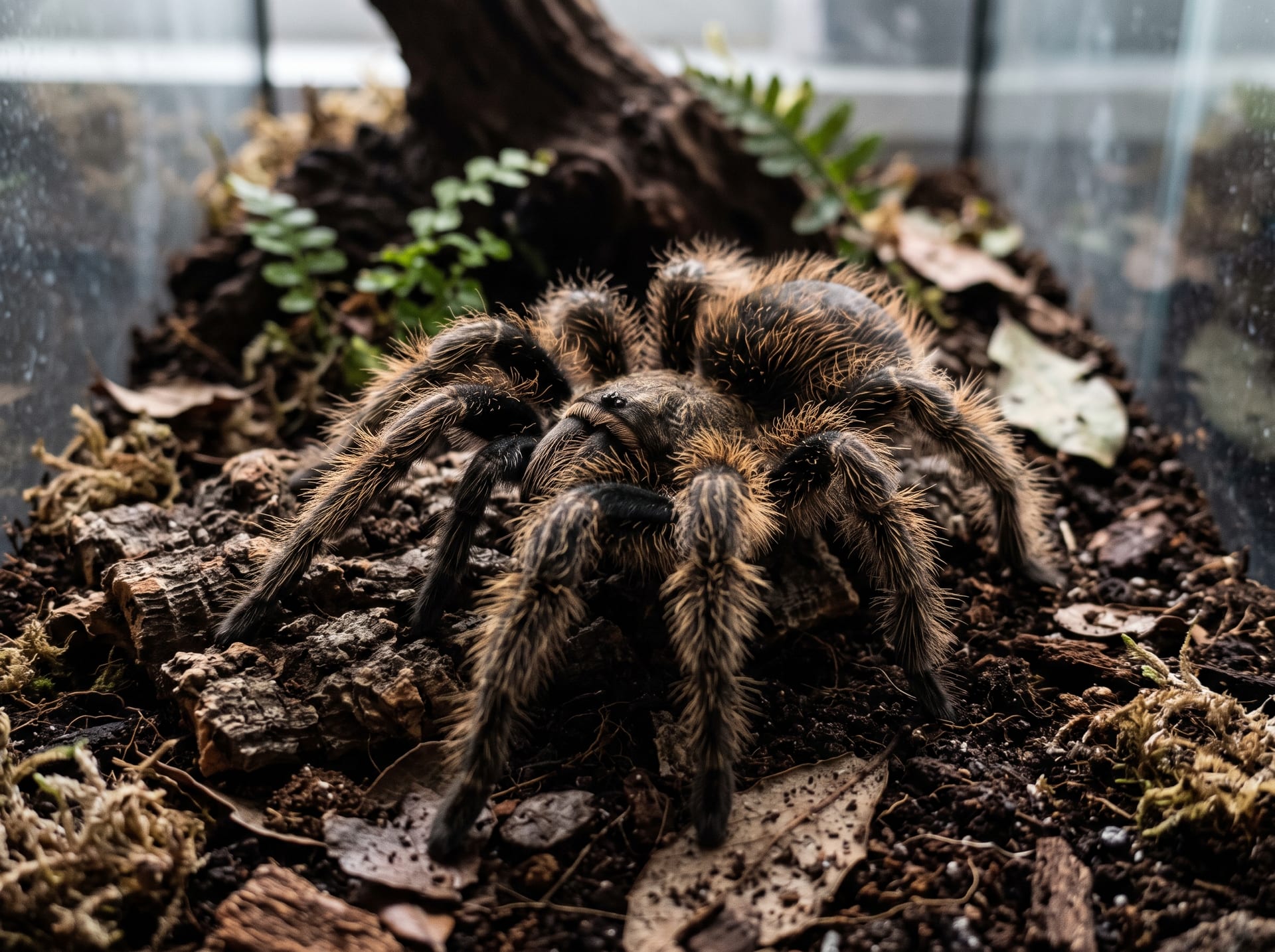
Curly Hair Tarantula
The Curly Hair Tarantula is a Central American ground-dwelling species instantly recognizable by the golden, wavy hair covering its body—hair that catches the light with a warm sheen. Renowned for its calm, easygoing temperament, it's one of the most forgiving tarantulas to keep and a favorite recommendation for first-time keepers. Hardy and adaptable, it grows at a comfortably steady pace and tolerates the ordinary ups and downs of husbandry well. As a terrestrial spider, it spends its time exploring the enclosure floor and retreating into burrows, making it easy and rewarding to observe.
View Curly Hair Tarantula encyclopedia →0% commission on your first sales!Register by September 30, 2026 and your first 2 sales are commission-free!
Breeder Wanted!
List on BreederDirect and sell directly to customers nationwide!
5 Transparency Standards You Can Trust
When listing Exotic Invertebrates, Breeders disclose the following. We guarantee transparency on growth stage and breeding unit.
- Real Photos
- Breeding Unit
- Generation Info
- Body Length (mm)
- Country of Origin
Browse all 249 breeds
Verified breeders wanted for Exotic Invertebrates
Breeders are signing up now ahead of launch. Subscribe to be notified when new listings go live.
Getting alerts is free with a member account. When new listings match your saved search, we'll notify you by email and in-app.
Browse other categories
Verified breeders (preview)
Are you raising exotic invertebrates?
Register as a breeder and connect with buyers directly.
Apply as a breederCurly Hair Tarantula key facts
- Care level
- Beginner-friendly
- Lifespan
- Female 15-20 years / Male 4-5 years
- Size
- Leg span 13-15 cm
- Temperature
- 24〜28℃
- Humidity
- 65〜75%
- Diet
- Live insects such as crickets and roaches, offered roughly weekly.
- Habitat
- Terrestrial setup with deep substrate for burrowing, a hide and water dish.
- Temp & Humidity
- 24-28°C, 65-75% humidity; keep part of the substrate slightly damp.
- Feeding
- Good eater; feed slings often and adults about weekly.
- Caution
- Has urticating hairs but is calm; venom is mild and bites are minor.
About Curly Hair Tarantula
A hardy, docile Central American ground-dwelling tarantula covered in golden, wavy hair—easy to care for and a popular choice for first-time keepers.
7 things to know before welcoming a Curly Hair Tarantula
1Basic Enclosure Setup
As a terrestrial species, provide a substrate layer deep enough for burrowing along with a hide to help it feel secure. Keep a shallow water dish filled with clean water, and pay extra attention to humidity for juveniles.
2A Calm Temperament
Known for its docile nature, it tends to react more calmly to disturbance than many other tarantulas. That said, individual personalities vary, so sudden movements or excessive handling should still be avoided.
3Watch for Urticating Hairs
Like many terrestrial tarantulas, it can kick irritating hairs from its abdomen with its hind legs when it feels threatened. Contact with these hairs can cause skin or eye irritation, so handle the enclosure carefully.
4Growth Rate
It grows relatively quickly, molting repeatedly as it develops toward its adult size of 13–15 cm leg span. Around molting time it may stop eating or become less active—this is normal and usually not a cause for concern.
5Lifespan Differs by Sex
Females can live an impressive 15–20 years, while males typically live only about 4–5 years after maturing. Many keepers choose a female specifically for a longer companionship.
6Feeding Frequency
Juveniles are generally fed more often to support rapid growth, with feeding intervals lengthening as they reach adulthood. Remove any uneaten prey promptly, as leftovers can attract mold or pests.
7Before You Bring One Home
Have the basics ready in advance—enclosure, substrate, hide, and water dish—so setup goes smoothly. Even as an entry-level species, it's a living animal, so make sure you can commit to its long-term care.
Frequently asked questions about Curly Hair Tarantula
- Q.Is the Curly Hair Tarantula suitable for beginners?
- A.Yes, thanks to its hardiness and docile temperament, it's widely recommended as an entry-level species. With just a basic setup in place, most keepers can get started without major difficulties.
- Q.How big does it get?
- A.Adults reach about 13–15 cm in leg span. As a terrestrial species, its body spreads out wide rather than growing tall.
- Q.How long does it live?
- A.Females can live an impressive 15–20 years, while males typically live only about 4–5 years after maturity. Many keepers choose a female if they want a longer-term companion.
- Q.Can it be handled?
- A.While generally calm, it may kick urticating hairs when startled, so frequent handling isn't recommended. Reactions can vary by individual and situation, so caution is always wise.
- Q.Is this species regulated under CITES?
- A.Curly Hair Tarantula is listed in CITES Appendix II. International trade requires a permit from the exporting country, but as far as CITES is concerned, no registration is needed to buy or sell individuals already legally in Japan.
Learn more about Curly Hair Tarantula in the encyclopedia
View Curly Hair Tarantula encyclopedia entry →
Care difficulty, lifespan, size and diet — all basics covered.
More in this category
Can't find the one you're looking for?
Post your wishes for free and breeders with matching animals will contact you with introductions.