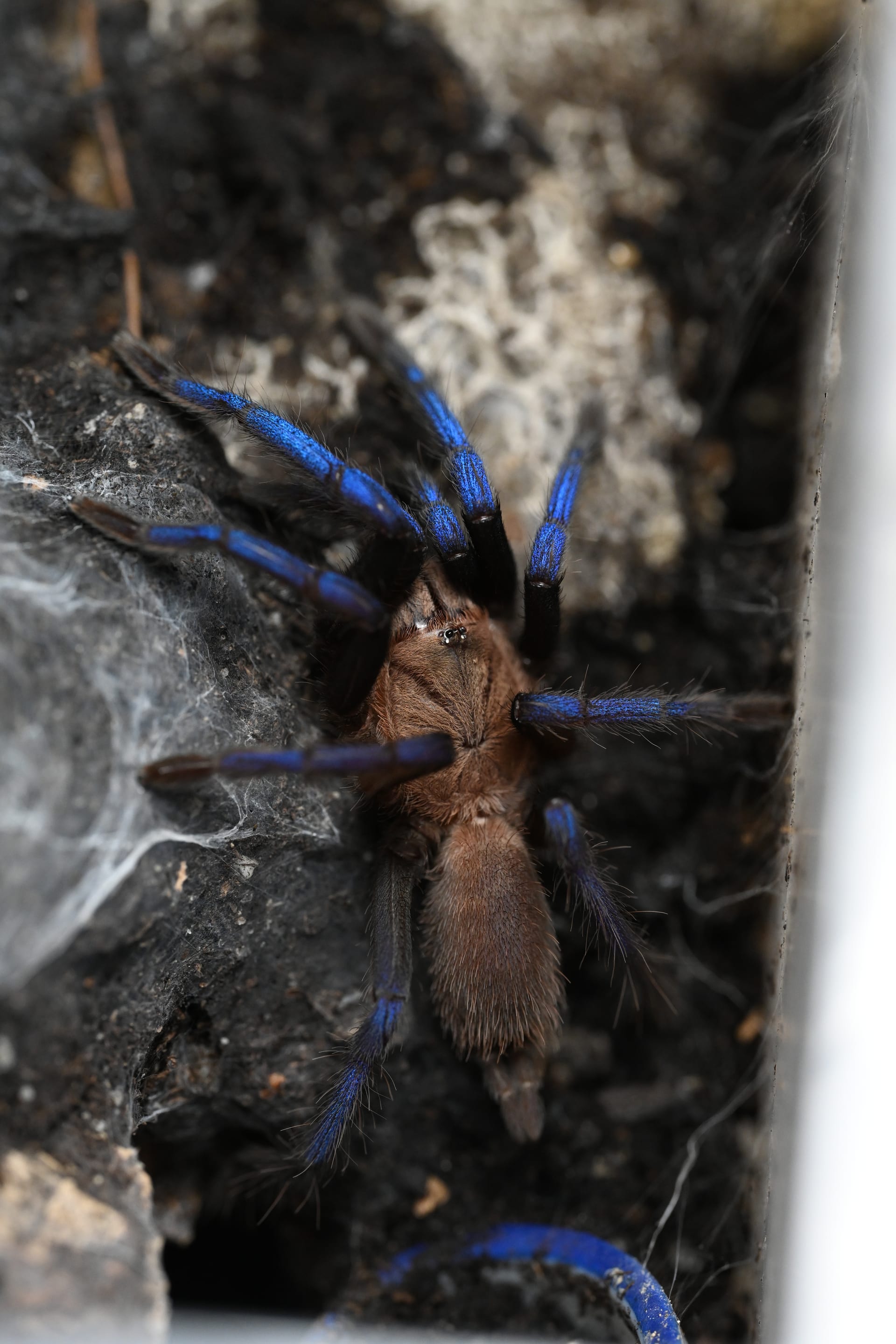
 © Burntclaw15 / CC BY-SA 4.0
Neon Blue Leg Tarantula
The Neon Blue Leg Tarantula is a ground-dwelling species found only in Sarawak, on the island of Borneo. Adult females stand out with a cream-colored carapace, a pale brown abdomen, and strikingly iridescent blue legs, making them a favorite among invertebrate keepers. Males are more subdued, with an overall brown body and black hairs covering their legs. Because it's ground-dwelling, an elaborate vertical setup isn't necessary, but keepers still need to manage humidity and provide a proper hide with care. It's generally considered a species for keepers with prior tarantula experience rather than a first pick for beginners.
View Neon Blue Leg Tarantula encyclopedia →0% commission on your first sales!Register by September 30, 2026 and your first 2 sales are commission-free!
Breeder Wanted!
List on BreederDirect and sell directly to customers nationwide!
5 Transparency Standards You Can Trust
When listing Exotic Invertebrates, Breeders disclose the following. We guarantee transparency on growth stage and breeding unit.
- Real Photos
- Breeding Unit
- Generation Info
- Body Length (mm)
- Country of Origin
Browse all 249 breeds
Verified breeders wanted for Exotic Invertebrates
Breeders are signing up now ahead of launch. Subscribe to be notified when new listings go live.
Getting alerts is free with a member account. When new listings match your saved search, we'll notify you by email and in-app.
Browse other categories
Verified breeders (preview)
Are you raising exotic invertebrates?
Register as a breeder and connect with buyers directly.
Apply as a breederNeon Blue Leg Tarantula key facts
- Care level
- Advanced
- Lifespan
- Females 10-15 years / males 2-4 years
- Size
- Holotype male 45.1mm in body length (carapace 18.6mm); paratype female 45.5mm (carapace 17mm)
- Diet
- Live insects such as crickets and roaches
- Temperature & Humidity
- It comes from lowland Bornean rainforest, so the enclosure should not be allowed to dry out.
- Enclosure
- It is terrestrial and digs burrows, so use a floor-space enclosure with substrate deep enough to dig in, plus a hide.
- Diet & Feeding
- Offer active live prey such as crickets and roaches and remove uneaten items within a day.
- Temperament & Venom
- As an Old World species it has no urticating hairs. It was described recently and husbandry experience is thin, so it is safest to treat it as hands-off like other defensive members of the subfamily.
- Notes
- It is known only from its type locality and supply is limited. The vivid blue is clearest in adult females and is inconspicuous in males and juveniles.
About Neon Blue Leg Tarantula
The Neon Blue Leg Tarantula is a ground-dwelling species endemic to Sarawak, Borneo, known for the female's iridescent blue legs. Recommended for experienced keepers — here are its key traits and care basics.
7 things to know before welcoming a Neon Blue Leg Tarantula
1A Species for Experienced Keepers
This species comes from a limited range on the island of Borneo, so care information is less abundant than for more widely kept tarantulas. It's a good idea to first gain experience with a more common species and get comfortable with husbandry basics before taking one on.
2Distinct Coloring Between Males and Females
Adult females have a cream-colored carapace, a pale brown abdomen, and vivid, iridescent blue legs. Males are more understated, with an overall brown body and black hairs covering their legs.
3Ground-Dwelling, So a Low Enclosure Works
Unlike arboreal species, this tarantula doesn't need a tall enclosure — a low setup with plenty of floor space works well. Adding a hide or a piece of driftwood gives it somewhere to retreat to and helps it settle in.
4Humidity Management Is Key
Coming from the rainforests of Borneo, this species needs an environment that never dries out completely. Keep part of the substrate lightly damp while maintaining good airflow, balancing humidity against the risk of mold or mites from excess moisture.
5Alert and Quick to React
Tarantulas in this group tend to be quick and easily startled when disturbed. During maintenance, avoid unnecessary stimulation and use tools to keep a safe distance rather than handling directly.
6Feeding Frequency and Amount
Crickets or dubia roaches sized to the animal make a good staple diet. Remove any uneaten prey promptly, and don't be concerned if appetite drops around a molt — just hold off on feeding and watch how it behaves.
7What to Prepare Before Bringing One Home
Set up a heat source, a thermometer/hygrometer, a hide, and substrate in advance so care goes smoothly from day one. Choose an enclosure with a lid that closes securely, since escape prevention is an important consideration.
Frequently asked questions about Neon Blue Leg Tarantula
- Q.Can beginners keep a Neon Blue Leg Tarantula?
- A.This species is considered suited to experienced keepers rather than beginners. It's recommended to first gain experience keeping other tarantulas and become comfortable with environmental management before taking one on.
- Q.How can you tell males and females apart?
- A.Adults show clear color differences. Females have a cream-colored carapace, a pale brown abdomen, and vivid blue legs, while males are entirely brown with black hairs on their legs, making the two easy to distinguish visually.
- Q.How large does this tarantula grow?
- A.The holotype male measured 45.1mm in body length (18.6mm carapace length), and the paratype female measured 45.5mm in body length (17mm carapace length) — a relatively compact species overall.
- Q.Is this species subject to CITES regulations?
- A.No — the Neon Blue Leg Tarantula is not a CITES-listed species. No CITES-related paperwork or permits are required for its trade or keeping.
- Q.How much space does it need?
- A.Since it's a ground-dwelling species, height isn't a priority the way it would be for an arboreal one — a low enclosure with adequate floor space is sufficient. Adding a hide or driftwood helps the tarantula settle in comfortably.
Learn more about Neon Blue Leg Tarantula in the encyclopedia
View Neon Blue Leg Tarantula encyclopedia entry →
Care difficulty, lifespan, size and diet — all basics covered.
More in this category
Can't find the one you're looking for?
Post your wishes for free and breeders with matching animals will contact you with introductions.