Source: Wikimedia Commons
Neon Blue Leg Tarantula
AdvancedBirupes simoroxigorum
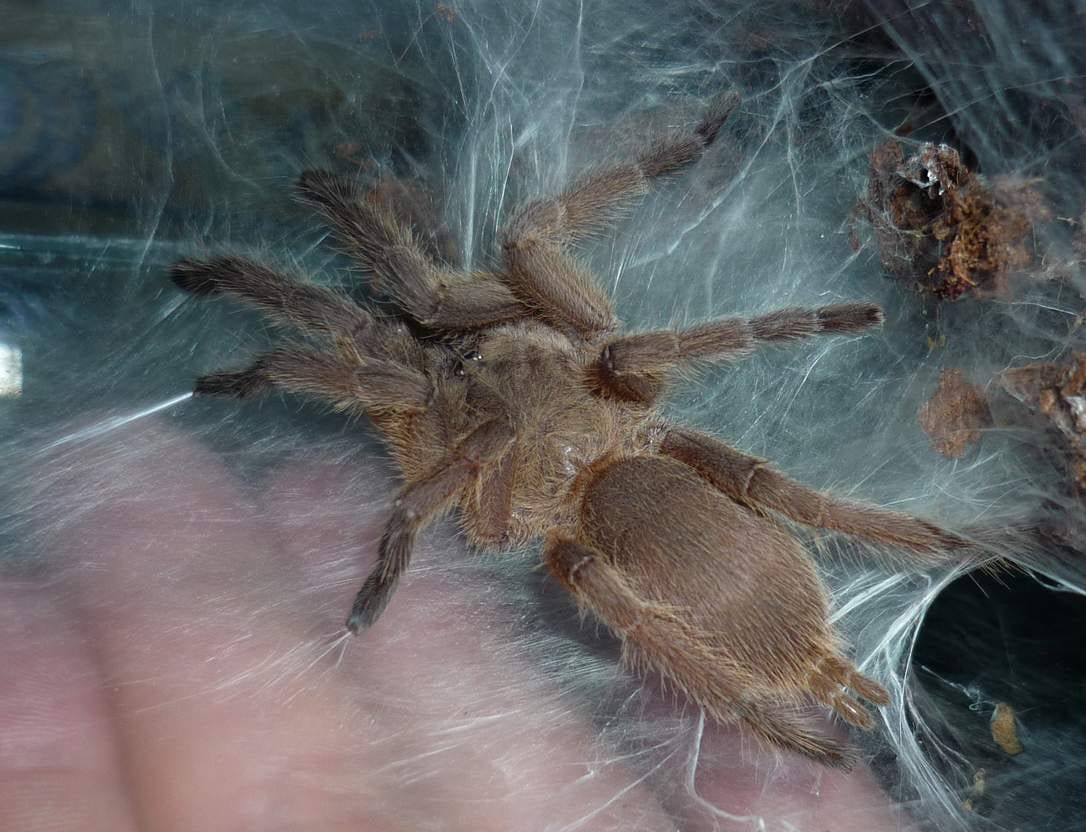
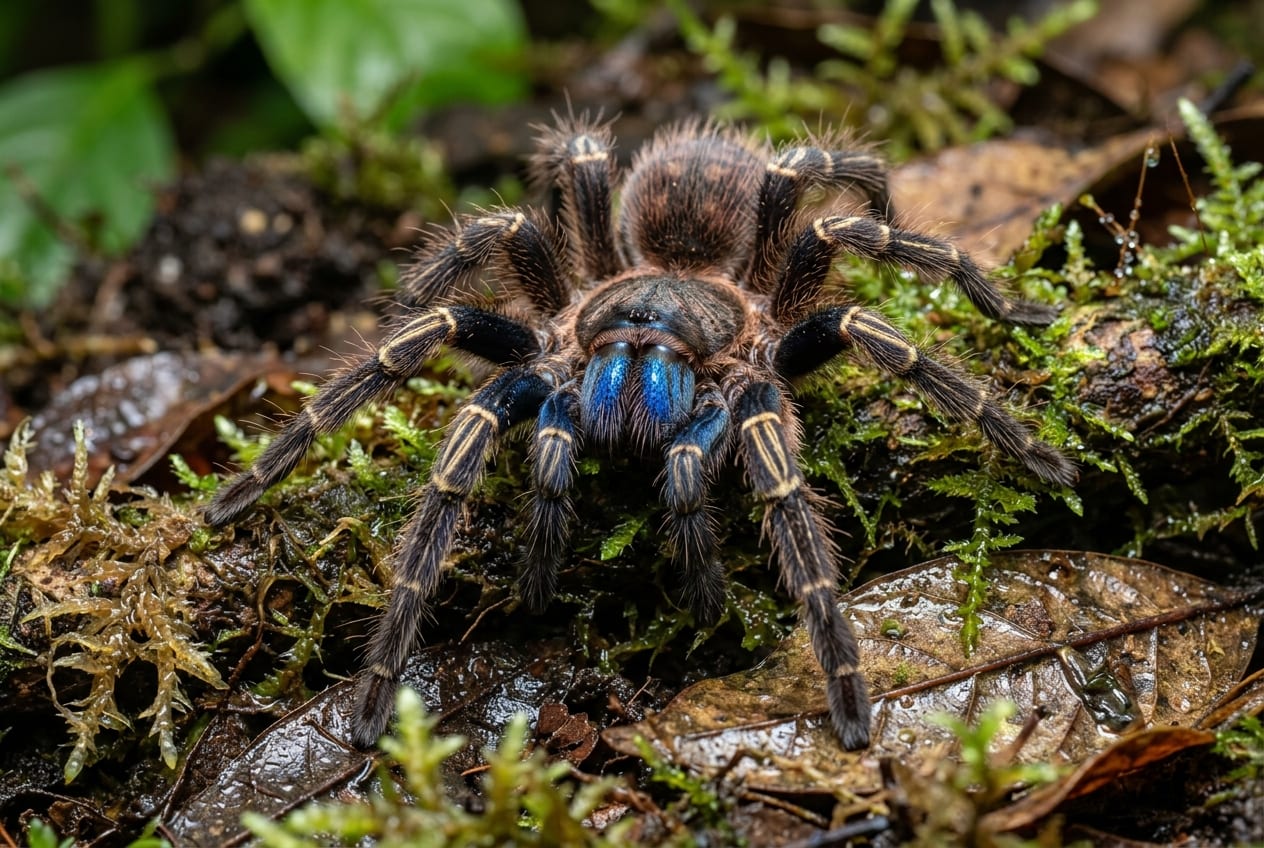
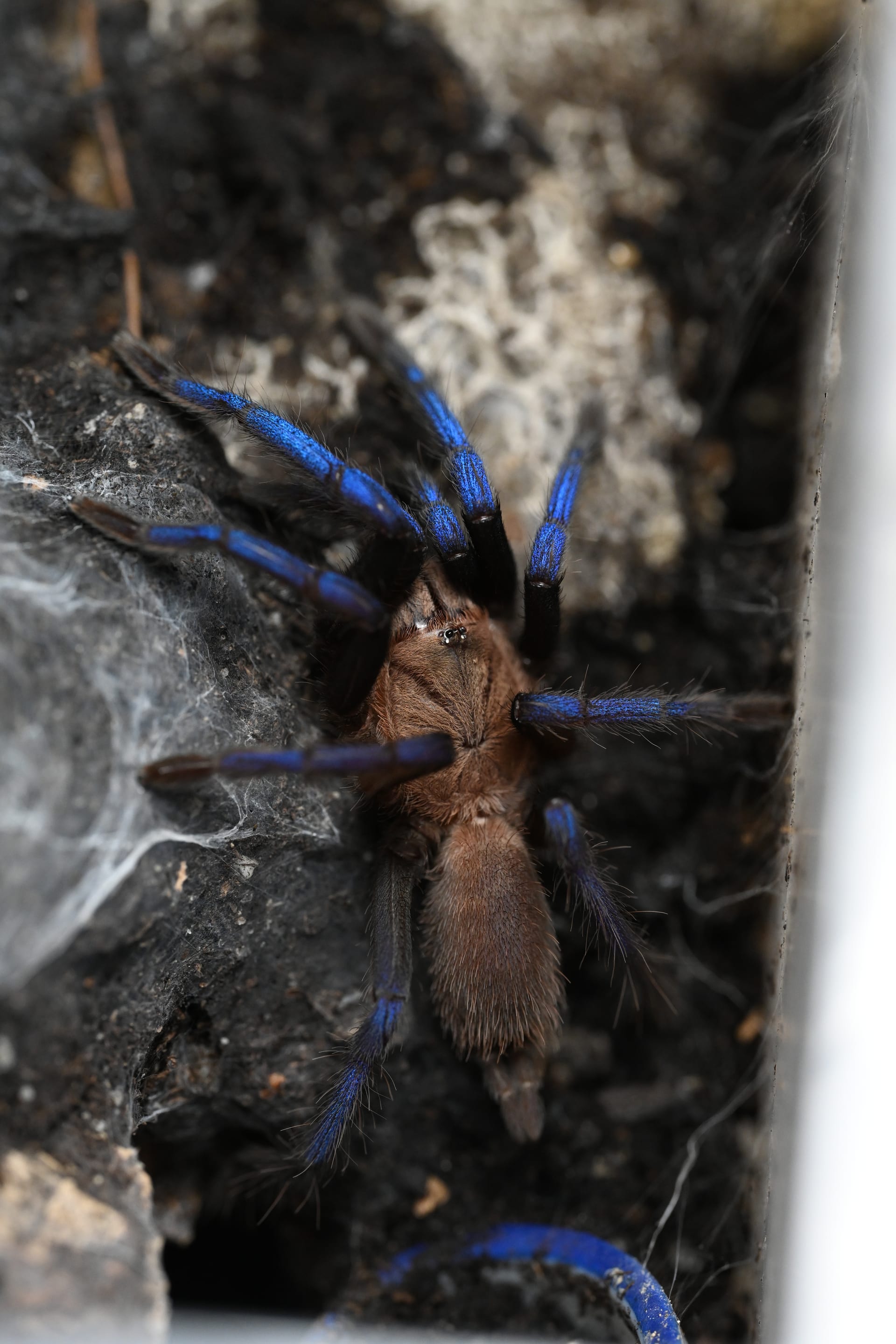
A terrestrial tarantula endemic to Sarawak on Borneo. Adult females combine a cream carapace and light brown abdomen with brilliant iridescent blue legs, while males are brown with black setae on the legs.
Difficulty
Advanced
Lifespan
Females 10-15 years / males 2-4 years
Size
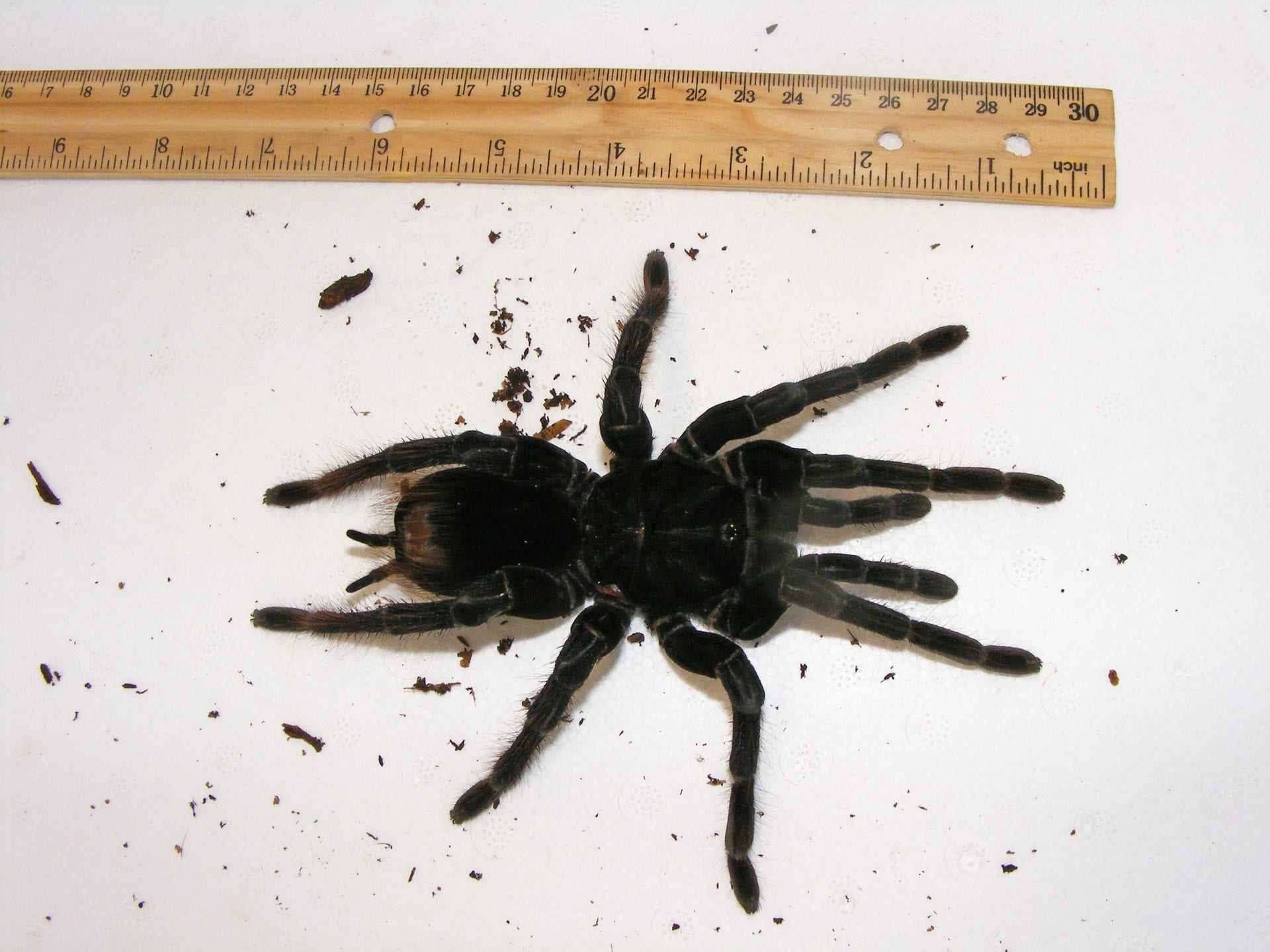
Holotype male 45.1mm in body length (carapace 18.6mm); paratype female 45.5mm (carapace 17mm)
Diet
Live insects such as crickets and roaches
About
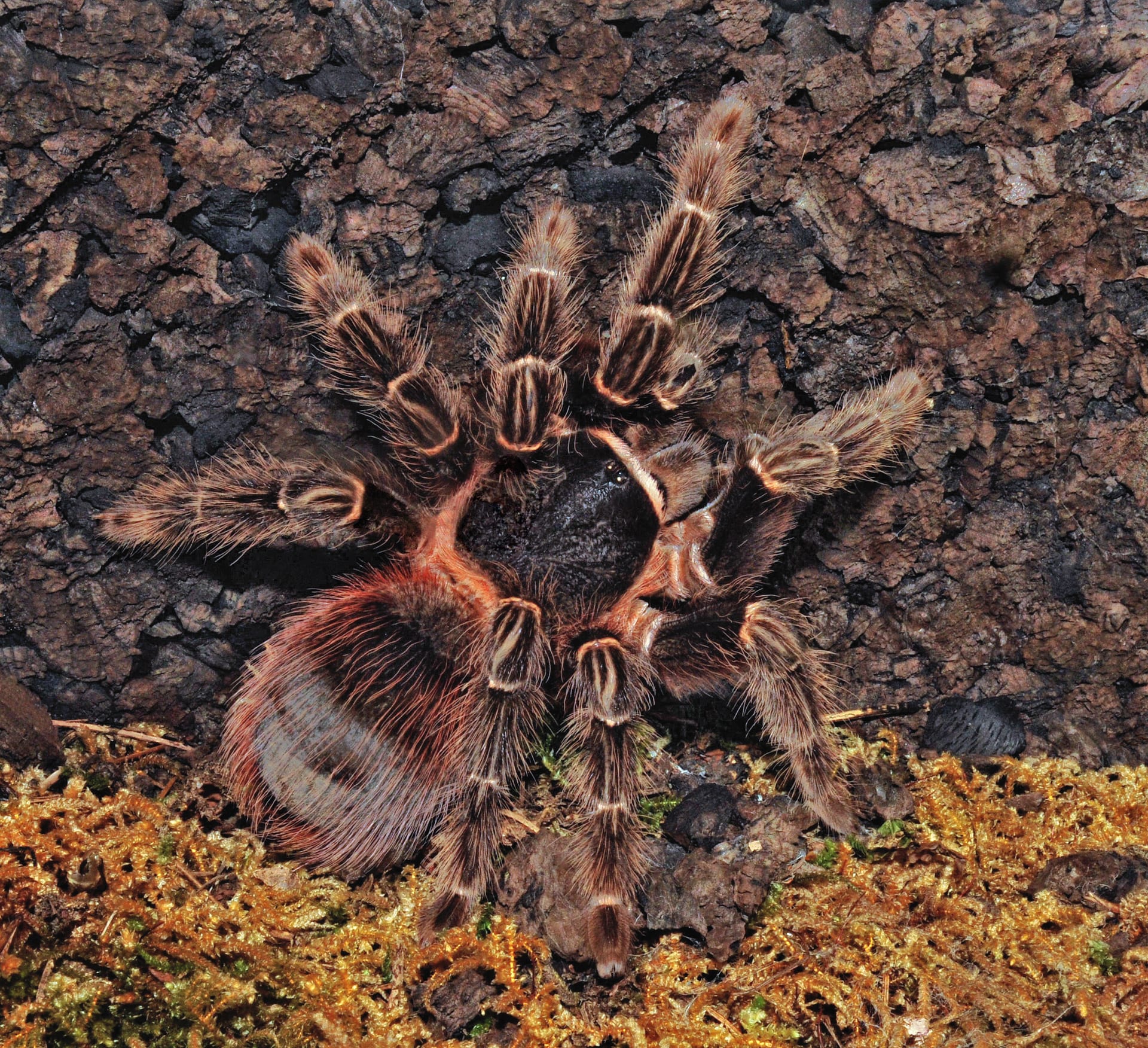
Birupes simoroxigorum was described in 2019 by Gabriel and Sherwood from a pair of specimens collected the previous year at Batang Salak in Sarawak, Malaysian Borneo, and is the only species in the genus Birupes. The genus name combines the Malay biru, meaning blue, with the Latin pes, meaning foot, in reference to the legs of adult females. Adult males are brown with black setae on the legs. Adult females have a cream carapace and light brown abdomen with brilliant iridescent blue legs that turn green in alcohol. The labium bears 250 to 300 cuspules and the maxillae 100 to 120, and the male pedipalps lack tibial apophyses. The species is known only from its type locality, where it lives on the floor of lowland rainforest and digs burrows in the soil.
Source: Wikipedia (CC BY-SA 4.0)
Lifespan of the Neon Blue Leg Tarantula
The Neon Blue Leg Tarantula lives Females 10-15 years / males 2-4 years.
Size of the Neon Blue Leg Tarantula
The Neon Blue Leg Tarantula grows to Holotype male 45.1mm in body length (carapace 18.6mm); paratype female 45.5mm (carapace 17mm).
The holotype male measures 45.1mm in body length, of which the carapace accounts for 18.6mm, and the paratype female 45.5mm with a 17mm carapace.
Basic Info
Origin
Borneo (Batang Salak, Sarawak, Malaysia)
Lifespan
Females 10-15 years / males 2-4 years
Size
Holotype male 45.1mm in body length (carapace 18.6mm); paratype female 45.5mm (carapace 17mm)
Care Specifications
Semi-aggressiveSolitary
Sources: Wikipedia: Birupes / Polish Wikipedia: Birupes simoroxigorum / GBIF
References & Sources
Edited & verified by: BreederDirect editorial team
The taxonomic, regulatory, and husbandry data on this page are compiled and verified against the authoritative primary sources below.
Taxonomy & Authority
Accepted name: Birupes simoroxigorum Gabriel & Sherwood, 2019
Authority databases: GBIF
Nomenclature follows global taxonomic authority databases.
Regulations & Conservation Status
Not CITES-listed
Sources: CITES Appendices (species not listed)
Regulations may change. Always verify the latest information with the relevant authorities.
Neon Blue Leg Tarantula Listings
Loading latest listingsFind listings for this species