About Blue-tongued Skinks
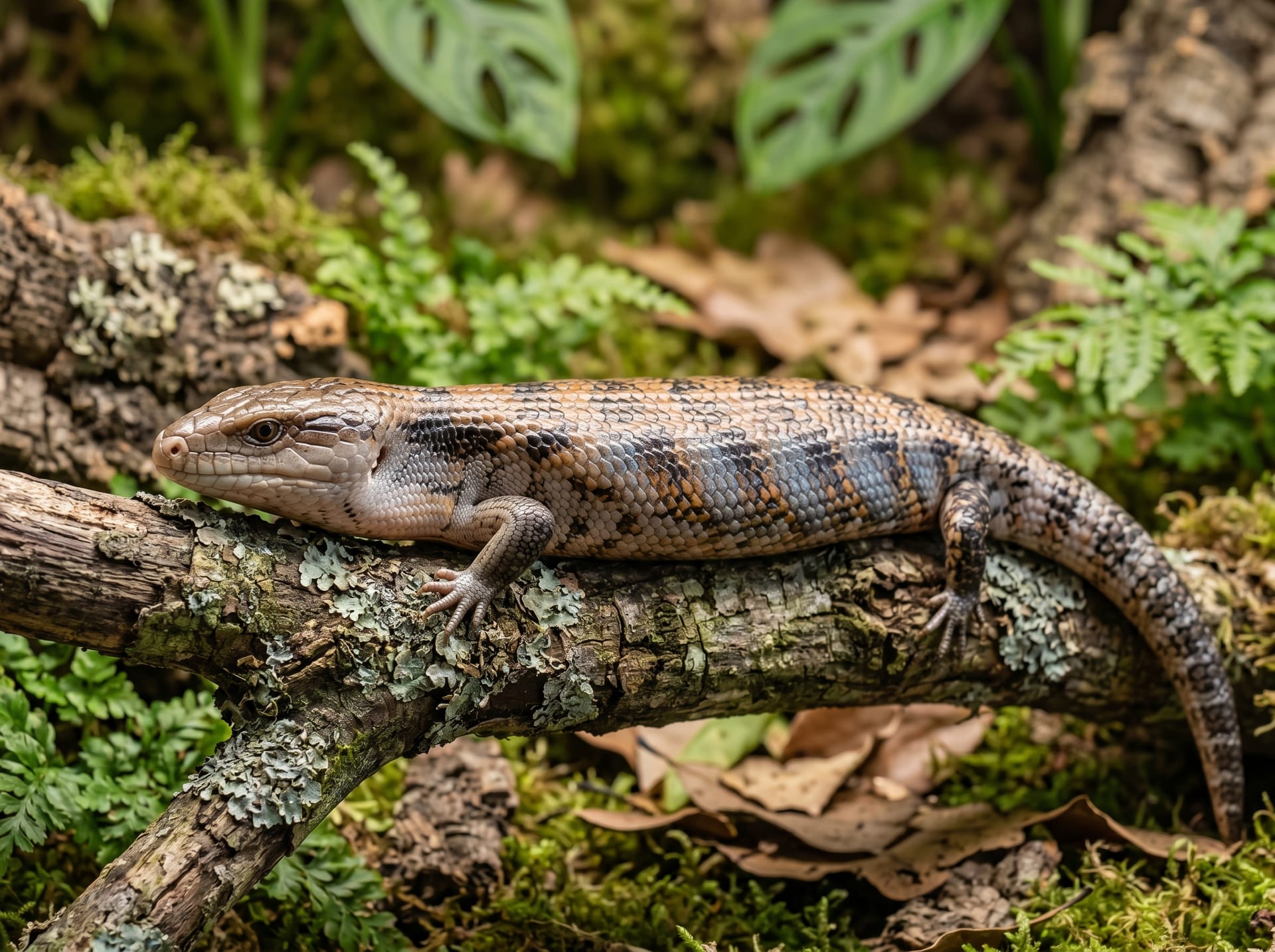
The Blue-tongued Skink is a large skink of the family Scincidae found in Australia, Indonesia, and other regions. Its most distinctive feature is its remarkably bright blue tongue, from which it derives its name—when threatened, it impressively displays this tongue as a threat display to predators.
Due to their docile temperament, ease of handling, and robust constitution, they have become a standard beginner reptile pet. In recent years, captive-bred (CB) individuals have become increasingly available. This article, building on the fundamentals of care, provides detailed information specialized for breeding these skinks.
Major Species and Their Suitability for Breeding
| Common Name | Scientific Name | Adult Size | Breeding Difficulty | Characteristics |
|---|
| Eastern Blue-tongue | T. scincoides scincoides | 50–60cm | Moderate | Most commonly available subspecies |
| Western Blue-tongue | T. occipitalis | 45–60cm | Moderate | Arid environment type; tan coloration |
| Northern Blue-tongue | T. scincoides intermedia | Up to 65cm | Moderate | Largest species; many breeding records |
| Indonesian Blue-tongue (Kaibit, etc.) | T. gigas spp. | 50–60cm | Moderate–High | Prefers humid environments |
| Merauke | T. gigas merauke | 50–65cm | High | Requires careful temperature/humidity management |
This article focuses primarily on the most commonly available Eastern Blue-tongue.
Breeding Prerequisites: Maintaining Healthy Adults
Before attempting to breed, it is paramount that both individuals that will form a breeding pair are fully grown and in good health.
Sexual Maturity Milestones
| Indicator | Milestone |
|---|
| Age | 2–3 years or older |
| Weight | Females 300g+ (400g+ ideal depending on species) |
| Length | 40cm+ |
Breeding immature females results in significant energy depletion and risks of post-partum decline and death. We strongly recommend beginning breeding only with individuals that have been raised for 2–3 years or longer and are in good health.
Sex Determination
Determining sex in Blue-tongued Skinks is relatively difficult and requires combining the following methods:
- Hemipenal bulges near the base of the hind legs: Males show slight development, but individual variation is significant
- Head size: Males tend to have slightly larger and broader heads compared to females
- Probing method: Consult with a specialist or experienced person (self-administration risks tissue damage)
- DNA sex determination: The most reliable method; available through veterinary clinics or specialist laboratories
Cooling (Creating a Winter Cooling Period)
Breeding Blue-tongued Skinks requires inducing a cooling period (brumation) equivalent to winter in nature to trigger their reproductive cycle.
Cooling Schedule (Southern Hemisphere Type)
Since they are native to Australia, in nature the cooling period before breeding occurs during May–August (Southern Hemisphere winter). In Japan, the cooling period is typically set around December–February.
| Period | Temperature Setting | Precautions |
|---|
| 2 weeks before cooling begins | Gradually lower temperature | Stop feeding and ensure complete digestion |
| Cooling period (4–8 weeks) | Basking 25–28°C, cool zone 15–20°C | Provide water at all times; feeding once every 1–2 weeks or stop entirely |
| After cooling ends | Return to normal temperature | Gradually increase temperature over 1–2 weeks |
Caution: Monitor health closely during cooling. If weight drops 10% or more or abnormal behavior is observed, discontinue cooling and consult a veterinarian.
Pairing
Return to normal husbandry conditions 1–2 weeks after cooling ends, and once feeding appetite resumes, proceed with pairing (mating).
Mating Process
- Introduce the female into the male's enclosure (or allow them to meet in a neutral, spacious area)
- The male grasps the female at the base of her hind legs and assumes the mating position
- Mating lasts from several minutes to tens of minutes
- Return both to separate enclosures immediately after mating (to treat any bite wounds)
If the female refuses (by fleeing or fighting back), do not force continued attempts; try again later. Multiple matings increase fertilization success (1–2 times per week for approximately 4–6 weeks).
Pregnancy Management
Blue-tongued Skinks are ovoviviparous (eggs hatch inside the mother and neonates are born live).
Signs of Pregnancy
- Abdominal enlargement: The abdomen gradually swells starting 4–8 weeks into pregnancy
- Changes in appetite: Early pregnancy may show increased appetite; late pregnancy often shows decreased appetite
- Behavioral changes: The female spends prolonged periods in the basking area to maintain abdominal warmth
Gestation Period and Litter Size
| Item | Details |
|---|
| Gestation period | 3–5 months |
| Litter size | Average 5–15 neonates (up to approximately 25) |
| Birth timing | 3–5 months after mating (most commonly spring–early summer) |
Pre-Partum Care
- Calcium supplementation: Increase calcium powder supplementation on prey items during the 1–2 months before parturition
- Nesting box: Provide a nesting box filled with moistened cork bark or vermiculite inside the enclosure
- Temperature management: Maintain basking spot temperatures of 32–35°C to assist thermoregulation
- Stress reduction: Minimize handling; leave the female alone in the weeks prior to birth
Neonate Management
Neonatal skinks move and absorb their yolk sacs (yolk material) immediately after birth.
Separation Timing
Separate neonates from the mother immediately after birth. The mother may consume her offspring (cannibalism).
Initial Rearing Environment
| Item | Setting |
|---|
| Enclosure size | 30–45cm plastic tub (individual housing per neonate) |
| Temperature | Basking 35°C, warm side 30°C, cool side 25°C |
| Humidity | 30–50% |
| Substrate | Paper towels (facilitates initial care) |
Initiation of Feeding
Neonates absorb their yolk sacs by day 2–7 post-partum and are ready for initial feeding.
- Crickets (medium–large size): Dust with calcium and vitamin D3 on the head
- Vegetables (mustard greens, bok choy, pumpkin): Finely chop and offer as topping
- Commercial prepared diets (Repashy, etc.): Nutritionally balanced and easy to manage
Some neonates may not eat initially, but appetite typically stabilizes within a few days.
Summary
Successful Blue-tongued Skink breeding depends on understanding the complete cycle: cooling → pairing → pregnancy management → parturition.
- Attempt breeding only with healthy adults (2–3 years old, 300g+)
- Use 4–8 weeks of cooling to trigger reproductive behavior
- Prepare a nesting box rather than an egg incubator (as they are ovoviviparous)
- Separate neonates from the mother immediately after birth
- House neonates individually to prevent cannibalism
Home breeding of captive-bred (CB) individuals offers the rewarding experience of working as a breeder while maintaining the health of your animals. Take your time and approach it thoughtfully.