Complete Breeding Guide for Leopard Geckos | Cooling, Mating, Incubation, and Hatchling Care
A complete guide for those who want to breed leopard geckos. Explains breeding preparation through cooling, how to sex males and females, confirming mating, setting up egg-laying boxes, managing egg incubation, and raising hatchlings.

Key Takeaways
A complete guide for those who want to breed leopard geckos. Explains breeding preparation through cooling, how to sex males and females, confirming mating, setting up egg-laying boxes, managing egg incubation, and raising hatchlings.
Related Species
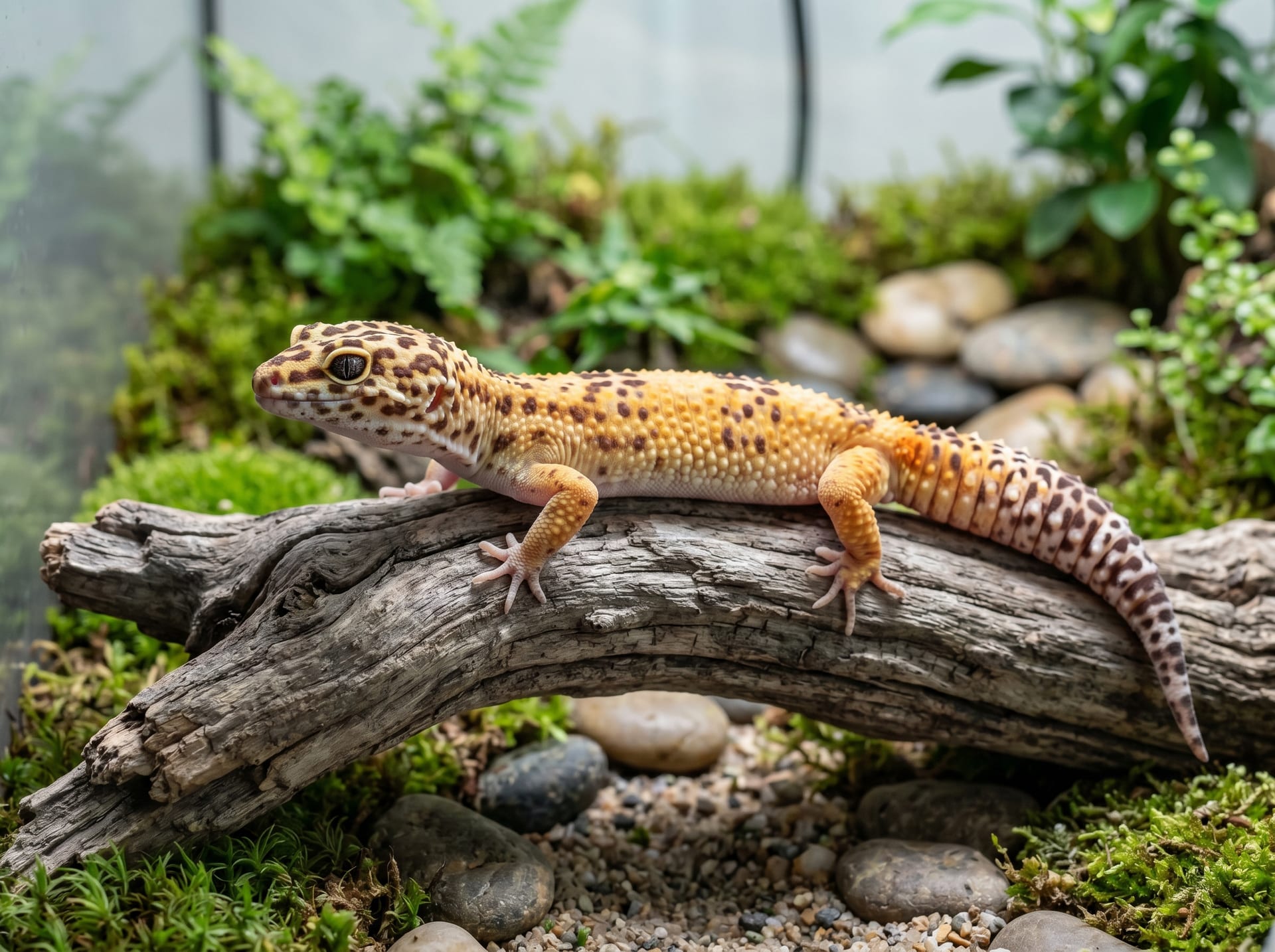
Before You Start Breeding Leopard Geckos
Leopard geckos (Eublepharis macularius) are relatively easy to breed among reptiles, and indoor breeding is entirely possible with proper environmental setup. However, despite being "relatively simple," inadequate preparation can lead to decreased hatch rates and deterioration of the female's health. Be sure to confirm the following before breeding:
- Females must be at least 18 months old and weigh 60g or more (70g+ recommended)
- Males must be at least 12 months old with visible hemipenal bulges on both sides of the tail base
- Both individuals must have been eating and eliminating normally for the past 3 months
- No parasites, respiratory disease, or Cryptosporidium infection
Female weight management is especially critical. Egg production consumes large amounts of calcium and energy from the female's body. Dusting with calcium + D3 at least twice weekly before the breeding season to build sufficient bone density is key to successful breeding without complications.
Triggering the Breeding Cycle with Cooling (Brumation)
In the semi-arid regions of Central to South Asia where wild leopard geckos live, winter temperatures drop below 10°C. This seasonal change triggers hormone secretion and breeding behavior in the following spring. Replicating this 'cooling' in captivity significantly increases breeding success rates.
Cooling Steps:
- Beginning around October-November, gradually lower temperature over 2 weeks (avoid sudden temperature changes)
- Maintain a cool spot of 18-20°C and warm spot of 24-25°C for 2-3 months
- Reduce feeding frequency to about once per week; from late December to January, feed minimally or not at all
- Continue providing water at all times (to prevent dehydration)
- From mid-February to March, gradually return to normal temperatures (28-32°C) over 2 weeks and resume feeding
Weigh your gecko once weekly during cooling. If weight loss exceeds 15% from the start, immediately stop cooling and return to normal care. Excessive cooling is particularly dangerous for females, as nutritional status directly affects clutch size and hatch rates.
While breeding without cooling is possible in some cases, breeding success rates and clutch sizes tend to decrease. For first-time breeders, we strongly recommend implementing cooling.
Mating and Pairing
After cooling ends, wait 2-3 weeks at normal temperature and confirm adequate feeding before pairing. Always introduce the male into the female's enclosure (not the other way around, as territorial males can become aggressive if moved into another male's territory).
When the male displays 'tail vibration' (rapid tail trembling), it's a sign of courtship. If the female remains still and accepts the male, he will gently grip her neck and mate. Mating itself typically lasts 5-20 minutes.
Pairing 3-4 times during the breeding season improves fertilization rates. Sperm can be stored for several weeks after a single mating, so weekly pairing is unnecessary, but repeating every 2-3 weeks ensures success.
Females often experience increased appetite after mating. Increase calcium dusting more than ever at this time to build nutritional reserves for egg production.
Preparing the Egg-Laying Box and Female Care
About 3-4 weeks after mating, white oval eggs become visible through the female's abdomen (no candling needed—direct observation is sufficient). At this point, place the egg-laying box in the enclosure.
How to Make an Egg-Laying Box:
- Drill a hole in the lid of a 2-3L plastic container just large enough for the head to pass through
- Fill the bottom with damp vermiculite to a depth of 3-4cm
- Humidity guideline: when squeezed, it should hold together without dripping water
- Place in a dark corner of the enclosure
Females prefer to lay eggs in dark, humid locations. If the female doesn't use the box, try increasing the vermiculite's humidity or darkening the entire enclosure.
Collect eggs promptly after laying. Never flip the eggs upside down. The embryo is attached to the inside of the shell, and inverting the egg will cause suffocation and death. Mark the top of the egg with a marker or pencil before transferring to an incubator.
A single clutch typically contains 1-2 eggs (rarely 3), with 4-8 clutches possible per season. Because egg production is energetically demanding, prioritize calories and nutrition for the female throughout the laying period.
Egg Incubation Management
Leopard geckos exhibit TSD (temperature-dependent sex determination), where incubation temperature affects sex ratio.
| Temperature | Incubation Period (approx.) | Sex Ratio Tendency |
|---|---|---|
| 26-27°C | ~70-80 days | Mostly female |
| 28-29°C | ~55-65 days | Mixed |
| 30-31°C | ~40-50 days | Mostly male |
| 32-33°C | ~35-45 days | Mostly female (Hot female) |
Females incubated at 32°C or above are called 'hot females' and tend to become more aggressive as they grow. For non-breeding purposes, 29-30°C is the most practical management temperature.
Dry incubation (a sealed container with a small amount of water to maintain humidity through natural evaporation) is convenient, low-trouble, and beginner-friendly. Maintain humidity at 80-90%. If eggs become dented or develop mold, isolate them to prevent infection, but slight denting may not prevent hatching.
Fine wrinkles will appear on the egg's surface 1-2 days before the expected hatch date—this is a normal pre-hatching sign. Even after pipping, hatchlings may take 1-2 days to fully emerge. Never force the hatchling out of the shell.
Caring for Hatchlings
Newly hatched geckos are typically 7-9cm long and weigh 3-5g. For the first 24-48 hours after hatching, leave them undisturbed to allow yolk sac absorption. No handling is necessary during this period.
Initial Care Setup:
- Enclosure size: 10-15L plastic container (oversized enclosures make it difficult for hatchlings to locate prey)
- Temperature: warm spot 30°C, ambient 25-27°C
- Shelter: one small piece of cork bark (secure hiding spot)
- Substrate: paper towel or kitchen paper (low accidental ingestion risk)
When to Start Feeding: Begin feeding after the first shed, which occurs 7-10 days post-hatch. Offering food before the first shed is usually ignored and only causes stress.
Initial food should be small two-spotted crickets or house crickets. It's critical to choose prey smaller than the hatchling's head width; oversized insects risk indigestion and choking. Dust with calcium powder and feed 4-5 times weekly to support rapid growth.
Minimize handling during the first 2 weeks. Stress hormones can suppress appetite and slow growth. Feeding should be done quietly and quickly, with minimal environmental disruption. After one month of age, once feeding is stable, gradually acclimate the hatchling to handling.