AI-generated image
Blue-Tongued Skink
BeginnerLarge skink named for its distinctive blue tongue. Docile, easy to handle, and omnivorous with varied diet. Hardy and long-lived.
Difficulty
Beginner
Temperature
25〜32℃
Lifespan
15-20 years
Size
45-60cm
Humidity
40〜70%
Diet
Omnivore (vegetables, fruits, insects, dog food)
About
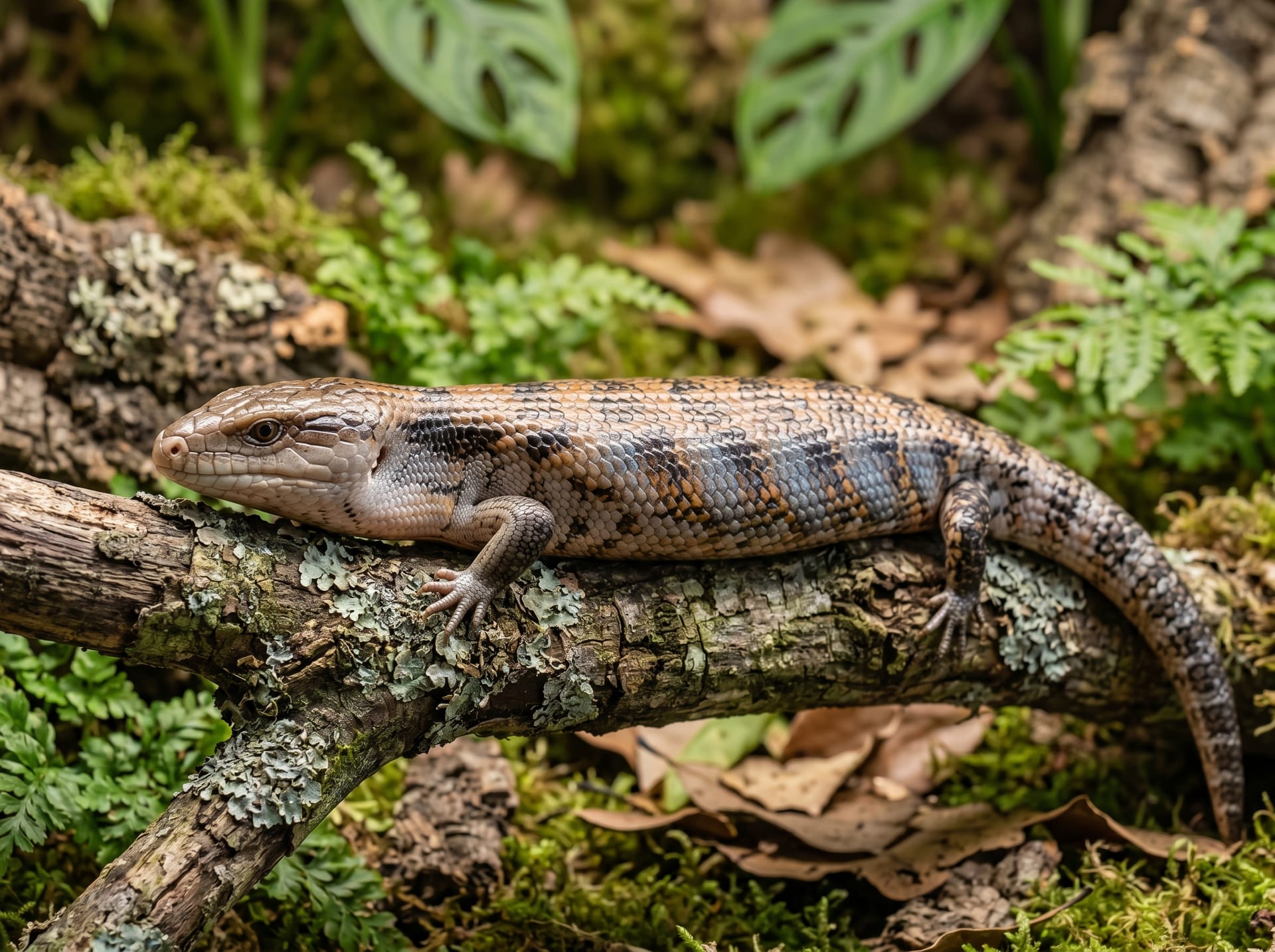
Blue-tongued skinks are a group of large lizards in the genus Tiliqua, native to Australia and parts of Indonesia. They are named for their distinctive blue tongue, which is displayed as a warning signal to potential predators. Adults commonly reach 45–60 cm in total length and have a robust, elongated body with short, stubby limbs. Coloration varies considerably among species and subspecies but typically involves shades of brown, black, and orange in banded or blotched patterns. Blue-tongued skinks are omnivorous, consuming a varied diet of vegetables, fruits, insects, and small vertebrates. They are widely regarded as docile and easy to handle, making them popular pets for both beginners and experienced keepers. Captive individuals can live 15–20 years or longer.
Lifespan of the Blue-Tongued Skink
The Blue-Tongued Skink lives 15-20 years.
Size of the Blue-Tongued Skink
The Blue-Tongued Skink grows to 45-60cm.
Temperature & humidity for the Blue-Tongued Skink
The ideal temperature for the Blue-Tongued Skink is 25〜32℃.
Basic Info
Origin
Australia and Indonesia (including Irian Jaya)
Lifespan
15-20 years
Size
45-60cm
Temperature
Morphs (Varieties)
The majority of trade names for Blue-tongued Skinks (Tiliqua)—Northern, Irian Jaya, Kei Island, Halmahera, Merauke, etc.—are locality or subspecific designations rather than morphs and are excluded. Hypo and Albino circulate in commerce, but Hypo inheritance (recessive or codominant) remains unconfirmed, and Albino lacks robust breeding evidence; neither is annotated with inheritance patterns. Caramel is a line-bred strain.
Line-bredEstablished by selective line breeding.
Caramel
Other
HypomelanisticAlbino
Sources: Reptile Mountain - On Morphs / BlueTongueSkinks.NET - Albino Fact Sheet
A curated selection of notable morphs. Inheritance modes are a breeding-planning guide; actual appearance varies with combos.
References & Sources
Edited & verified by: BreederDirect editorial team
The taxonomic, regulatory, and husbandry data on this page are compiled and verified against the authoritative primary sources below.
Regulations & Conservation Status
CITES Appendix IIIIUCN LC · Least Concern
The Australian subspecies was listed in CITES Appendix III in 2022.
Sources: CITES Checklist (Tiliqua scincoides Australia Appendix III, 2022) / IUCN Red List
Regulations may change. Always verify the latest information with the relevant authorities.
Blue-Tongued Skink Listings
Loading latest listingsFind listings for this species