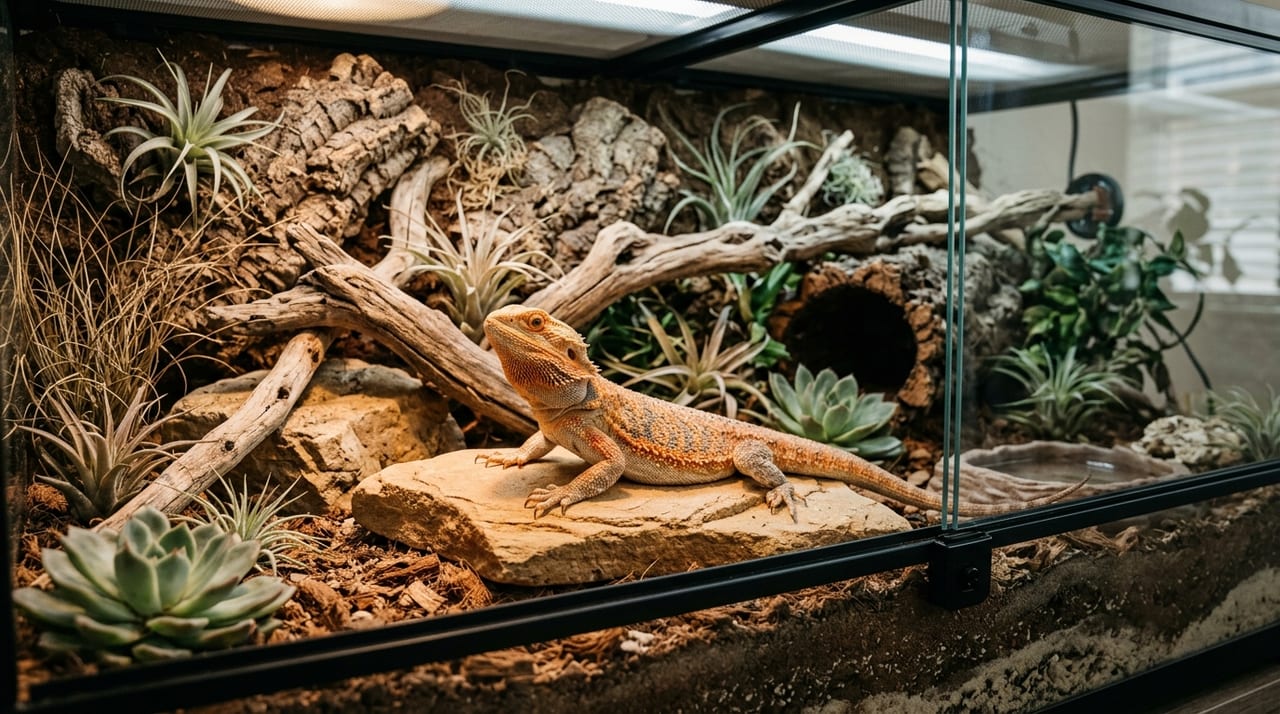
The Japanese grass lizard (Takydromus tachydromoides) is a small lizard commonly seen in grasslands and parks throughout Japan. Many people have the childhood experience of catching one. When keeping them as pets, proper environmental conditions and management are essential. This article explains the fundamentals of care in detail.
- Distribution: Throughout Japan (Hokkaido to Kyushu)
- Length: 16-25cm (the tail is long, comprising about 2/3 of the body)
- Lifespan: 2-3 years in the wild, 4-6 years in captivity
- Activity Period: Approximately March to October (hibernates in winter)
- Diet: Carnivorous (primarily insects, spiders, earthworms, etc.)
Choosing a Proper Enclosure
Japanese grass lizards are active and need a spacious enclosure with adequate height.
Recommended Enclosure Size:
- 1-2 individuals: 45×30×30cm or larger
- 3 or more: 60×45×45cm or larger
Wood, plastic, or glass enclosures can all be used, but a specialized reptile enclosure with good ventilation is best. Choose one with a secure lid to prevent escape.
Enclosure Layout:
- Substrate: A mix of leaf mold, coconut husk, and clay granules (effective for retaining moisture)
- Hiding spots: Cork bark, driftwood, rocks
- Basking spot: Flat rocks or branches (positioned directly under the light)
Temperature and UVB Lighting Setup
Japanese grass lizards are ectothermic reptiles and cannot regulate their body temperature independently. Proper temperature gradients and UVB lighting are essential.
Temperature Settings:
- Basking spot: 35-40°C
- Average enclosure temperature: 25-30°C
- Night: 20-25°C (avoid dropping too suddenly)
UVB Lighting:
UVB light is necessary for Japanese grass lizards to synthesize Vitamin D3. Prolonged housing without UVB can lead to "metabolic bone disease (MBD)," causing skeletal deformities.
- Recommended UVB Light: T5 HO UVB 5.0 or 10.0
- Daily light duration: 10-12 hours
- Replacement schedule: Every 6-12 months (UV radiation degrades even if visible light is still emitted)
Types of Food and Feeding Methods
Japanese grass lizards primarily eat live food.
Main Types of Food:
- Crickets (house crickets or dubia): The most readily available standard live food
- Dubia roaches (Argentine roaches): High nutritional value and easy to size appropriately
- Mealworms: Supplement food due to high fat content
- Wild-caught insects: Grasshoppers, spiders, caterpillars, etc. (beware of pesticide exposure)
Calcium and Vitamin Supplementation:
Dust live food with calcium powder 2-3 times weekly and with vitamin D3-enriched calcium once per week.
Feeding Frequency:
- Adults: 3-4 times per week, 1-3 insects per feeding
- Juveniles and young individuals: Daily or every other day (to promote growth)
Hydration
Japanese grass lizards prefer moving water droplets, and some individuals won't drink from water bowls.
Watering Methods:
- Spray the enclosure walls to create water droplets (morning and evening)
- Place a small, shallow water dish (keep water level shallow)
- If the lizard won't drink from a dish, use a dropper to touch water droplets to its mouth
Hibernation (Overwintering) Management
Wild Japanese grass lizards enter hibernation when temperatures drop below 10°C. In captivity, you can choose to allow natural hibernation or maintain year-round care with heating.
If Allowing Hibernation
- Gradually reduce feeding from late October
- Thicken the substrate (10cm or more) and keep it moist
- Move to a dark area or outdoors at 5-10°C (protected from frost)
- Gradually return to room temperature as temperatures rise around March
For Year-Round Care
Use heating equipment (ceramic heaters or heat panels) to maintain room temperature at 18°C or above and continue using UVB lighting.
Shedding Care
Japanese grass lizards shed periodically. While healthy individuals typically shed on their own, insufficient humidity can cause incomplete shedding.
Treating Incomplete Shedding:
- Soak in lukewarm water (around 30°C) for 5-10 minutes
- Once the skin softens, gently remove it with a cotton swab
- Don't pull forcefully (dead tissue can result if skin remains on the toes)
To prevent this, maintain enclosure humidity at 40-60%. Regular misting of the substrate is effective.
Breeding Basics
Since Japanese grass lizards are native to Japan, they naturally exhibit breeding behavior after experiencing proper hibernation.
- Mating: April to June
- Egg-laying: May to August (2-5 eggs per clutch)
- Incubation: 50-60 days after laying (maintain at 28-30°C)
- Egg management: Keep at 28-30°C in a dedicated incubator or moisturized container
Summary
While Japanese grass lizards are familiar creatures, proper environmental setup is essential for long-term care.
- Provide an appropriately sized enclosure with a proper temperature gradient
- Always use UVB lighting to prevent metabolic bone disease
- Dust live food with calcium powder
- Use spraying for watering and humidity control
- Choose between hibernation or year-round heating for overwintering
With proper care, Japanese grass lizards can be companions for five years or more.