Sand Boa Care Guide | Housing, Feeding & Handling for Burrowing Snakes
Comprehensive guide to sand boa care, focusing on the Kenya sand boa. Covers sand substrate setup, under-tank heater temperature management, frozen mouse feeding, breeding, and handling techniques.
Key Takeaways
Comprehensive guide to sand boa care, focusing on the Kenya sand boa. Covers sand substrate setup, under-tank heater temperature management, frozen mouse feeding, breeding, and handling techniques.
Related Species
About Sand Boas
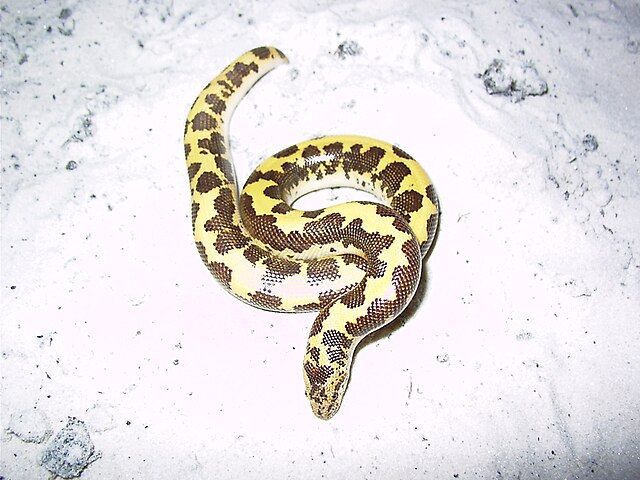
Sand Boas are a collective term for snakes of the genus Eryx (family Boidae) found in Africa, the Middle East, and Central Asia. Their name derives from their "semifossorial" burrowing habit—they live in sand and soil—and they employ an ambush hunting strategy.
Primary captive species:
- Kenya Sand Boa (Eryx colubrinus loveridgei): Most commonly available in the pet trade. Features beautiful coloration—orange and yellow with brown markings. Length: 40–70 cm
- John's Sand Boa (Eryx johnii): Solid brown coloration, slightly larger (70–90 cm)
- Tartar Sand Boa (Eryx tataricus): Native to Central Asia. Large species, exceeding 100 cm in length
- Rough-scaled Sand Boa (Eryx conicus): Native to India
Among these, the Kenya Sand Boa is gaining popularity due to its docile temperament, small size, ease of care, and abundance of morphs (color variations).
Characteristics and Benefits as a Pet
Sand boas possess excellent characteristics as a beginner snake species:
- Small size: Kenya sand boas reach only 60–70 cm, making them compact
- Docile temperament: Once acclimated, they are easy to handle and readily adapt to handling
- Hardy: Relatively disease-resistant compared to many other snake species
- Abundant morphs: Many color variations available, including albino, snow, anerythristic, and lemon frost
- Nocturnal and fossorial: They burrow during the day, making them suitable for passive observation
Housing and Equipment
Enclosure
Sand boas are small with limited activity levels, allowing them to thrive in relatively compact enclosures.
| Adult Size | Recommended Enclosure Size |
|---|---|
| Kenya Sand Boa Adult (40–70 cm) | 45×45×30 cm or larger |
| Juvenile (up to 30 cm) | 30×30×20 cm |
Plastic containers, acrylic tanks, or glass terrariums are all suitable.
Important: Sand boas are escape artists. Always choose an enclosure with a locking lid.
Substrate (Sand)
True to their name, "sand-based substrates" are most appropriate.
- Reptile sand (desert sand): Fine sand. Maintain a depth of 10–15 cm
- Calcium sand: Safer if ingested (though note it compacts easily)
- Paper towels (for juveniles): Easier to manage hygienically. Less suitable for adults as it obscures natural behavior
Maintain a sand depth of at least 10 cm. Insufficient depth prevents natural burrowing behavior and causes stress.
Temperature Management
| Zone | Temperature |
|---|---|
| Warm spot (over under-tank heater) | 32–35°C |
| Cool side | 24–27°C |
| Night | Can be lowered to 20–22°C (for Kenya origin) |
Under-tank heater placement: Sand boas sense warmth through their belly, making under-tank heating essential. Install a heat panel under 1/3 to 1/2 of the enclosure floor to create a temperature gradient.
Basking lights are typically unnecessary, though UVB lighting is optional (not harmful). Since sand boas spend most of their time underground, natural light supplementation is often unnecessary.
Humidity
As desert and semi-desert natives, they prefer low humidity.
- Recommended humidity: 30–50%
- Before shedding only: Temporarily raising humidity to 60–70% prevents shedding problems (a humid hide is also effective)
Place a shallow water bowl on the cool side of the enclosure.
Feeding
Food
Sand boas ambush prey in the wild, consuming mammals and birds. In captivity:
- Frozen mice (thawed): Staple diet. Choose mice sized to match the snake's thickest body part
- Feeding temperature: Warm to 40–42°C before offering (do not use boiling water; thaw with lukewarm water)
- Feeding with tweezers: Slowly wave the mouse in front of the snake's face until it strikes
Live prey is generally unnecessary (injury risk; no water quality concerns). Captive-bred individuals readily accept frozen mice.
Feeding Frequency
| Stage | Frequency |
|---|---|
| Juvenile (up to 30 cm) | Every 5–7 days |
| Subadult (30–50 cm) | Every 7–10 days |
| Adult (50 cm and above) | Every 10–14 days |
Sand boas are prone to obesity if overfed. Maintain appropriate feeding frequency and prey size.
Handling
Sand boas are relatively easy to handle, and properly socialized individuals tolerate handling well.
- Start with short sessions: Begin with 5–10 minutes after introduction
- Avoid handling after feeding: Handling during digestion can cause regurgitation
- Avoid handling 1 week before and after shedding: Skin becomes sensitive during this period
- Socialize from juvenility: Early handling determines future docility
As constrictors, they have constricting power, but not enough to cause human injury.
Breeding
Sand boas are ovoviviparous (eggs hatch inside the mother before birth).
- Cooling: Lower temperatures to 20–22°C in winter to induce brumation (2–3 months)
- Pairing: Introduce breeding pairs after the cooling period ends in spring
- Gestation period: Approximately 3–4 months
- Litter size: 10–20 neonates (Kenya sand boa)
Males are smaller and grow more slowly than females. Mature males show testicular development visible as body bulges.
Health Management
Common Health Issues
| Issue | Symptoms | Treatment |
|---|---|---|
| Shedding problems | Retained skin, incomplete shed | Ensure proper temperature/humidity, lukewarm soak |
| Mouth rot | Inflammation around mouth, cheesy discharge | Reptile veterinarian |
| Respiratory infection | Open-mouth breathing, wheezing | Increase heat, veterinary care |
| Mite infestation | Small red or black dots on body | Thorough cage cleaning, anti-mite treatment |
Conclusion
Sand boas are captivating species well-suited to both beginner and intermediate keepers thanks to their fascinating burrowing behavior, beautiful morphs, and docile nature. With a properly set-up deep sand substrate, appropriate temperature management, and reliable frozen mouse feeding, they become long-term companions. Their accessibility to breeding makes them an ideal stepping stone for those looking to expand into breeding activities.