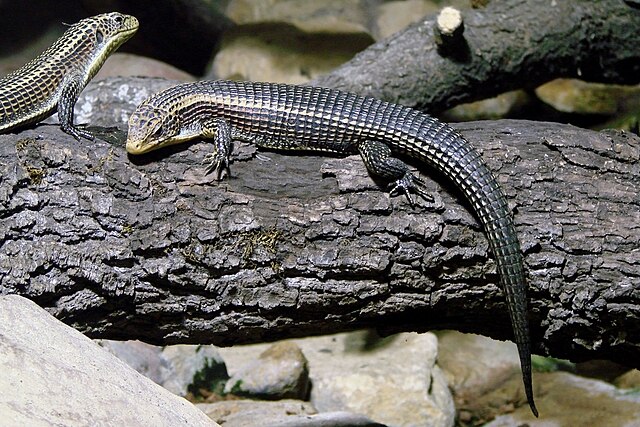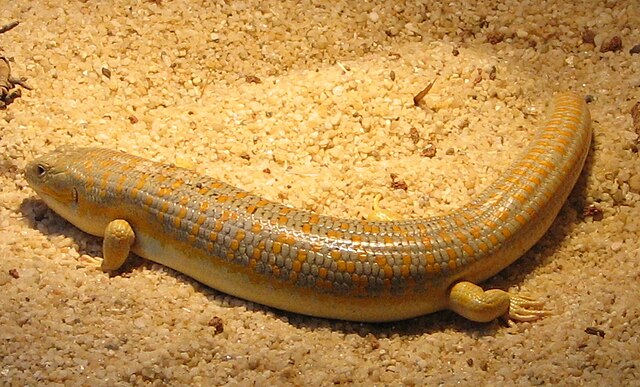
Source: Wikimedia Commons
Schneider's Skink
BeginnerEumeces schneideri
A medium skink from Middle East to North Africa. Beautiful orange spots, hardy and easy to keep.
Difficulty
Beginner
Temperature
25〜32℃
Lifespan
15-20 years
Size
30-40cm
Humidity
40〜70%
Diet
Insects, Vegetables
About
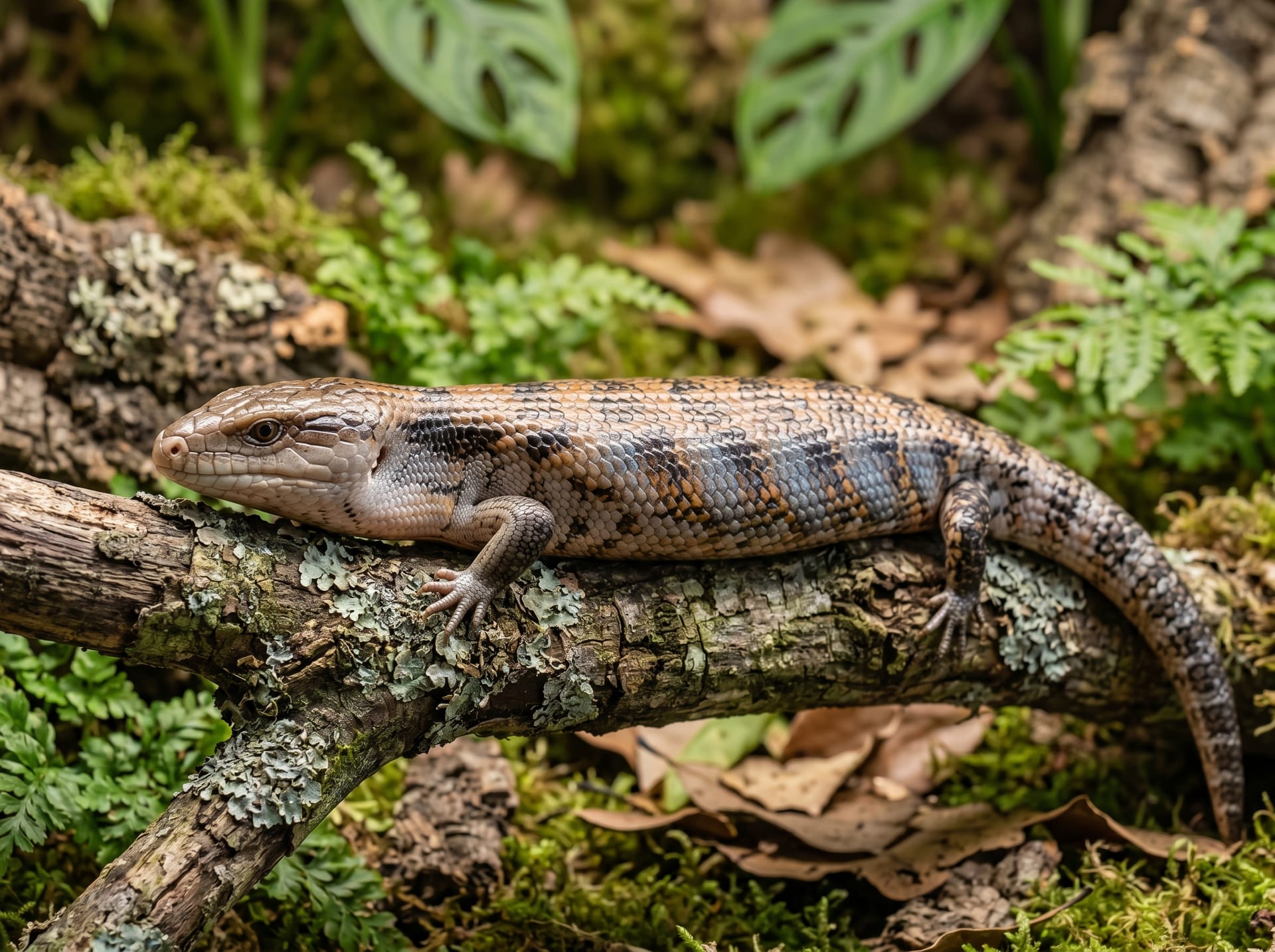
Schneider's skink (Eumeces schneiderii), also known as the Berber skink or orange-spotted skink, is a robust lizard native to arid and semi-arid habitats across North Africa and the Middle East, from Morocco east to Afghanistan and Pakistan. Adults typically reach 30–40 cm in total length. The body is tan to olive-brown with rows of orange spots along the flanks, giving this species an attractive appearance. Schneider's skink is an omnivore, feeding on insects, small vertebrates, plant matter, and eggs. It is considered one of the hardier and more straightforward lizards to keep in captivity, thriving in dry setups with sand or sandy loam substrate. With regular handling most individuals become quite docile.
Lifespan of the Schneider's Skink
The Schneider's Skink lives 15-20 years.
Size of the Schneider's Skink
The Schneider's Skink grows to 30-40cm.
Temperature & humidity for the Schneider's Skink
A hot basking spot of 35–40°C and a cool retreat of 25–28°C should be provided.
Basic Info
Origin
North Africa to the Middle East (Morocco, Egypt, Iran and surrounding regions)
Lifespan
15-20 years
Size
30-40cm
Temperature
Care Specifications
PeacefulSolitaryBreeding: Hard
Sources: Wikipedia (EN) Schneider's skink
Captive Breeding
Egg-laying
- Incubation days
- 49〜70 days
Breeding season: Monoestrous (one clutch per year). In the native range (North Africa and the Middle East), mating tends to occur in spring through early summer.
Breeding notes
Captive breeding is considered challenging; males can be aggressive during courtship, risking injury to females. A moist soil-and-moss nesting substrate is recommended for egg deposition. Fertile eggs hatch approximately 7–10 weeks (49–70 days) after laying. This species is monoestrous, with only one clutch produced per year.
Breeding requires planning, proper husbandry, and responsibility. These figures are general guidelines.
Sources: The Vet Desk – Schneider's Skink Complete Care Guide
References & Sources
Edited & verified by: BreederDirect editorial team
The taxonomic, regulatory, and husbandry data on this page are compiled and verified against the authoritative primary sources below.
Taxonomy & Authority
Accepted name: Eumeces schneideri (Daudin, 1802)
Synonyms: Eumeces pavimentatus Geoffroy De St.Hilaire, Eumeces pavimentatus var. syriaca Boettger, 1883, Eumeces schneideri Boulenger, 1887, Euprepes princeps Eichwald, 1839, Euprepis princeps Eichwald, 1839, Novoeumeces schneiderii (Daudin, 1802)
Authority databases: GBIF · Reptile Database
Nomenclature follows global taxonomic authority databases.
Regulations & Conservation Status
Not CITES-listedIUCN LC · Least Concern
Sources: CITES Checklist (not listed) / IUCN Red List
Regulations may change. Always verify the latest information with the relevant authorities.
Schneider's Skink Listings
Loading latest listingsFind listings for this species