Green Neon Tetra Care Guide | Differences from Neon Tetras, Water Quality, and the Beauty of Schooling
A detailed guide to caring for the smaller and more beautiful green neon tetra (Paracheirodon simulans). Covers the differences between green neon tetras, neon tetras, and cardinal tetras, how to create optimal weakly acidic soft water, tank layouts that showcase schooling behavior, and breeding basics—a complete guide to enjoying green neon tetras.
Key Takeaways
A detailed guide to caring for the smaller and more beautiful green neon tetra (Paracheirodon simulans). Covers the differences between green neon tetras, neon tetras, and cardinal tetras, how to create optimal weakly acidic soft water, tank layouts that showcase schooling behavior, and breeding basics—a complete guide to enjoying green neon tetras.
Related Species
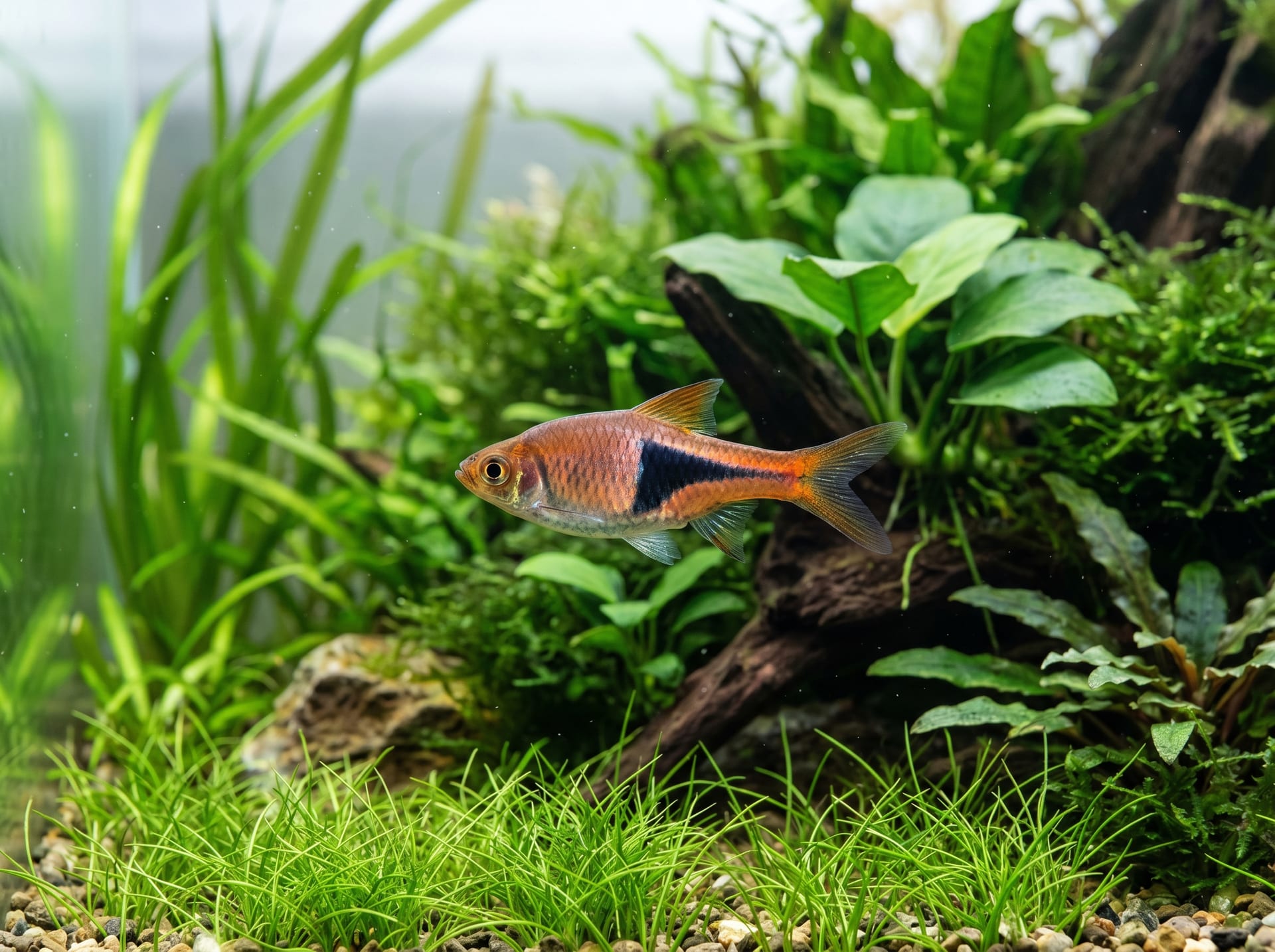
What Are Green Neon Tetras?
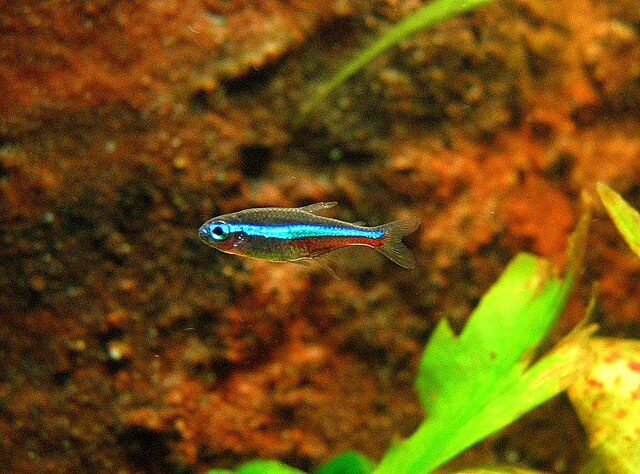
Green neon tetras (Paracheirodon simulans) are small tropical fish from the family Characidae, belonging to the same genus (Paracheirodon) as neon tetras and cardinal tetras. They inhabit blackwater regions of the Orinoco River basin in Venezuela, South America.
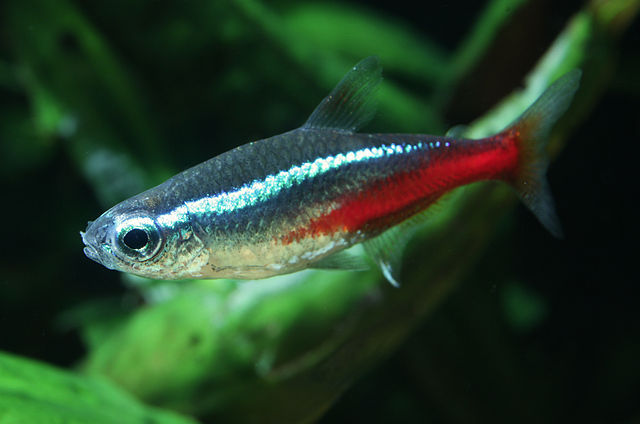
At 2-3 cm in body length, they are the smallest of the three species, characterized by a brilliant blue line running along their side from head to tail. Unlike the red line of neon tetras, green neon tetras have only a small amount of red in the rear half of their body, with an overall blue-green shimmer that inspired their name.
Comparison of Three Neon Tetras
| Feature | Green Neon | Neon Tetra | Cardinal Tetra |
|---|---|---|---|
| Scientific Name | Paracheirodon simulans | Paracheirodon innesi | Paracheirodon axelrodi |
| Body Length | 2-3 cm | 3-4 cm | 4-5 cm |
| Blue Line | Head to tail (full length) | Mid-body to tail | Head to tail (full length) |
| Red Line | Rear abdomen only (minimal) | Rear abdomen to tail | Entire abdomen (extensive) |
| Optimal pH | 4.5-6.5 | 6.0-7.0 | 5.0-6.5 |
| Care Difficulty | Moderately difficult | Beginner-friendly | Moderately difficult |
In Japan, they are less commonly available than neon tetras in general shops, so you'll need to look for them at specialty or dedicated aquarium stores.
Water Quality for Proper Care: Weakly Acidic Soft Water is Essential
Green neon tetras originate from blackwater environments and strongly prefer weakly acidic to acidic soft water. In pH 7.0 or higher (alkaline) conditions or hard water, their coloration becomes dull and their immune function declines.
Optimal Water Parameters
| Parameter | Optimal Range | Acceptable Range |
|---|---|---|
| pH | 4.5-6.5 | 6.0-7.0 |
| General Hardness (GH) | 1-5 dGH | ≤8 dGH |
| Carbonate Hardness (KH) | 1-3 dKH | ≤5 dKH |
| Water Temperature | 24-28°C | 22-30°C |
| Ammonia | 0 ppm | - |
| Nitrite | 0 ppm | - |
How to Create Weakly Acidic Soft Water
1. Using Aquarium Soil
ADA Amazonia and many moss-based soils naturally adjust pH to weakly acidic levels. Using soil from the initial tank setup is the simplest method of creating soft water.
2. Using Driftwood and Peat Moss
Tannins and humic acids leaching from driftwood acidify the water. In a blackwater tank with multiple large pieces of driftwood, pH naturally drops to 5-6. You can also place peat moss in a filter bag and incorporate it into filtration.
3. Using RO Water (Reverse Osmosis)
In areas where tap water has high TDS (total dissolved solids), the most reliable method is to mix RO water with a small amount of remineralized water to adjust GH to approximately 2-3.
Important: Avoid Sudden pH Changes
Green neon tetras are sensitive to sudden pH changes. When performing water changes, it's recommended to acclimate the new water and add it slowly so that the pH difference before and after the change is within 0.5.
Tank Setup and Layout
Recommended Tank Size
For schooling 10-30 fish, a 45-60 cm tank is optimal. Since green neon tetras are small-bodied, even 20 fish can swim comfortably in a 60 cm tank.
Tips for Displaying Schooling Beauty
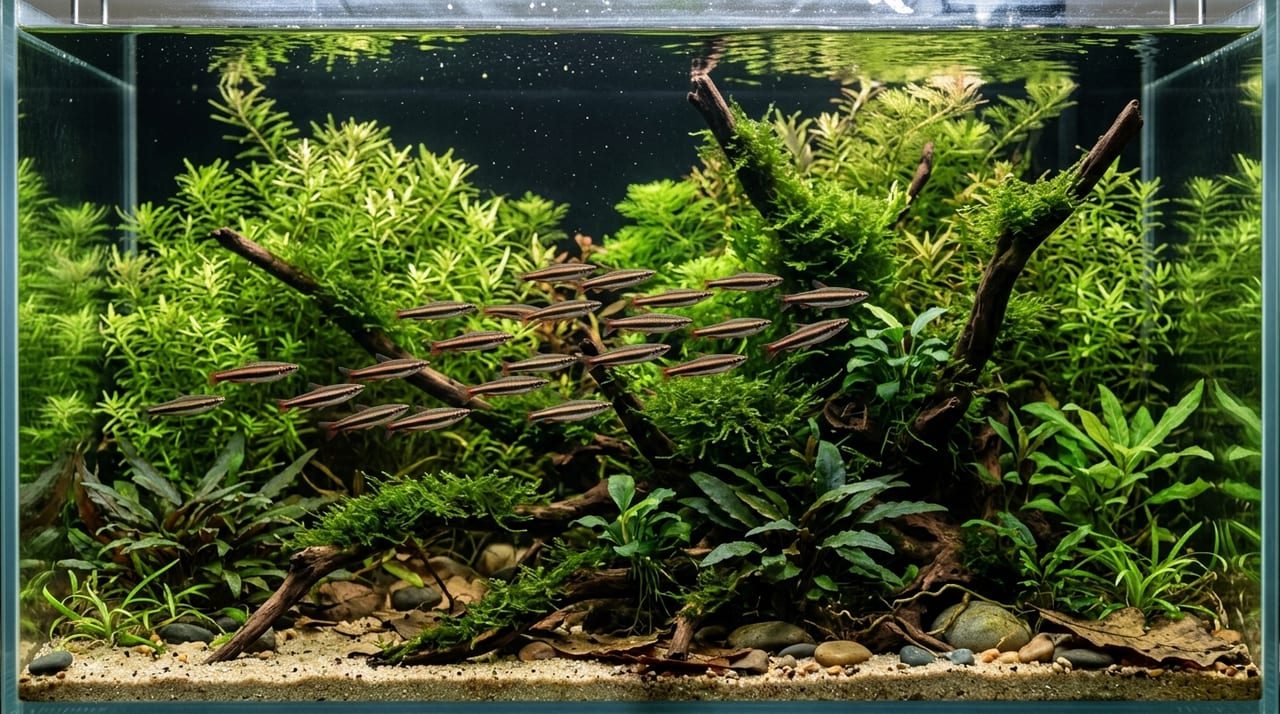
The appeal of green neon tetras lies in "small fish with blue-green shimmering lines schooling together." Design your layout to maximize this showcase effect.
- Use dark substrate (black-toned soil like Amazonia) to enhance body coloration
- Dark background (black or dark gray) makes schooling more prominent than white
- Place 1-2 large pieces of driftwood to create a blackwater aesthetic
- Use shade-loving plants like moss-covered driftwood or Bucephalandra
- Medium lighting (excessive light promotes algae growth and makes plant tank maintenance difficult)
Lighting Selection
Lighting with cooler color temperatures (6500K-10000K) makes the blue line of green neon tetras shimmer more effectively than white LEDs. The "starfield effect" created with flickering lighting is also popular.
Tank Mates and Compatibility
Green neon tetras are peaceful small fish and are suitable for keeping with other peaceful fish of similar size.
Compatible Tank Mates
- Neon tetras and cardinal tetras (beautiful schooling together as related species)
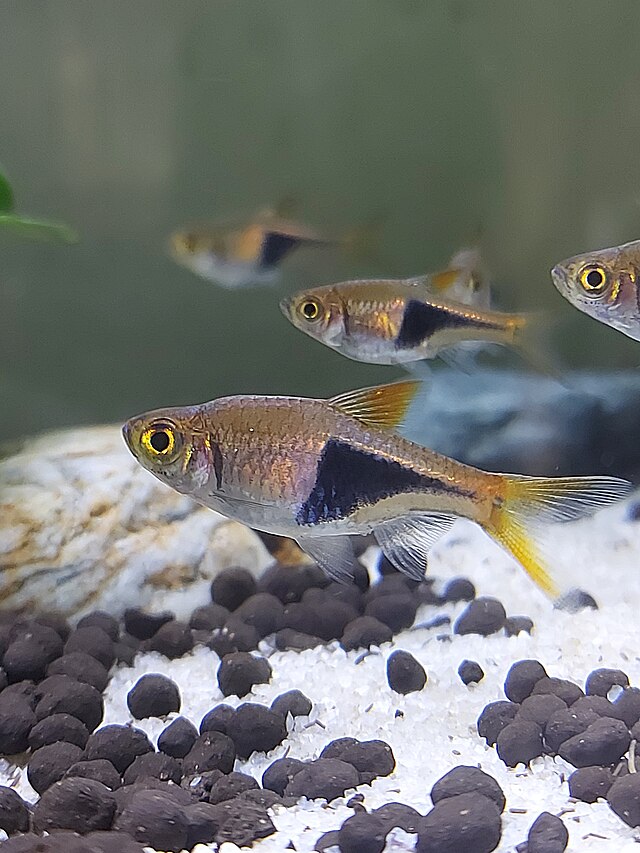
- Rasboras (harlequin rasbora, lampeye tetra, etc.)
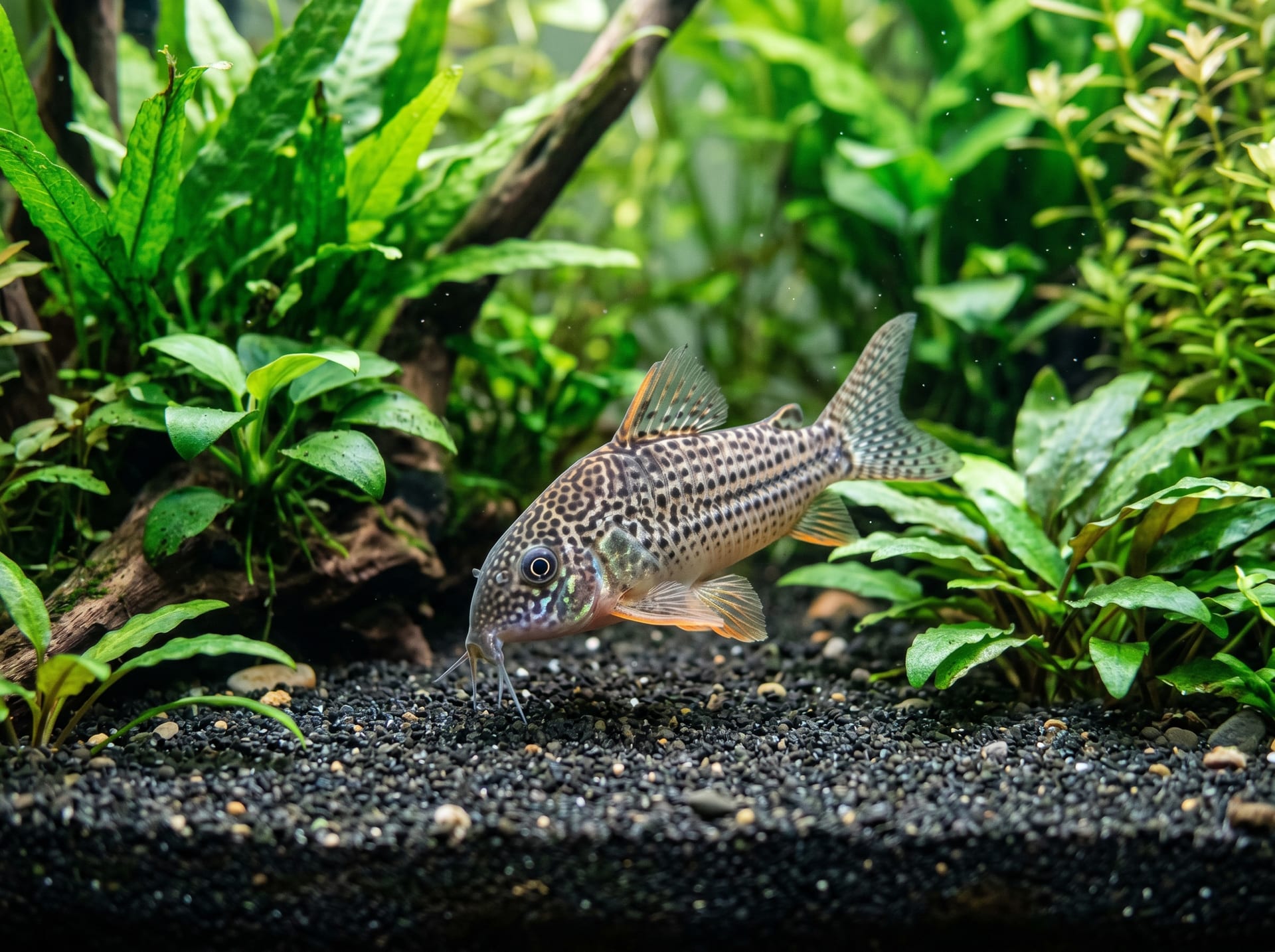
- Small corydoras species (Corydoras paleatus, C. habrosus, etc.)
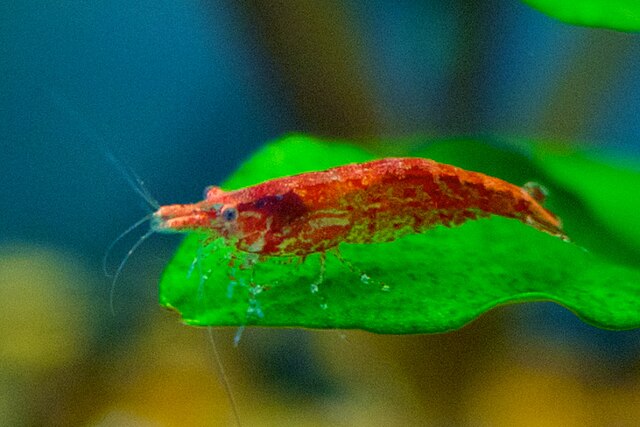
- Cherry shrimp and Amano shrimp (share similar water quality requirements)
Tank Mates to Avoid
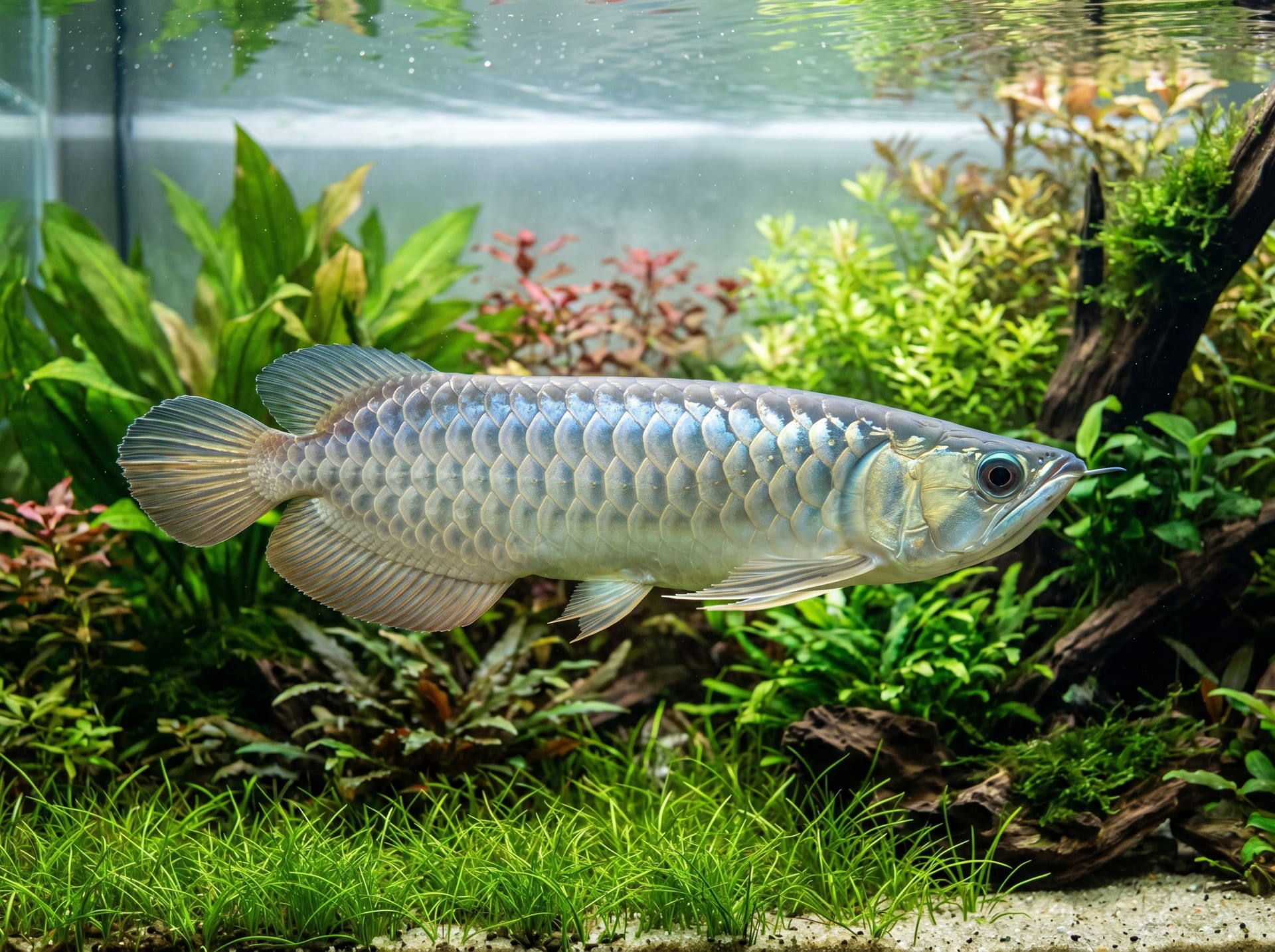
- Large cichlids and arowanas (predation risk)
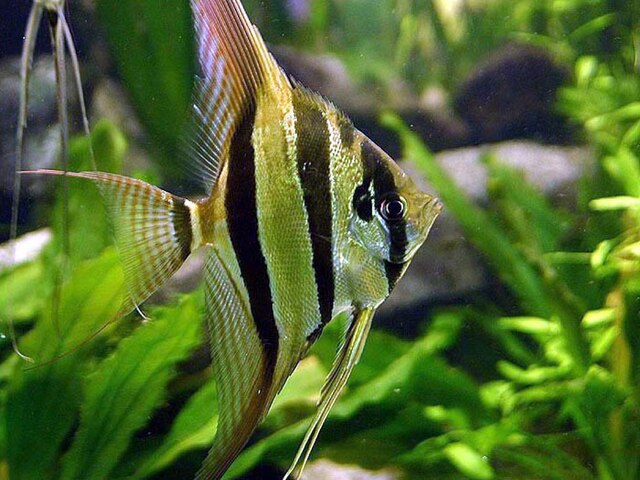
- Angelfish (may be eaten due to their small size)
- Medium to large barbs (aggressive, fin-nipping behavior)
Feeding
Green neon tetras have small mouths, so choose fine-grained foods.
Suitable Foods
- Flake food for small tropical fish (crush finely before use)
- Micro pellets (0.2-0.5 mm diameter)
- Frozen brine shrimp (newly hatched nauplii)
- Frozen daphnia (thaw before use)
Feed twice daily in amounts they can consume within 2-3 minutes. Remove any uneaten food with a siphon, as leftover food degrades water quality.
Breeding
Green neon tetras can breed in aquariums, but breeding difficulty is moderately high, similar to cardinal tetras.
Breeding Conditions
- Prepare a dedicated breeding tank (10-20 L)
- Create extremely soft water with pH 4.5-5.5 and low TDS (≤100)
- Keep lighting dim (shaded)
- Install moss or fine-leafed plants as spawning substrate
- Move a mature pair (plump female and slightly slender male)
Spawning occurs around dawn. Newly hatched fry are fed on infusoria and extremely fine foods (microworms, paramecia). Fry survival rates depend heavily on water quality stability.
Common Care Issues
Pale Coloration or Dull Lines
The most common cause is unsuitable water quality (pH or hardness). Measure your pH; if it exceeds 6.5, lower it using soil, driftwood, or peat moss. Insufficient light and low water temperature also affect coloration.
Sudden Death (After Purchase)
pH shock from the difference between the shop's water and your home aquarium water is the most common cause. After purchase, perform a drip acclimation over at least 1 hour, aiming for a pH difference of 0.5 or less.
Ich (White Spot Disease) Infection
It tends to occur when water temperature drops or pH fluctuates significantly. Raise water temperature to 28-29°C. When medicating, start with half the recommended dose, as green neon tetras are highly sensitive to medications.
Summary
Green neon tetras are beautiful tropical fish with stunning coloration condensed into a body smaller than 3 cm and striking visual impact when schooling. Once you meet the water quality requirement of weakly acidic soft water, their care difficulty is comparable to neon tetras. They are excellent in blackwater tanks and simple planted aquariums, and a school of 20-30 fish displays breathtaking beauty. I recommend this species to intermediate and advanced aquarists comfortable with water quality management.