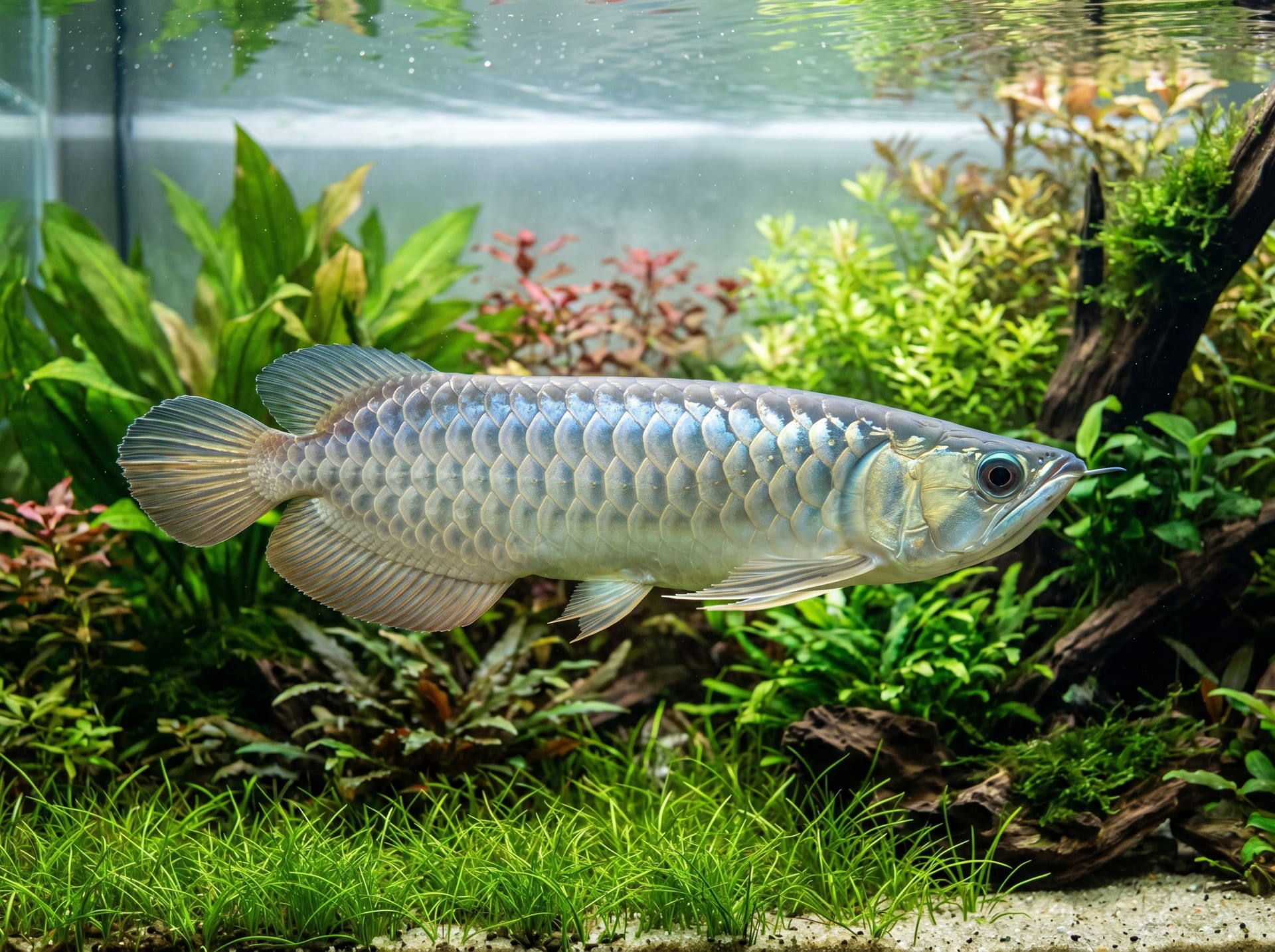
AI-generated image
Asian Arowana
AdvancedKing of ancient fish. Gold and red varieties are stunningly beautiful. Majestic swimming near the surface is breathtaking.
Difficulty
Advanced
Temperature
22〜28℃
Lifespan
20-30 years
Size
60-90cm
Diet
Insects, crustaceans, small fish, pellets
About
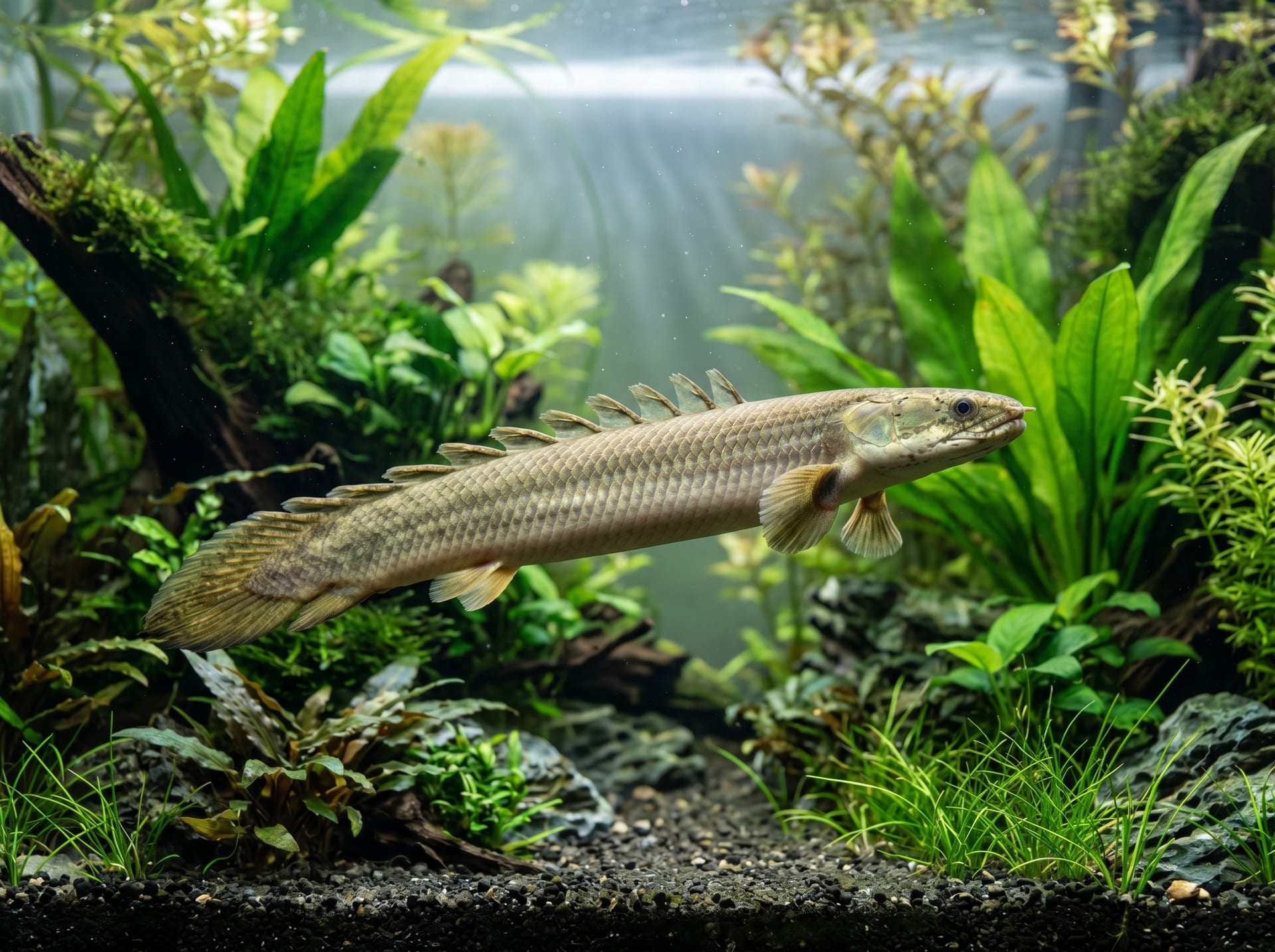
The Asian arowana (Scleropages formosus), known as the dragonfish, is a large arowanid fish native to tropical rivers of Southeast Asia including Indonesia, Malaysia, Thailand, and Vietnam. Adults grow to 60–90 cm and are categorized by body color — gold cross-back, super red, blood red, green, and platinum — with the rarest color forms commanding extraordinarily high prices. Its large, mirror-like scales, elongated body, and the characteristic pair of barbels projecting from the lower jaw evoke the appearance of a dragon, making it the ultimate symbol of good fortune in Asian cultures. Solo keeping is standard, as multiple arowana will fight viciously. Despite their aggression toward other fish, arowanids are remarkably intelligent — they recognize their owners and respond to their presence. Secure lids are essential as they are powerful jumpers. The species is listed on CITES Appendix I; all commercially available specimens must be captive-bred with valid documentation. Diet includes carnivore pellets, frozen fish, shrimp, and large insects.
Source: Wikipedia (CC BY-SA 4.0)
Lifespan of the Asian Arowana
The Asian Arowana lives 20-30 years.
Size of the Asian Arowana
The Asian Arowana grows to 60-90cm.
Temperature & humidity for the Asian Arowana
A minimum 150-cm aquarium is required, with water temperature of 26–30°C and slightly acidic to neutral conditions.
Basic Info
Origin
tropical rivers of Southeast Asia (Indonesia, Malaysia, Thailand, Vietnam)
Care Specifications
Semi-aggressiveSolitaryBreeding: Very hard
Sources: Seriously Fish
References & Sources
Edited & verified by: BreederDirect editorial team
The taxonomic, regulatory, and husbandry data on this page are compiled and verified against the authoritative primary sources below.
Regulations & Conservation Status
Domestic law: The Asian arowana (Scleropages formosus, red-tailed, golden-back, etc.) is listed in CITES Appendix I, and international commercial trade is in principle prohibited. Within Japan, only individuals with registration certificates (with microchip implantation) based on the Species Conservation Law may be sold or transferred. The silver arowana and northern barramundi are not subject to regulation.
"Arawana" is a collective term for multiple species. In Japan, the primary trade consists of the non-regulated Silver Arowana (Osteoglossum bicirrhosum) and Northern Barramundi (Scleropages jardinii).
Sources: CITES Checklist (Scleropages formosus Appendix I) / Ministry of the Environment Endangered Species Conservation Act (Endangered Wild Fauna and Flora)
Regulations may change. Always verify the latest information with the relevant authorities.
Asian Arowana Listings
Loading latest listingsFind listings for this species