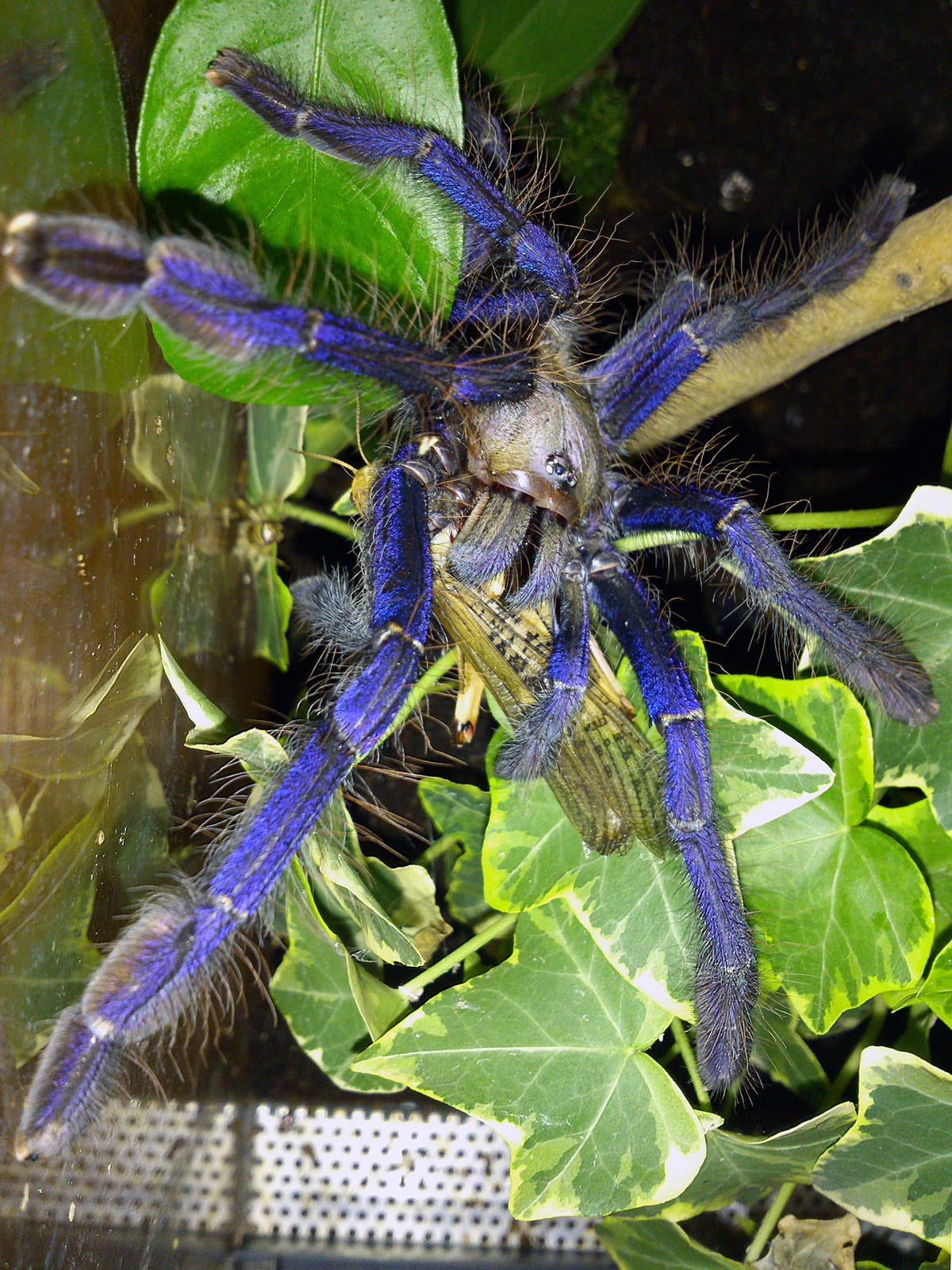
 © Stefan Walkowski / CC BY-SA 4.0
Singapore Blue
The Singapore Blue is considered one of the largest arboreal tarantula species in the world. Females display legs that shimmer from purple to blue paired with a grayish-green carapace, while mature males transform into a striking yellow-green, giving keepers a chance to enjoy shifting colors as the spider grows. Despite lacking urticating hairs, this species is remarkably fast and carries potent venom, making it quick to react defensively. Its striking beauty and wild presence have made it a favorite among invertebrate keepers, but its speed and venom mean it is best suited to experienced, advanced-level keepers rather than beginners.
View Singapore Blue encyclopedia →0% commission on your first sales!Register by September 30, 2026 and your first 2 sales are commission-free!
Breeder Wanted!
List on BreederDirect and sell directly to customers nationwide!
5 Transparency Standards You Can Trust
When listing Exotic Invertebrates, Breeders disclose the following. We guarantee transparency on growth stage and breeding unit.
- Real Photos
- Breeding Unit
- Generation Info
- Body Length (mm)
- Country of Origin
Browse all 249 breeds
Verified breeders wanted for Exotic Invertebrates
Breeders are signing up now ahead of launch. Subscribe to be notified when new listings go live.
Getting alerts is free with a member account. When new listings match your saved search, we'll notify you by email and in-app.
Browse other categories
Verified breeders (preview)
Are you raising exotic invertebrates?
Register as a breeder and connect with buyers directly.
Apply as a breederSingapore Blue key facts
- Care level
- Advanced
- Lifespan
- Up to about 14 years for females, around 5 years for males
- Size
- Body up to 8cm, leg span up to about 25cm, carapace up to 3cm
- Temperature
- 23〜25℃
- Humidity
- 60〜75%
- Diet
- Live insects such as crickets, locusts and roaches
- Temperature & Humidity
- Keep 23-25C by day, dropping to 20-22C at night, with humidity of 60-75% and a slightly damp substrate. Keep ventilation good to prevent mould.
- Enclosure
- Being arboreal it needs an enclosure at least 40cm tall; a 30x30cm footprint is enough. Provide about 10cm of substrate plus a cork tube or a slab of bark set at an angle as a retreat.
- Diet & Feeding
- Offer active live prey such as crickets, locusts and roaches. Its feeding response is very strong, so take particular care when feeding.
- Temperament & Venom
- It has no urticating hairs. Normally shy and quick to retreat, it will raise its front legs in threat and bite when it has no escape. The venom is medically significant, causing severe pain and muscle cramping.
- Notes
- It is extremely fast and can make short leaps on its long legs, so guard against escapes during maintenance and never handle it. Wild-caught animals still reach the market, so captive-bred stock is preferable.
About Singapore Blue
Singapore Blue is one of the world's largest arboreal tarantulas, known for its shimmering purple-to-blue legs, quick movements, and potent venom, an advanced-level species with no urticating hairs.
7 things to know before welcoming a Singapore Blue
1Vertical Housing Setup
Since Singapore Blues are arboreal, provide a tall enclosure rather than a wide one, with cork bark or climbing branches and hiding spots. Aim for a layout that maintains humidity while still allowing good airflow.
2Surprisingly Fast Movements
This species is known for its remarkable speed, and it can dart out unexpectedly when the enclosure is opened or misted. Handle maintenance calmly and take precautions to prevent an escape.
3Potent Venom to Respect
Lacking urticating hairs, this species relies on strong venom instead, and a bite can cause more noticeable pain and symptoms than many other tarantulas. Avoid direct contact and use tools for indirect care whenever possible.
4Skittish, Alert Temperament
Sensitive to vibration and movement, it tends to flash a defensive posture or dash for cover when startled. It's best appreciated as a display species rather than one meant for handling.
5Lifespan Differs by Sex
Females typically live around 14 years, while males have a much shorter lifespan of about 5 years. Keep this difference in mind when planning for long-term care.
6Large, Striking Adult Size
Adults reach a body length of up to about 8 cm and a leg span of around 25 cm, with a carapace length of up to 3 cm, making this a genuinely large species. Enclosure size should be reassessed as the spider grows.
7Suited to Experienced Keepers
Combining fast movement with potent venom, this species is generally recommended for keepers who already have tarantula-keeping experience. Before bringing one home, make sure you understand proper handling and what to do in an emergency.
Frequently asked questions about Singapore Blue
- Q.Is the Singapore Blue suitable for beginners?
- A.Because it lacks urticating hairs but has potent venom and very fast movements, this species is generally recommended for experienced, advanced-level keepers. First-time tarantula owners are usually better off starting with a calmer species.
- Q.How different is the lifespan between males and females?
- A.Females typically live around 14 years, while males live roughly 5 years. If you want a long-term companion, a female is the better choice for extended keeping.
- Q.Is it true that this species has no urticating hairs?
- A.Yes, the Singapore Blue is a species without urticating hairs. Instead, it's known for potent venom, so it's best to avoid direct hand contact and use tools for care instead.
- Q.How large does this species grow?
- A.Adults reach a body length of up to about 8 cm and a leg span of around 25 cm. The carapace can reach up to 3 cm, making it one of the larger species among exotic invertebrates.
- Q.Can the Singapore Blue be handled by hand?
- A.Handling isn't recommended, since this species moves very quickly and carries potent venom. It's best enjoyed as a display animal, with tools used for any necessary care tasks.
Learn more about Singapore Blue in the encyclopedia
View Singapore Blue encyclopedia entry →
Care difficulty, lifespan, size and diet — all basics covered.
More in this category
Can't find the one you're looking for?
Post your wishes for free and breeders with matching animals will contact you with introductions.