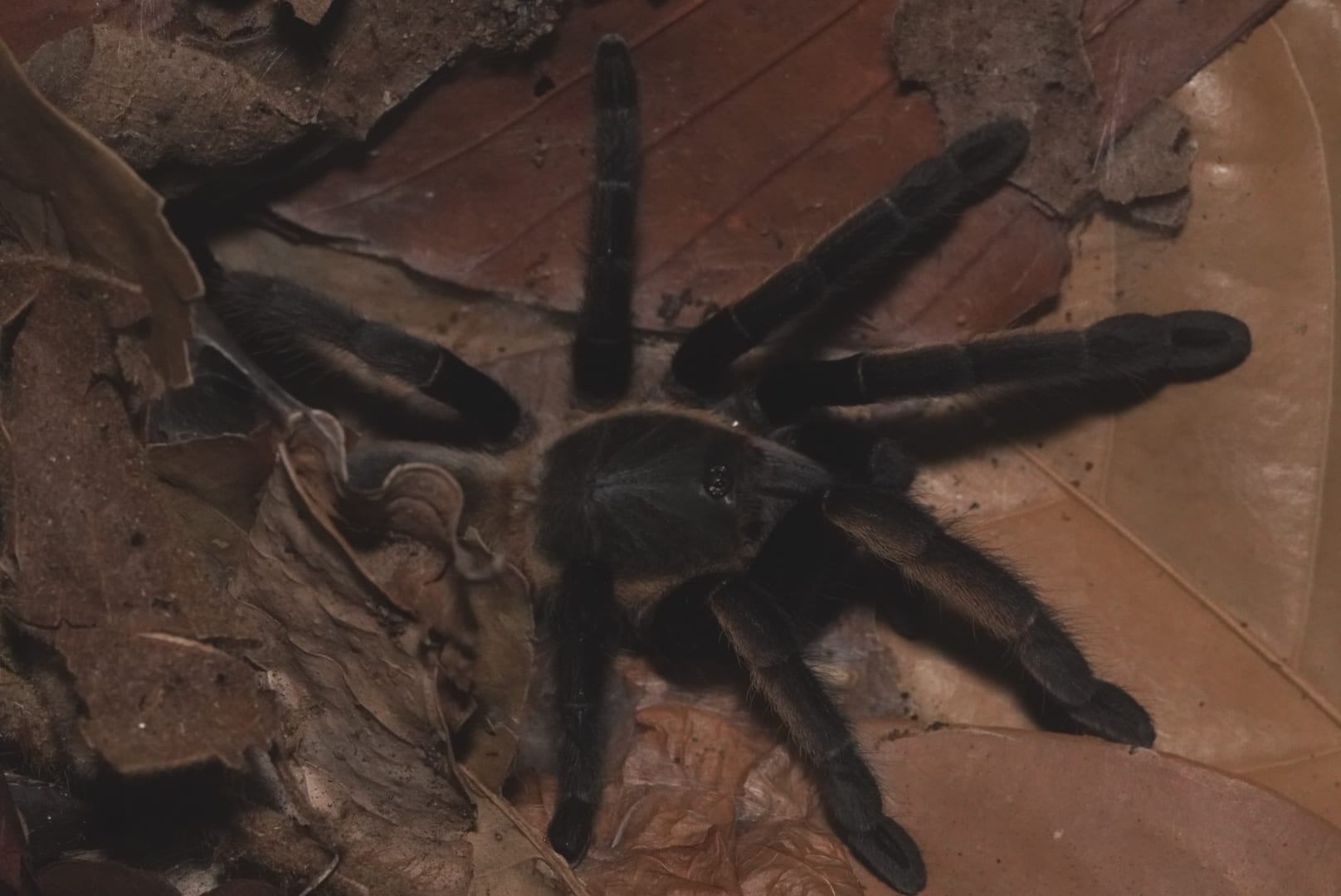
 © Chris Oldnall / CC BY-SA 4.0
Thai Golden Fringed
Thai Golden Fringed tarantulas are burrowing, ground-dwelling spiders native to Thailand and Malaysia. Their bodies are mostly black, but as females and sub-adult males mature, the front legs develop a striking fringe of gold-to-orange hairs along the femur and tibia, while the abdomen carries a faint fishbone-like pattern — a look that changes noticeably as the spider grows. Being a fossorial species, it spends much of its time hidden in a burrow, so keeping one calls for patience rather than frequent viewing. Females can live for many years, making this a long-term companion for keepers who enjoy watching a tarantula slowly reveal its adult coloration. This species is best suited to experienced tarantula keepers.
View Thai Golden Fringed encyclopedia →0% commission on your first sales!Register by September 30, 2026 and your first 2 sales are commission-free!
Breeder Wanted!
List on BreederDirect and sell directly to customers nationwide!
5 Transparency Standards You Can Trust
When listing Exotic Invertebrates, Breeders disclose the following. We guarantee transparency on growth stage and breeding unit.
- Real Photos
- Breeding Unit
- Generation Info
- Body Length (mm)
- Country of Origin
Browse all 249 breeds
Verified breeders wanted for Exotic Invertebrates
Breeders are signing up now ahead of launch. Subscribe to be notified when new listings go live.
Getting alerts is free with a member account. When new listings match your saved search, we'll notify you by email and in-app.
Browse other categories
Verified breeders (preview)
Are you raising exotic invertebrates?
Register as a breeder and connect with buyers directly.
Apply as a breederThai Golden Fringed key facts
- Care level
- Advanced
- Lifespan
- 14-15 years for females, 3-4 years for males
- Size
- Body 5-6cm (female)
- Temperature
- 25〜30℃
- Humidity
- 80%
- Diet
- Live insects such as crickets and roaches
- Temperature & Humidity
- Aim for 25-30C, allowing night temperatures to fall to 21-22C, and hold humidity at around 80%.
- Enclosure
- Use an enclosure of about 25x25x30cm with at least ten-odd centimetres of peat or coir. It excavates its own tunnel system and reinforces it with silk, so a ready-made hide is not essential.
- Diet & Feeding
- Offer active live prey such as crickets and roaches. Growth is fast, so feed spiderlings somewhat generously.
- Temperament & Venom
- An Old World species without urticating hairs, it is bad-tempered and easily agitated; some individuals take a threat posture at any movement within their territory. The venom is considered strong, so it is kept hands-off.
- Notes
- It normally stays deep in its burrow and is rarely seen, so it is a poor choice if you want a spider on display. It is still sold under old names such as Haplopelma aureopilosum.
About Thai Golden Fringed
A guide to the Thai Golden Fringed tarantula, a burrowing species from Thailand and Malaysia known for its black body and gold-to-orange leg fringe. Covers temperament, care basics, and what to know before keeping this advanced-level species.
7 things to know before welcoming a Thai Golden Fringed
1Burrows Underground
The Thai Golden Fringed is a fossorial (burrowing) species that digs and lives in underground tunnels. Provide a deep enough substrate layer so it can dig freely, along with hides that mimic a natural burrow entrance. Because it spends much time hidden, enjoy watching its digging behavior rather than expecting frequent visual contact.
2Advanced-Level Temperament
This species carries an advanced difficulty rating and is generally alert, defensive, and quick to move. Keep handling to a minimum and avoid direct contact during maintenance. If you're new to tarantula keeping, it's wise to gain experience with an easier species first.
3Coloration Changes With Age
Juveniles start out mostly black, and the signature gold-to-orange fringe on the front leg joints appears in females and sub-adult males as they mature. A faint fishbone-like pattern also emerges on the abdomen, so the spider's appearance shifts noticeably as it grows — part of the appeal of raising one from a young age.
4Females Are a Long-Term Commitment
Females typically live 14 to 15 years, meaning this is a long-term relationship rather than a short-term pet. Before bringing one home, think through whether you can maintain a stable enclosure for that entire span, including possible moves or lifestyle changes.
5Males Have a Shorter Lifespan
Males live considerably shorter lives than females, typically around 3 to 4 years. Lifespan tends to shorten further once a male matures and reaches breeding condition, so it's worth understanding this difference in advance depending on which sex you choose.
6Adult Size and Enclosure Space
Adult females reach a body length of about 5 to 6 cm. Since this is a burrowing species, choose an enclosure tall enough to hold a deep substrate layer, and plan to size up the housing as the spider grows.
7Before You Bring One Home
Before your Thai Golden Fringed arrives, prepare the substrate, hides, and temperature and humidity setup in advance so the enclosure is ready on day one. Having a general understanding of tarantula care basics will help you start off calmly and confidently.
Frequently asked questions about Thai Golden Fringed
- Q.Can beginners keep this species?
- A.The Thai Golden Fringed is classified as an advanced-level species. Since it tends to be alert and quick to move, we recommend gaining experience with tarantulas before taking one on.
- Q.How different are male and female lifespans?
- A.Females typically live 14 to 15 years, while males live only about 3 to 4 years — a substantial difference. Consider this gap when deciding which sex to bring home.
- Q.When does the golden coloration appear?
- A.Juveniles are mostly black, and the gold-to-orange fringe on the front legs develops in females and sub-adult males once they reach the sub-adult stage. The appearance changes gradually as the spider grows.
- Q.How big does it get?
- A.Adult females reach a body length of about 5 to 6 cm. Since this is a burrowing species, an enclosure that allows for a deep substrate layer is recommended.
- Q.Is this species subject to CITES?
- A.No, the Thai Golden Fringed is not subject to CITES.
Learn more about Thai Golden Fringed in the encyclopedia
View Thai Golden Fringed encyclopedia entry →
Care difficulty, lifespan, size and diet — all basics covered.
More in this category
Can't find the one you're looking for?
Post your wishes for free and breeders with matching animals will contact you with introductions.