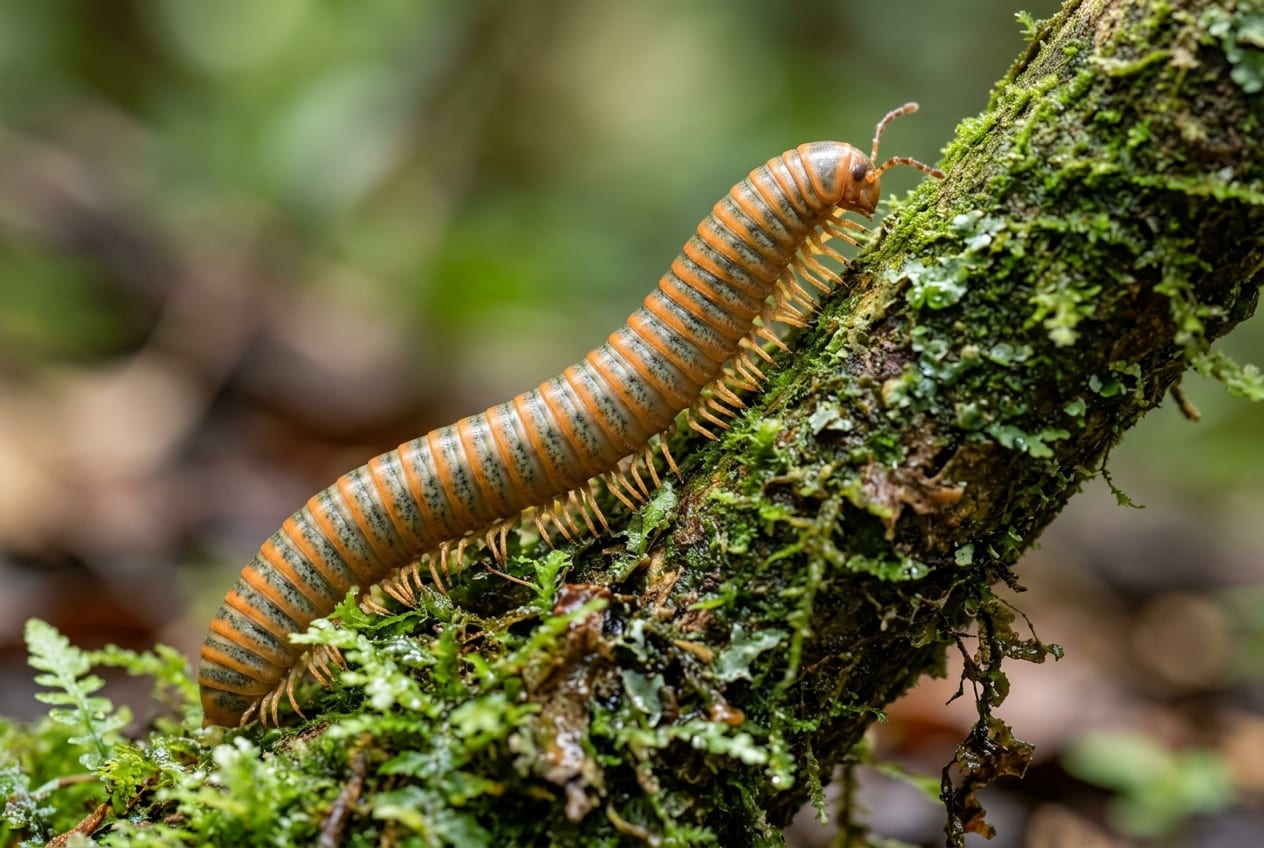
Thai Rainbow Millipede
The Thai Rainbow Millipede is native to eastern Thailand and Vietnam, prized for its striking banding of warm orange and grayish-green that seems to shift color as light catches it from different angles. First described in 2018, it's still a relatively new species to the hobby, making it an exciting find for anyone drawn to lesser-known invertebrates. Unlike many millipedes that stay hidden by day, adults have notably long legs and climb well, often roaming about even in daylight. Their calm, easygoing temperament makes them rewarding to observe up close, though since they're considered suited to intermediate keepers, it's worth learning the basics of their care setup before bringing one home.
View Thai Rainbow Millipede encyclopedia →0% commission on your first sales!Register by September 30, 2026 and your first 2 sales are commission-free!
Breeder Wanted!
List on BreederDirect and sell directly to customers nationwide!
5 Transparency Standards You Can Trust
When listing Exotic Invertebrates, Breeders disclose the following. We guarantee transparency on growth stage and breeding unit.
- Real Photos
- Breeding Unit
- Generation Info
- Body Length (mm)
- Country of Origin
Browse all 249 breeds
Verified breeders wanted for Exotic Invertebrates
Breeders are signing up now ahead of launch. Subscribe to be notified when new listings go live.
Getting alerts is free with a member account. When new listings match your saved search, we'll notify you by email and in-app.
Browse other categories
Verified breeders (preview)
Are you raising exotic invertebrates?
Register as a breeder and connect with buyers directly.
Apply as a breederThai Rainbow Millipede key facts
- Care level
- Intermediate
- Lifespan
- 3-5 years
- Size
- 8-10cm
- Temperature
- 26〜28℃
- Humidity
- 75〜90%
- Diet
- Decaying leaf litter and white-rotted wood as the staple, plus carrot, courgette, cucumber and squash, occasional fruit and a pinch of fish flake; cuttlebone stays in permanently
- Temperature & Humidity
- 26-28C and 75-90% humidity. Always heat from above, never from underneath. Keep the substrate damp through the lower layers without turning it to mud.
- Enclosure
- Substrate at least as deep as the adult is long, minimum 10cm, built on flake soil, white-rotted hardwood and topsoil with leaf litter on top. Add cork bark and branches to climb.
- Diet & Feeding
- Never let leaf litter and white-rotted wood run out. Carrot, courgette, cucumber and squash, with occasional fruit and a little fish flake. Keep cuttlebone in permanently.
- Temperament & Venom
- Placid, and it neither bites nor stings. It coils when alarmed and may release a defensive fluid. It lives happily in groups and gets bolder with age.
- Notes
- Wash hands with soap after handling and keep them from your face. The trade name covers more than one species, so check care information against the scientific name. In particular the Vietnamese congener Atopochetus dollfusi (formerly Tonkinbolus dollfusi) is sold under the same Thai Rainbow name, so check locality together with the scientific name.
About Thai Rainbow Millipede
A millipede native to eastern Thailand and Vietnam, known for warm orange and grayish-green bands that shift with the light. Described in 2018, it climbs well and stays active by day — a pick suited to intermediate keepers.
7 things to know before welcoming a Thai Rainbow Millipede
1Keep Humidity High
Thai Rainbow Millipedes come from humid forests in eastern Thailand and Vietnam, so maintaining moist substrate is essential in captivity. Mist the enclosure regularly, since low humidity can make them sluggish.
2A Natural Climber
With their long legs, these millipedes climb walls and driftwood readily. Choose an enclosure with a secure, well-fitted lid to prevent escapes.
3Active During the Day
Unlike most millipedes, which are nocturnal, adult Thai Rainbow Millipedes often roam around in daylight. This makes them easy to observe and enjoy throughout the day.
4Colors That Shift with Light
The orange and grayish-green bands change appearance depending on the angle and lighting. The same individual can look noticeably different under different light conditions.
5Handle Molting with Care
Millipedes are vulnerable while molting. Keep the substrate deep enough for them to burrow in, and avoid handling them if you notice signs that a molt is approaching.
6Suited to Intermediate Keepers
Day-to-day care isn't difficult, but humidity control and escape prevention call for some prior experience, which is why this species is considered suited to intermediate keepers. First-time millipede owners should brush up on the basics beforehand.
7Plan for Adult Size
Adults typically reach 8 to 10 cm in length. Prepare an enclosure and enough substrate to comfortably accommodate that size before bringing one home.
Frequently asked questions about Thai Rainbow Millipede
- Q.Is the Thai Rainbow Millipede suitable for beginners?
- A.This species is generally considered suited to intermediate keepers, so it's best to have some millipede-keeping experience first. With the basics of humidity control in place, care is manageable.
- Q.How big do they get?
- A.Adults typically grow to about 8 to 10 cm. Plan your enclosure and substrate depth with that size in mind.
- Q.Are they nocturnal?
- A.Unlike most millipedes, adults are often active during the day as well. This makes them easier to observe and enjoy at any time.
- Q.Are they subject to any wildlife trade regulations?
- A.The Thai Rainbow Millipede is not subject to CITES.
- Q.Why does the color pattern seem to vary between individuals?
- A.The orange and grayish-green bands shift in appearance depending on how light hits them. Even the same individual can look different depending on the angle or lighting.
Learn more about Thai Rainbow Millipede in the encyclopedia
View Thai Rainbow Millipede encyclopedia entry →
Care difficulty, lifespan, size and diet — all basics covered.
More in this category
Can't find the one you're looking for?
Post your wishes for free and breeders with matching animals will contact you with introductions.