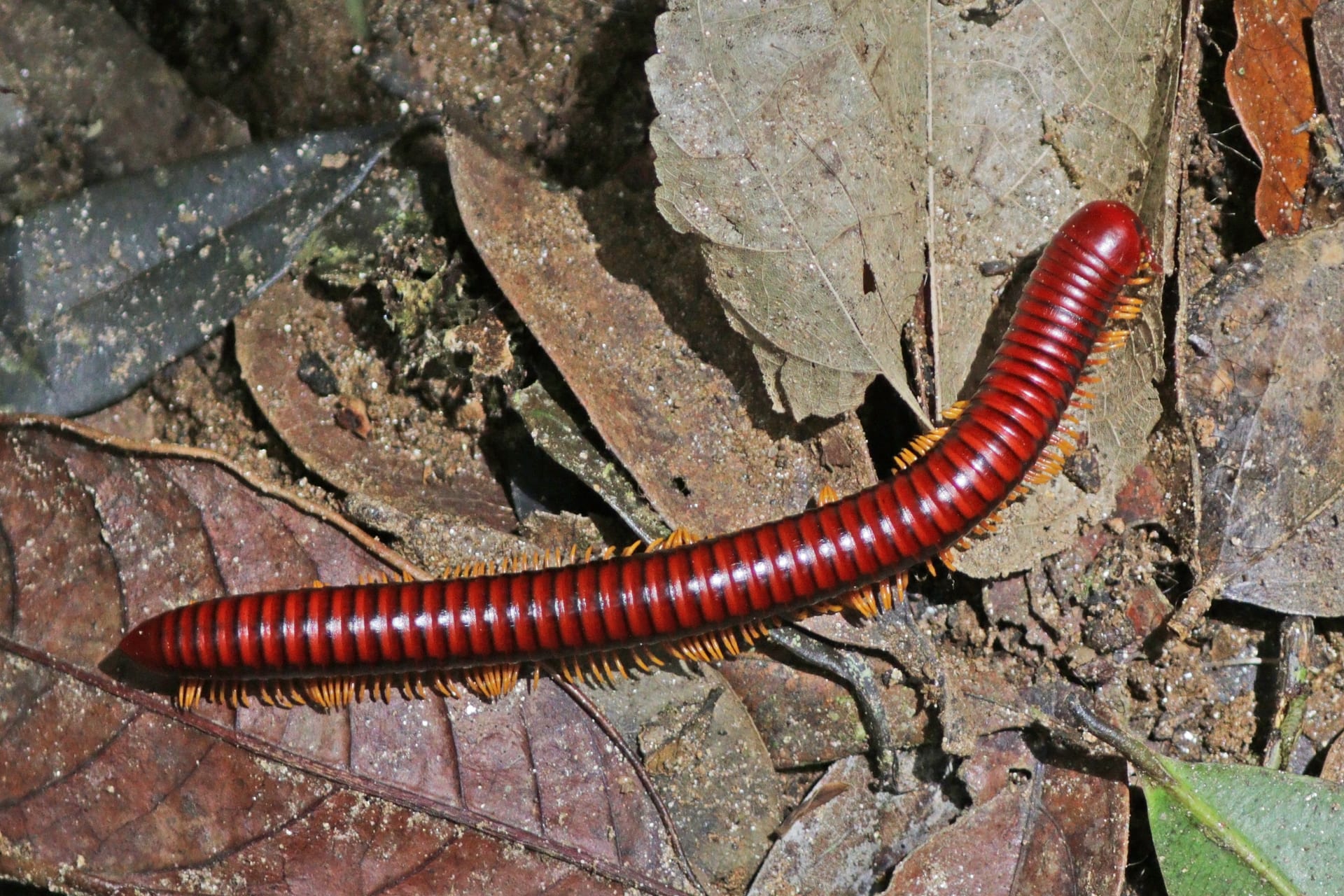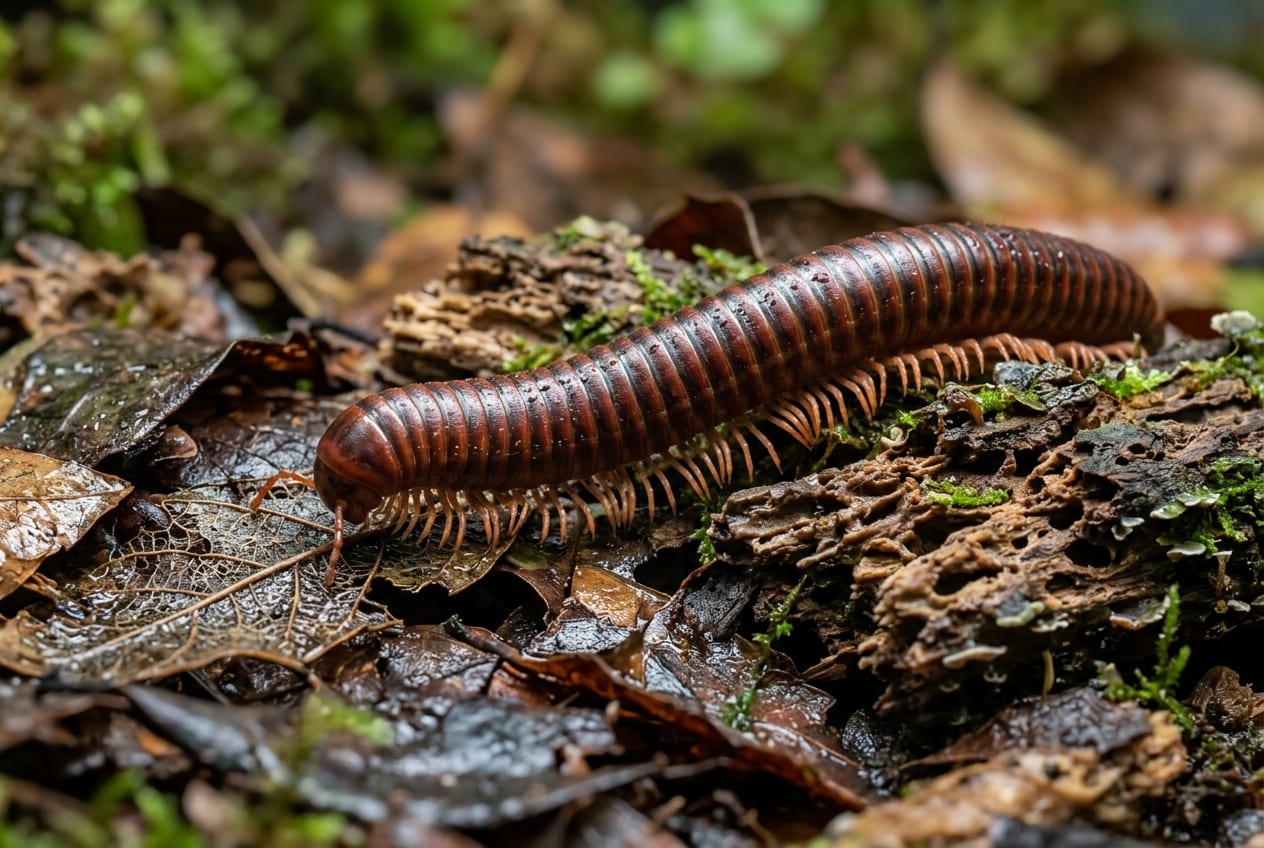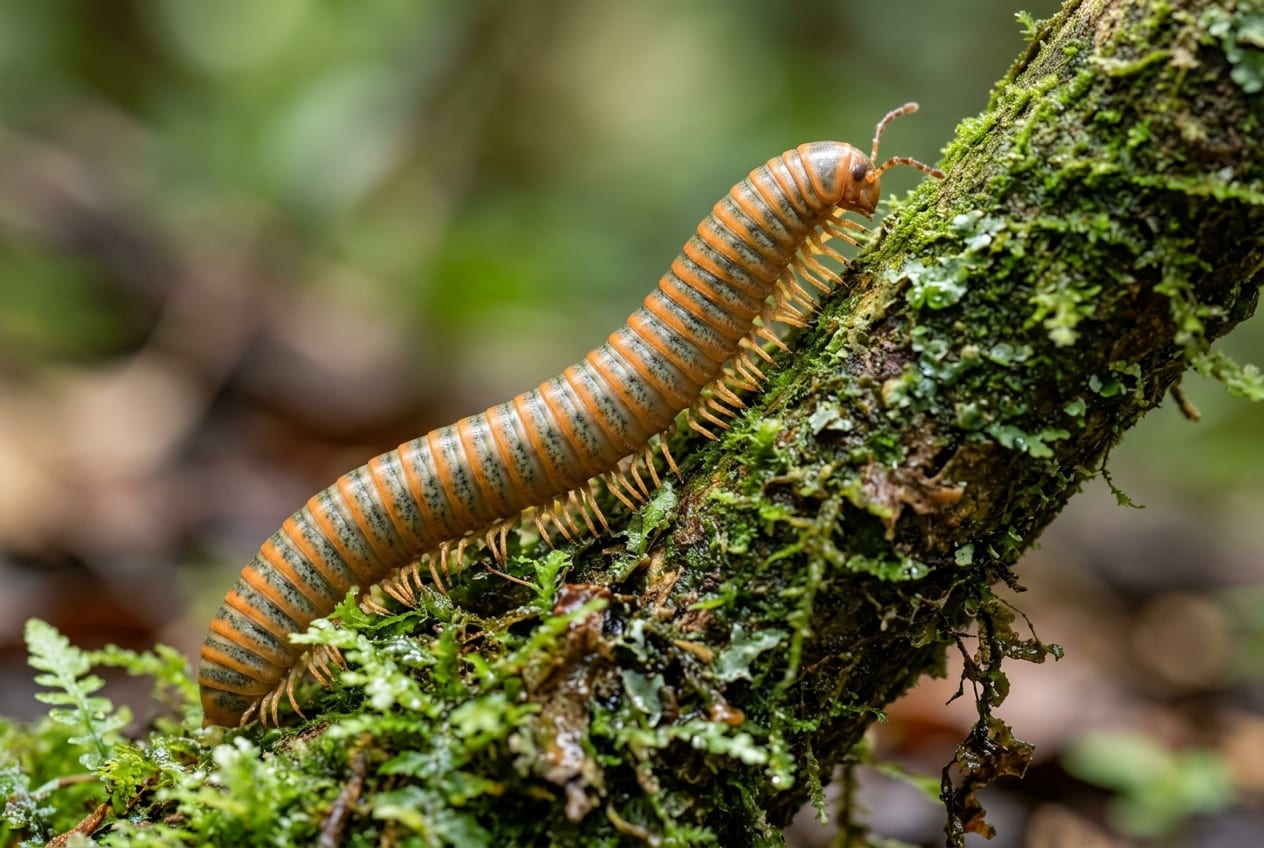
AI-generated image
Thai Rainbow Millipede
IntermediateAtopochetus spinimargo
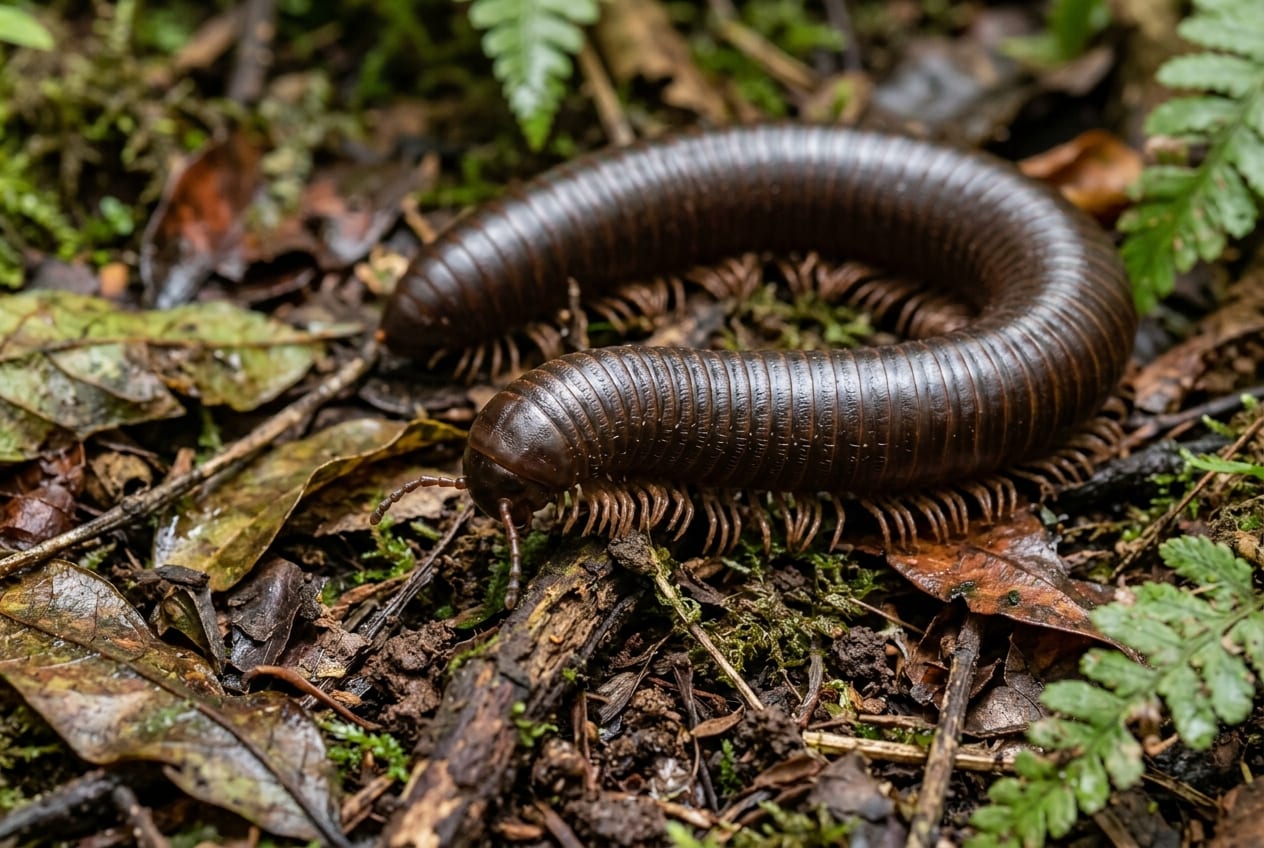
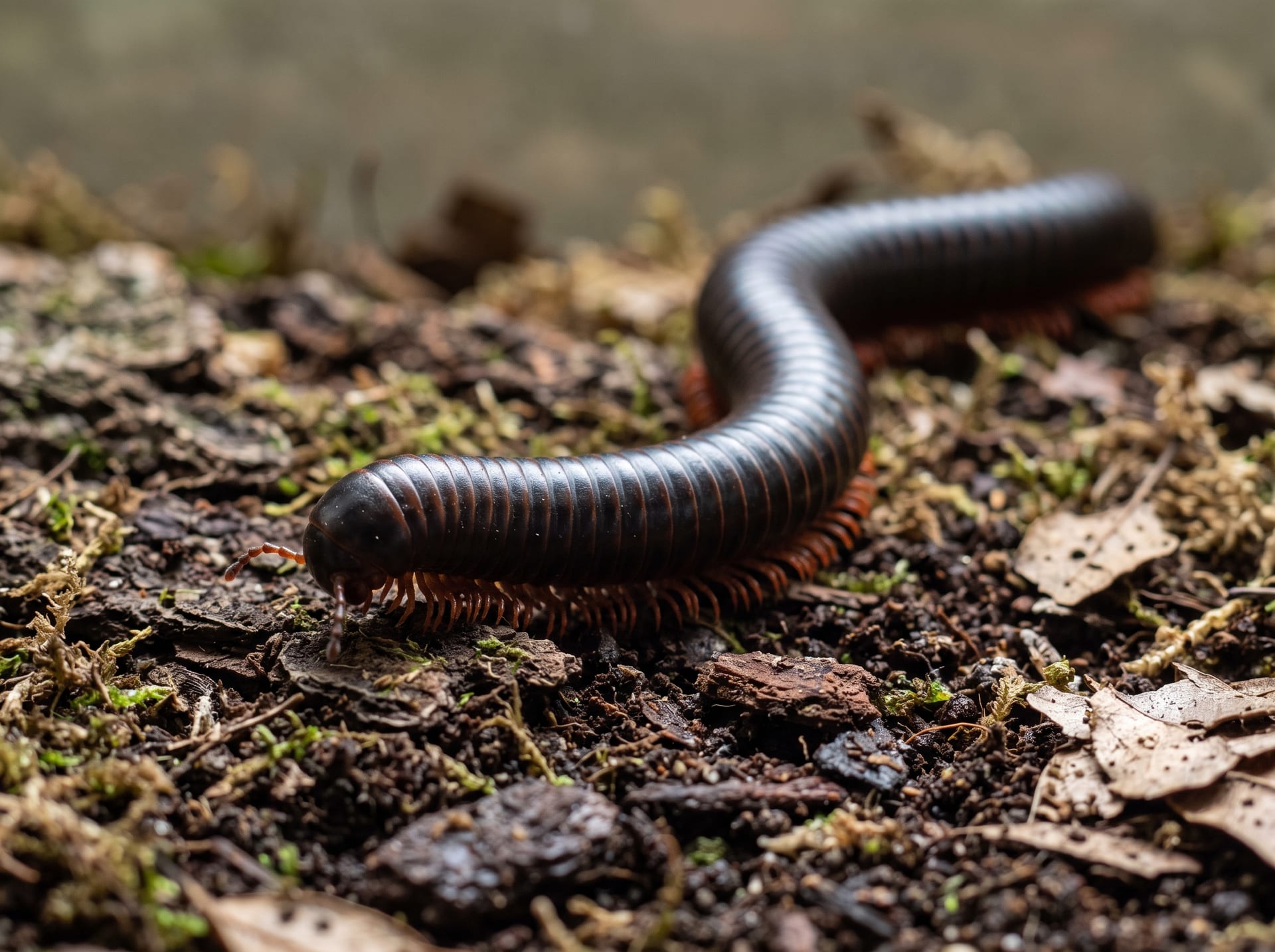
A millipede of eastern Thailand and Vietnam. Bands of warm orange alternate with grey-green and shift with the light. Its legs are long and it climbs, and mature animals wander about in daylight. Described only in 2018.
Difficulty
Intermediate
Temperature
26〜28℃
Lifespan
3-5 years
Size
8-10cm
Humidity
75〜90%
Diet
Decaying leaf litter and white-rotted wood as the staple, plus carrot, courgette, cucumber and squash, occasional fruit and a pinch of fish flake; cuttlebone stays in permanently
About
Atopochetus spinimargo, described by Pimvichai and colleagues in 2018, is a Thai millipede from the green riverine forests of the east of the country, where the Mekong and Mun rivers run. Adults reach 8-10cm, mid-sized for the hobby, with alternating bands of warm orange and grey-green that shift depending on the light. Juveniles are duller and darker, and the banding sharpens through successive moults. Adults are sexually dichromatic: males have black legs and deep black segments, females reddish feet and greyish segments. Its legs are long and it climbs, so with cork bark and branches it can be seen moving about in daylight. It moults in a sealed chamber underground, so the substrate must be at least as deep as an adult is long, a minimum of 10cm. A floor around 30cm square suits a small group. Never letting leaf litter and white-rotted wood run out matters most, and calcium stays permanently available. It breeds willingly, but maturity takes into the second year.
Source: millibase.org
Lifespan of the Thai Rainbow Millipede
The Thai Rainbow Millipede lives 3-5 years.
Size of the Thai Rainbow Millipede
The Thai Rainbow Millipede grows to 8-10cm.
Temperature & humidity for the Thai Rainbow Millipede
The ideal temperature for the Thai Rainbow Millipede is 26〜28℃. Ideal humidity is 75〜90%.
Keep it at 26-28C with the heat source always above the enclosure and never underneath, at 75-90% humidity with the substrate damp through the lower layers.
Basic Info
Care Specifications
PeacefulGroupBreeding: Moderate
Sources: PostPods Thai Rainbow Millipede (size, substrate, breeding) / Insektenliebe Atopochetus spinimargo (origin, temperature, humidity, sexual dichromatism) / MilliBase / GBIF
References & Sources
Edited & verified by: BreederDirect editorial team
The taxonomic, regulatory, and husbandry data on this page are compiled and verified against the authoritative primary sources below.
Taxonomy & Authority
Accepted name: Atopochetus spinimargo Pimvichai, Enghoff, Panha & Backeljau, 2018
Authority databases: GBIF
Nomenclature follows global taxonomic authority databases.
Regulations & Conservation Status
Not CITES-listed
Sources: CITES Appendices (species not listed)
Regulations may change. Always verify the latest information with the relevant authorities.
Thai Rainbow Millipede Listings
Loading latest listingsFind listings for this species