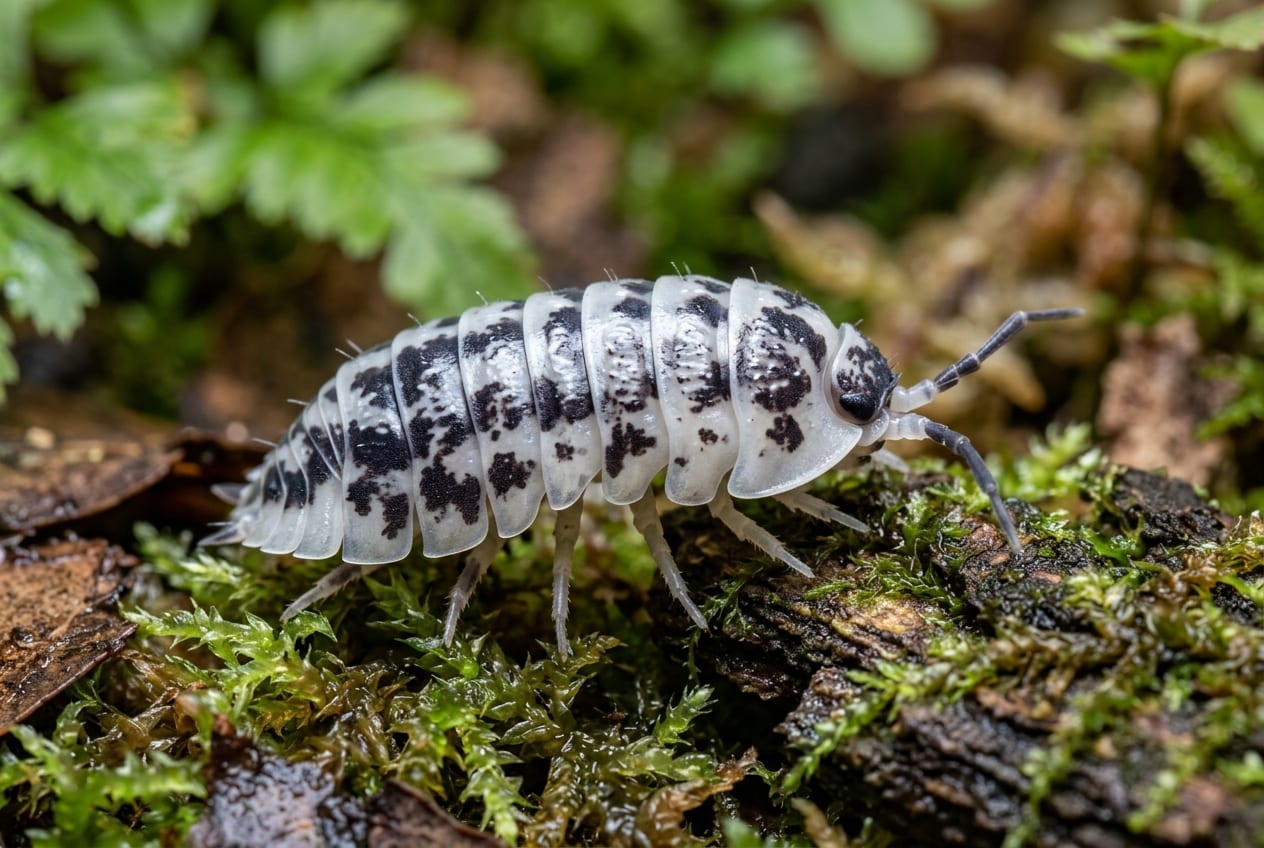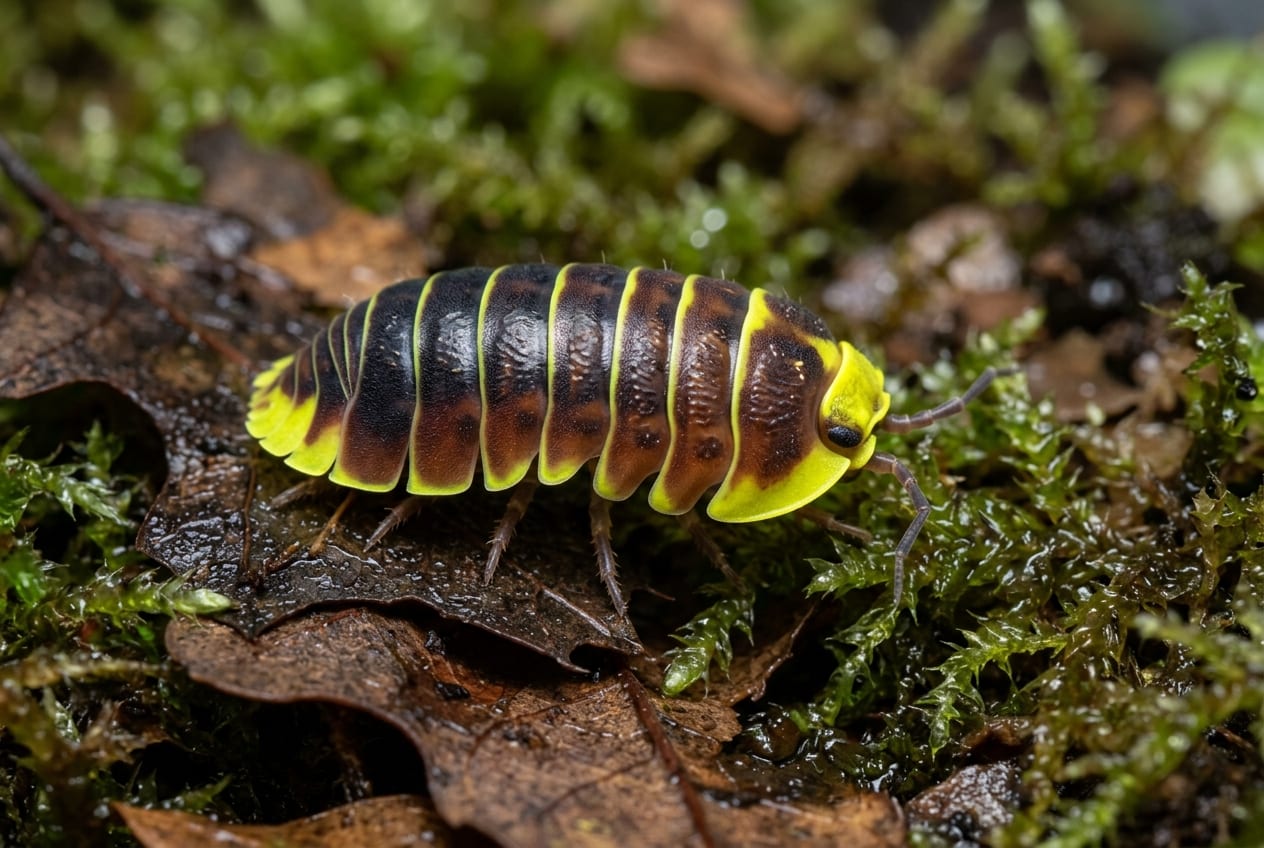
AI-generated image
Jupiter Isopod
IntermediateCubaris sp. "Jupiter"
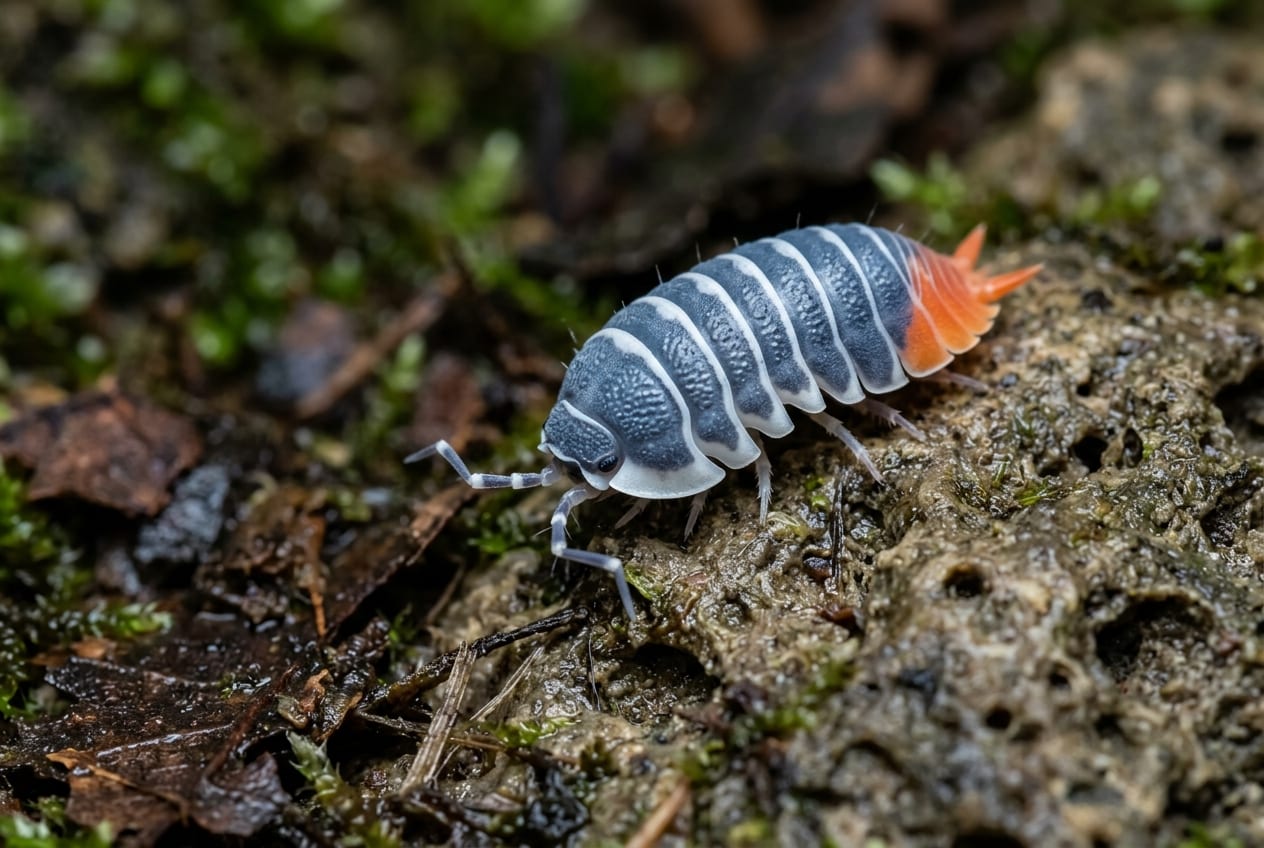
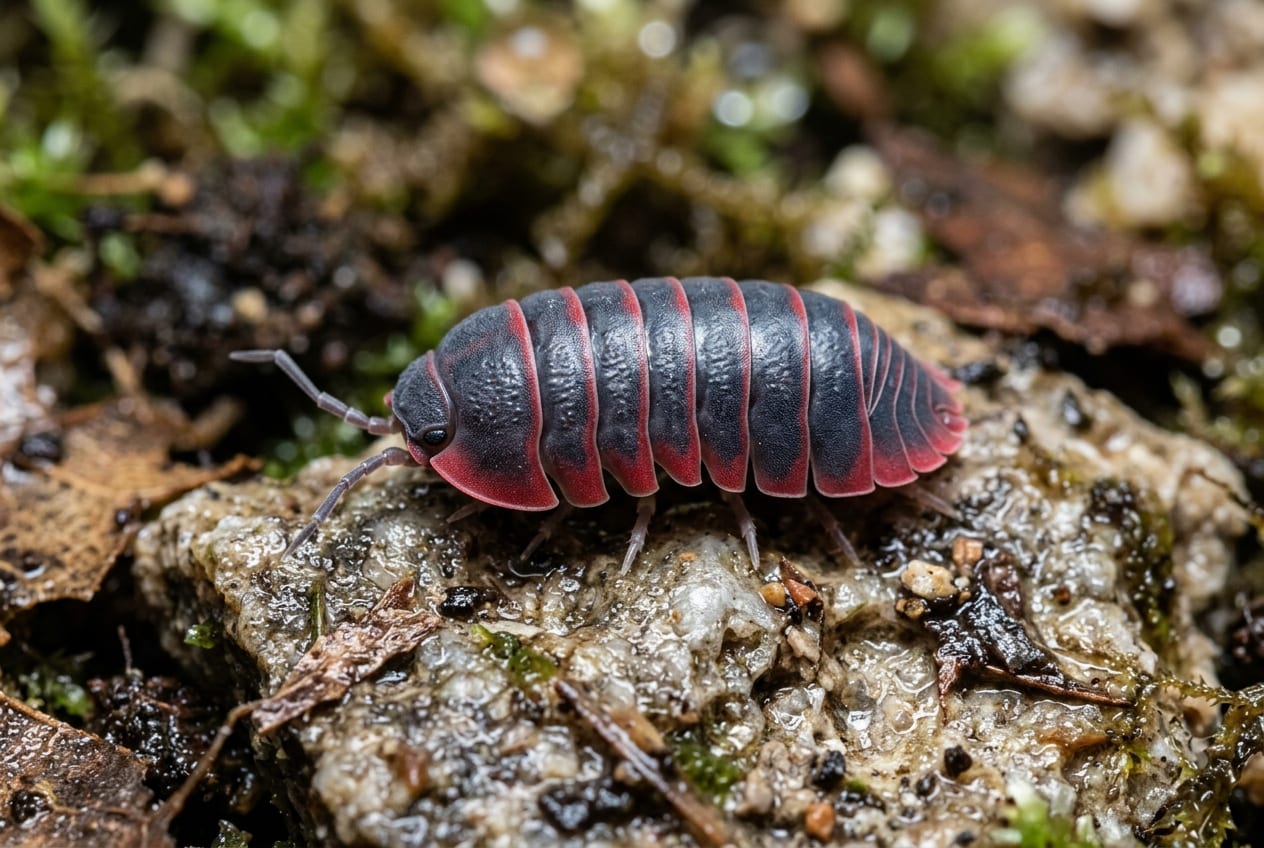
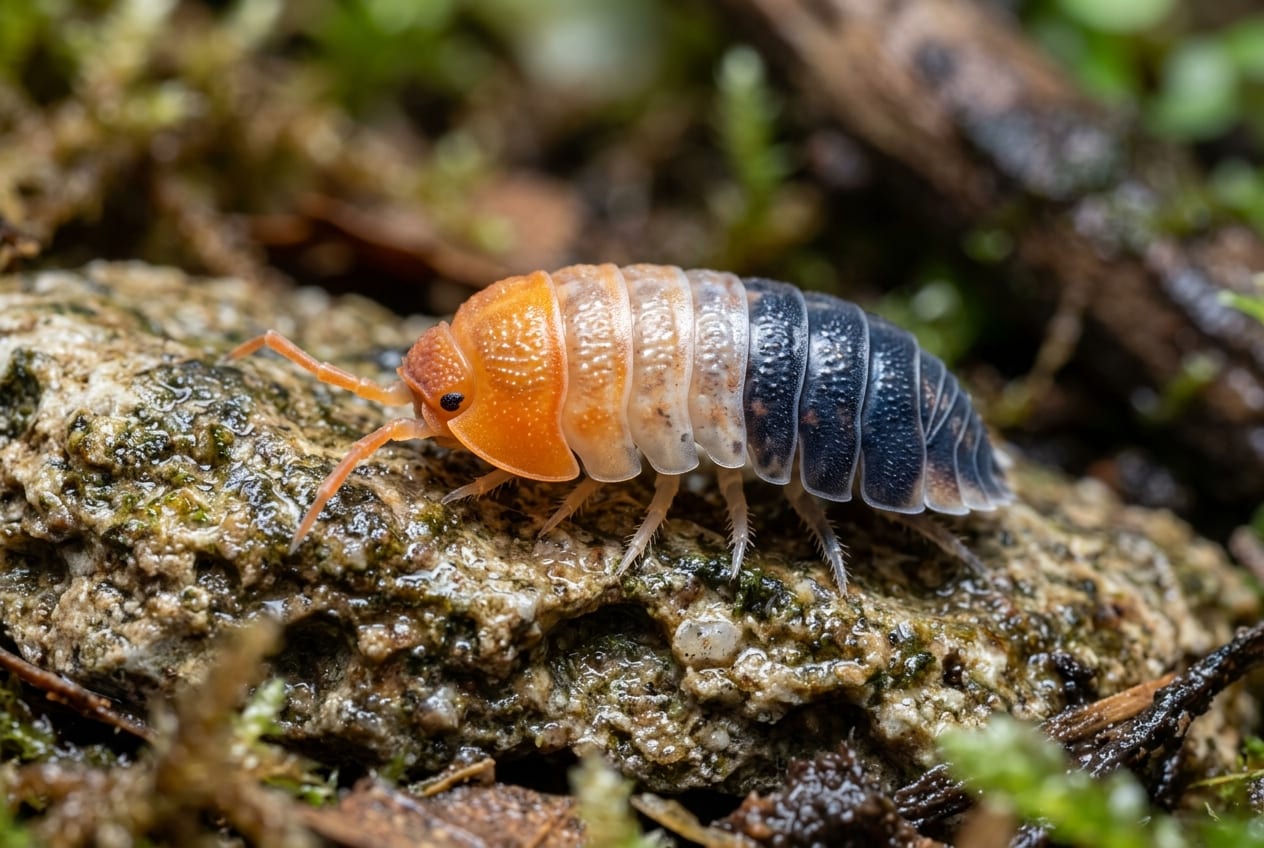
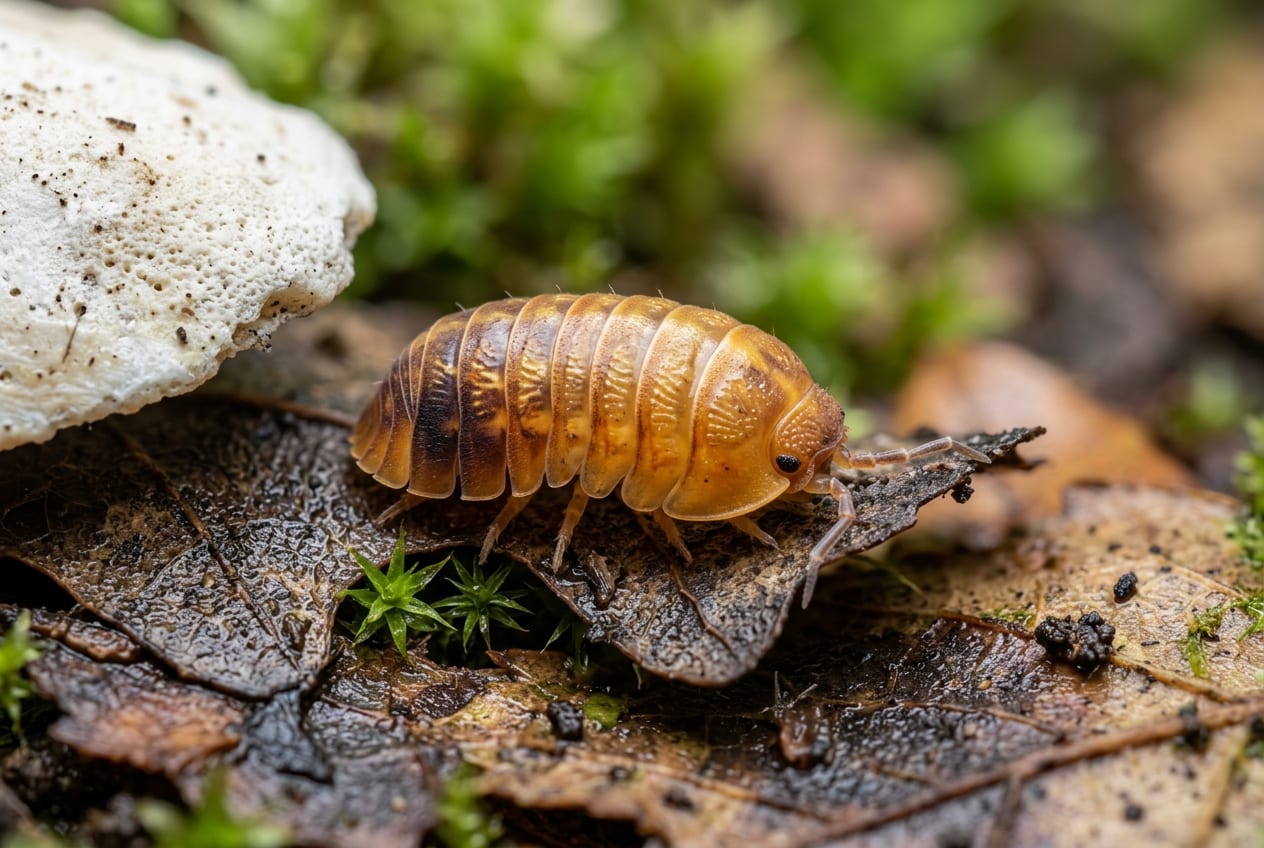
An undescribed pill isopod with yellow borders picked out along each segment against a brown-to-black base, brightest on the head and tail.
Difficulty
Intermediate
Temperature
22〜26℃
Lifespan
2-4 years
Size
15-20mm
Humidity
70〜80%
Diet
Leaf litter and white-rotted hardwood as the base, with small amounts of vegetable, fruit and mushroom and the occasional pinch of fish flake or dried shrimp; cuttlebone stays in permanently
About
Cubaris sp. 'Jupiter' is an undescribed pill isopod from the limestone karst and tropical forest of Thailand. Yellow borders along each segment stand against a brown-to-black base, brightest on the head and tail, and the effect is likened to the banded planet the trade name comes from. Adults run 15-20mm with a flatter profile than the rounded cave species. Colour firms up over successive moults, so young stock looks muted next to a settled adult. It sits at the accessible end of the genus, hardier and less temperamental than the premium cave species, and is a sensible step up from hardy Armadillidium. Vents on opposing sides give real airflow and head off the stagnation that breeds mould. Build the substrate on flake soil, white-rotted hardwood and organic topsoil with limestone scattered through it, since constant calcium feeds straight into clean moults for a karst species. Carotenoid-rich vegetables such as carrot and pumpkin may deepen the yellow. Breeding is slow but steady, with the first mancae three to six months after a starter group settles.
Source: Wikipedia (CC BY-SA 4.0)
Lifespan of the Jupiter Isopod
The Jupiter Isopod lives 2-4 years.
Size of the Jupiter Isopod
The Jupiter Isopod grows to 15-20mm.
Temperature & humidity for the Jupiter Isopod
The ideal temperature for the Jupiter Isopod is 22〜26℃. Ideal humidity is 70〜80%.
Keep it at 22-26C and 70-80% humidity, with roughly a third of the enclosure damp and the rest drier so the colony can choose.
Basic Info
Care Specifications
PeacefulGroupBreeding: Moderate
Sources: PostPods Jupiter Isopods (size, substrate, breeding) / Insektenliebe Cubaris spec. 'Jupiter' (temperature, humidity)
References & Sources
Edited & verified by: BreederDirect editorial team
The taxonomic, regulatory, and husbandry data on this page are compiled and verified against the authoritative primary sources below.
Regulations & Conservation Status
Not CITES-listed
Sources: CITES Appendices (species not listed)
Regulations may change. Always verify the latest information with the relevant authorities.
Jupiter Isopod Listings
Loading latest listingsFind listings for this species