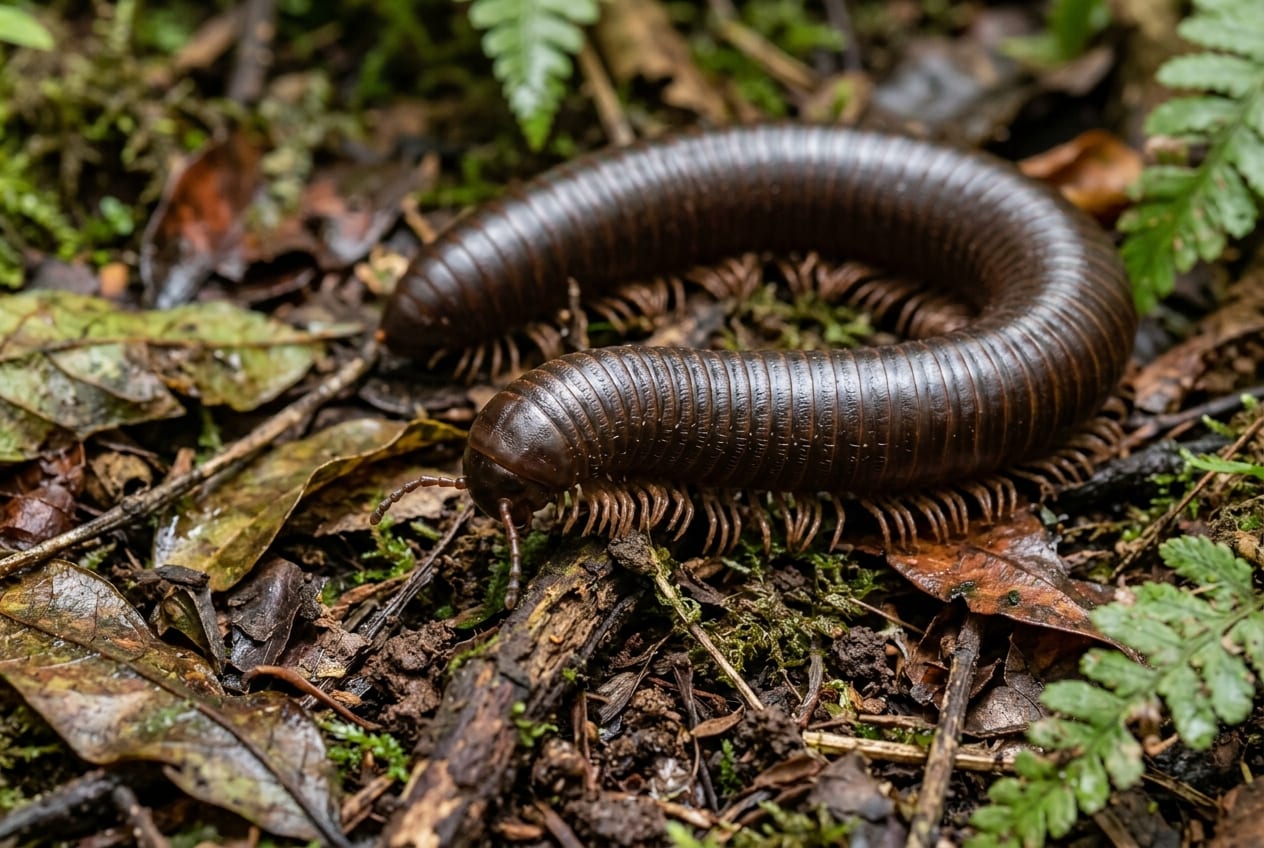
AI-generated image
Ghana Chocolate Millipede
IntermediateMardonius parilis
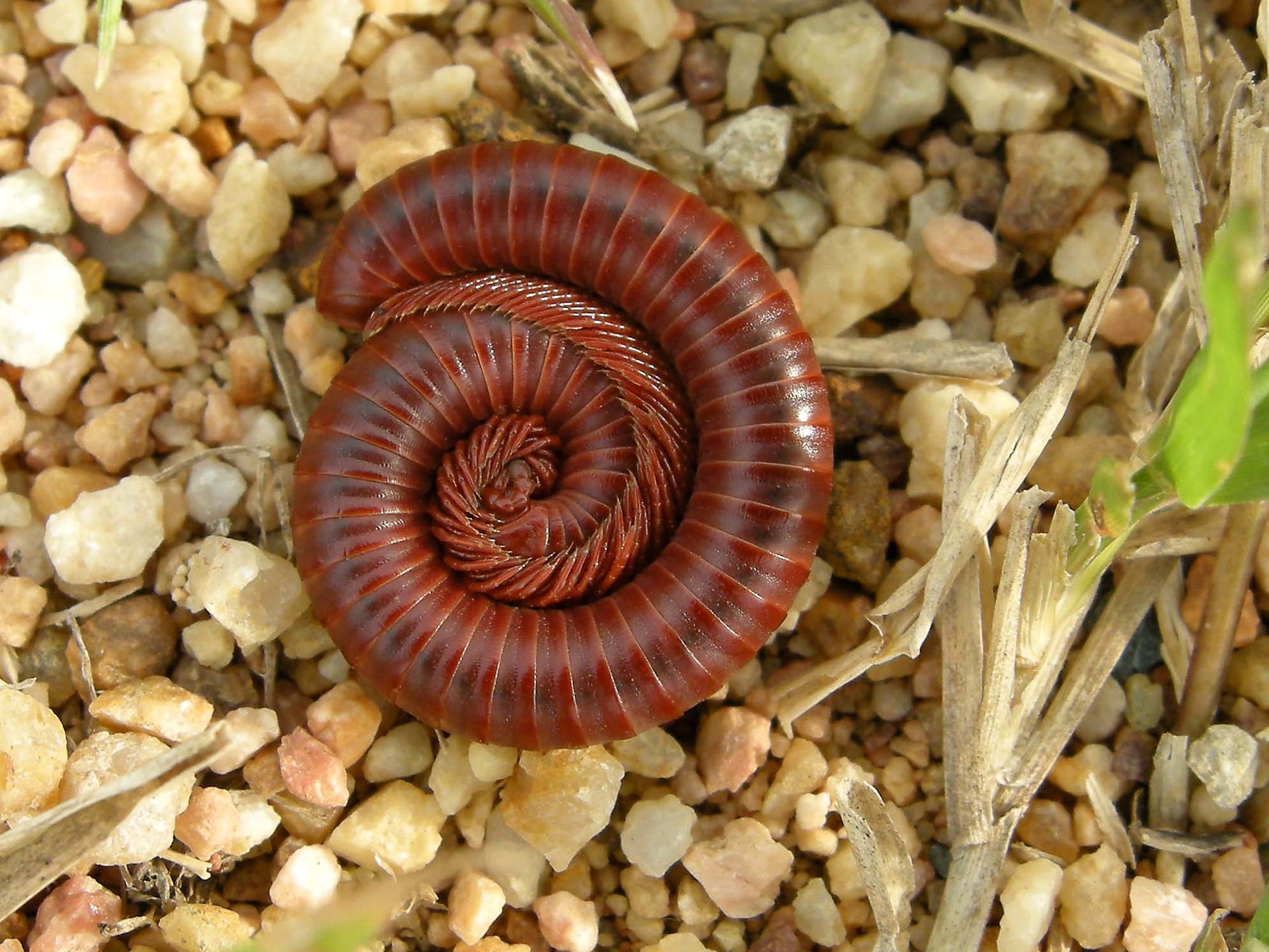
A millipede of West and Central Africa, traded as a chocolate millipede for its glossy dark brown body. Its currently accepted name is Spiropoeus fischeri, so the name used in the trade no longer matches the accepted one.
Difficulty
Intermediate
Lifespan
5-8 years
Diet
Rotting hardwood and leaf litter as the base, supplemented with carrot, cucumber, courgette or sweet potato and some protein, with a permanent calcium source
About
Mardonius parilis is an African spirostreptid millipede traded as a chocolate millipede for its glossy dark brown body. Its taxonomy is not straightforward: both MilliBase and GBIF treat Mardonius parilis (Karsch, 1881) as unaccepted and a synonym of Spiropoeus fischeri Brandt, 1833, and the subspecies name Mardonius parilis acuticonus Attems, 1914 used in the trade is likewise unaccepted. GBIF records for the accepted name run across West and Central Africa, from Guinea, Cote d'Ivoire, Liberia and Sierra Leone through Benin and Gabon to Congo. Husbandry follows the general rules for large African millipedes, under which room temperature is held to be sufficient. The substrate is the food, so use forest humus worked through with white-rotted wood and leaf litter, laid deeper than the animal is long and kept damp through the lower layers. Ventilate, but never let water stand at the base. Calcium must be permanently available because the whole exoskeleton is rebuilt at every moult. It is placid and can be kept in groups, but it releases a defensive fluid when alarmed, so wash your hands after handling.
Source: millibase.org
Lifespan of the Ghana Chocolate Millipede
The Ghana Chocolate Millipede lives 5-8 years.
Basic Info
Origin
West and Central Africa (records from Guinea, Cote d'Ivoire, Liberia, Sierra Leone, Benin, Gabon and Congo)
Lifespan
5-8 years
Diet
Rotting hardwood and leaf litter as the base, supplemented with carrot, cucumber, courgette or sweet potato and some protein, with a permanent calcium source
Care Guide
Temperature & Humidity
General millipede guidance says room temperature is sufficient (Bugs in Cyberspace). Keep the substrate damp through the lower layers rather than misted on top.
Enclosure
Forest humus mixed with white-rotted wood and leaf litter, laid deeper than the animal is long. Ventilate and never let water stand at the base. Add cork bark and branches.
Diet & Feeding
Rotting hardwood and leaf litter are the diet. Offer carrot, cucumber, courgette or sweet potato, and remove leftovers, which attract mites.
Temperament & Venom
Placid, and it neither bites nor stings. It coils when startled and may release a defensive fluid that stains and irritates skin.
Notes
Wash hands with soap after handling. The trade name and the accepted name disagree, so confirm the identification with the seller.
MillipedeAfricanLarge speciesTaxonomy caution
Ghana Chocolate Millipede FAQ
QHow difficult is it to keep Ghana Chocolate Millipede?
A
Intermediate. This is an intermediate-level species. Some prior experience and knowledge of environmental management are recommended.
QWhat is the lifespan of Ghana Chocolate Millipede?
A
The average lifespan of Ghana Chocolate Millipede is 5-8 years. With proper care and nutrition, they can live a long and healthy life.
QWhat should I feed Ghana Chocolate Millipede?
A
Ghana Chocolate Millipede feeds on: Rotting hardwood and leaf litter as the base, supplemented with carrot, cucumber, courgette or sweet potato and some protein, with a permanent calcium source. Aim for a balanced diet with appropriate feeding frequency.
QWhat is the typical price for Ghana Chocolate Millipede?
A
The price of Ghana Chocolate Millipede varies significantly depending on morph, size, and lineage. Check our market price page for the latest pricing information.
Last updated: September 17, 2026
Care Specifications
PeacefulGroup
Sources: MilliBase Mardonius parilis (unaccepted; accepted as Spiropoeus fischeri) / MilliBase Spiropoeus fischeri / GBIF Spiropoeus fischeri (occurrence records) / Insektenliebe Mardonius spec. (genus-level husbandry: 10-15cm substrate, feeding) / Bugs in Cyberspace millipede care sheet
References & Sources
Edited & verified by: BreederDirect editorial team
The taxonomic, regulatory, and husbandry data on this page are compiled and verified against the authoritative primary sources below.
Taxonomy & Authority
Accepted name: Mardonius parilis (Karsch, 1881)
Synonyms: Mardonius parilis acuticonus
Authority databases: GBIF
Nomenclature follows global taxonomic authority databases.
Regulations & Conservation Status
Not CITES-listed
Sources: CITES Appendices (species not listed)
Regulations may change. Always verify the latest information with the relevant authorities.
Related Species
Ghana Chocolate Millipede Listings
Loading latest listingsFind listings for this species
Related Articles
Millipede and Centipede Care Guide | Comparison with Asian Forest Scorpion Explained
Learn how to care for millipedes and centipedes as pets. This guide covers feeding, temperature, humidity, enclosures, and safety measures for African Giant Millipedes and large centipedes, with comparisons to tarantulas and other exotic species.
Chocolate Gourami Care Guide | Advanced Labyrinth Fish Requiring Soft, Acidic Water
The Chocolate Gourami (Sphaerichthys osphromenoides) is a beautiful gourami native to Borneo and Sumatra. This guide explains how to care for this advanced tropical fish, which requires demanding water chemistry management of soft, acidic conditions.
Chocolate Gourami Care Guide | Soft Water, Low pH, and the Mystery of Mouthbrooding
Explains how to care for Chocolate Gouramis. Covers practical guidance on creating soft water and low pH environments, blackwater tank design, and observation tips for the mouthbrooding reproductive behavior.
Dubia & Madagascar Hissing Cockroach Care Guide | How to Keep Feeder Insects and Pet Cockroaches
A comprehensive guide to caring for Dubia roaches (Blaptica dubia) and Madagascar Hissing Cockroaches (Gromphadorhina portentosa), popular as feeder insects for reptiles and amphibians and as ornamental pets. Covers essentials from container selection and temperature management to feeding, home breeding, feeder colony maintenance, and proper disposal methods—a practical guide for successfully keeping and breeding cockroach species.