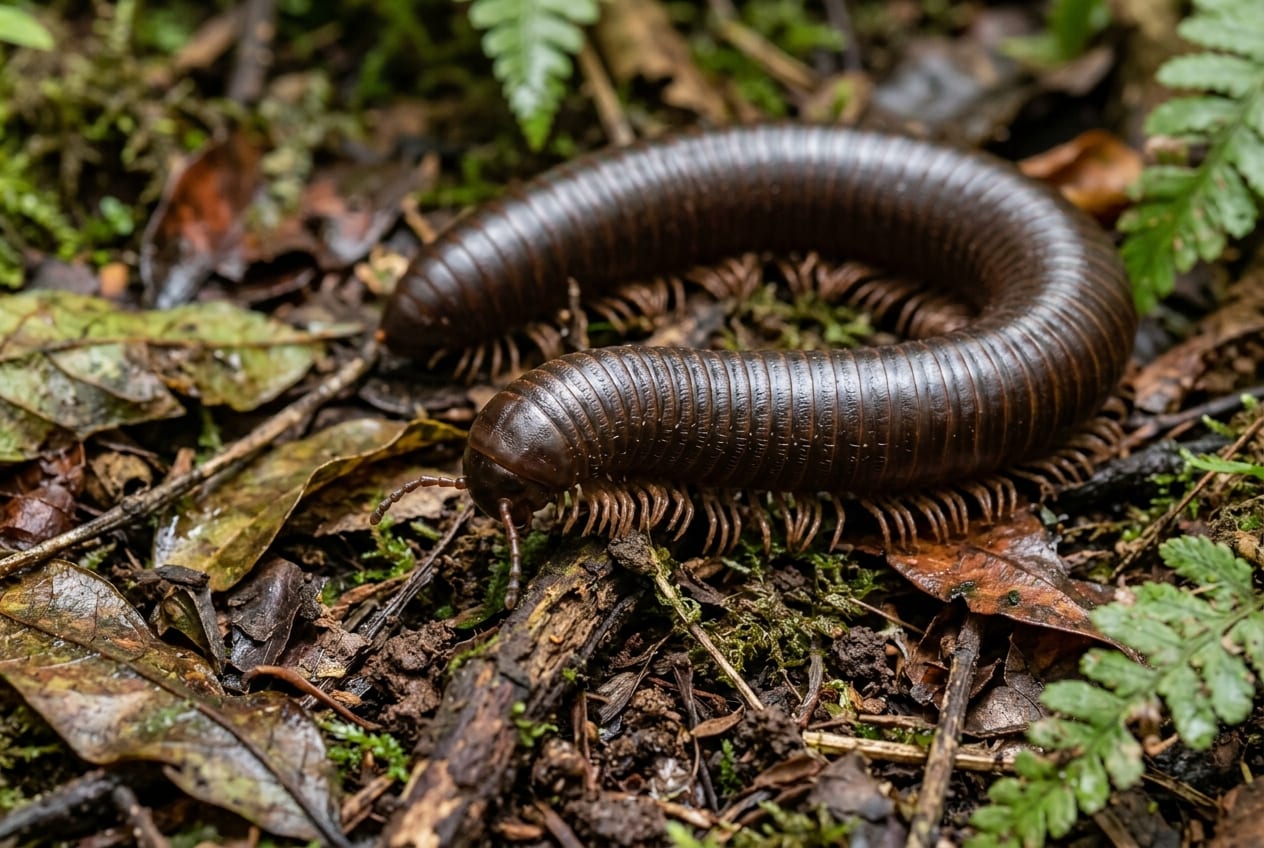
AI-generated image
Nigerian Giant Millipede
BeginnerOphistreptus guineensis
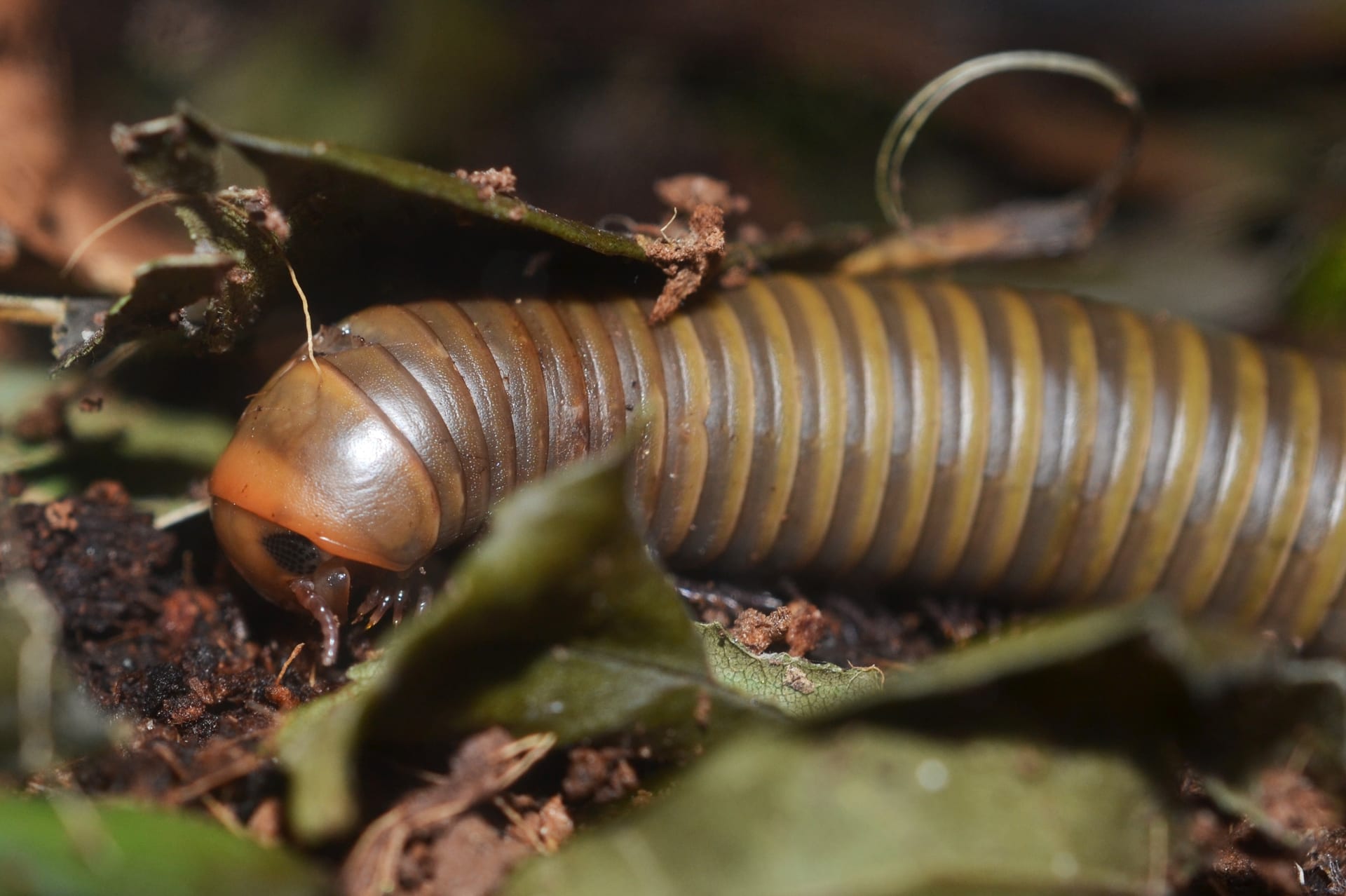
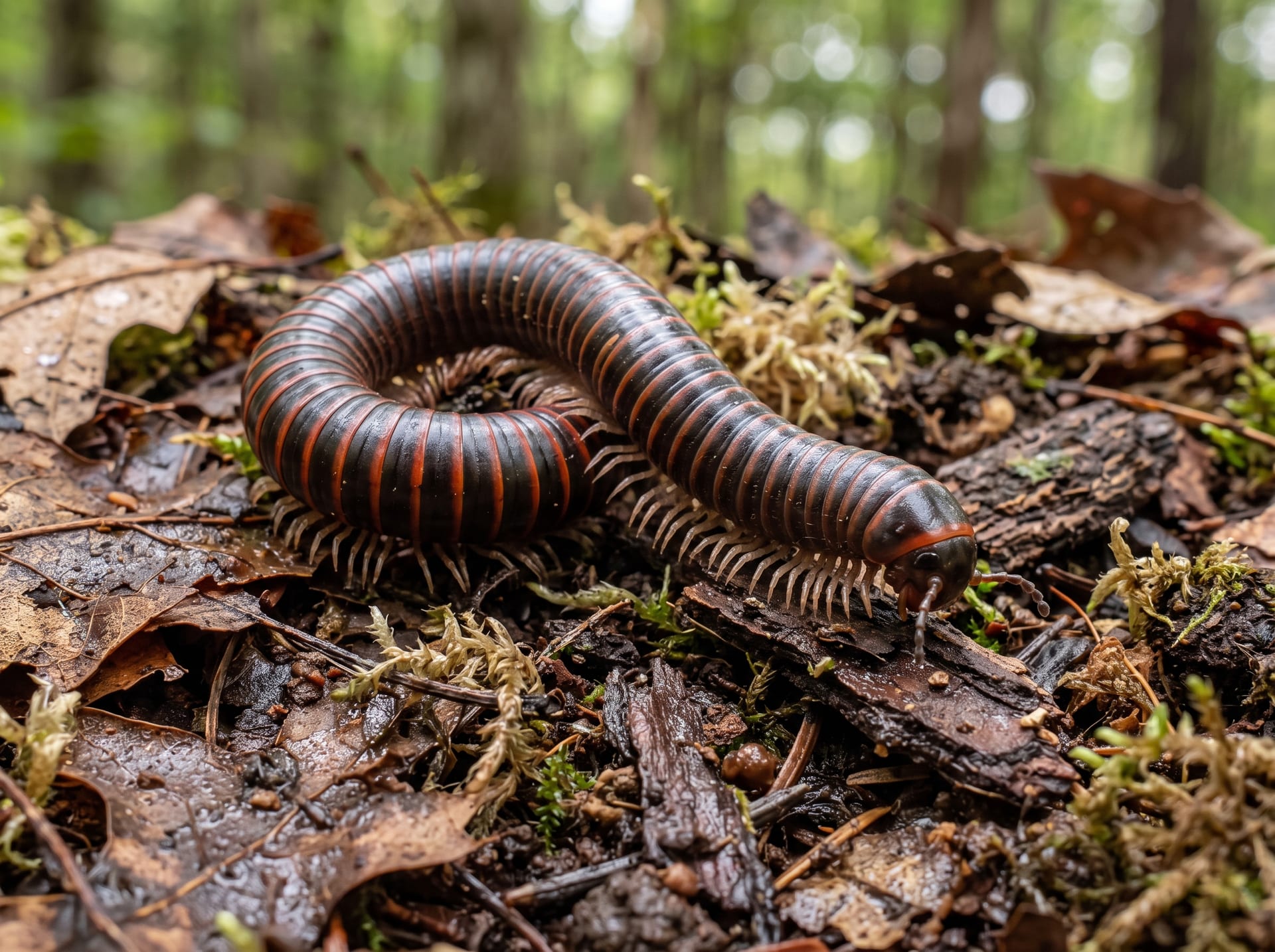
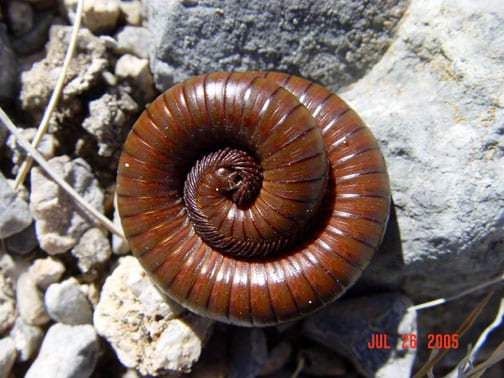
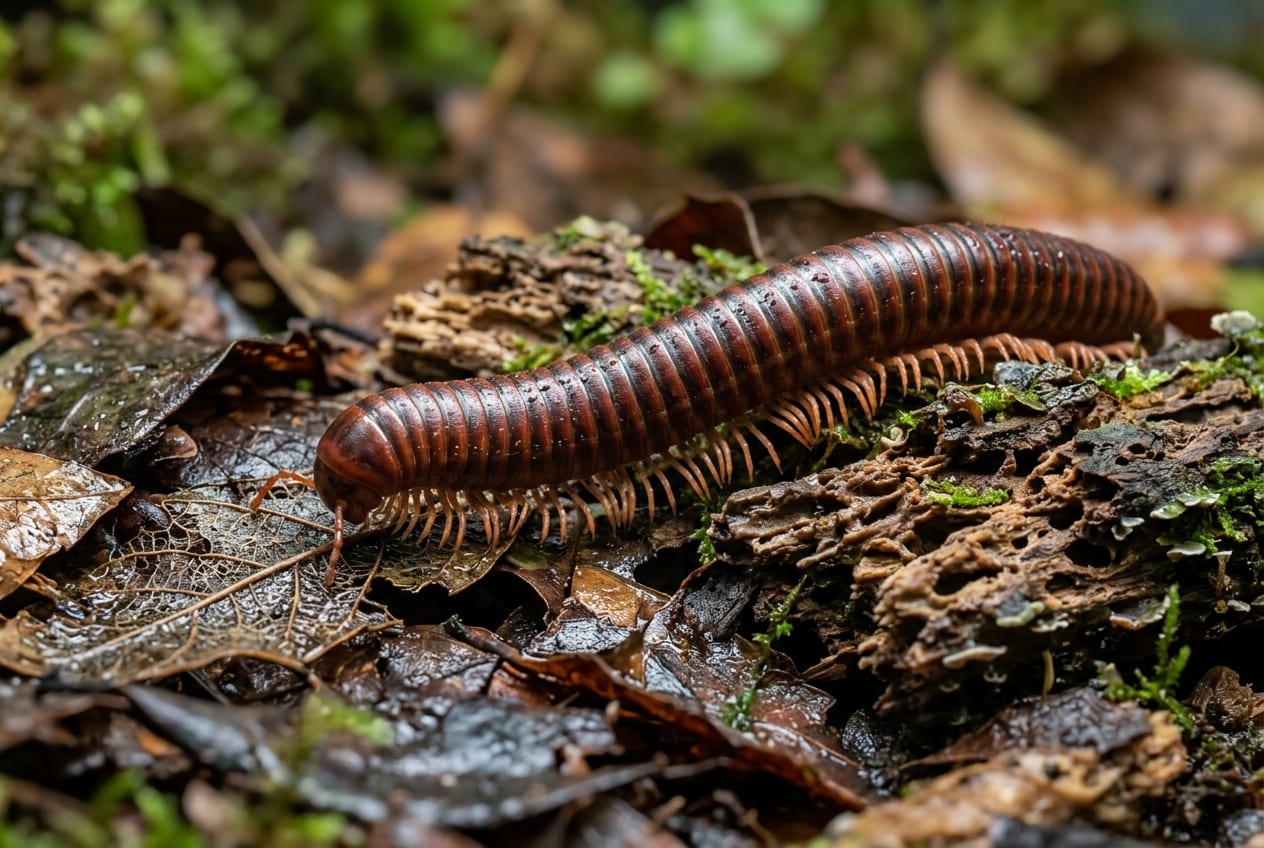
A large millipede of the West African savannah, glossy deep chocolate to reddish tan, reaching around 25cm. It spends real time above ground and is placid and forgiving for its size.
Difficulty
Beginner
Temperature
22〜26℃
Lifespan
7-10 years
Size
25-26cm
Humidity
70〜75%
Diet
Rotting hardwood and decayed leaf litter as the bulk of the diet, with soft fruit and vegetables in moderation, occasional protein, and permanent calcium such as cuttlebone
About
Ophistreptus guineensis, described by Silvestri in 1897, is a large spirostreptid millipede of the West African savannah, with GBIF records from Ghana and Benin. Adults reach 25-26cm, glossy deep chocolate through to reddish tan depending on the individual and how recently it moulted. Coming from savannah with distinct wet and dry seasons rather than constant rainforest, it is noticeably more drought-tolerant than most tropical millipedes and forgives an enclosure that dries out for a few days. The substrate is the food rather than the bedding: at least 15cm for adults and more if possible, worked through with a generous quantity of white-rotted hardwood and covered with leaf litter that is topped up as it goes. Calcium is not negotiable for an animal rebuilding 25cm of exoskeleton at every moult, and a shortfall is the usual cause of failed moults. It is placid and neither bites nor stings, but under real stress it releases a defensive fluid that stains and irritates skin and causes a chemical burn in an eye, so wash hands after handling. It lives seven to ten years.
Source: millibase.org
Lifespan of the Nigerian Giant Millipede
The Nigerian Giant Millipede lives 7-10 years.
Size of the Nigerian Giant Millipede
The Nigerian Giant Millipede grows to 25-26cm.
Temperature & humidity for the Nigerian Giant Millipede
The ideal temperature for the Nigerian Giant Millipede is 22〜26℃. Ideal humidity is 70〜75%.
Keep it at 22-26C, which it tolerates up towards thirty without complaint, at around 70-75% humidity by day rising to 90-100% at night.
Basic Info
Care Specifications
PeacefulGroupBreeding: Moderate
Sources: PostPods African Giant Chocolate Millipede (size, lifespan, temperature, substrate) / Insektenliebe Ophistreptus guineensis (size, lifespan, humidity) / MilliBase / GBIF
References & Sources
Edited & verified by: BreederDirect editorial team
The taxonomic, regulatory, and husbandry data on this page are compiled and verified against the authoritative primary sources below.
Taxonomy & Authority
Accepted name: Ophistreptus guineensis (Silvestri, 1897)
Authority databases: GBIF
Nomenclature follows global taxonomic authority databases.
Regulations & Conservation Status
Not CITES-listed
Sources: CITES Appendices (species not listed)
Regulations may change. Always verify the latest information with the relevant authorities.
Nigerian Giant Millipede Listings
Loading latest listingsFind listings for this species