Giant Gourami: Overview
Giant Gourami (Osphronemus goramy) is a freshwater fish belonging to the order Perciformes and family Osphronemidae, and is the largest species among the Gourami family. Native to Southeast Asia (Indonesia, Malaysia, Thailand, etc.), it is an important fish in its native regions for both food and ornamental purposes.
Adults reach 50-70cm (occasionally exceeding 80cm) and can weigh several kilograms. Young fish display silver to dark brown horizontal stripe patterns, which change as the fish matures; some older individuals develop golden to orange coloration.
Basic Information
| Item | Details |
|---|
| Scientific Name | Osphronemus goramy |
| Common Name | Giant Gourami |
| Origin | Indonesia, Malaysia, Thailand, Indochina Peninsula |
| Adult Size | 50-70cm (recorded in captivity) |
| Lifespan | 20-30 years (with proper care) |
| Care Difficulty | Intermediate (large tank required) |
| Temperament | Territory consciousness strengthens with growth |
Juvenile vs. Adult Differences
Giant Gourami changes significantly in appearance throughout growth stages.
| Stage | Size Range | Coloration | Temperament |
|---|
| Fry (up to 15cm) | 5-15cm | Silver to dark brown horizontal stripes | Docile |
| Juveniles (15-30cm) | 15-30cm | Stripes fade | Active, curious |
| Sub-adult (30-50cm) | 30-50cm | Color shifts, dark to tan tones | Territory consciousness emerges |
| Adult (50cm+) | 50cm and above | Gold to orange possible | Strong territory consciousness |
Fish sold in shops as juveniles appear to be "relatively calm, normal-sized fish," but you must always account for the fact that they will eventually exceed 50cm.
Required Tank Size
Since Giant Gourami ultimately reaches 50-70cm, appropriate tank sizing is essential.
| Growth Stage | Minimum Tank Size | Recommended Tank Size |
|---|
| Fry to Juvenile (up to 20cm) | 90cm tank (150L) | 120cm tank |
| Sub-adult (20-40cm) | 150cm tank (400L) | 180cm tank |
| Adult (40cm+) | 180cm tank (700L+) | 200cm or larger |
Tank Cover: Gouramis possess a labyrinth organ and breathe air directly from the water surface. A cover is essential (but avoid sealing it completely—allow air to reach the surface).
Labyrinth Organ and Air Breathing
The defining characteristic of Gouramis is the "labyrinth organ." As an auxiliary breathing organ, it allows them to take oxygen directly from the atmosphere at the water surface.
- Even if water quality deteriorates or dissolved oxygen is low, they can survive via air breathing (high tolerance)
- If surface-breathing is infrequent, the labyrinth organ may not be functioning properly
- Water temperatures below 20°C increase air-breathing frequency and cause stress
Water Quality and Environment Setup
Water Parameters
| Parameter | Ideal Range |
|---|
| Temperature | 22-28°C (optimal 24-26°C) |
| pH | 6.5-8.0 |
| Hardness | 5-20 dGH (soft to moderately hard) |
| Ammonia/Nitrite | 0 |
| Nitrate (NO₃⁻) | Below 40ppm |
Giant Gourami are relatively tolerant of water quality fluctuations, but because they are large fish with high waste output, powerful filtration and regular water changes are essential.
Filter Selection
| Filter Type | Features | Recommendation |
|---|
| External canister filter | Quiet, large media capacity | ◎ |
| Hang-on-back filter | Easy maintenance | ◎ |
| Overflow system | Ideal for large tanks | ◎ (for large tanks) |
| Internal/sponge filter | Supplementary only | △ (insufficient alone) |
Water Change Frequency: Even with large tanks, perform 20-30% water changes weekly. As fish reach adult size, waste increases, so monitor nitrate accumulation regularly.
Feeding: Omnivorous Hearty Eater
Giant Gourami are omnivorous and in the wild eat everything from aquatic plants and vegetation to small fish and crustaceans. In captivity, they readily adapt to various foods.
Recommended Foods
| Food Type | Features | Frequency |
|---|
| Large fish pellets | Ideal as main diet | 2-3 times daily |
| Frozen shrimp/grass shrimp | Protein source | 2-3 times weekly |
| Vegetables (spinach, lettuce, broccoli) | Plant matter | 2-3 times weekly |
| Earthworms/mealworms | High preference | 1-2 times weekly |
| Small fish (goldfish, etc.) | Protein | 1-2 times monthly (supplementary) |
| Aquatic plants/floating plants | Natural foraging | As available |
Importance of Plant Matter: In the wild, plants comprise a significant portion of their diet. Regular feeding of vegetables and aquatic plants beyond pellets alone contributes to long-term health. Vegetables rich in vitamin C and fiber (such as blanched spinach) are particularly beneficial.
Feeding Amount: Provide only what can be consumed in 2-3 minutes. Adults require only two feedings daily. Remove any uneaten food immediately, as it degrades water quality.
Tank Mate Considerations
As Giant Gourami grow, their territorial awareness and aggression increase.
Fry to Juvenile Stage (up to 20cm): Relatively docile; cohabitation with similarly-sized fish is possible.
Sub-adult to Adult Stage (20cm+): Territory consciousness strengthens, increasing aggression toward conspecifics and other fish.
Compatible Tank Mates
| Pairing | Considerations |
|---|
| Large cyprinids (like Bighead Carp) | Possible if size difference exists |
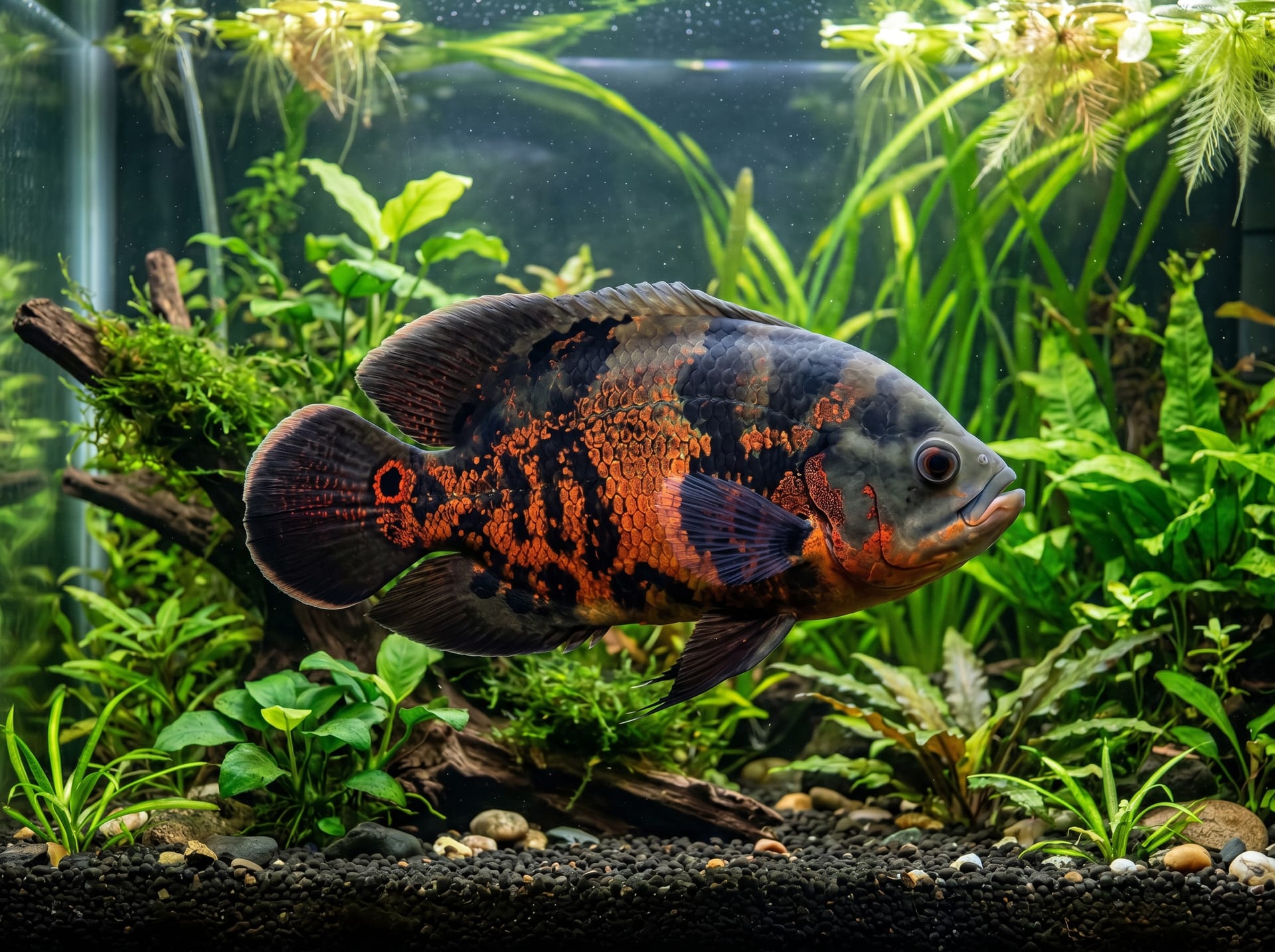
| Oscars (large cichlids) | Watch for territorial disputes |
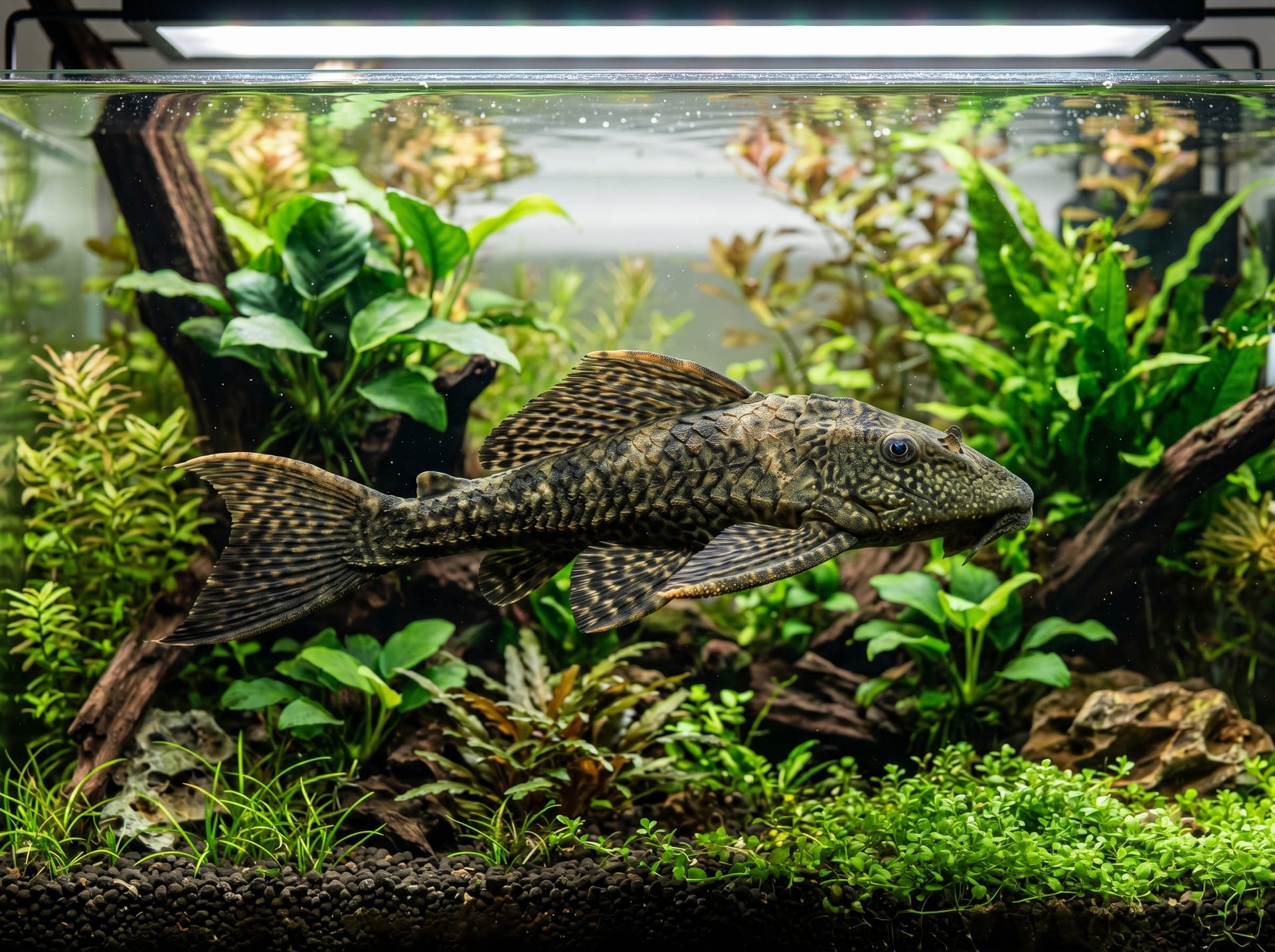
| Plecos/Loricaria (similar size) | Bottom-dwelling separation possible |
| Large catfish | Bottom-dwelling separation works |
Incompatible Tank Mates
- Small fish in general (predation target)
- Other Giant Gouramis (adults engage in fierce conflict)
- Extremely timid fish (constant stress)
Ultimately, solitary housing is safest and allows the fish to live longer without stress.
Intelligence and Keeper Recognition
One remarkable trait of Giant Gourami is their ability to recognize their keeper.
- When the keeper approaches the tank, they often come forward in a "feed me" posture
- They typically show little response to strangers
- They may sniff at or mouth your finger if placed near the surface (may bite)
- Long-term captive fish become increasingly responsive to their keeper
This "friendliness" is one reason that long-term keepers become devoted to Giant Gourami.
Common Diseases
Hexamita (Hole-in-the-Head): Holes develop in the head region. Poor water quality and malnutrition are triggers. Treat with metronidazole medicated baths.
Ich (White Spot Disease): Often appears during sudden temperature changes. Treat by raising temperature to 28-30°C.
Wounds/Scrapes: Can occur from territorial disputes or colliding with tank walls. Treat with salt baths or antibacterial medications like Green F Gold.
Summary: A Long-Term Intelligent Companion
Giant Gourami cannot be kept under the assumption of "easy care in a small tank," but with proper large aquarium housing and long-term commitment, they become intelligent partners that recognize their keeper and continue to grow for 20-30 years.
Before purchase, plan your equipment based on their final size (50-70cm), and consider future moves and tank relocations. This responsible approach is the foundation for a happy, lasting relationship with your fish.