Rainbow Fish (Melanotaenia) Care Guide | Enjoying the Iridescent Brilliance of a Tropical Fish
A comprehensive guide to caring for Rainbow Fish (Melanotaenia genus). From species characteristics, tank setup, water quality management, feeding, tank mates, and breeding—a practical guide for long-term care of these brilliantly iridescent tropical fish native to Australia and New Guinea.
Key Takeaways
A comprehensive guide to caring for Rainbow Fish (Melanotaenia genus). From species characteristics, tank setup, water quality management, feeding, tank mates, and breeding—a practical guide for long-term care of these brilliantly iridescent tropical fish native to Australia and New Guinea.
Related Species
What Are Rainbow Fish?
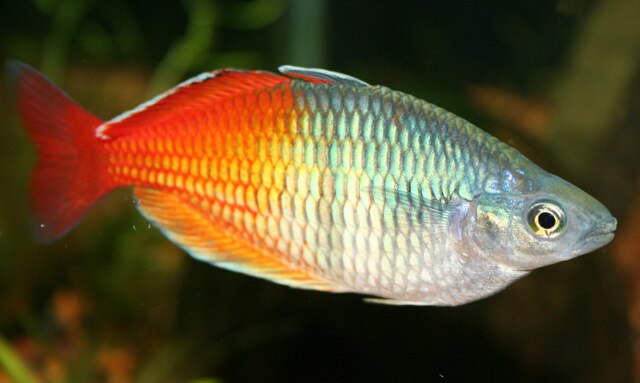
Rainbow Fish are freshwater fish of the family Melanotaeniidae (order Atheriniformes), native primarily to Australia and New Guinea. The blue, green, orange, and pink iridescent brilliance displayed by mature males is especially striking when they swim in groups, making them highly popular in the aquarium hobby.
The following are representative species commonly available domestically:
| Species | Body Length | Characteristics |
|---|---|---|
| Boeseman's Rainbow | Approx. 8–10 cm | Two-tone: blue anteriorly, orange posteriorly |
| Turquoise Rainbow | Approx. 12–15 cm | Turquoise shimmer across the body; large species |
| Praecox Rainbow | Approx. 7–9 cm | Reddish body color; compact |
| McCulloch's Rainbow | Approx. 8–10 cm | Strong metallic sheen; popular species |
| Saratoga species (Misostoma) | Approx. 6–8 cm | Slim body type; striking in groups |
Care difficulty ranges from low to moderate; most species are hardy and suitable for tropical fish beginners. Conversely, coloration improves dramatically as they mature, making them equally popular with intermediate and advanced aquarists who enjoy raising and developing their colors.
Tank and Equipment Selection
Rainbow Fish are active swimmers that utilize their elongated bodies to swim through the mid-water to upper layers. Tank length is critical, with 90–120 cm sizes being the most manageable environment.
Recommended Tank Sizes (for 5–10 fish)
| Tank Size | Capacity (Medium Species) | Notes |
|---|---|---|
| 60 cm standard (54 L) | 5–7 fish | Beginner to small groups |
| 90 cm (approx. 150 L) | 10–15 fish | School beauty becomes evident |
| 120 cm (200+ L) | 15–25 fish | Dedicated Rainbow Fish tank |
An external canister filter with strong biological filtration capacity is recommended. Since Rainbow Fish prefer water flow, set the flow rate moderately strong (5–8 times the tank volume per hour).
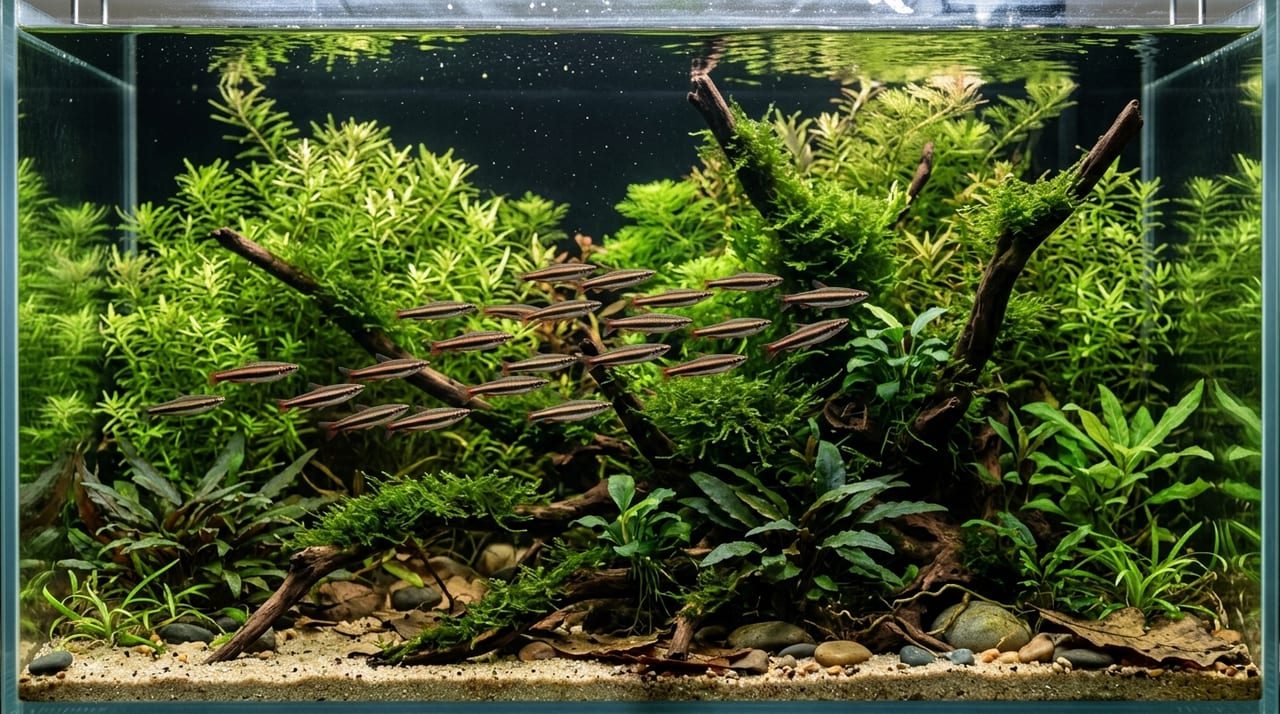
Layout should place tall background plants (Vallisneria, etc.) in the back, with open space in the mid-ground and foreground to maximize the visual impact of schooling.
Water Quality Management
Rainbow Fish hail from clear streams to moderately hard waters in Australia and New Guinea, with relatively broad water quality tolerance.
Recommended Water Parameters
| Parameter | Ideal Range | Notes |
|---|---|---|
| Temperature | 72–82°F (22–28°C) | Cool-water species (New South Wales types) prefer 72–75°F (22–24°C) |
| pH | 7.0–8.0 | Slightly alkaline is stable |
| Hardness (GH) | 8–15°dH | Water too soft inhibits color development |
| Ammonia/Nitrite | 0 ppm | Established biological filtration is essential |
| Nitrate | ≤40 ppm | Manage with weekly 20–30% water changes |
Perform water changes weekly, changing 20–30% of total volume. Dechlorinated tap water can be used directly; adding small amounts of oyster shells or coral sand can stabilize pH and improve coloration.
Feeding and Color Enhancement Tips
Rainbow Fish are omnivorous and eat both flake and pellet foods. Balanced nutrition is key to maximizing color in mature males.
Recommended Feeding Menu
- Primary Food: Medium floating flakes or pellets (40%+ protein)
- Supplementary Foods:
- Frozen bloodworms: 2–3 times weekly (enhances color and breeding)
- Frozen daphnia & brine shrimp: 1–2 times weekly
- Dried krill (shrimp): ~once weekly for carotenoid supplementation
Feed an amount that is consumed in 2–3 minutes; remove uneaten food promptly. Overfeeding is a major cause of water quality deterioration.
Tank Mate Compatibility
Rainbow Fish are generally peaceful and suitable for community tanks. However, males frequently engage in color-displaying behavior (flashing) to compete with each other, so multiple males in one tank actually intensify coloration.
Compatible Tank Mates
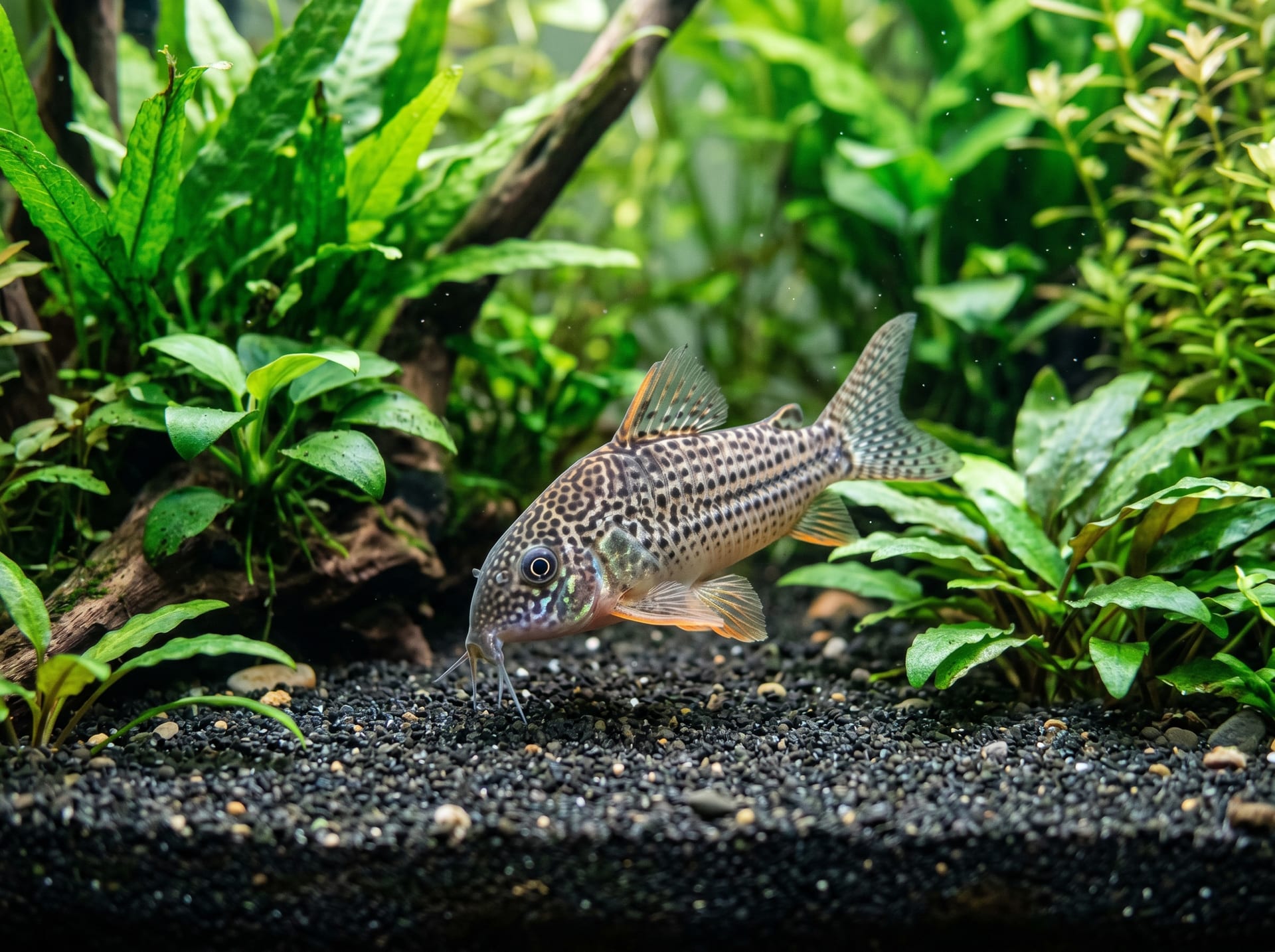
- Corydoras species (occupy the bottom layer without competition)
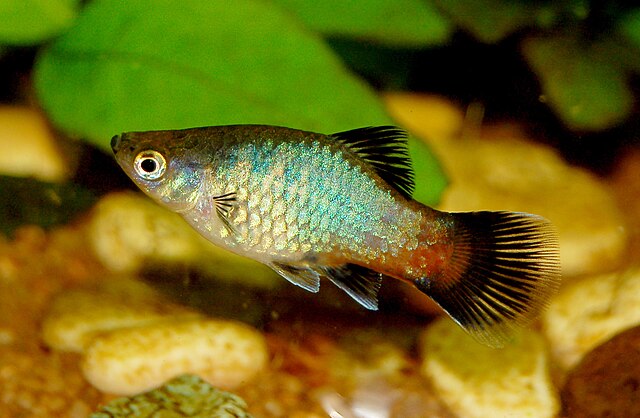
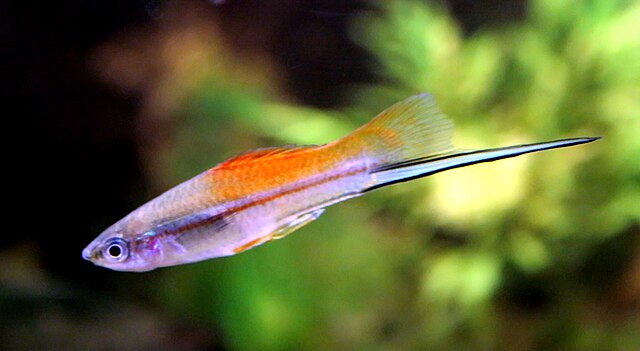
- Platies and Swordtails
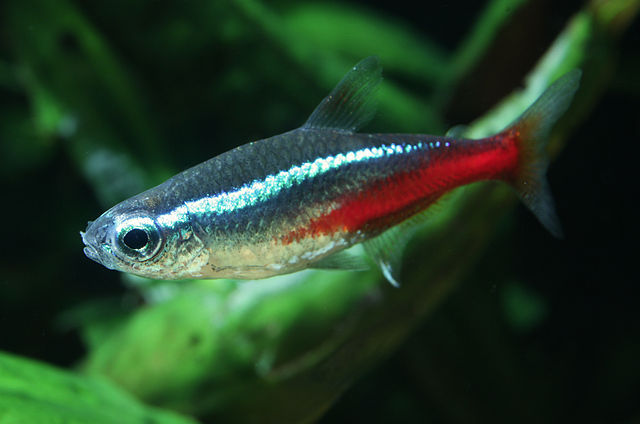
- Peaceful Tetras (Cardinals, Neon Tetras)
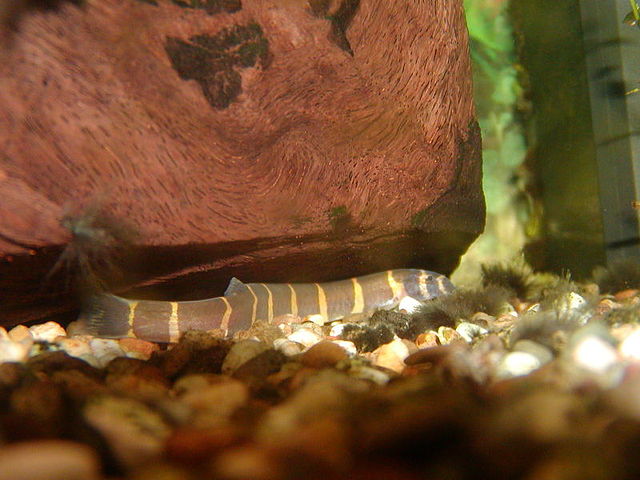
- Kuhli Loaches (bottom-feeding cleanup crew)
Incompatible Tank Mates
- Bettas (fin-nipping risk)
- Large Cichlids
- Tiny Tetras (fry-sized species may be preyed upon by Rainbow Fish)
Different Rainbow Fish species may hybridize if housed together; if breeding is intended, keep each species in separate tanks.
Breeding Basics
Rainbow Fish are relatively easy to breed, laying adhesive eggs on plants or spawning mops.
Breeding Setup
- Move a pair or 1 male + 2 females to a breeding tank (40–60 L)
- Place fine-leaved plants (Willow Moss, Cabomba) or spawning mops in the mid- to upper levels
- Set temperature to 26–28°C (79–82°F) and extend lighting to 12–14 hours daily
- Each morning, move mops/plants to a separate tank for incubation (parents will eat eggs)
Eggs hatch in approximately 10 days at 76°F (26°C). Raise fry on infusoria initially, progressing to brine shrimp nauplii. They reach adult size in 6–12 months.
Summary
Rainbow Fish combine stunning schooling coloration with the joy of cultivation, making them enjoyable for beginners through advanced aquarists alike. Their broad water quality tolerance and peaceful nature suit various tank mates. When kept in adequately sized tanks with plenty of swimming space, their iridescent brilliance shines at its fullest.