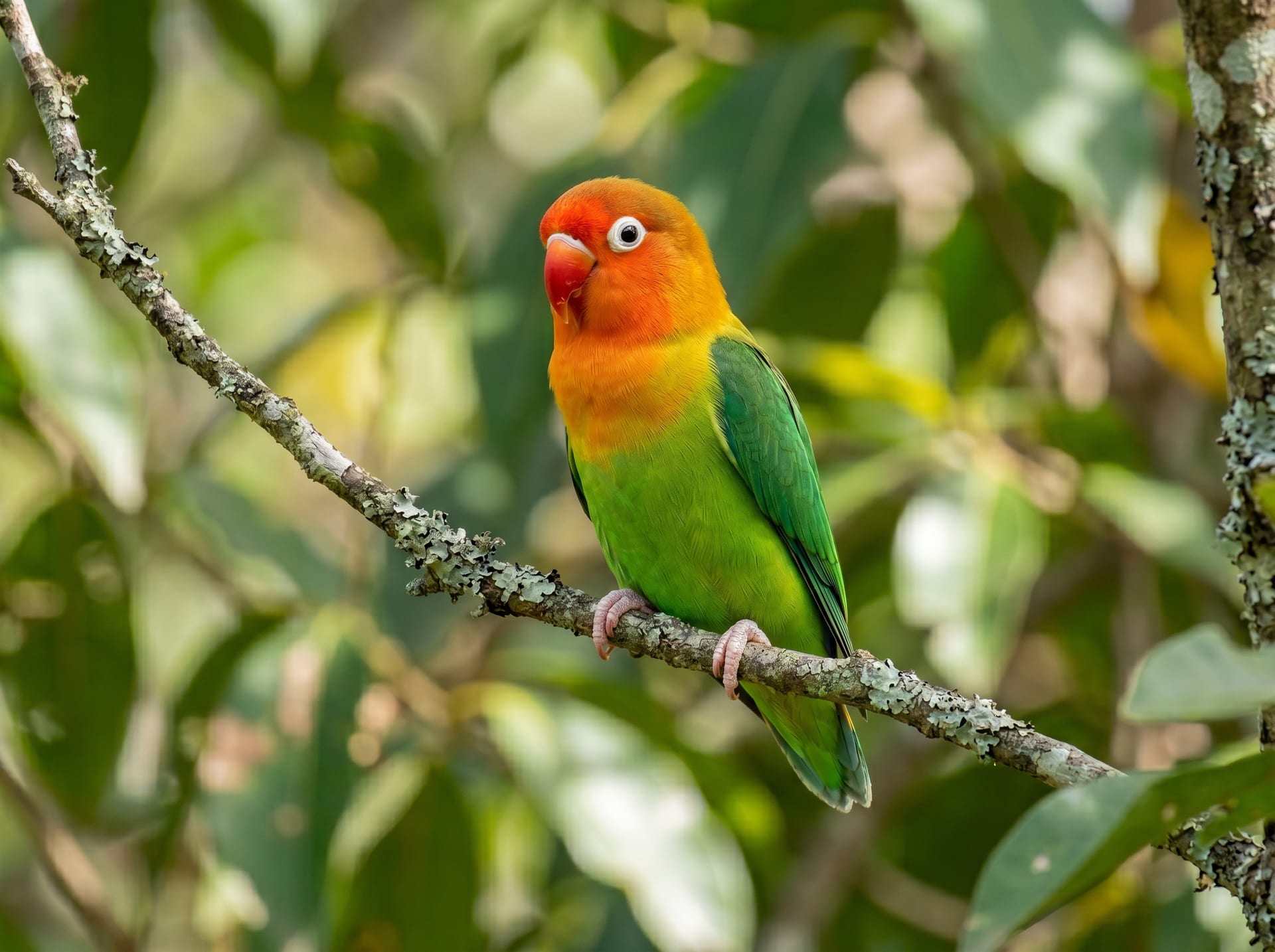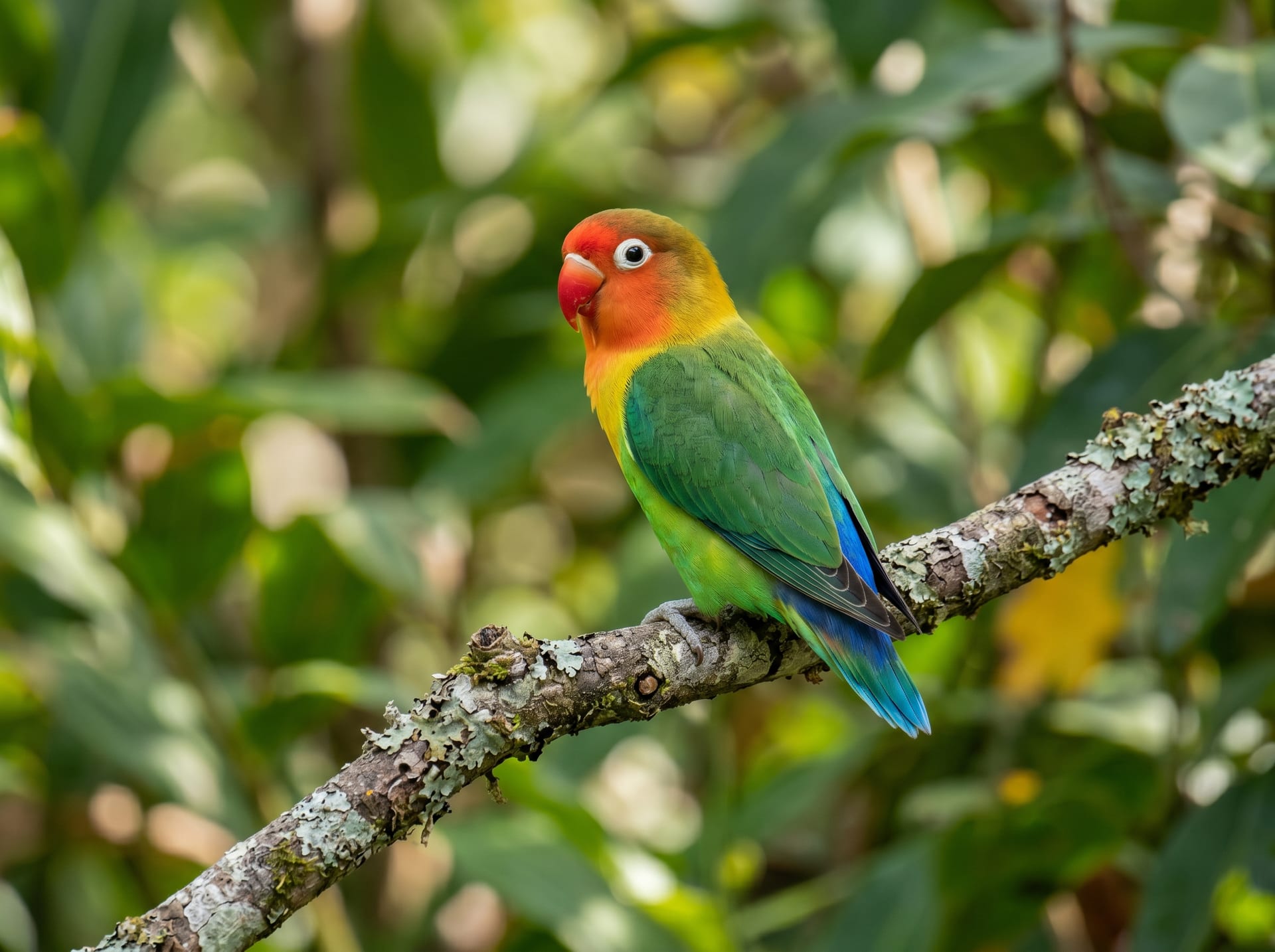
AI-generated image
Lovebird
IntermediateAgapornis roseicollis
Named for their affectionate nature and vivid plumage. Bonds deeply with owners but can be jealous. Strong bite for their size. Small but powerful and curious.
Difficulty
Intermediate
Temperature
20〜30℃(適温25℃前後)
Lifespan
10-15 years
Size
15-17cm
Humidity
40〜60%
Diet
Seeds + pellets + vegetables/fruits
About
The rosy-faced lovebird, also known as the rosy-collared or peach-faced lovebird, is a species of lovebird native to the Namibian savanna woodlands. Loud and constant chirpers, these birds are very social animals and often congregate in small groups in the wild. They eat throughout the day and take frequent baths. Coloration can vary widely among populations. Plumage is identical in males and females. Lovebirds are renowned for their sleep position in which they sit side-by-side and turn their faces in towards each other. Also, females are well noted to tear raw materials into long strips, "twisty-tie" them onto their backs, and fly substantial distances back to make a nest. These birds are common in the pet industry.
Source: Wikipedia (CC BY-SA 4.0)
Lifespan of the Lovebird
The Lovebird lives 10-15 years.
Size of the Lovebird
The Lovebird grows to 15-17cm.
Temperature & humidity for the Lovebird
The ideal temperature for the Lovebird is 20〜30℃.
Basic Info
Origin
Namibian savanna woodlands
Lifespan
10-15 years
Size
15-17cm
Morphs (Varieties)
Representative color mutations of the Peach-faced Lovebird (Agapornis roseicollis). Sex-linked inheritance is denoted as recessive in this schema.
RecessiveVisual only with two copies; one copy = het (carrier).
LutinoCinnamonOpalineDutch BluePale FallowOrange-faced
Incomplete dominant1 copy visual; 2 copies (super form) more pronounced.
Dark factorViolet
DominantVisual with a single copy; no distinct super form.
Dominant Pied
A curated selection of notable morphs. Inheritance modes are a breeding-planning guide; actual appearance varies with combos.
Calls & Media
Calls / Song
Call · © African Bioacoustics Community · xeno-canto XC1087077 (CC BY-NC 4.0)
Sources: xeno-canto
References & Sources
Edited & verified by: BreederDirect editorial team
The taxonomic, regulatory, and husbandry data on this page are compiled and verified against the authoritative primary sources below.
Taxonomy & Authority
Accepted name: Agapornis roseicollis (Vieillot, 1818)
Synonyms: Psittacus roseicollis
Authority databases: GBIF
Nomenclature follows global taxonomic authority databases.
Regulations & Conservation Status
Not CITES-listed
Agapornis roseicollis (Peach-faced lovebird). One of four species (Agapornis roseicollis / Melopsittacus undulatus / Nymphicus hollandicus / Psittacula krameri) explicitly excluded from CITES Appendix II by notation. Not subject to CITES.
Sources: CITES Psittaciformes spp. Appendix II Annotation
Regulations may change. Always verify the latest information with the relevant authorities.
Lovebird Listings
Loading latest listingsFind listings for this species