Peach-faced Lovebirds (Lovebirds) Complete Care Guide | Pair Breeding, Breeding Condition Management, and Hand-taming Tips
Complete guide to caring for Peach-faced Lovebirds (Agapornis genus). Detailed explanation of care methods, including pair breeding precautions, hand-taming training, breeding condition suppression, and breeding basics, through molt care and diet management—a complete guide to raising lovebirds long-term and healthy.
Key Takeaways
Complete guide to caring for Peach-faced Lovebirds (Agapornis genus). Detailed explanation of care methods, including pair breeding precautions, hand-taming training, breeding condition suppression, and breeding basics, through molt care and diet management—a complete guide to raising lovebirds long-term and healthy.
Related Species
What Kind of Bird Is the Peach-faced Lovebird
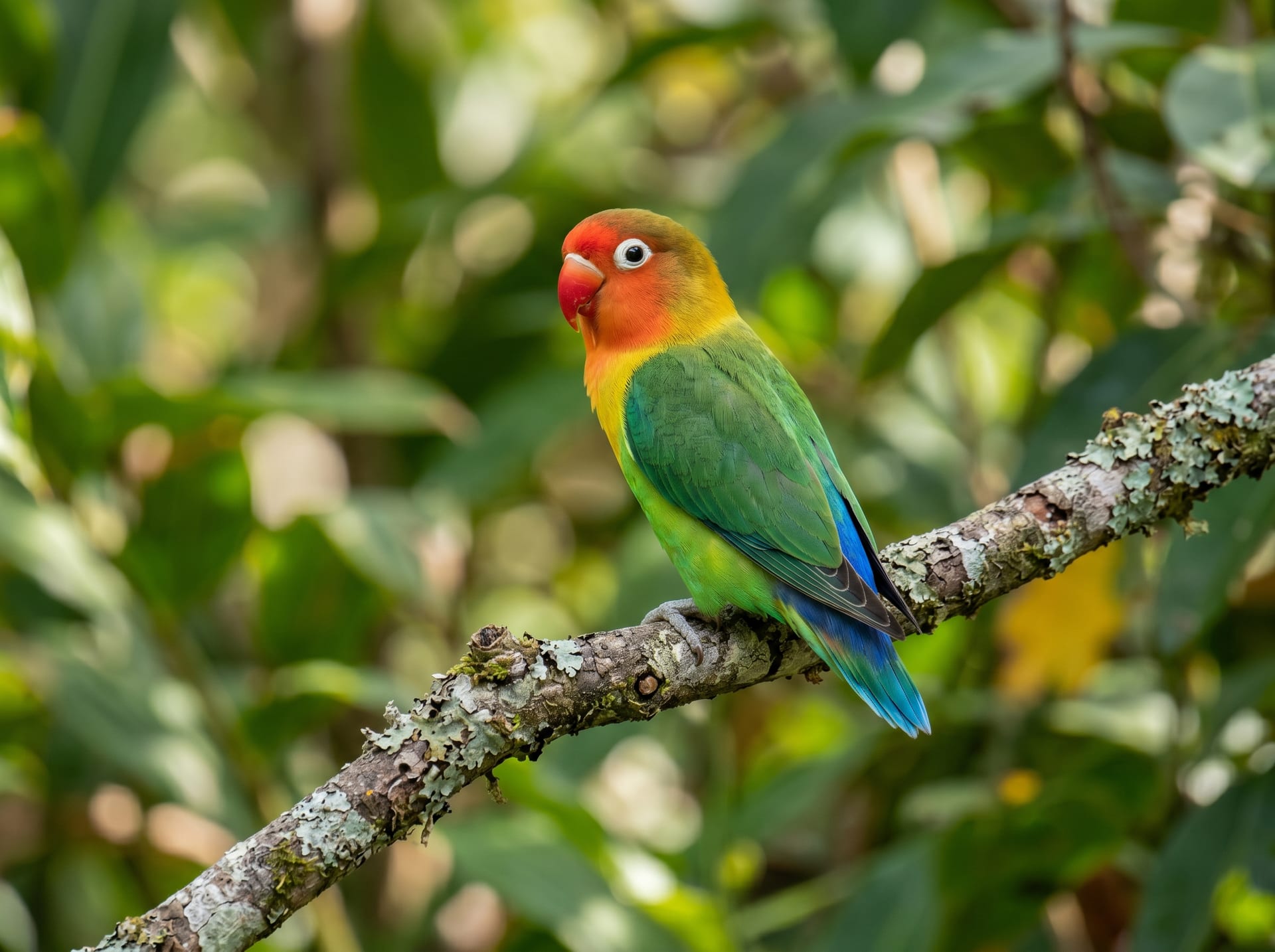
The Peach-faced Lovebird (Agapornis roseicollis) is a small parrot native to southwestern Africa, particularly Namibia and Angola, measuring approximately 15 cm in length and weighing 45–60 g. As the nickname "lovebird" suggests, this species has a very strong pair bond. The beautiful pink to orange coloring on the head and face, combined with the wide variety of color mutations, has made it popular among breeders both domestically and internationally.
In captivity, they live 10–15 years. Husbandry methods differ significantly depending on whether you acquire one as a companion bird or for breeding and selective breeding. This article covers key points from three perspectives: single-bird keeping, pair breeding, and breeding.
Cage and Keeping Environment Setup
Peach-faced Lovebirds are active with strong flight ability and are prone to insufficient exercise in cramped cages.
Recommended Cage Sizes (1–2 Birds)
| Purpose | Minimum Size | Recommended Size |
|---|---|---|
| Companion (1 bird) | W45×D35×H50cm | W60×D45×H60cm |
| Pair breeding | W60×D45×H60cm | W75×D50×H75cm |
| Breeding pair | W75×D50×H75cm | W90×D60×H90cm |
Perches should be approximately 8–12 mm in diameter; natural wood (cherry, apple, or willow) also exercises the feet. Peach-faced Lovebirds have a strong wood-chewing habit, so select perches with the expectation of regular replacement as consumables.
Ideal temperature is 22–28°C and humidity 50–60%. Avoid direct sunlight and cold air from air conditioning; provide natural light for illumination purposes.
Differences Between Pair Breeding and Single-Bird Keeping
When raising Peach-faced Lovebirds as companion birds, single-bird keeping is recommended. This is because pair-kept birds prioritize bonding with each other, which tends to reduce their familiarity with humans.
Single-Bird Keeping (Companion-oriented)
- Easier to build trust with humans, with rich interaction during out-of-cage time
- Since the owner becomes the breeding stimulus, excessive breeding-condition management is a challenge
- Requires 1–2 hours daily of out-of-cage time and physical interaction
Pair Breeding (Breeding and Display-oriented)
- Natural bird behaviors can be observed, with minimal stress
- Hand-taming training becomes difficult (individual variation)
- Egg-laying suppression is necessary if breeding is not intended
If you later pair a bird with a companion for breeding purposes, the original bird may attack the newcomer, so a gradual introduction process with cages placed side by side is necessary.
Diet and Nutrition Management
The basic diet for Peach-faced Lovebirds is recommended to be balanced as pellets (30–40%) + seeds (40–50%) + supplementary foods (10–20%). Seed-only feeding tends to result in excess fat and vitamin deficiency, so transitioning to pellets or mixing pellets with seeds is recommended.
Daily Food Guidelines (Per Bird)
| Food | Amount | Notes |
|---|---|---|
| Pellets (small) | 3–5 g | Pellet size S–M |
| Seed mix | 5–7 g | Keep high-fat seeds (sunflower, hemp) to a minimum |
| Vegetables and greens | 5–10 g | Komatsuna, bok choy, dandelion |
Foods to Avoid: Avocado, chocolate, caffeine, onion, garlic, and high-sodium foods. Limit fruit to 1–2 times per week to prevent excessive breeding conditions from excess sugar.
Calcium supplementation can be provided by keeping cuttlebone (crushed oyster shell) in the cage or through vegetables.
Hand-taming Training and Socialization
Many Peach-faced Lovebirds become hand-tamed with appropriate socialization. Chicks raised from hand-feeding naturally trust humans, but older or unsocialized birds require gradual training.
Hand-taming Training Steps
- Acclimation to Environment (1–2 weeks): Sit near the cage and speak softly. Do not force physical contact
- Making Your Hand Non-threatening (1–4 weeks): Show your finger through the cage and offer millet spray from your fingertip
- Hand-taming Inside the Cage (2–6 weeks): Place your hand inside the cage and lure the bird onto your finger with treats
- Interaction During Out-of-Cage Time: Acclimate the bird to perching on your finger outside the cage and increase physical contact
Peach-faced Lovebirds have a powerful bite, so for birds with biting habits, training by not reacting when bitten is effective. They learn that biting is not rewarding if you do not react to the pain.
Breeding-condition Management and Excessive Breeding Suppression
Peach-faced Lovebirds, both males and females, are prone to excessive breeding conditions. Females especially face increased risk of egg binding, osteomyelitis, and calcium deficiency if they repeatedly lay infertile eggs.
Signs of Excessive Breeding Condition
- Carrying nesting-like materials tucked in the body (stuffing behavior)
- Chewing paper or fabric into fine pieces
- Increased aggression
- Abdominal swelling and genital enlargement
Environmental Management for Suppression
- Increase dark time to 12–14 hours per day (photoperiod management)
- Remove all nesting boxes and nesting materials
- Restrict high-calorie breeding-stimulating foods (sunflower seeds, nuts)
- Eliminate "dark corners" in the cage (do not place cardboard boxes inside)
If egg-laying persists, consult an avian veterinarian and consider hormone therapy (such as leuprolide acetate) for breeding-condition suppression.
Breeding Basics and Chick Management
For breeding purposes, three key factors are confirming health status, pair compatibility, and nesting box preparation.
Breeding Preparation Checklist
- Both parents are at least 1 year old with breeding-condition signs present
- Tested for external parasites and infections
- Nesting box size: 25 cm × 20 cm × 20 cm (entrance hole diameter 5 cm)
- Nesting material: shredded paper, soft grass (which the female carries herself)
The incubation period is approximately 23 days. Chicks fledge 30–35 days after hatching and then transition to independent feeding from parents. If hand-feeding chicks, starting before the eyes open (around day 10) encourages hand-taming but strains immunity and crop function; if inexperienced, begin with transition hand-feeding at day 30–40 or later.
Summary
Peach-faced Lovebirds are charming and offer the enjoyment of diverse breeding mutations. For single-companion birds, hand-taming training and breeding-condition management are key; for pair breeding and breeding enjoyment, environment creation and health management are essential. Deciding your acquisition style upfront and preparing an environment suited to that approach is the shortcut to long-term breeding success.