Rosy-faced Lovebird Care & Breeding Guide: Basic Care for Affectionate Love Birds
A comprehensive guide to raising affectionate Rosy-faced Lovebirds. Learn the differences between pair and single-bird housing, cage selection, breeding procedures, and strategies for managing behavior issues specific to this species.

Key Takeaways
A comprehensive guide to raising affectionate Rosy-faced Lovebirds. Learn the differences between pair and single-bird housing, cage selection, breeding procedures, and strategies for managing behavior issues specific to this species.
Related Species
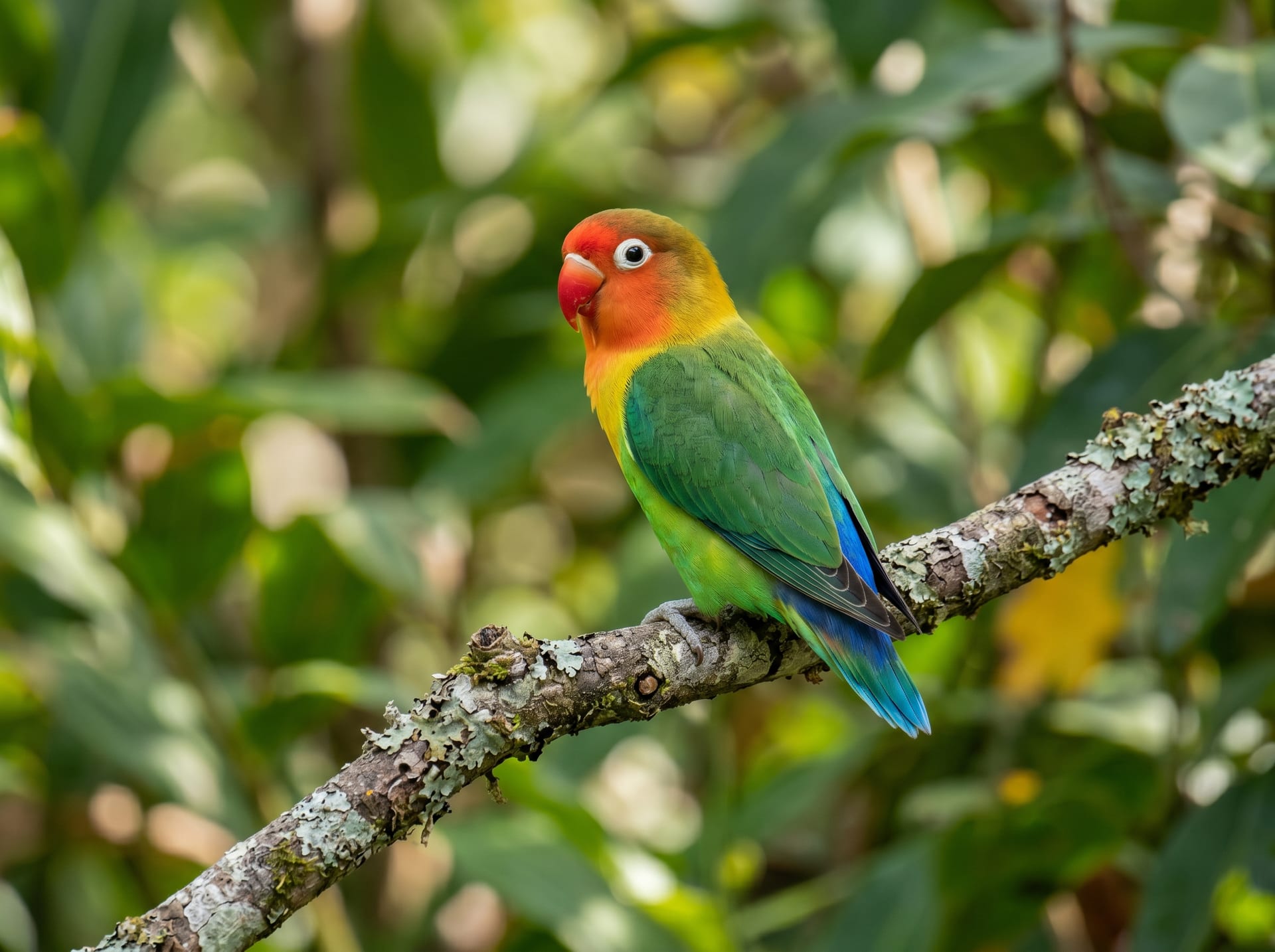
What Are Rosy-faced Lovebirds—The Charm of Affectionate Love Birds
The Rosy-faced Lovebird (Agapornis roseicollis) is a small parrot native to southwestern Africa, ranging from Namibia to Angola. True to its English name "Lovebird," this species is renowned for its strong bonds with its partner. Measuring roughly 15 cm in length and weighing 50–60 g—small enough to fit in the palm of your hand—these birds are remarkably expressive, possess distinct personalities, and have a charm that never fails to captivate their owners.
Color variations are remarkably diverse, ranging from the natural green of wild-type birds to blue, violet, lutino (yellow), albino, and pied. Selective breeding by dedicated breeders has produced many color morphs, and it's common for enthusiasts to collect rare colorations. With proper care, these birds live 10–15 years, making them reliable long-term companion birds.
Single-Bird vs. Pair Housing—Your First Critical Decision
Before bringing a Rosy-faced Lovebird home, one of the most important decisions is whether to house a single bird or a pair. Each approach has distinct advantages and considerations.
Benefits of Single-Bird Housing
- Strengthens the bond between owner and bird, resulting in a more affectionate and dependent companion
- Makes hand-training easier and increases the quality of physical interaction
- Individuals typically exhibit milder sexual behavior
Benefits of Pair Housing
- Provides psychological stability through bird-to-bird companionship, ideal for households where owners are frequently away
- Offers the rewarding experience of breeding
- Reduces stress and feather-plucking risks associated with loneliness
Important Caution: If introducing an adult bird to another adult, compatibility issues can result in severe aggression. To successfully create a pair, either house them together from 3–6 months of age, or gradually acclimate them over 2–4 weeks by keeping them in separate cages while monitoring their behavior. Simply placing them in the same cage without preparation can lead to serious injury.
Setting Up Your Bird's Environment
Cage Selection For single birds, a minimum cage size of 40 cm wide × 40 cm deep × 60 cm tall is recommended. For pair housing or breeding, ensure the width is at least 60 cm. Lovebirds have powerful beaks, so select sturdy metal cages with wire spacing of 1.5 cm or less and wire thickness of 2 mm or more. Avoid cages with extensive plastic components, as they are prone to destruction.
Perches and Interior Setup Perches should be 10–14 mm in diameter. Since lovebirds are vigorous chewers, natural wood species such as eucalyptus, willow, and mulberry are superior in durability and safety. Rather than arranging perches of uniform diameter at even intervals, provide multiple perches of varying thicknesses to maintain proper foot muscle balance. Toys are essential for these intelligent and curious birds; regularly rotate chew toys, foraging toys, bells, and swings to maintain engagement.
Temperature and Humidity Control The ideal temperature range is 20–28°C. In winter, maintain temperatures above 20°C using pet heating pads or heat lamps (40–60 W). Birds are susceptible to illness in environments with extreme temperature fluctuations, so if the cage is placed near a window, be mindful of nighttime cooling. Humidity should be maintained between 40–60%; using a humidifier during dry winter months is beneficial.
Nutrition—Balanced Diet Is Key to Longevity
Primary Diet Pellets offer the most balanced nutrition and well-regarded brands include Harrison's Bird Foods (organic), ZuPreem Natural, and TOPs Parrot Food. However, transitioning birds accustomed to seeds may take weeks to months. The "replacement method"—gradually increasing the pellet ratio while mixed with seeds—is most effective.
If using seeds as the primary diet, base it on a small bird mix centered on millet, panicum, canary grass seed, and other grains, supplemented with vegetables, fruits, and protein sources. Reserve sunflower and safflower seeds for treats only, as they are too high in calories.
Supplementary Foods Leafy greens (mizuna, bok choy, kale), colorful vegetables (bell peppers, broccoli, carrots), and fruits (apples, pears, and berries in small quantities) are all appropriate. During breeding and molting seasons, supplement with vegetable-based proteins such as egg whites and tofu to support energy demands.
Foods to Avoid Strictly avoid avocado (persin toxin, potentially fatal), onions, garlic (causes hemolytic anemia), chocolate (theobromine toxicity), caffeine, and high-sodium processed foods.
Managing Behavioral Issues
Lovebirds are highly expressive, but this expressiveness can manifest as behavioral problems. Understanding behavioral signals enables early intervention.
Biting Biting occurs when owners fail to recognize signs of displeasure or fatigue. Warning signals include ruffled head feathers, backing away, squinted eyes, and wings held tightly against the body. When these signs appear, immediately withdraw your hand and wait until the bird calms down. Reacting strongly or loudly to bites teaches the bird that biting gets attention, reinforcing the behavior.
Excessive Sexual Behavior Sexual behavior intensifies during spring and summer when day length increases, manifesting as hiding in cage corners, seeking nesting materials, and reduced appetite. Effective suppression strategies include limiting daylight to 10 hours or less daily and removing nesting boxes and potential nesting materials (cloth, etc.) from the cage. Prolonged excessive sexual behavior increases risks of egg-binding and osteoporosis; consult an avian veterinarian if the behavior persists.
Feather Plucking and Self-Injury Common causes include stress, loneliness, boredom, and nutritional deficiencies. Simultaneously improve the environment (provide more toys, extend out-of-cage time) and consult an avian veterinarian promptly. Neglected feather plucking becomes habitual and is difficult to treat.
Breeding Procedures and Parental Care
Before breeding, thoroughly assess pair compatibility by observing whether the birds preen each other and stay close together. Once the pair is established, install a horizontal nesting box approximately 15 cm tall × 15 cm wide × 20 cm deep at the top of the cage.
Rosy-faced Lovebirds display a unique behavior rarely seen in other parrots: females tuck nesting materials (paper pieces, bark, leaves) into their feathers and carry them to the nest box. This behavior signals that egg-laying is imminent. Females typically lay 4–6 eggs per clutch, with incubation lasting approximately 21–23 days. Chicks fledge around 40–45 days after hatching.
Breeding parents experience significant energy depletion, so provide abundant pellets, egg yolks, sprouted seeds, and calcium sources (cuttlebone and squid bone). Limit the same pair to 2–3 clutches per year to maintain parental health.
Rosy-faced Lovebirds form increasingly deep bonds the better you understand them, thanks to their strong personalities and rich emotional expressiveness. With proper knowledge and a well-designed environment, you can nurture a profound connection that lasts over a decade.