Lovebird Care & Breeding Guide | Tips for Raising Them with Love
Explains the care environment, hand-training, and breeding methods for Lovebirds (Peach-faced and Fisher's lovebirds). We introduce care tips for keeping these birds, which form strong bonds, healthy and long-lived.
Key Takeaways
Explains the care environment, hand-training, and breeding methods for Lovebirds (Peach-faced and Fisher's lovebirds). We introduce care tips for keeping these birds, which form strong bonds, healthy and long-lived.
Related Species
The Charm of Lovebirds — Big Love in a Small Body
Peach-faced Lovebirds (Agapornis roseicollis) and Fisher's Lovebirds (Agapornis fischeri / A. personatus) are known as parakeets that form very strong bonds in pairs, true to their English name "Lovebirds" (birds of love). Though they are small to medium-sized parakeets with a body length of approximately 14–17 cm, their personality, emotional expression, and depth of bond are not inferior to larger parakeet species.
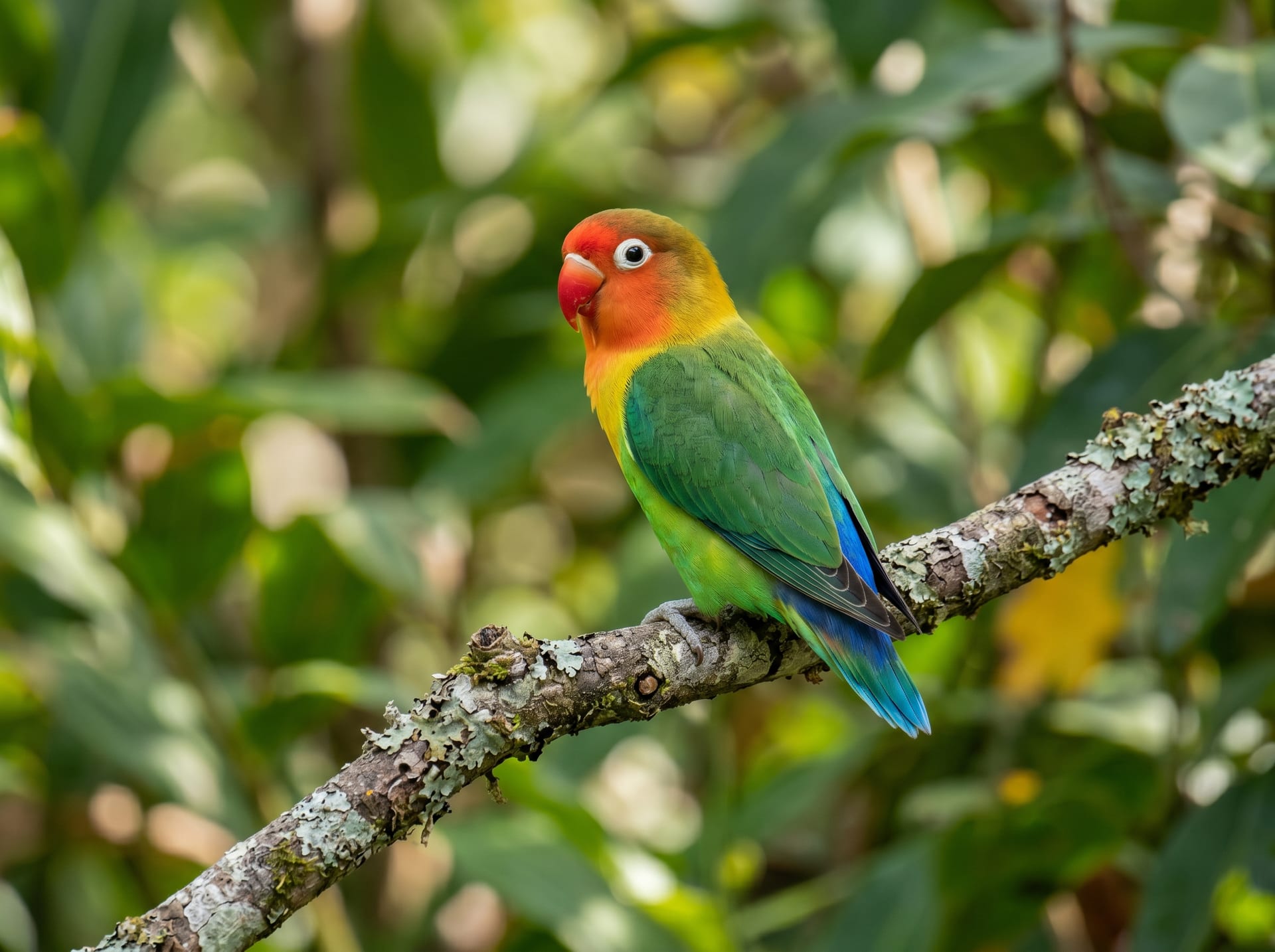
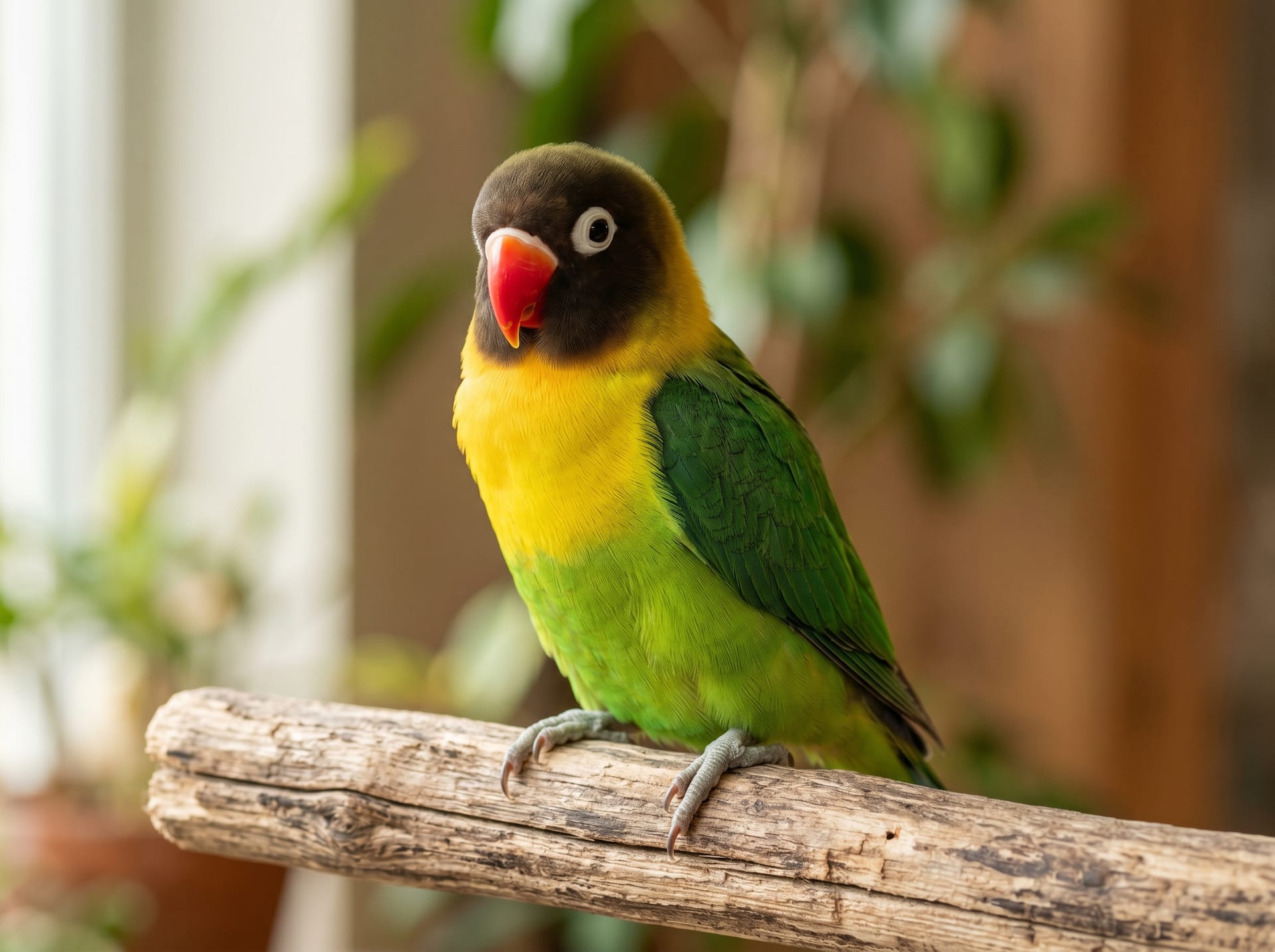
Peach-faced Lovebirds are distinctive for their orange-pink facial coloring and green body, with numerous color mutations such as Lutino, Dutch Blue, and Violet. Fisher's Lovebirds are characterized by their striking yellow breast and blue eye-ring, while the Masked variety features a white eye-ring. Both are charming and active, valuing trust with their owners.
They are moderate in difficulty to keep and are popular beginner to intermediate species alongside Budgerigars and Cockatiels. With proper care, they can live 10–15 years or more.
Setting Up the Right Living Environment
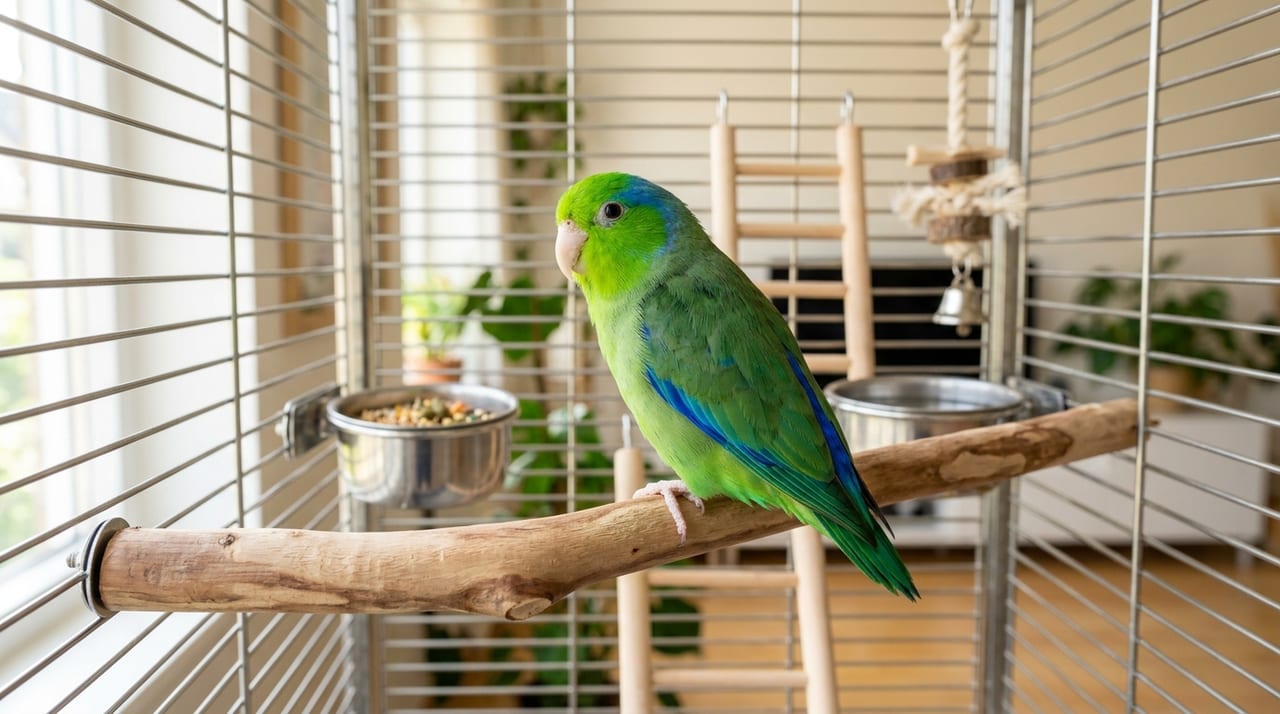
Cage size should be at least 50 cm wide × 40 cm deep × 50 cm tall. Since this species moves laterally frequently, a horizontally oriented cage is ideal. Choose metal cages with small gaps to prevent escape and finger pinching.
Temperature management should maintain 20–26°C as the optimal range. Below 10°C, they become prone to illness; young birds and sick birds especially require heating. In summer, be careful to avoid direct sunlight and overheating in enclosed spaces.
Perches should be made from natural wood (such as cherry, apple, willow, and other non-toxic species) in multiple diameters. The key is to create height variation so they use their leg muscles evenly, which also helps with beak care. Using only a single plastic perch increases the risk of bumblefoot (foot inflammation).
Toys and play areas are essential. Rotate destructible toys, swings, and rope ladders regularly to prevent boredom. For single birds, a mirror can help ease loneliness, but remove it if the bird becomes too attached to it.
Bathing should occur 2–3 times per week. Provide a shallow dish-shaped container or lightly mist the entire body with a spray bottle. After bathing, ensure a well-ventilated drying environment, and in cold seasons, avoid leaving the bird wet.