Color Genetics and Morph Explanation of Rosy-faced Lovebirds and Black-capped Lovebirds | How Green, Blue, and Lutino Work
Explaining the color variations (morphs) of Rosy-faced Lovebirds (Lovebirds) and Black-capped Lovebirds from the perspective of genetic inheritance. A beginner-friendly guide to how Green, Blue, Lutino, Pied, and Albino morphs develop, and how to predict the colors of offspring from pairing.
Key Takeaways
Explaining the color variations (morphs) of Rosy-faced Lovebirds (Lovebirds) and Black-capped Lovebirds from the perspective of genetic inheritance. A beginner-friendly guide to how Green, Blue, Lutino, Pied, and Albino morphs develop, and how to predict the colors of offspring from pairing.
Related Species
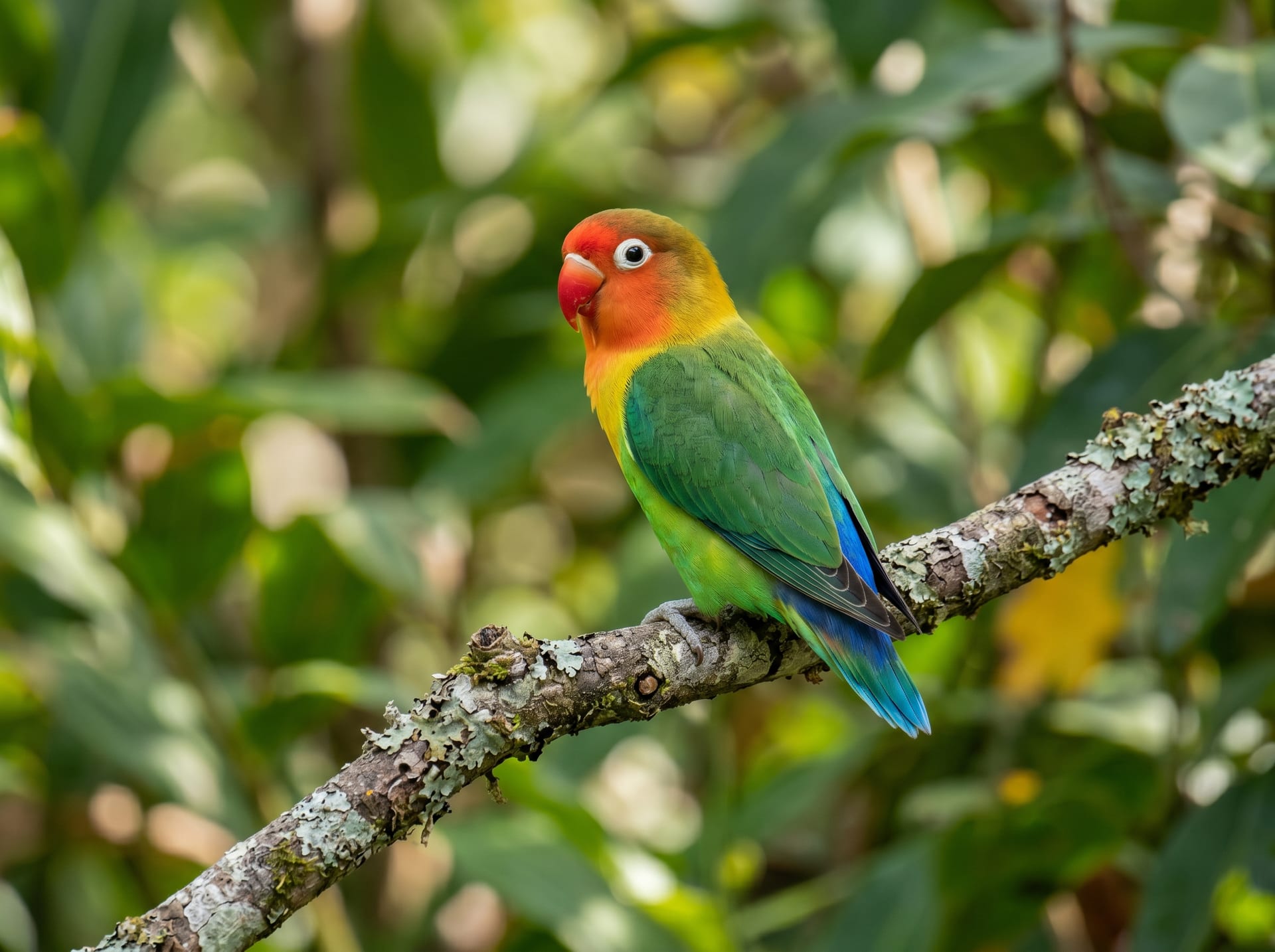
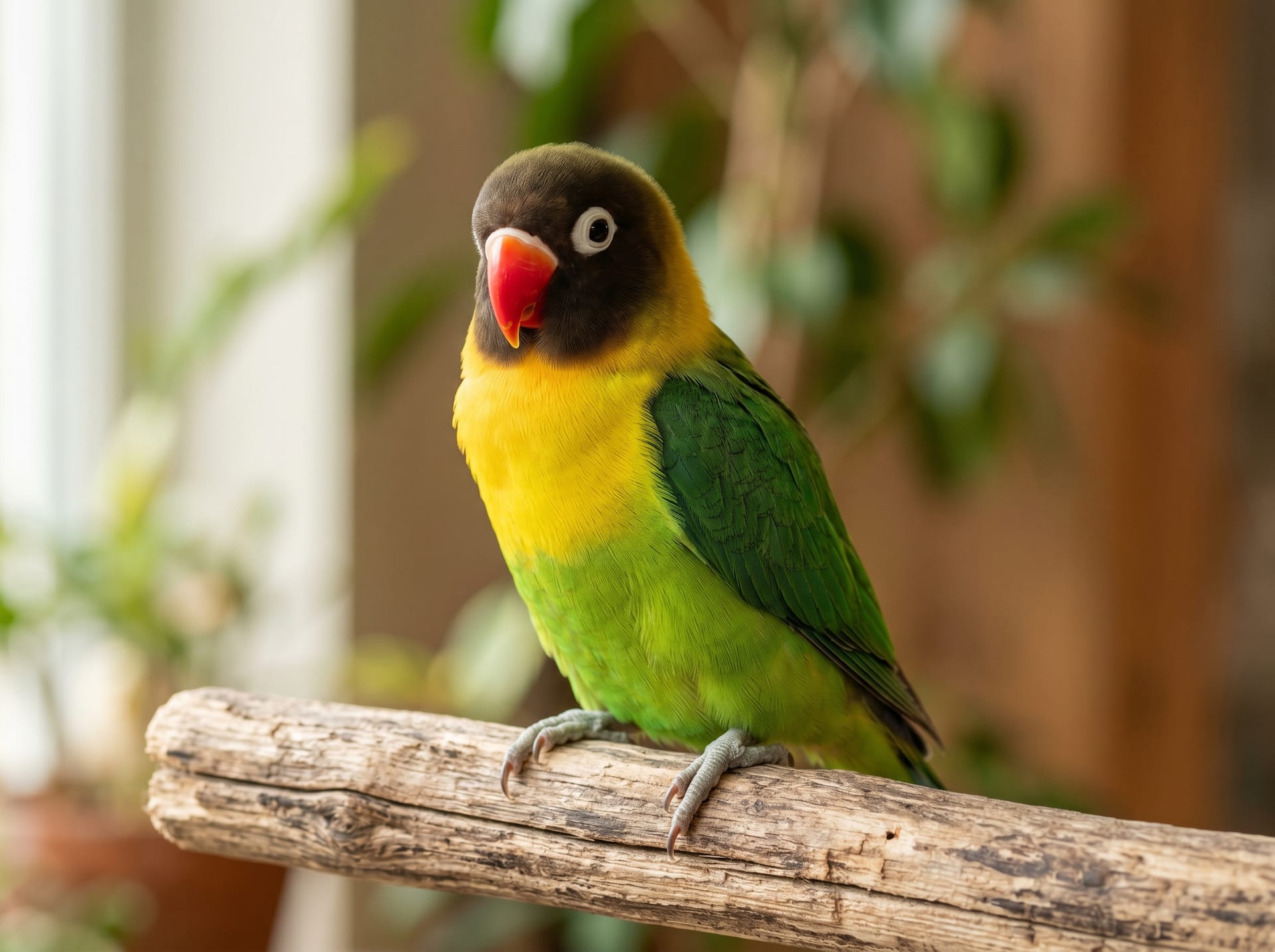
Rosy-faced Lovebirds and Black-capped Lovebirds are known for their particularly rich color variations among small parrot species. Many breeders have experienced the surprise of discovering Turquoise or Lutino at a shop after only ever knowing Green. This article explains the types of representative morphs (color variations) and the genetic mechanisms behind them.
Understanding Base Color
To understand the color variations in Rosy-faced Lovebirds and Black-capped Lovebirds, you must first understand how base color (ground color) works.
The body color of wild-type (Normal) birds is created by a combination of two main pigments and structural color:
- Eumelanin (black and brown pigment): Creates black and brown gradients in feathers
- Carotenoid (yellow and red pigment): Red and orange on the face and belly
- Structural color (nano-structure reflection): Nano-scale structures on feather surfaces produce blue, green, and purple
Changes in base color are primarily caused by the "blue mutation" gene. The blue mutation is a recessive trait that inhibits the synthesis or expression of yellow pigment (carotenoid), and is expressed when homozygous (inheriting the blue mutation gene from both parents).
Major Morph Types
Green (Normal)
The wild-type color of Rosy-faced Lovebirds and Black-capped Lovebirds. Characterized by orange and reddish coloring on the head and face, and vibrant green plumage on the body. This serves as the genetic baseline for all morphs.
Blue Series (Blue Mutation)
When the blue mutation gene is expressed homozygously, the orange on the face disappears and the feathers take on a bluish hue. In Rosy-faced Lovebirds, this produces colors called Turquoise and Violet; in Black-capped Lovebirds, it produces Blue and Cobalt.
The blue mutation gene becomes a split (carrier) when heterozygous and does not appear in the phenotype. An individual marked "Split (Blue mutation)" will appear green but carries the blue mutation gene.
Lutino
Lutino is a morph where synthesis of eumelanin (black pigment) is inhibited. As a result, black and brown pigments disappear from the body color, leaving only yellow and red from carotenoids. In most cases, the plumage is yellow to cream colored, and the eyes are red (albino eyes).
The Lutino gene is often sex-linked (linked to the Z chromosome = sex-linked inheritance), making its inheritance pattern different from other morphs. Birds use ZW sex determination with males as ZZ and females as ZW. For Z-linked recessive traits, females (ZW) express the trait with only one copy, so females are more likely to express Lutino.
Albino
Albino occurs when both the blue mutation gene and Lutino gene are expressed simultaneously. Because neither black nor yellow pigment is expressed, the entire body becomes white with red eyes. This can occur from crossing Blue series Lutinos.
Pied (Variegated)
Pied is a morph where pigment distribution in the feathers becomes uneven, with yellow or white variegated patterns appearing within green or blue plumage. The degree of pied varies greatly among individuals, ranging from slight variegation to heavy pied with more than half white.
Violet (Split)
In Rosy-faced Lovebirds, the Violet factor influences structural color and produces a unique purple-tinted color tone beyond the typical blue series. The Violet factor also acts on green series birds and can slightly enhance color depth.
Genetics Basics: Pairing Prediction
Blue Mutation Inheritance
The blue mutation is autosomal recessive. Using symbols:
- G = Green (dominant)
- g = Blue (recessive)
| Parental Pairing | Expected Offspring Ratio |
|---|---|
| GG × GG (Green × Green) | GG 100% (Green only) |
| GG × gg (Green × Blue) | Gg 100% (Appearance Green, split carrier) |
| Gg × Gg (Split × Split) | GG:Gg:gg = 1:2:1 (25% Blue) |
| Gg × gg (Split × Blue) | Gg:gg = 1:1 (50% Blue) |
| gg × gg (Blue × Blue) | gg 100% (Blue only) |
When two split birds are paired, statistically 25% of chicks will be blue, but with small clutch sizes, blue chicks may not appear.
Lutino Inheritance (Z-linked = Sex-linked)
★ Note: This is opposite to mammals. Birds use ZW sex determination with males as ZZ and females as ZW. When Lutino is linked to the Z chromosome, females (ZW) express the trait with one copy, while males (ZZ) require two copies.
This asymmetry makes two points practically important:
- Females cannot be carriers (splits). With only one Z chromosome, if a female carries the gene, it will definitely show in appearance. "Split Lutino females" do not exist
- To produce Lutino males, the mother bird must be Lutino (the father can be either Lutino or a carrier/split)
| Parental Pairing | Lutino Expression in Offspring |
|---|---|
| Normal female × Lutino male | Males: Lutino carriers, Females: Normal |
| Lutino female × Normal male | All males Normal (carriers/splits), All females Lutino |
Communicating with Breeders
When purchasing morph individuals, confirm the phenotype and split information of both parents with the breeder. Listings clearly marked with phenotype and split information, such as "Green/Blue (Split Blue)," are more trustworthy.
On BreederDirect, breeders with breeding experience list breeding history and parent information in their listings, making it possible to make informed choices based on genetic information.
Summary
The color genetics of Rosy-faced Lovebirds and Black-capped Lovebirds can be predicted by understanding basic genetics (dominant, recessive, and Z-linked = sex-linked inheritance). When planning pairings to achieve your desired morph, always confirm the split information of both parents and calculate the probability of obtaining chicks with the expected colors beforehand.