Archer Fish (Toxotes) Care Guide | How to Keep Tropical Fish That Shoot Water to Hunt Insects Above Water
A guide to the care methods of Archer Fish (Toxotes), which have the unique habit of spraying water from the surface to hunt insects. This beginner-friendly introduction covers tank size, water quality, salinity management, feeding, and tankmate compatibility.
Key Takeaways
A guide to the care methods of Archer Fish (Toxotes), which have the unique habit of spraying water from the surface to hunt insects. This beginner-friendly introduction covers tank size, water quality, salinity management, feeding, and tankmate compatibility.
Related Species
The Archer Fish (genus Toxotes, including Toxotes jaculator) is a tropical fish known for its specialized predatory behavior of spraying water from the surface to strike down insects and other prey above the water. Native to brackish waters (regions where rivers and seawater mix) in India, Southeast Asia, and northern Australia, the remarkable accuracy of its "water gun" has garnered scientific attention. This article provides a detailed guide to the care methods for this distinctive fish.
Basic Information on Archer Fish
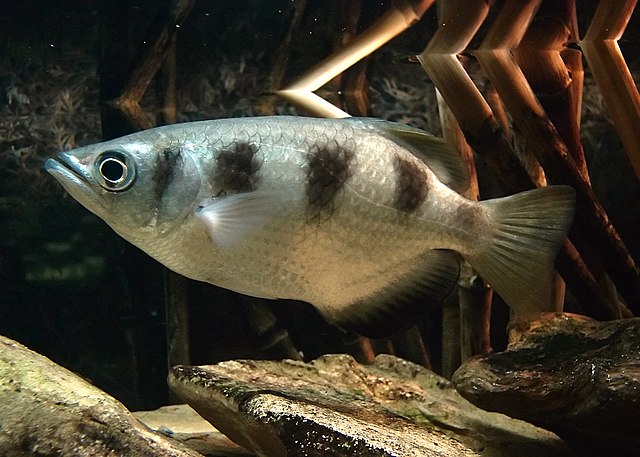
Archer Fish belong to the family Toxotidae in the order Perciformes, and seven species are known worldwide. The two species commonly seen in aquariums and available in the hobby are the Common Archer Fish (Toxotes jaculatrix) and the Banded Archer Fish (Toxotes chatareus).
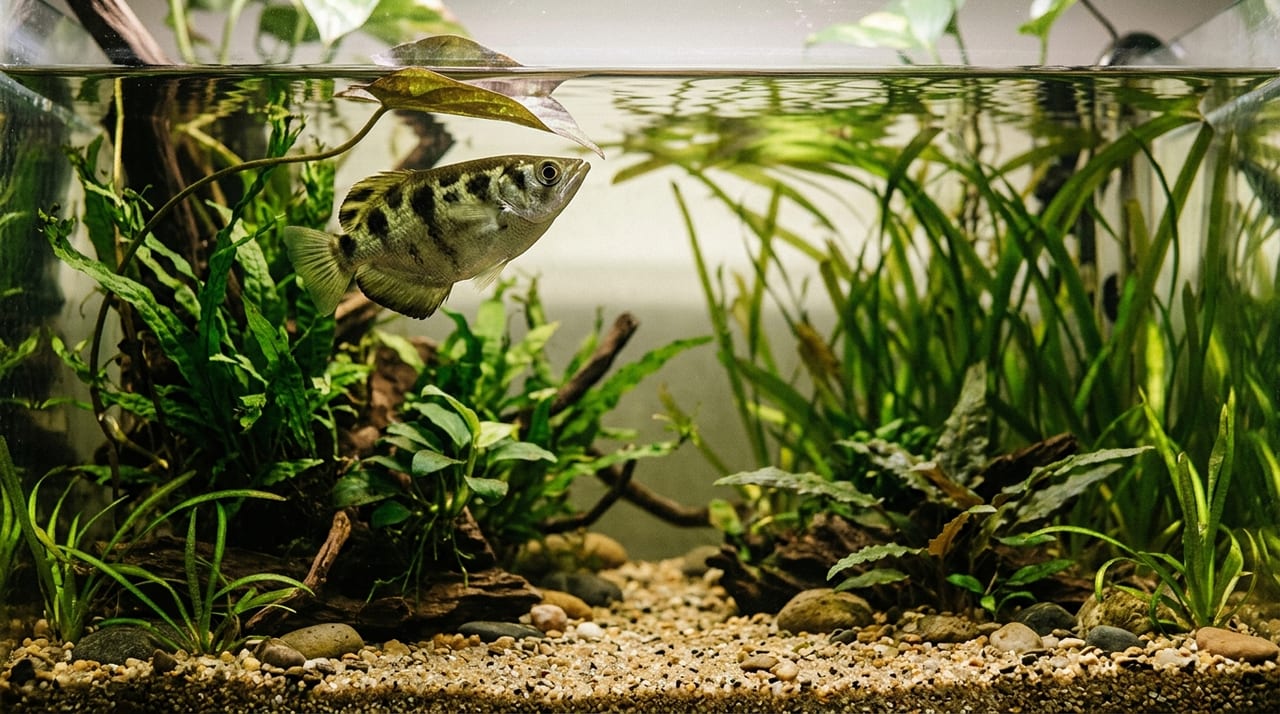
They reach approximately 15-25 cm in length with a laterally compressed, oval body shape. The dorsal region is dark (olive-green to brown) while the ventral region is silvery-white. The sides display black spots or vertical stripes depending on the species.
How the Water Gun Works
Archer Fish use a "tube" formed by the tongue and palate inside their mouth, rapidly closing their mouth to create a high-pressure jet of water. The precision is remarkably accurate—they can target insects on branches 1-3 meters away from the water surface. When prey falls into the water, they quickly circle around to capture it.
This water-spraying behavior is instinctive rather than learned, and even in an aquarium they will spray water at insects near the lighting or when people approach. An uncovered tank will become completely soaked, so a lid is absolutely essential.
Difficulty Level of Care
While Archer Fish are a popular species known for their unique behavior, they require specialized water management (salinity and water chemistry) and specific dietary needs, making them better suited for intermediate to advanced aquarists rather than beginners.
Key challenges:
- Brackish water husbandry is essential (salinity management)
- Heavy reliance on live and frozen foods (training them to accept prepared foods takes time)
- Large adult size requires a spacious tank
- Limited compatible tankmate options
Tank and Environment Setup
Tank Size
Adult fish reach approximately 20 cm in size, so a minimum tank of at least 90 cm is recommended, with 120 cm or larger being ideal. Since Archer Fish are active swimmers, a tank with good horizontal space is appropriate.
Importantly, since Archer Fish prefer to stay near the surface, maintaining a 10-15 cm gap (dry zone) between the water surface and the lid is key to observing their water-spraying behavior.
Water Quality and Salinity Management
Archer Fish are brackish-water species and require water with some salinity rather than pure freshwater.
| Parameter | Target Range |
|---|---|
| Specific Gravity (Salinity) | 1.004–1.010 (brackish) |
| Temperature | 24–28°C |
| pH | 7.0–8.5 |
| Hardness | Medium to hard water (GH 10+) |
It is typical to use artificial sea salt (marine salt) to adjust the specific gravity to approximately 1.005–1.008. While they cannot tolerate full seawater (specific gravity 1.025), they will become stressed if salinity is either too high or too low.
Perform 20–25% water changes weekly, ensuring the replacement water matches the same salinity level.
Filtration System
Brackish-water environments often have less stable bacterial colonization than freshwater systems. Using external or canister filters to establish reliable biological filtration is important. Live rock (natural stone) or porous filter media helps establish stable bacterial colonies.
Feeding and Food Training
Live and Frozen Foods as the Foundation
Since wild Archer Fish prey on live insects and crustaceans, captive fish typically begin with the following live and frozen foods:
- Crickets (small to medium size)
- Mealworms
- Flies (commercially available fruit flies)
- Roaches (dubia, red roaches)
- Small shrimp (river shrimp, grass shrimp)
Dropping live food on the surface or bringing it near the surface with tweezers will trigger their water-spraying behavior.
Transition to Prepared Foods
Once acclimated, attempt to transition to frozen crickets, dried shrimp, and floating pellet foods. Offering food with tweezers while gently moving it helps them recognize it as "live prey." Complete transition to prepared foods varies by individual and may take considerable time.
Tankmate Compatibility
Archer Fish have somewhat aggressive temperaments and will eat any fish small enough to fit in their mouths. Consider the following points when choosing tankmates.
Compatible Tankmates
- Brackish-water fish of equal size or larger (such as scats)
- Other Archer Fish (multiple same-species fish)
Incompatible Tankmates
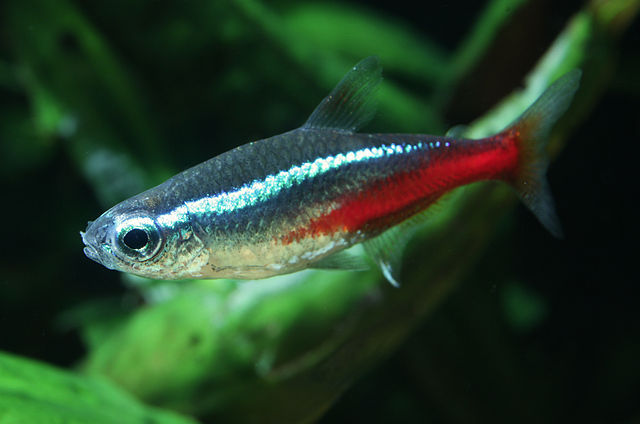
- Small freshwater fish (such as neon tetras) → will be eaten
- Pure freshwater fish (incompatible water chemistry)
- Highly aggressive fish (such as cichlids)
Multiple same-species fish can coexist relatively well, though competition for food may cause hierarchical disputes. The larger the tank, the greater the success rate of cohabitation.
Disease and Precautions
While brackish-water adapted species have some tolerance to salinity fluctuations, they are sensitive to sudden water chemistry changes. Common diseases include:
- Ich (White Spot Disease): Common during high temperatures or poor water conditions. Low-salinity brackish water inhibits ich parasite reproduction.
- Bacterial Infection: Infection through wounds. Be cautious of injuries from tankmates.
- Loss of Appetite: Often caused by temperature or water chemistry changes, or stress.
Some medications are not compatible with brackish-water conditions, so consult with a veterinarian or specialized aquarium store before treatment.
Summary
The Archer Fish is a distinctive tropical fish in the aquarium hobby, remarkable for its unparalleled predatory behavior of spraying water. While there are three significant hurdles—brackish-water environment, live food requirements, and spacious tank needs—overcoming them provides a uniquely rewarding observation experience. Begin by setting up a 90 cm brackish-water tank, then drop live crickets or other prey on the surface to witness their remarkable water-spraying behavior.