Rainbow Boa Care Guide | Brazilian Rainbow Boa's Iridescent Sheen, Cage Setup, and High Humidity Management
Explains how to care for Brazilian Rainbow Boas (Epicrates cenchria). Covers the features of iridescent scales, why high humidity is necessary, cage setup, temperature and humidity management, feeding with frozen mice, how to acclimate them to handling, and common care issues.
Key Takeaways
Explains how to care for Brazilian Rainbow Boas (Epicrates cenchria). Covers the features of iridescent scales, why high humidity is necessary, cage setup, temperature and humidity management, feeding with frozen mice, how to acclimate them to handling, and common care issues.
Related Species
Rainbow Boas
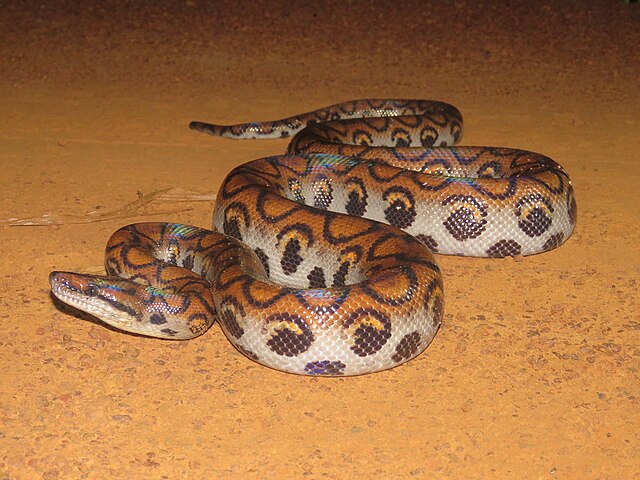
The Rainbow Boa (Rainbow Boa, scientific name: Epicrates cenchria) is a boa species native to South America, known for its "structural coloration" where scales on the body shimmer with iridescent colors depending on how light strikes them. The most popular variety is the Brazilian Rainbow Boa (Brazilian Rainbow Boa, E. c. cenchria), which is prized for its striking coloration featuring a vibrant orange-to-reddish-brown base with black circular markings arranged along its body.
Basic Information
| Item | Details |
|---|---|
| Scientific Name | Epicrates cenchria |
| Length (Adult) | 150–200 cm |
| Weight (Adult) | 1–2 kg |
| Lifespan | 15–25 years (with proper care) |
| Native Range | Tropical rainforests of Brazil, Colombia, Guyana, and others |
| Cause of Iridescence | Thin-film interference from the microscopic structure of scales |
Subspecies
Several subspecies of E. cenchria are recognized, each with different color variations. In the pet trade, the Brazilian Rainbow Boa is the most commonly available, though Peruvian and Colombian varieties also appear in the market.
Setting Up the Enclosure
Cage Size and Material
Adult Rainbow Boas require adequate space.
| Individual Size | Recommended Cage Size (W × D × H) |
|---|---|
| Juvenile to Subadult (up to 80 cm) | 60 × 45 × 45 cm |
| Adult (80–150 cm) | 90 × 60 × 45 cm |
| Large Adult (150 cm+) | 120 × 60 × 60 cm or larger |
Because they have semi-arboreal tendencies, providing adequate height allows you to install climbing branches and create a more naturalistic environment. Glass or PVC enclosures are recommended for their superior moisture-retention properties.
Temperature Management
| Location | Temperature |
|---|---|
| Warm Side (Basking) | 30–32°C |
| Cool Side | 24–27°C |
| Night (Overall) | 22–25°C |
Generally, maintaining a temperature differential between day and night (ΔT) promotes digestion and positively affects metabolic activity.
Maintaining High Humidity (Most Important)
The key aspect of Rainbow Boa care is maintaining high humidity.
- Recommended Humidity: 80–90% (90%+ especially before and after shedding)
- Choose glass or PVC enclosures for superior moisture retention
- Use substrate combinations of coconut fiber, sphagnum moss, and bioactive soil to maintain water retention
- An automatic misting system is ideal (2–3 times daily)
- Manual misting should occur 3–4 times daily
Why high humidity is necessary: Low humidity environments lead to shedding problems and increase the risk of skin infections. Additionally, the snake's iridescent coloration is displayed most vividly in high-humidity conditions.
Choosing Substrate
| Substrate | Water Retention | Cleanliness | Cost |
|---|---|---|---|
| Coconut Fiber | High | Moderate | Low |
| Sphagnum Moss | Very High | Low (frequent changes needed) | Moderate |
| Bioactive Mixed Soil | High | High (natural decomposition) | High (initial investment) |
| Paper Towels | None | Very High | Very Low |
Paper towels are easy to keep clean for juvenile care, but for adults, a deep coconut fiber substrate creates a more naturalistic and manageable environment.
Feeding
Food Types and Feeding Frequency
Rainbow Boas are obligate carnivores and feed primarily on thawed frozen mice or rats.
| Individual Size | Primary Food | Feeding Frequency |
|---|---|---|
| Juvenile (up to 60 cm) | Pink mice → Fuzzy mice | Once every 5–7 days |
| Subadult (60–120 cm) | Adult mice to small rats | Once every 7–10 days |
| Adult (120 cm+) | Adult to large rats | Once every 10–14 days |
Prey size should be approximately equal to the thickest part of the snake's body (or no more than 1.5 times that size).
Feeding Tips
- Use pre-thawed frozen prey (live prey carries injury risk)
- Thaw at room temperature or in warm water (40°C) for even warming
- Evening or nighttime feeding is more likely to trigger feeding response
- Minimize handling and cage work for 48 hours after feeding
Addressing Refusal to Feed
Rainbow Boas may refuse food due to environmental changes or insufficient humidity.
- Verify that humidity is maintained at 80% or above
- Check that nighttime temperature is around 25°C
- Ensure the shelter fits the snake's size (it should be large enough for the entire body to hide)
- Consider switching to live prey (live feeding) as a last resort
Handling
Rainbow Boas are known to be quite aggressive and bite frequently when young.
Juvenile Characteristics
- Young juveniles (less than 1 year old) are often quite sensitive and aggressive
- They tend to calm down as they mature (with individual variation)
- Avoid sudden movements and direct eye contact when approaching
Acclimation Steps
- Leave the snake untouched for the first 2 weeks to adjust to its environment
- Use a snake hook to gently remove it from the enclosure
- Conduct short 5-minute handling sessions 3–4 times per week
- Support the body and handle at low heights (close to the ground)
Most adults become relatively docile and can develop into long-term companions.
Common Care Issues and Solutions
| Issue | Cause | Solution |
|---|---|---|
| Shedding Problems | Insufficient humidity | Increase humidity above 90%, provide sphagnum moss hides |
| Refusal to Feed | Environmental stress, temperature/humidity issues | Recheck temperature and humidity, improve hides |
| Skin Blisters | Bacterial infection in warm, humid conditions | Ensure proper ventilation, seek veterinary care |
| Respiratory Sounds (Wheezing) | Respiratory infection | Seek veterinary care promptly |
Summary
Rainbow Boas are highly valued by snake enthusiasts for their stunning iridescent coloration. While maintaining high humidity presents a care challenge, establishing a management routine is achievable with an automatic misting system and moisture-retentive substrate. Most juveniles calm down as they mature, making them attractive companions for long-term care.