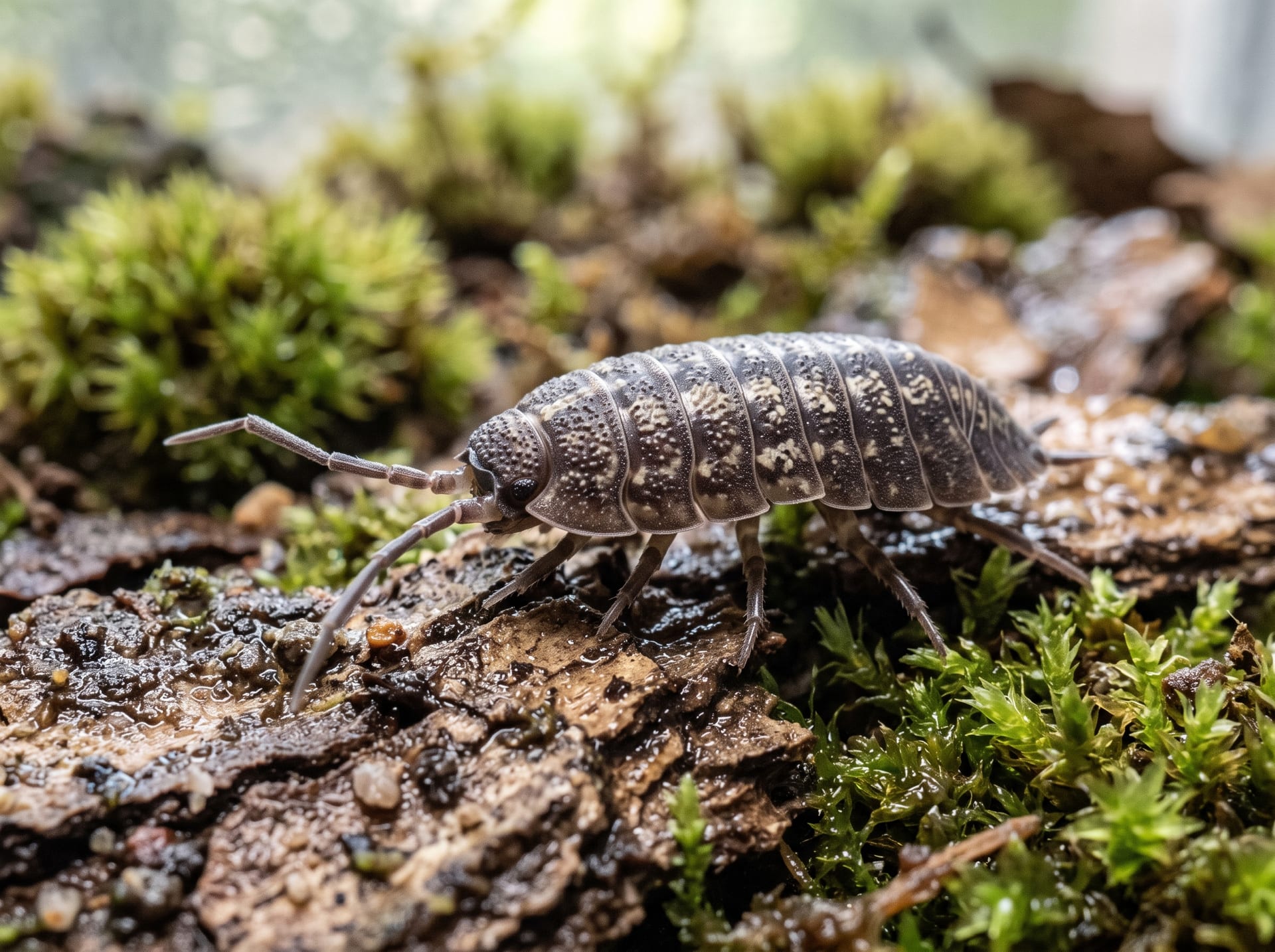
Silvestrii Isopod
The Silvestrii Isopod is a woodlouse species native to pine forests in southern Spain. Its standout feature is striking sexual dimorphism: males develop vivid orange coloring while females stay gray or muted orange, so much so that the two sexes can look like different species. They're calm, unhurried isopods that spend much of their time burrowing or tucked under leaf litter. Because they dislike excess humidity, they do best in a well-ventilated, drier-than-average enclosure, making them a good fit for keepers who prefer not to mist heavily. Adults stay compact at up to about 2.5cm and typically live 2 to 2.5 years. With intermediate-level care needs, they're a natural next step for hobbyists who already have some isopod-keeping experience.
View Silvestrii Isopod encyclopedia →0% commission on your first sales!Register by September 30, 2026 and your first 2 sales are commission-free!
Breeder Wanted!
List on BreederDirect and sell directly to customers nationwide!
5 Transparency Standards You Can Trust
When listing Exotic Invertebrates, Breeders disclose the following. We guarantee transparency on growth stage and breeding unit.
- Real Photos
- Breeding Unit
- Generation Info
- Body Length (mm)
- Country of Origin
Browse all 249 breeds
Verified breeders wanted for Exotic Invertebrates
Breeders are signing up now ahead of launch. Subscribe to be notified when new listings go live.
Getting alerts is free with a member account. When new listings match your saved search, we'll notify you by email and in-app.
Browse other categories
Verified breeders (preview)
Are you raising exotic invertebrates?
Register as a breeder and connect with buyers directly.
Apply as a breederSilvestrii Isopod key facts
- Care level
- Intermediate
- Lifespan
- 2-2.5 years
- Size
- Up to about 25mm
- Temperature
- 18〜22℃
- Humidity
- 50〜60%
- Diet
- Leaf litter and rotten wood as staples, with vegetables, fruit, fresh leaves, protein about twice a week and a calcium source.
- Temperature & Humidity
- 18-22C and 50-60% humidity. Prefers cooler conditions; keep only one third of the enclosure moist.
- Enclosure
- Ventilate well and build dry and damp zones with leaf litter, rotten wood and a little moss.
- Diet & Feeding
- Keep leaf litter and rotten wood available; add fresh leaves, vegetables, fruit, protein about twice a week and calcium.
- Temperament & Venom
- Harmless and calm. Visible by day and evening, moving in groups.
- Notes
- Sensitive to wet conditions and slow to breed. Males and females differ in colour, so do not mistake them for different species.
About Silvestrii Isopod
A Spanish pine-forest isopod prized for rare sexual dimorphism — vivid orange males, gray females. Prefers dry, well-ventilated setups. Intermediate-level care, adults to 2.5cm, 2-2.5 year lifespan.
7 things to know before welcoming a Silvestrii Isopod
1Striking Sexual Dimorphism
Males turn vivid orange while females stay gray or dull orange, so the sexes can look like entirely different species. This makes it easy to tell males and females apart at a glance, which is a rare treat among isopods.
2Keep It Dry, Not Damp
True to their pine-forest origins, these isopods dislike excess humidity. Aim for good ventilation and a substrate that stays on the drier side rather than constantly damp, since prolonged high humidity can stress them.
3Best Suited to Intermediate Keepers
This species calls for some prior experience managing temperature and humidity. It's a good next step once you've kept easier isopods, rather than a first-time species.
4Calm, Watch-and-Observe Temperament
They aren't especially active, spending much of their time burrowing or hiding under cover. They show little to no aggression and cohabit calmly with other individuals.
5Compact Even as Adults
Adults max out at around 2.5cm, keeping them compact and easy to house. That makes them well suited to smaller enclosures or group setups.
6A 2 to 2.5 Year Lifespan
Typical lifespan runs about 2 to 2.5 years — not too short, not too long. It's worth considering upfront whether you can commit to that full stretch.
7Prep the Enclosure Beforehand
Have a well-ventilated enclosure and substrate that won't stay soggy ready before your isopods arrive. Given their pine-forest background, choose a spot with good airflow for the setup.
Frequently asked questions about Silvestrii Isopod
- Q.Is this species suitable for beginners?
- A.It's generally considered an intermediate-level species, best approached after you've handled basics like humidity management. As long as you can avoid excess dampness, it isn't especially difficult to keep.
- Q.How can I tell males and females apart?
- A.Sexual dimorphism makes this easy — males turn vivid orange while females stay gray or dull orange. The color difference becomes clearer as they mature.
- Q.How large do they get?
- A.Adults reach a maximum of about 2.5cm, staying quite compact. That makes them easy to house in a modest-sized enclosure.
- Q.What humidity level do they need?
- A.Since they dislike excess moisture, aim for good ventilation and a drier-than-average setup. Avoid letting the substrate stay constantly damp.
- Q.How long do they typically live?
- A.Their typical lifespan is around 2 to 2.5 years. It's worth thinking ahead about whether you can care for them for that full stretch before bringing them home.
Learn more about Silvestrii Isopod in the encyclopedia
View Silvestrii Isopod encyclopedia entry →
Care difficulty, lifespan, size and diet — all basics covered.
More in this category
Can't find the one you're looking for?
Post your wishes for free and breeders with matching animals will contact you with introductions.