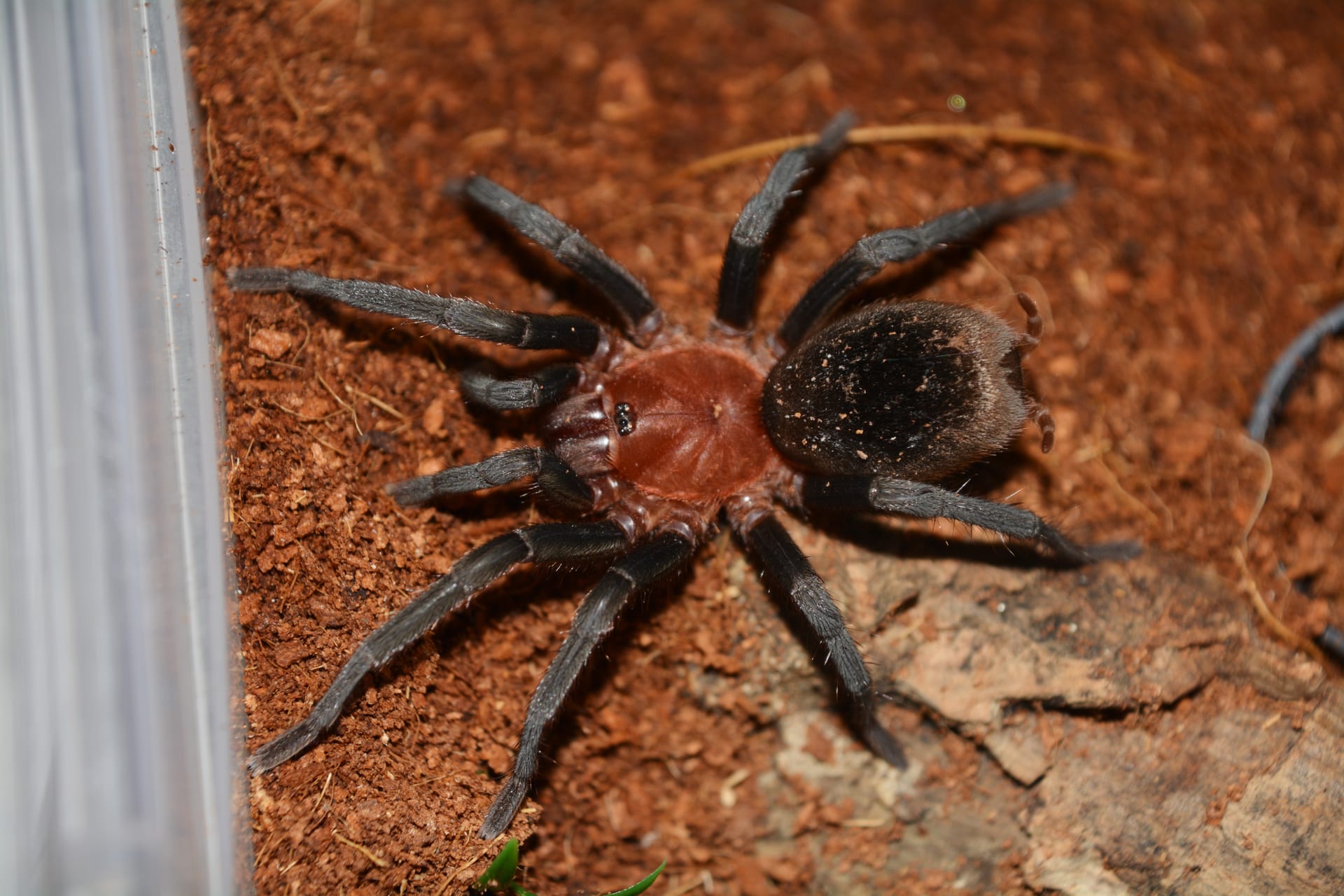
 © Jokuyken15 / CC BY-SA 4.0
Brazilian Redhead
The Brazilian Redhead is a mid-sized tarantula native to northern Brazil, known for the striking contrast between its deep reddish carapace and its slender, elongated legs. Paired with a rounded abdomen, this build gives it a distinctive silhouette that makes it a rewarding species to simply watch. With a leg span of around 12 to 13 cm, it doesn't demand much space, and its tolerance for both dry and humid conditions means enclosure upkeep stays relatively low-stress. Many individuals are considered calm in temperament, making this a popular entry point for anyone new to keeping exotic invertebrates.
View Brazilian Redhead encyclopedia →0% commission on your first sales!Register by September 30, 2026 and your first 2 sales are commission-free!
Breeder Wanted!
List on BreederDirect and sell directly to customers nationwide!
5 Transparency Standards You Can Trust
When listing Exotic Invertebrates, Breeders disclose the following. We guarantee transparency on growth stage and breeding unit.
- Real Photos
- Breeding Unit
- Generation Info
- Body Length (mm)
- Country of Origin
Browse all 249 breeds
Verified breeders wanted for Exotic Invertebrates
Breeders are signing up now ahead of launch. Subscribe to be notified when new listings go live.
Getting alerts is free with a member account. When new listings match your saved search, we'll notify you by email and in-app.
Browse other categories
Verified breeders (preview)
Are you raising exotic invertebrates?
Register as a breeder and connect with buyers directly.
Apply as a breederBrazilian Redhead key facts
- Care level
- Beginner-friendly
- Lifespan
- Females 12-15 years / males 3-4 years
- Size
- 12-13cm leg span
- Temperature
- 22〜26℃
- Humidity
- 70〜80%
- Diet
- Live insects such as crickets and roaches
- Temperature & Humidity
- Keep around 22-26 C and roughly 70-80% humidity. Its range has distinct dry and wet seasons, so it tolerates dryness well and moistening part of the substrate is enough.
- Enclosure
- An enthusiastic burrower: give deep substrate and a cork bark hide. Spiderlings may seal the entrance and vanish for a long time, but do not dig them out.
- Diet & Feeding
- Offer crickets and roaches. Spiderlings can be intimidated by live prey and refuse it, so start with pre-killed food.
- Temperament & Venom
- Not aggressive but skittish, bolting into its burrow when disturbed. It kicks urticating hairs. The venom is considered mild.
- Notes
- Growth is fairly slow and slows further at low temperatures. Because the genus has been renamed from Iracema to Maraca to Bumba, it is also sold under those older names and under the epithet cabocla.
About Brazilian Redhead
A mid-sized tarantula from northern Brazil with a deep red carapace and slender legs. Leg span of 12-13 cm, tolerant of both dry and humid conditions, and considered beginner-friendly.
7 things to know before welcoming a Brazilian Redhead
1Vivid red carapace
The Brazilian Redhead's signature feature is its richly colored red carapace. Paired with its slender, elongated legs, it creates a striking look unlike many other tarantula species.
2Leg span of 12-13 cm
Adults reach a leg span of roughly 12 to 13 cm, a manageable mid-size among tarantulas. This makes it easy to fit into a reasonably compact enclosure without needing a large setup.
3Tolerates dry or humid air
This species adapts well to both dry and humid conditions. Because it doesn't require precise humidity control, day-to-day care tends to be relatively low-maintenance.
4Beginner-friendly temperament
Many individuals are described as having a calm temperament, and the species is often recommended to those new to keeping invertebrates. That said, it is still a wild animal at heart, so sudden movements or handling should be avoided.
5Native to northern Brazil
Native to the natural habitats of northern Brazil, this species has adapted to that region's climate. Keeping temperatures in mind that reflect its native range helps support stable, long-term care.
6Go easy around molting
As with tarantulas in general, this species becomes especially sensitive around molting. During this period, it's best to avoid handling or major changes to its environment and simply let it be.
7Prep supplies beforehand
Before bringing one home, prepare the basics — an enclosure, hides or climbing décor, and a thermometer/hygrometer. Having the environment ready in advance helps a newly arrived tarantula settle in smoothly.
Frequently asked questions about Brazilian Redhead
- Q.Is this species suitable for beginners?
- A.Yes, it's generally considered a beginner-friendly species. Its tolerance for both dry and humid conditions means you don't need to be overly precise with environmental management.
- Q.How large does it get as an adult?
- A.Adults reach a leg span of about 12 to 13 cm. That's a manageable mid-size within the range of tarantula species.
- Q.Does it prefer a dry or humid environment?
- A.It tolerates both dry and humid conditions well. You don't need extremely precise humidity control to keep it comfortably.
- Q.Is it calm-natured, and is it venomous?
- A.Many individuals are considered relatively calm, though as a wild-origin animal it should still be handled with care and not touched carelessly. Like tarantulas in general, it does have venom, but with sensible precautions this isn't a major concern.
- Q.Is this species subject to CITES regulations?
- A.No, this species is not subject to CITES. It falls outside that international trade framework.
Learn more about Brazilian Redhead in the encyclopedia
View Brazilian Redhead encyclopedia entry →
Care difficulty, lifespan, size and diet — all basics covered.
More in this category
Can't find the one you're looking for?
Post your wishes for free and breeders with matching animals will contact you with introductions.