 © Syrio / CC BY-SA 4.0
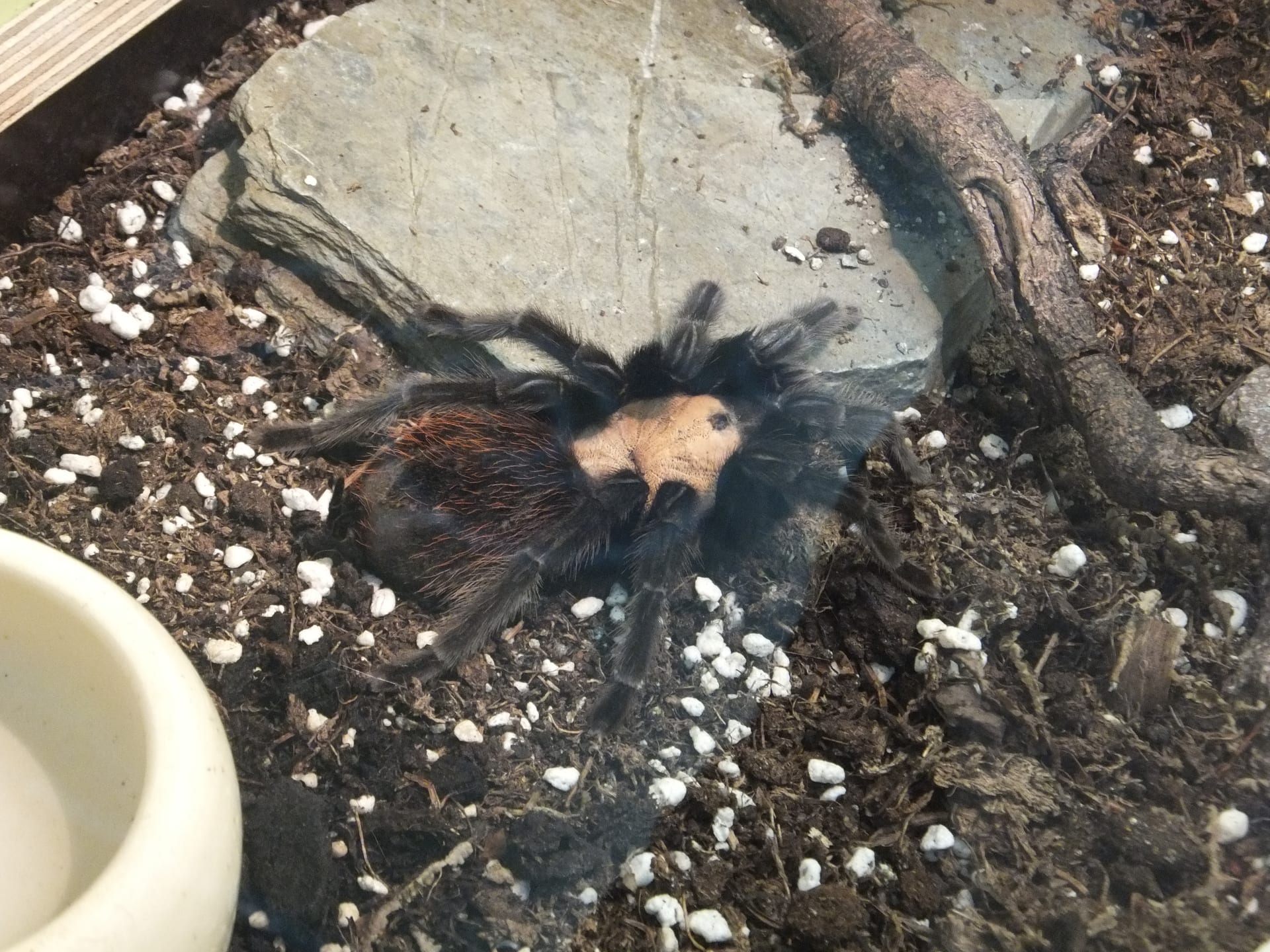
Mexican Golden Red Rump
The Mexican Golden Red Rump is a tarantula native to the highlands of central Mexico, prized for its striking contrast between a bright carapace that shifts from sandy tan to rose and gold under different lighting, and a black abdomen covered in long red hairs. Known for its calm temperament, it's considered a beginner-friendly species that's easy to keep even for first-time keepers. Females typically live around 15 years and sometimes up to 20, making this a long-term companion rather than a short-lived novelty. Its steady disposition and shifting colors make daily care genuinely enjoyable for newcomers to tarantula keeping.
View Mexican Golden Red Rump encyclopedia →Breeder Wanted!
List on BreederDirect and sell directly to customers nationwide!
BreederDirect's 5 Transparency Commitments
When listing Exotic Invertebrates, Breeders disclose the following. We guarantee transparency on growth stage and breeding unit.
- Real Photos
- Breeding Unit
- Generation Info
- Body Length (mm)
- Country of Origin
Browse all 286 breeds
Verified breeders wanted for Exotic Invertebrates
Breeders are signing up now ahead of launch. Subscribe to be notified when new listings go live.
Getting alerts is free with a member account. When new listings match your saved search, we'll notify you by email and in-app.
Browse other categories
Verified breeders (preview)
Are you raising exotic invertebrates?
Register as a breeder and connect with buyers directly.
Apply as a breederMexican Golden Red Rump key facts
- Care level
- Beginner-friendly
- Lifespan
- Females about 15 years (up to 20); males about 5 years, or up to 12 months after the final moult
- Size
- Females about 6.5cm in body length with a fourth leg of about 6cm
- Diet
- Crickets, grasshoppers, beetles and cockroaches; live food is needed in captivity
- Temperature & Humidity
- It occurs in the central highlands of Mexico. Avoid keeping it in hot, humid conditions.
- Enclosure
- In the wild it digs long burrows, typically under large rocks, and sometimes occupies nests abandoned by other animals. Provide deep substrate and a hide.
- Diet & Feeding
- It takes crickets, grasshoppers, beetles and cockroaches. Dead food may be ignored, so offer live prey in captivity.
- Temperament & Venom
- Brachypelma species are known as docile tarantulas. When provoked they flick urticating hairs from the abdomen.
- Notes
- Most active at night and dusk. A CITES Appendix II species requiring permits for import and export.
About Mexican Golden Red Rump
A Mexican highland tarantula with a shimmering carapace and red-haired abdomen. Beginner-friendly, calm, and long-lived as a female.
7 things to know before welcoming a Mexican Golden Red Rump
1Simple housing is enough
As a terrestrial tarantula, it needs a enclosure with a decent depth of substrate rather than an elaborate setup. A single hide is usually enough to help it feel secure. Avoid overly humid conditions and favor good ventilation instead.
2Calm and easygoing temperament
This species is generally regarded as one of the calmer tarantulas, rarely showing defensive behavior if left undisturbed. That said, it's still a wild animal at heart, so it's best enjoyed mainly through observation rather than frequent handling.
3Long-lived females, short-lived males
Females are remarkably long-lived, typically reaching around 15 years and sometimes up to 20. Males, however, have a much shorter lifespan after their final molt, often living no more than about a year afterward. If you want a long-term companion, a female is the natural choice.
4Give it space around molting
Tarantulas molt repeatedly as they grow, and their bodies are especially vulnerable just before and after this process. It's important to hold off on feeding or handling during this time and simply leave it undisturbed. Reduced appetite or sluggish movement is often an early sign that a molt is approaching.
5Feed at a modest frequency
It feeds on insects such as crickets, and because its metabolism is slow, frequent feeding isn't necessary. Any uneaten prey should be removed promptly to keep the enclosure clean.
6Carapace color shifts with light
One of this species' biggest draws is how its carapace shifts in appearance from sandy tan to rose and gold depending on the angle and intensity of light. Where you place the enclosure and how light falls on it can noticeably change its look, adding another layer of enjoyment to observation.
7Prepare housing before bringing one home
Before bringing one home, it helps to have an appropriately sized enclosure, substrate, hide, and water dish ready in advance. Since the enclosure may need upsizing as it grows, it's also worth planning for that extra space ahead of time.
Frequently asked questions about Mexican Golden Red Rump
- Q.Can beginners keep this species?
- A.Yes, this species is considered beginner-friendly. Its calm temperament and manageable care routine make it approachable even for first-time keepers, as long as basic housing and feeding guidelines are followed.
- Q.How long will I be caring for it?
- A.Females typically live around 15 years and can reach up to 20. Males, by contrast, live only about a year at most after their final molt. If you're looking for a long-term companion, a female is the better choice.
- Q.Can I handle it?
- A.While it has a relatively calm temperament, it's still a wild animal at its core. Frequent handling isn't recommended — it's best enjoyed primarily through observation.
- Q.How can I tell when it's about to molt?
- A.Reduced appetite and sluggish movement are common signs that a molt is approaching. During this time, it's important to hold off on feeding or handling and keep the environment quiet.
- Q.Do I need any legal permit to keep it?
- A.Mexican Golden Red Rump is listed in CITES Appendix II. International trade requires a permit from the exporting country, but as far as CITES is concerned, no registration is needed to buy or sell individuals already legally in Japan.
Learn more about Mexican Golden Red Rump in the encyclopedia
View Mexican Golden Red Rump encyclopedia entry →
Care difficulty, lifespan, size and diet — all basics covered.
More in this category
Can't find the one you're looking for?
Post your wishes for free and breeders with matching animals will contact you with introductions.