Source: Wikimedia Commons
Mexican Golden Red Rump
BeginnerBrachypelma albiceps
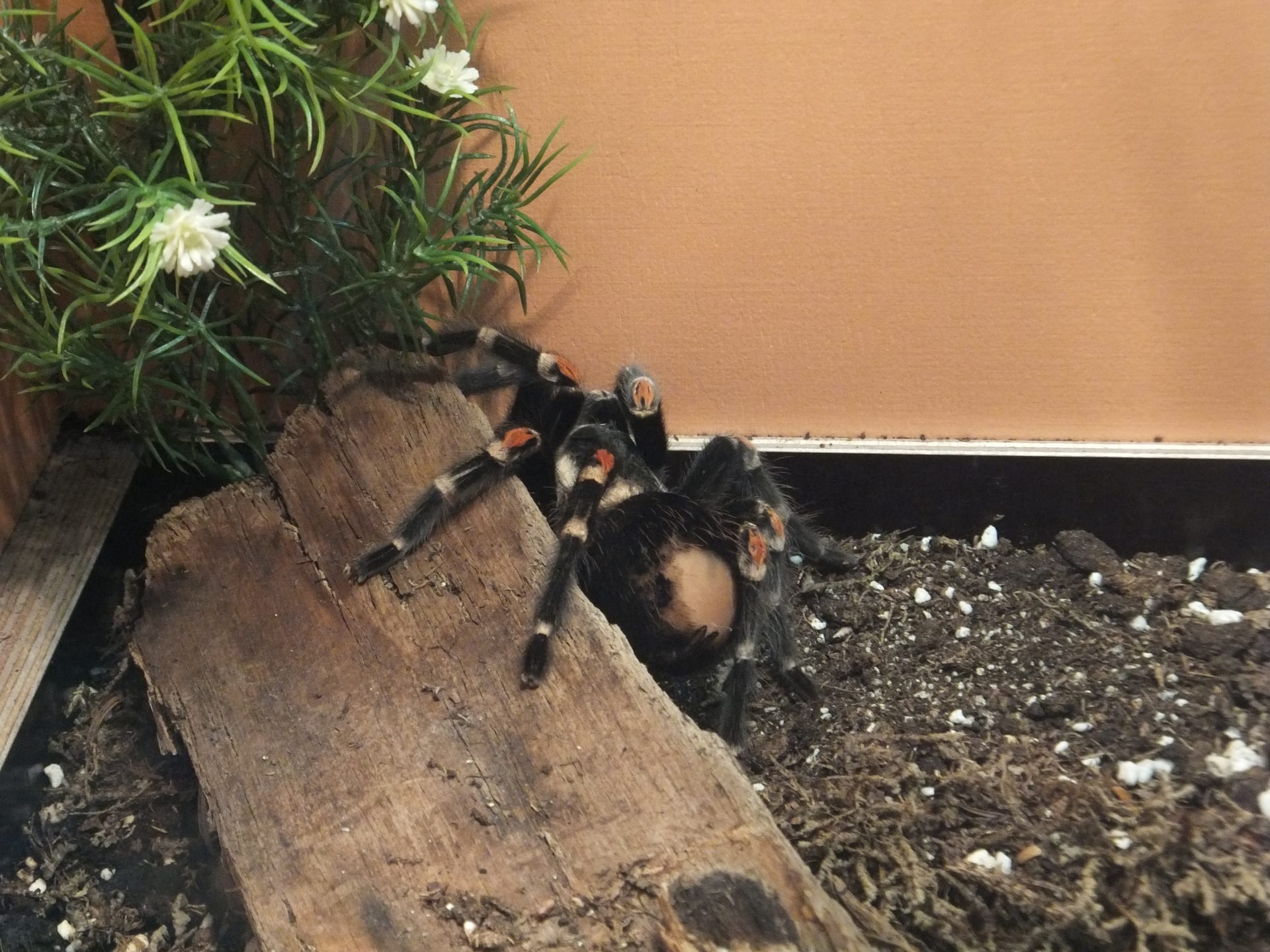
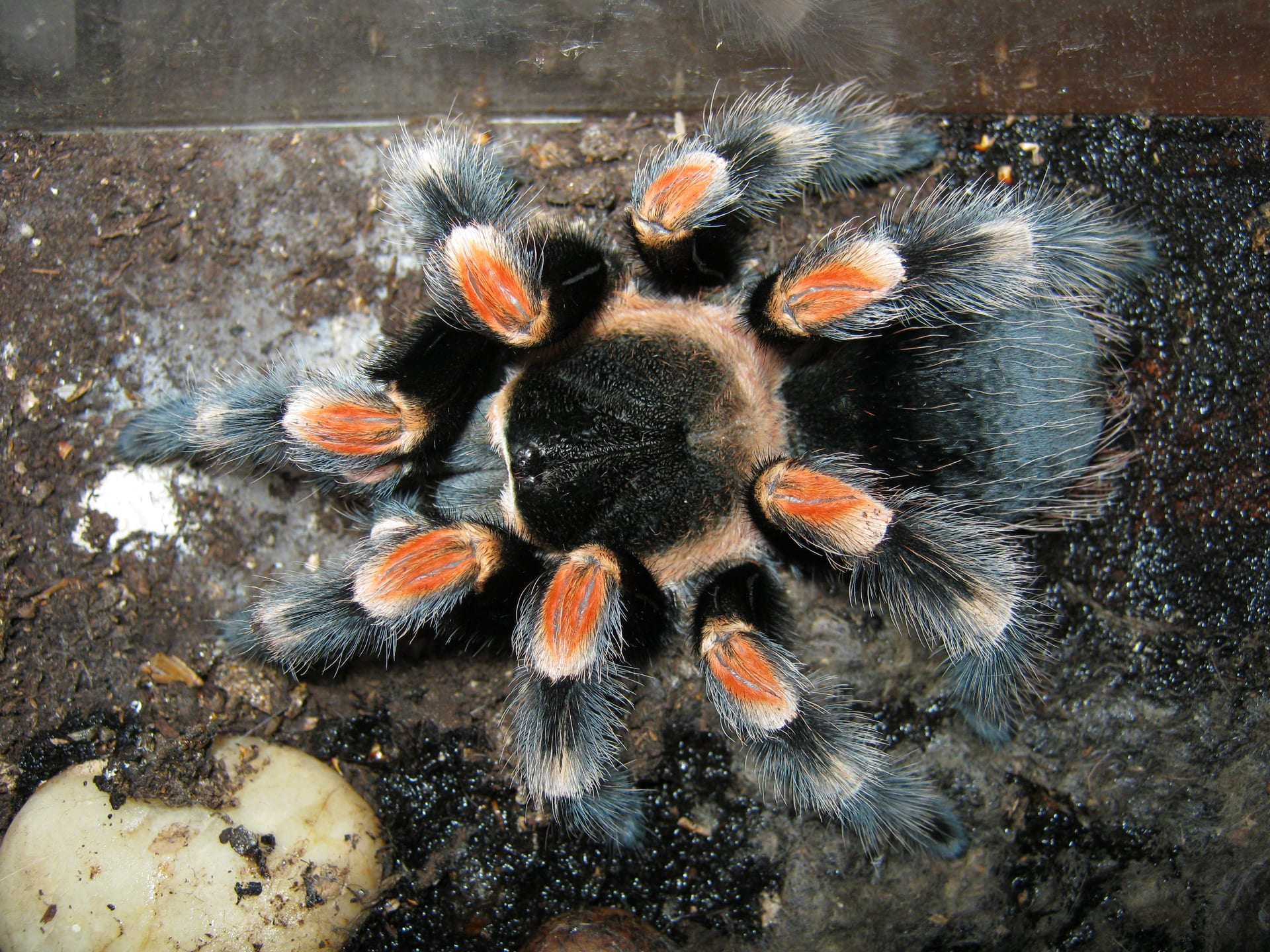
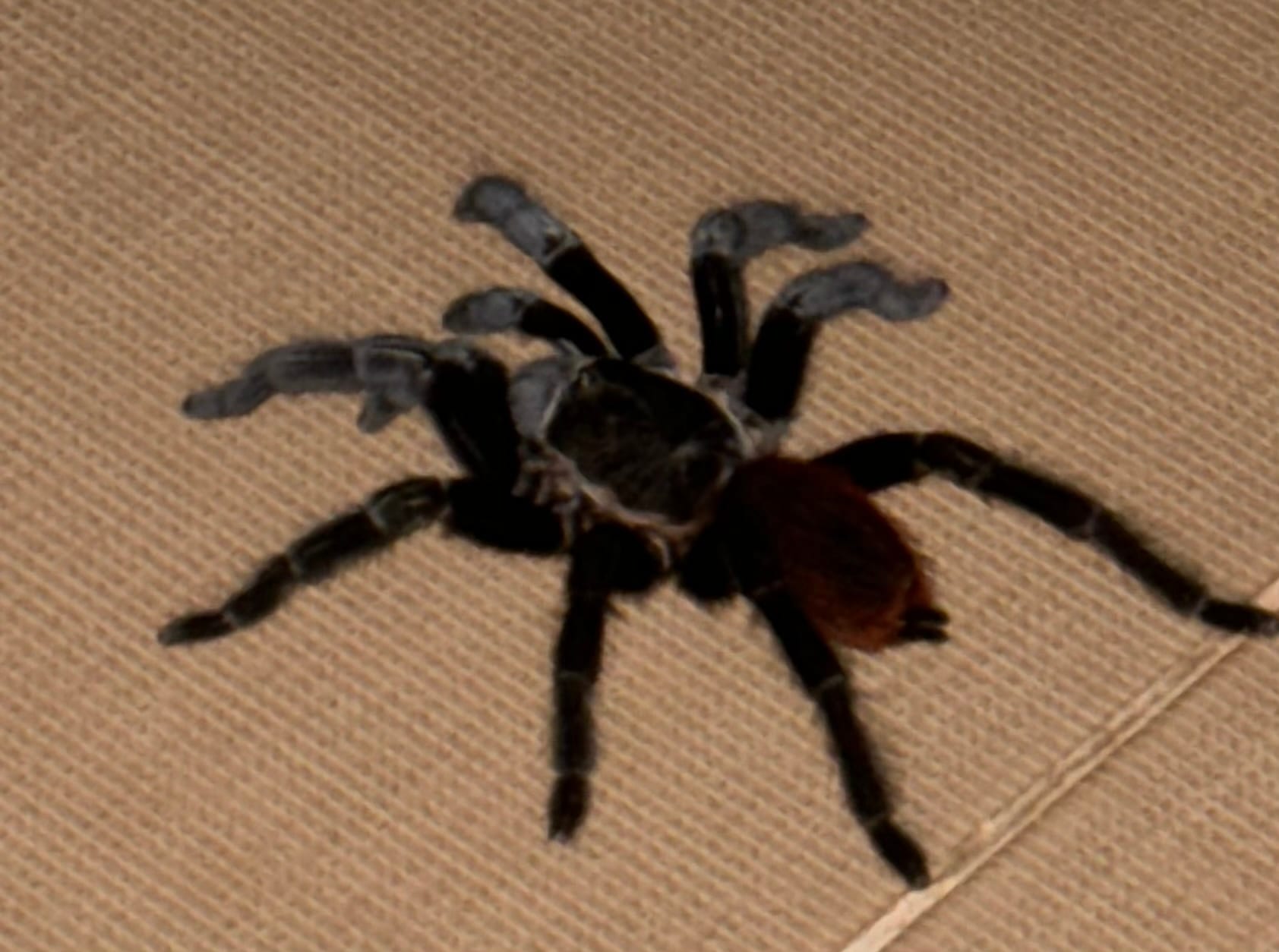
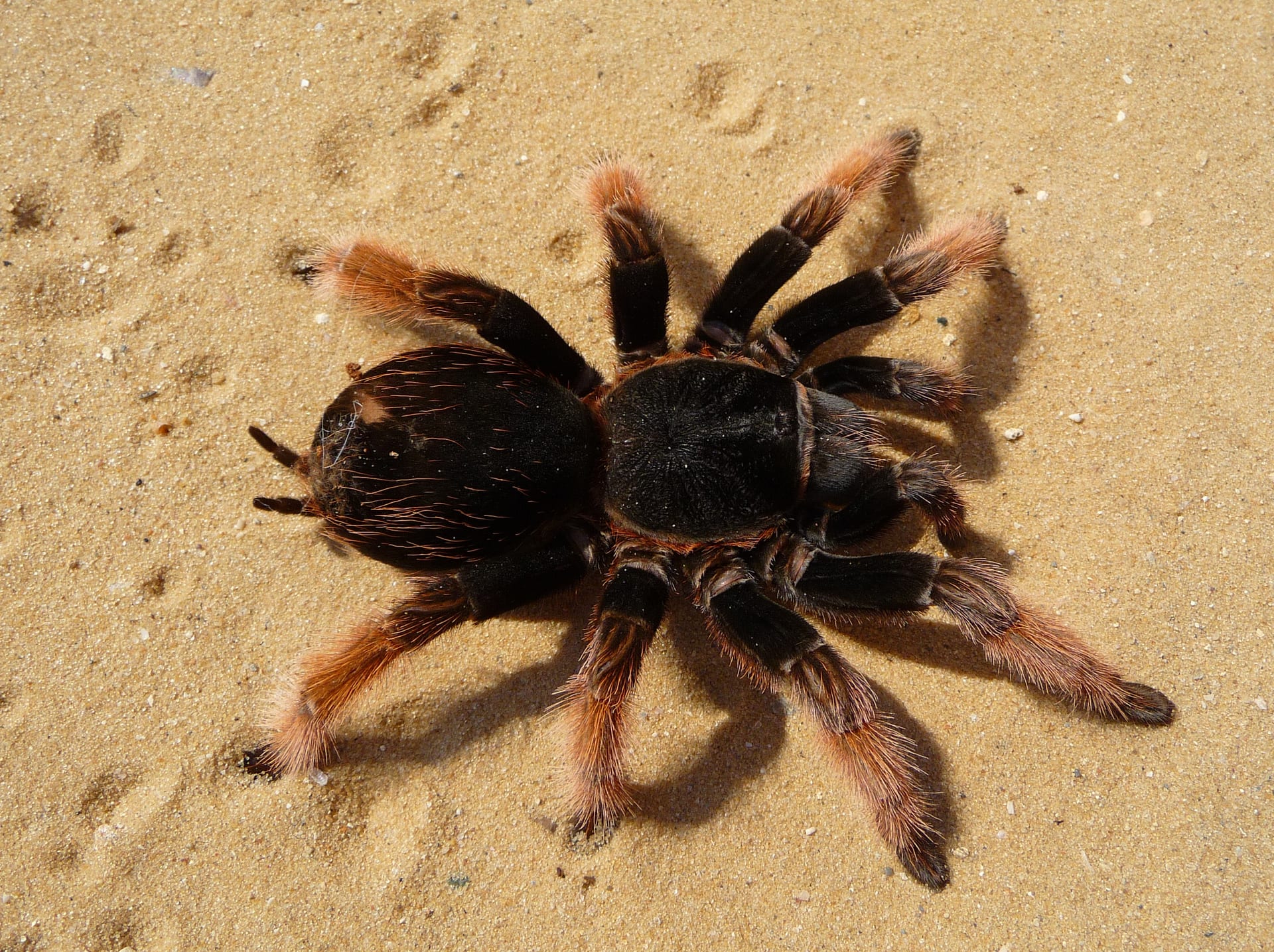
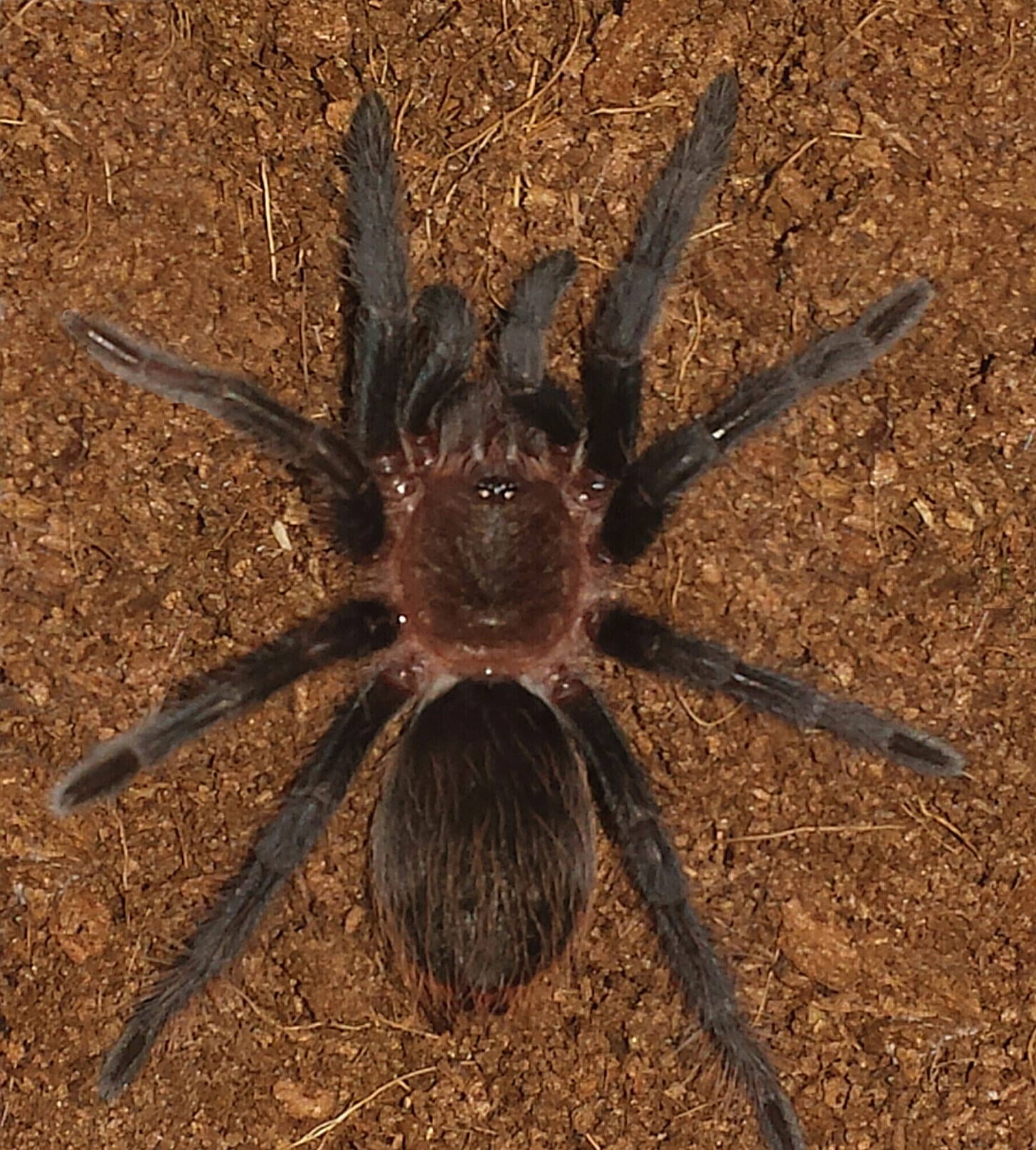
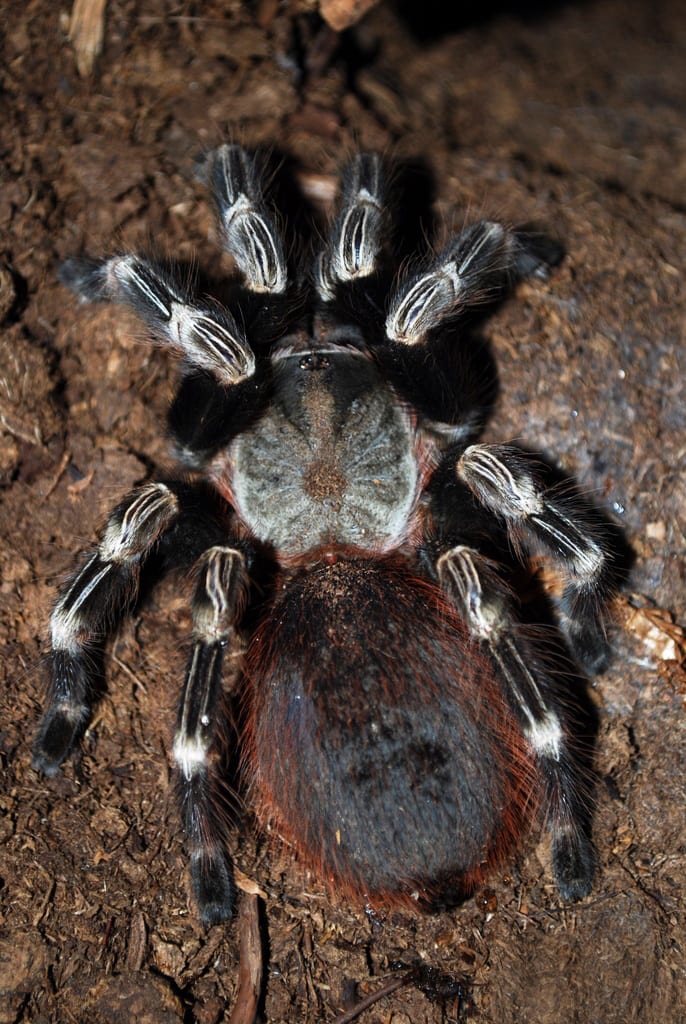
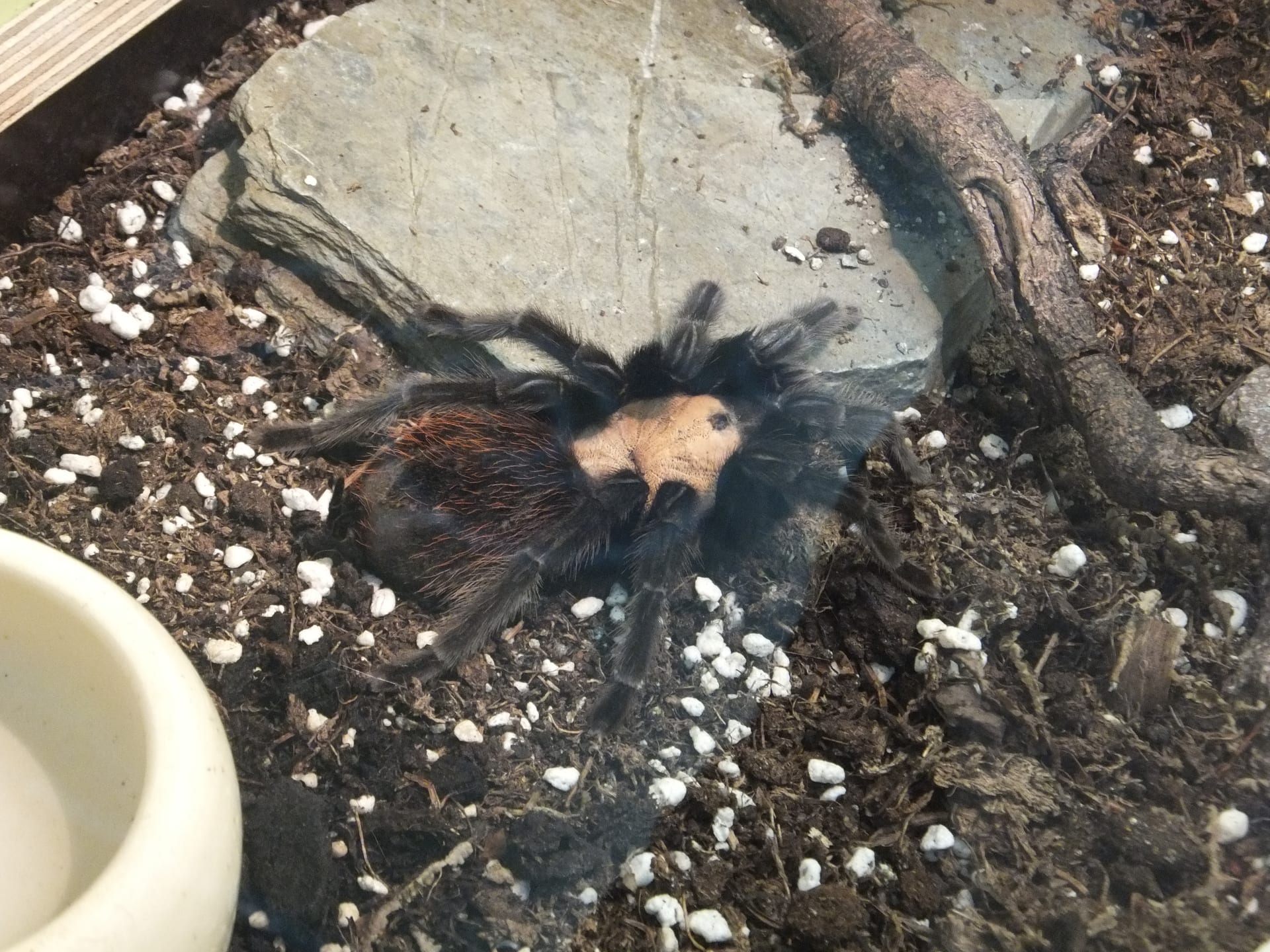
A tarantula endemic to the central highlands of Mexico. Its pale carapace shifts from sandy grey to rose or yellow depending on the light, contrasting with a dark abdomen covered in long red hairs. Females live about 15 years.
Difficulty
Beginner
Lifespan
Females about 15 years (up to 20); males about 5 years, or up to 12 months after the final moult
Size
Females about 6.5cm in body length with a fourth leg of about 6cm
Diet
Crickets, grasshoppers, beetles and cockroaches; live food is needed in captivity
About
The Mexican golden red rump (Brachypelma albiceps) is a tarantula endemic to the central highlands of Mexico, in Guerrero and southern Morelos. The carapace is covered in fine hair whose apparent colour shifts with the light, from sandy grey through rose to yellow, while the dark abdomen carries long, bright red setae. Females typically live about 15 years and sometimes up to 20; males live around 5 years and at most 12 months after their final moult. In the wild they dig long burrows, usually under large rocks, and may occupy nests abandoned by rodents or other animals. They are most active at night and dusk. Two months after mating a female lays a cocoon of roughly 500 and up to 900 eggs, and the spiderlings hatch 8-10 weeks later. The species has a tangled taxonomic history and only settled into its present genus in 2005.
Source: Wikipedia (CC BY-SA 4.0)
Lifespan of the Mexican Golden Red Rump
The Mexican Golden Red Rump lives Females about 15 years (up to 20); males about 5 years, or up to 12 months after the final moult.
Size of the Mexican Golden Red Rump
The Mexican Golden Red Rump grows to Females about 6.5cm in body length with a fourth leg of about 6cm.
Females have a body length of about 6.5 cm, with the fourth and longest leg measuring some 6 cm.
Basic Info
Origin
Central highlands of Mexico (Guerrero and southern Morelos)
Lifespan
Females about 15 years (up to 20); males about 5 years, or up to 12 months after the final moult
Care Specifications
PeacefulSolitary
Sources: Wikipedia: Brachypelma albiceps / Wikipedia: Brachypelma (genus; morphology and captivity) / GBIF Brachypelma albiceps
References & Sources
Edited & verified by: BreederDirect editorial team
The taxonomic, regulatory, and husbandry data on this page are compiled and verified against the authoritative primary sources below.
Taxonomy & Authority
Accepted name: Brachypelma albiceps Pocock, 1903
Synonyms: Brachypelmides ruhnaui Schmidt, 1997, Aphonopelma albiceps
Authority databases: GBIF
Nomenclature follows global taxonomic authority databases.
Regulations & Conservation Status
CITES Appendix II
Brachypelma smithi (then not distinguished from B. hamorii) was placed on CITES Appendix II in 1985, and all remaining Brachypelma species were added in 1994.
Sources: CITES Appendices (Brachypelma spp., Appendix II) / Wikipedia: Brachypelma (conservation and CITES)
Regulations may change. Always verify the latest information with the relevant authorities.
Mexican Golden Red Rump Listings
Loading latest listingsFind listings for this species